A considered reference · 100 articles

The Gem & Jewellery Library

Explore 72 gem-material topics, twenty jewellery houses, seven guides and the family glossary. Eight longer atlas studies remain available separately.

Independent educational writing, with sources attached to each subject. This edition is a defined selection; the library continues to grow.

Read the eight extended atlas studies

Browse by material or house, reading depth and evidence

01Diamond

Diamond

Diamond is crystalline carbon.
Read the complete Diamond study

Two images, two contexts

Source-identified references, not matching specimens or photographs of the museum objects discussed later in this profile. Images are not to a common scale and cannot establish treatment or provenance.

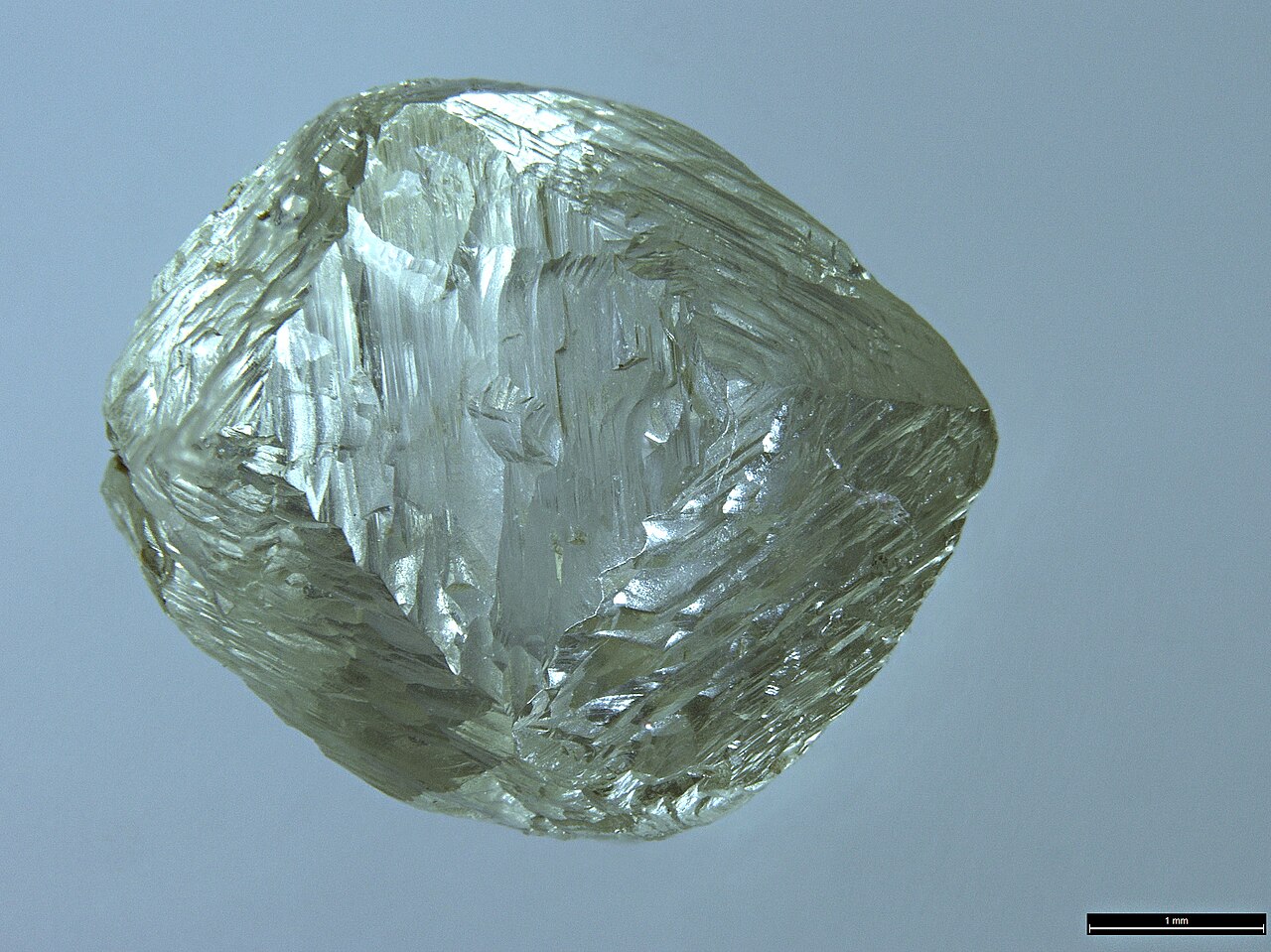
Pale translucent rough diamond with etched triangular faces; a 1 mm scale bar is at the lower right.

Uncut diamond crystal, identified by its photographer as 0.7 ct. Image by Tõnu Pani.

Tõnu Pani, “Diamond crystal, 0,7 ct.jpg”, Wikimedia Commons, CC BY 4.0.

Context and image limits

A natural rough crystal, not a faceted diamond. Carat weight is the uploader’s identification; no origin or grading report is supplied.

Resized display copy; full photograph retained.
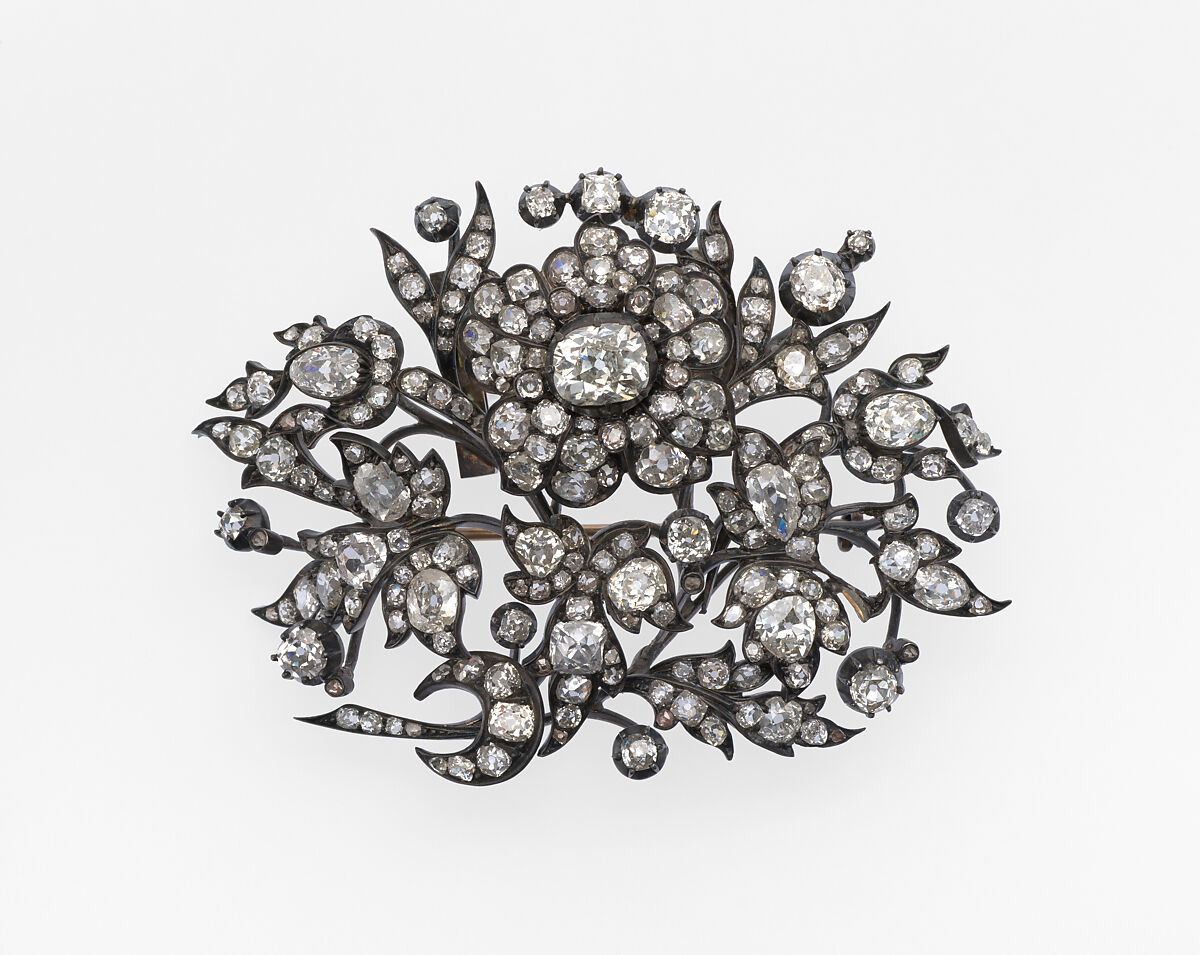
A branching floral brooch covered with clear diamonds, with a large central flower and smaller diamond buds.

Diamond-set brooch, part of a hair ornament, probably French, mid-19th century. Diamonds, gold, and silver; The Met, 45.30.1.

The Metropolitan Museum of Art, Gift of Ellen Goin Rionda, 1945; 45.30.1. Public domain / CC0.

Context and image limits

Historical jewellery context; this photograph does not establish a loose-stone identification or a modern cut grade.

Resized display copy; full photograph retained.
Continue at this sectionContinue at this sectionContinue at this sectionContinue at this sectionContinue at this sectionContinue at this sectionContinue at this sectionContinue at this sectionContinue at this sectionContinue at this sectionContinue at this sectionContinue at this sectionContinue at this sectionContinue at this sectionContinue at this sectionContinue at this sectionContinue at this sectionContinue at this sectionContinue at this sectionContinue at this sectionContinue at this sectionContinue at this section
02Corundum

Ruby

Ruby is red corundum, the same mineral species as sapphire.
Read the complete Ruby study

Two images, two contexts

Source-identified references, not matching specimens or photographs of the museum objects discussed later in this profile. Images are not to a common scale and cannot establish treatment or provenance.

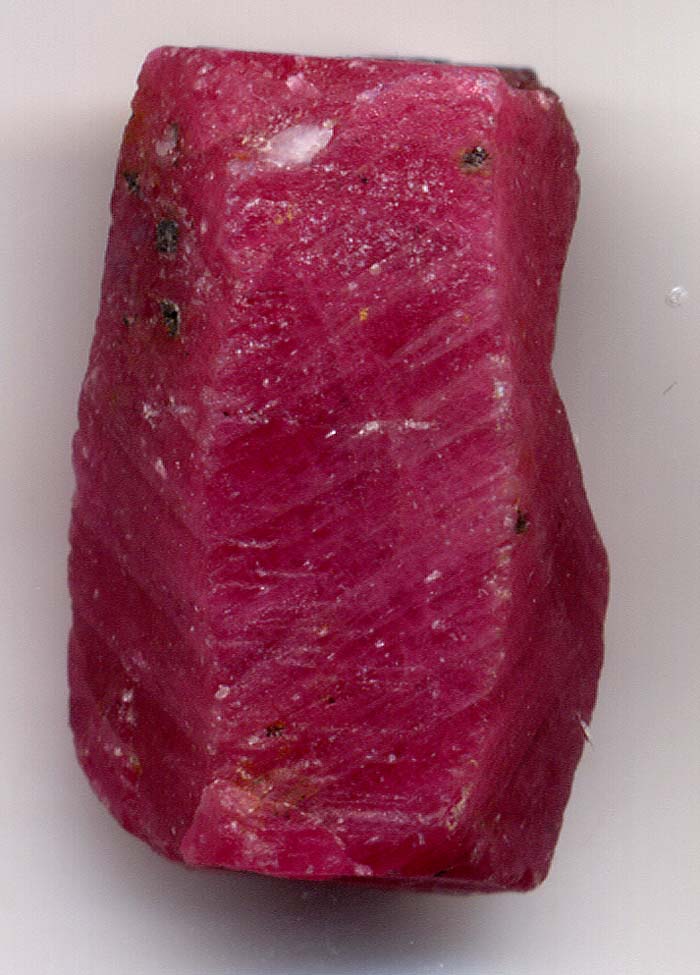
An elongated red ruby crystal with rough striated sides on a pale background.

Flatbed scan of a crystal identified by the source as ruby, about 2 cm long. Adrian Pingstone, 2003. Natural-versus-synthetic origin is not established.

Adrian Pingstone (Arpingstone), “Ruby cristal.jpg”, via Wikimedia Commons. Public domain.

Context and image limits

This is a flatbed scan, not a camera photograph. Locality, treatment status, and natural-versus-synthetic origin are not established by this page.

Resized display copy; full photograph retained.
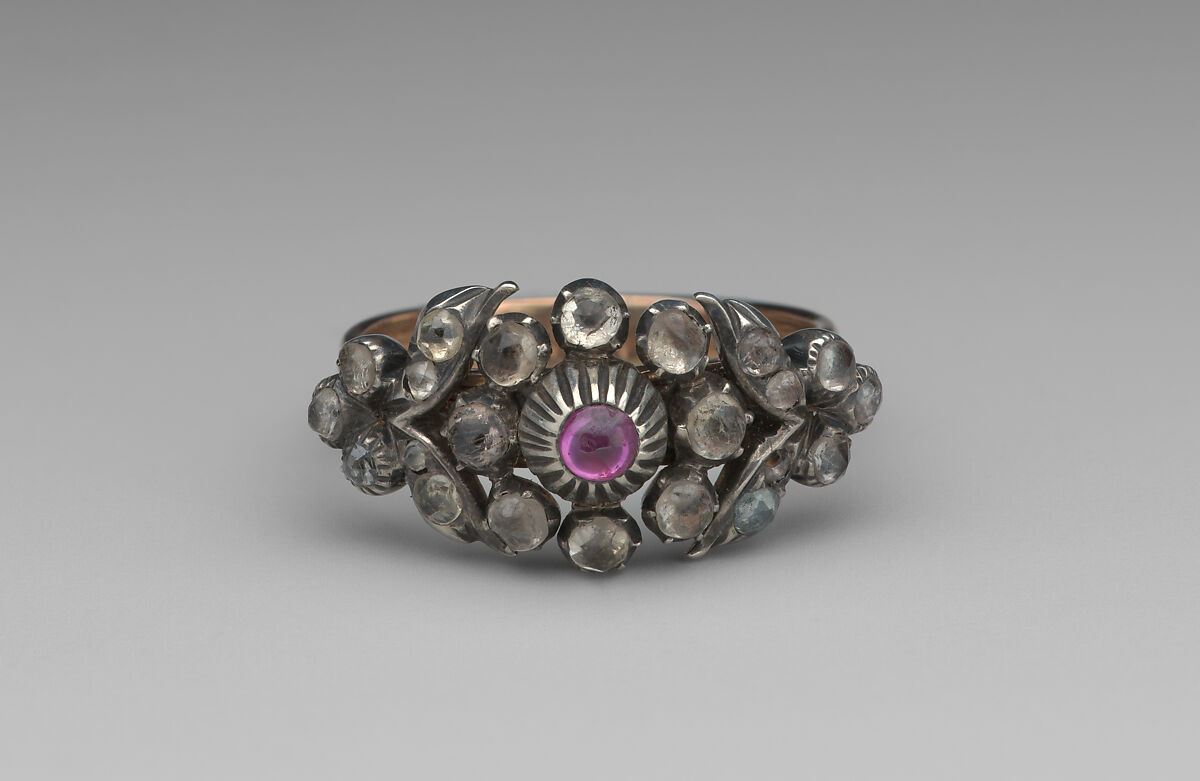
A pinkish-purple central ruby surrounded by small clear diamonds in a dark floral ring setting.

French ring, 19th century, in gold and silver with ruby and diamonds. The Met, 41.84.8.

The Metropolitan Museum of Art, Gift of Susan Dwight Bliss, 1941; 41.84.8. Public domain / CC0.

Context and image limits

Ruby identification follows the museum record. Locality, treatment and quality cannot be established from this photograph.

Resized display copy; full photograph retained.
Continue at this sectionContinue at this sectionContinue at this sectionContinue at this sectionContinue at this sectionContinue at this sectionContinue at this sectionContinue at this sectionContinue at this sectionContinue at this sectionContinue at this sectionContinue at this sectionContinue at this sectionContinue at this sectionContinue at this sectionContinue at this sectionContinue at this sectionContinue at this sectionContinue at this sectionContinue at this sectionContinue at this sectionContinue at this section
03Corundum

Sapphire

Sapphire is gem corundum other than the red material called ruby.
Read the complete Sapphire study

Two images, two contexts

Source-identified references, not matching specimens or photographs of the museum objects discussed later in this profile. Images are not to a common scale and cannot establish treatment or provenance.

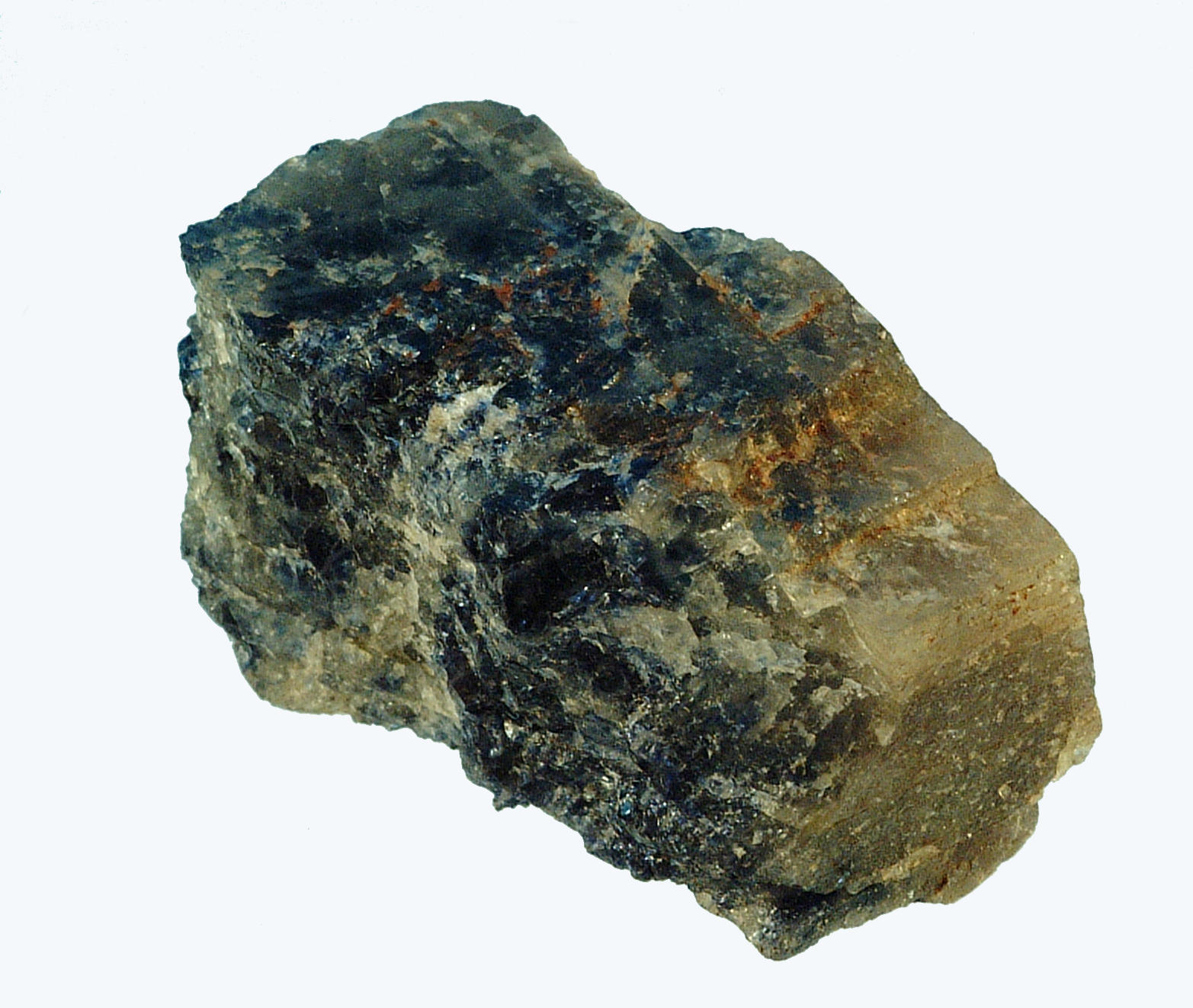
A rough dark-blue and gray sapphire specimen with an uneven surface against a pale background.

Sapphire hand specimen from near Kashmir, India, according to GeoDIL; University of North Dakota Mineralogy Collection 451. Photo by Nessa Eull, 2001.

Nessa Eull / Geoscience Digital Image Library, GeoDIL 1429; University of North Dakota Mineralogy Collection 451. CC0 1.0.

Context and image limits

The primary record confirms collection, photographer, and locality: https://geodil.dperkins.org/h/1429.html . “Near Kashmir” is the source wording, not an independent origin certification.

Resized display copy; full photograph retained.
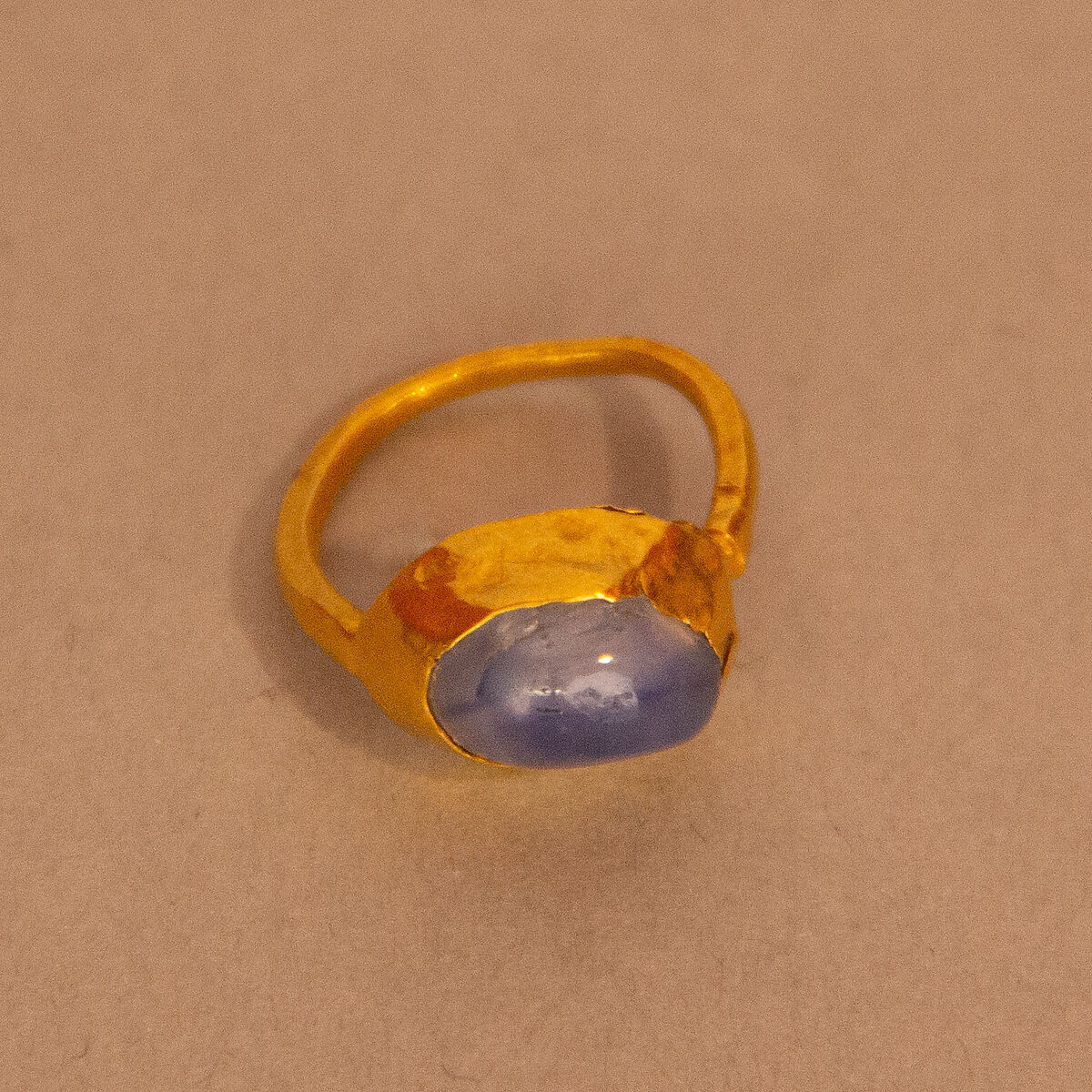
A slender gold ring holding a rounded pale blue-violet sapphire in a plain gold setting.

Gold-sheet and sapphire ring, 11th–13th century, found in Iran, probably Gurgan. The Met, 52.32.4.

The Metropolitan Museum of Art, Rogers Fund, 1952; 52.32.4. Public domain / CC0.

Context and image limits

The findspot is not the sapphire’s geological origin. “Probably Gurgan” remains an uncertain attribution.

Resized display copy; full photograph retained.
Continue at this sectionContinue at this sectionContinue at this sectionContinue at this sectionContinue at this sectionContinue at this sectionContinue at this sectionContinue at this sectionContinue at this sectionContinue at this sectionContinue at this sectionContinue at this sectionContinue at this sectionContinue at this sectionContinue at this sectionContinue at this sectionContinue at this sectionContinue at this sectionContinue at this sectionContinue at this sectionContinue at this section
04Beryl

Emerald

Emerald is green to bluish-green beryl.
Read the complete Emerald study

Two images, two contexts

Source-identified references, not matching specimens or photographs of the museum objects discussed later in this profile. Images are not to a common scale and cannot establish treatment or provenance.

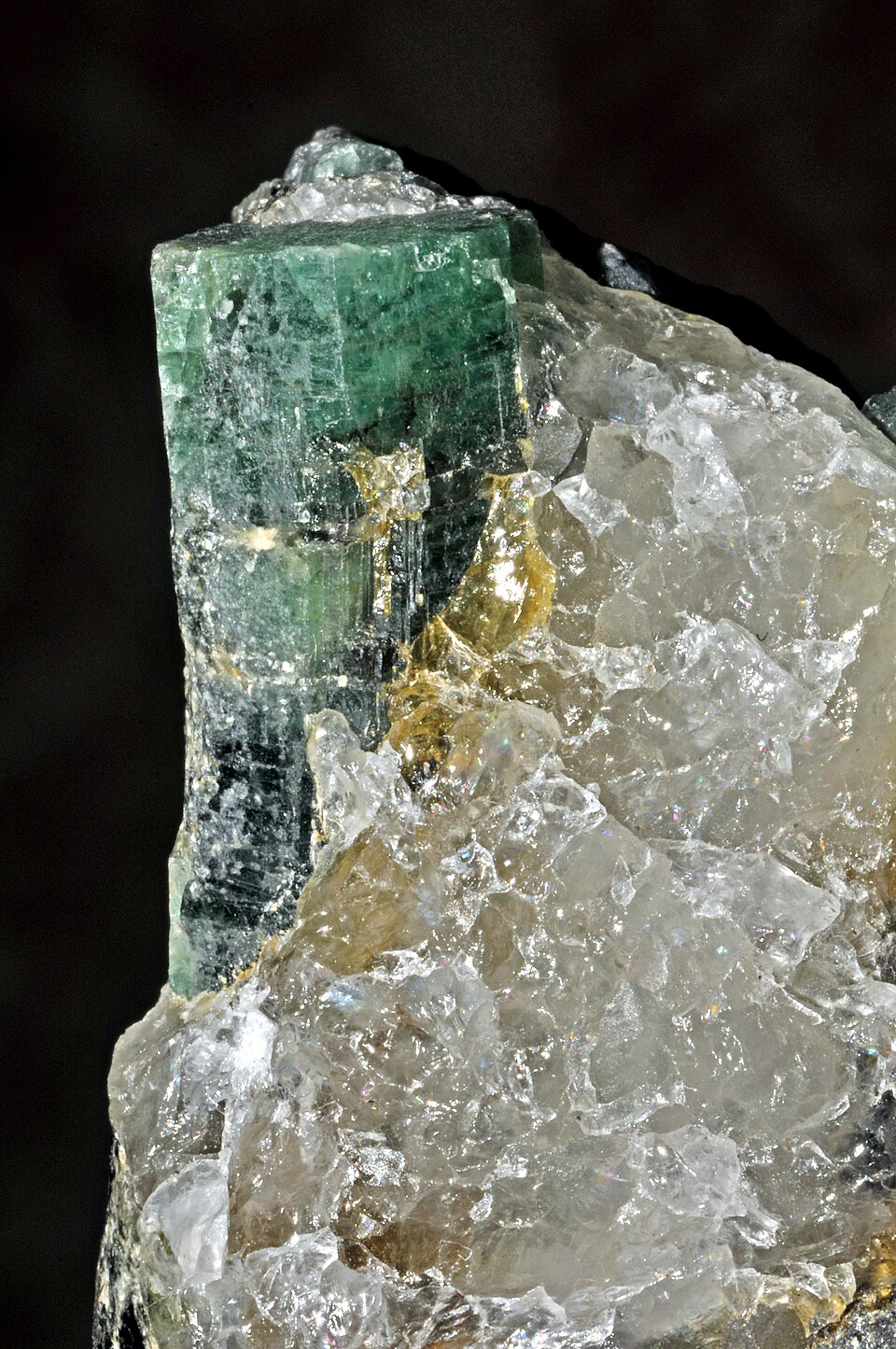
A green prismatic emerald crystal rises from a pale, glassy quartz matrix against a black background.

Emerald in quartz; the photographer gives the locality as Carnaíba district, Bahia, Brazil. Photo by Géry PARENT.

Géry PARENT, “Beryl, quartz 02.jpg”, via Wikimedia Commons. Public domain.

Context and image limits

The locality is supplied by the photographer, not independently certified. The stone is in matrix, not a polished emerald.

Resized display copy; full photograph retained.
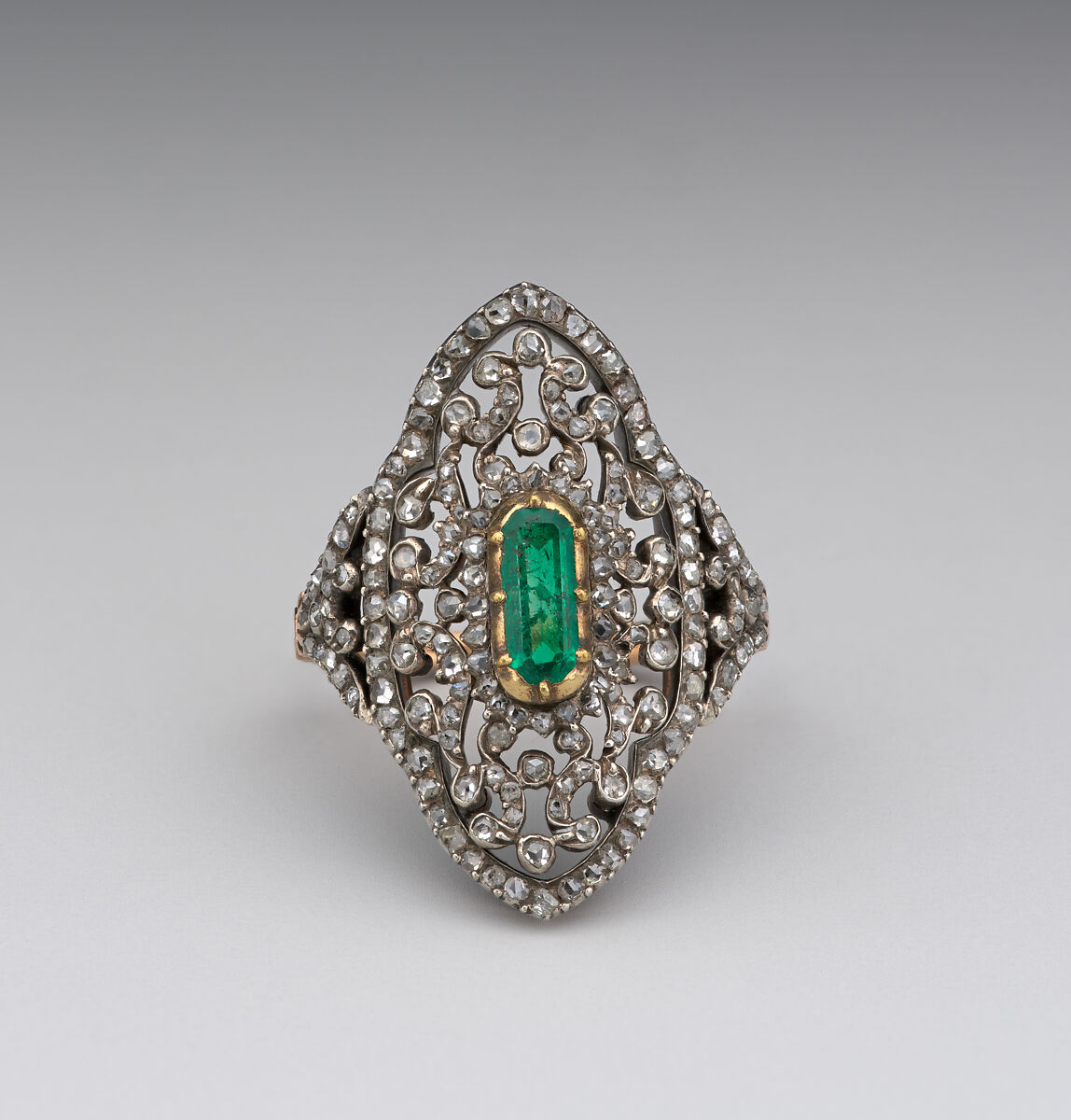
A long green emerald sits at the center of a pointed oval ring face filled with diamond-set scrollwork.

Ring made in Paris, 1838–47, with emerald and diamonds in gold and silver. The Met, 41.84.2.

The Metropolitan Museum of Art, Gift of Susan Dwight Bliss, 1941; 41.84.2. Public domain / CC0.

Context and image limits

Paris is the jewel’s cultural/manufacturing attribution, not the emerald’s mine origin.

Resized display copy; full photograph retained.
Continue at this sectionContinue at this sectionContinue at this sectionContinue at this sectionContinue at this sectionContinue at this sectionContinue at this sectionContinue at this sectionContinue at this sectionContinue at this sectionContinue at this sectionContinue at this sectionContinue at this sectionContinue at this sectionContinue at this sectionContinue at this sectionContinue at this sectionContinue at this sectionContinue at this sectionContinue at this sectionContinue at this section
05Beryl

Aquamarine

Blue beryl links high mountain crystals, delicate colour and a remarkable carved obelisk.
06Beryl

Morganite

Morganite is the pink to orange-pink variety of beryl.
07Chrysoberyl

Alexandrite

Alexandrite is a color-change variety of chrysoberyl.

Selected documented sources, including historic localities; not a complete deposit inventory or a claim about current mine operation. Mohs is a relative scratch-resistance ranking, not a linear scale or a toughness score.

Open the focused study

Material
mineral variety
Composition
BeAl₂O₄
Mohs hardness
8.5
Colours
green, bluish green, purplish red, brownish red

What it is

Read Alexandrite — What it is

Evidence: GIA: Alexandrite, GIA: Alexandrite description

Colour and character

Read Alexandrite — Colour and character

Evidence: GIA: Alexandrite description

A life in human hands

Read Alexandrite — A life in human hands

Evidence: GIA: Alexandrite history and lore

Discovery, recognition and naming

Read Alexandrite — Discovery, recognition and naming

Evidence: GIA: Alexandrite history and lore

Natural, treated and laboratory-grown

Read Alexandrite — Natural, treated and laboratory-grown

Evidence: GIA: Alexandrite care and cleaning, GIA: Introduction to gem treatments

Living with the gem

Read Alexandrite — Living with the gem

Evidence: GIA: Alexandrite care and cleaning

Places in the story

These places describe documented sources or historical settings. They do not establish the origin of an individual object.

  • Russia / Ural Mountains — Historic source; broad country/region evidence only.
  • Brazil — Documented source; broad country/region evidence only.
  • Sri Lanka — Documented source; broad country/region evidence only.

Sources & reading

  1. GIA: AlexandriteGIA · 2026-10-03

    Supports: identity, properties

  2. GIA: Alexandrite descriptionGIA · 2026-10-03

    Supports: appearance, identity

  3. GIA: Alexandrite history and loreGIA · 2026-10-03

    Supports: history, discoveryContext

  4. GIA: Alexandrite care and cleaningGIA · 2026-10-03

    Supports: care, treatments, hardness

  5. GIA: Introduction to gem treatmentsGIA · 2026-10-03

    Supports: treatments

08Garnet group

Garnet

A family of reds, oranges and greens whose tiny crystals can reveal very long journeys.
09Spinel

Spinel

Gem spinel belongs to a wider mineral group but is a distinct gem identity from ruby.

Selected documented sources, including historic localities; not a complete deposit inventory or a claim about current mine operation. Mohs is a relative scratch-resistance ranking, not a linear scale or a toughness score.

Open the focused study

Material
mineral species
Composition
MgAl₂O₄
Mohs hardness
8
Colours
red, pink, blue, purple, violet, grey

What it is

Gem spinel belongs to a wider mineral group but is a distinct gem identity from ruby. It commonly forms octahedral crystals. Its cubic structure means that ordinary gem spinel is singly refractive, unlike doubly refractive corundum.

Evidence: GIA: Spinel, GIA: Spinel description

Colour and character

Chromium can produce red and pink; iron and cobalt contribute to blue ranges. Strong cobalt-blue and vivid pink stones are only part of the palette. Grey, violet and softer colours also deserve examination in neutral light.

Evidence: GIA: Spinel description

A life in human hands

Some royal “rubies” turned out to be spinel. The Black Prince’s Ruby in the British Imperial State Crown is the best-known example. Historical naming followed appearance long before modern instruments separated visually similar minerals.

Evidence: GIA: Spinel history and lore

Discovery, recognition and naming

Used historically without always being distinguished from ruby. Recognition as a separate mineral is a different event from a first human encounter.

Evidence: GIA: Spinel history and lore

Natural, treated and laboratory-grown

Synthetic spinel exists and has long served as an imitation of other gems. Natural spinel may also receive treatment; do not label every specimen untreated simply because untreated spinel is widely encountered.

Evidence: GIA: Spinel care and cleaning, GIA: Introduction to gem treatments

Living with the gem

Hardness 8 makes spinel practical for jewellery, but forceful knocks can still damage it. Mild soapy water is a reliable starting point. Fractures and filling need assessment before ultrasonic or steam cleaning.

Evidence: GIA: Spinel care and cleaning

Places in the story

These places describe documented sources or historical settings. They do not establish the origin of an individual object.

  • Myanmar / Mogok — Documented source; broad country/region evidence only.
  • Sri Lanka / Ratnapura — Documented source; broad country/region evidence only.
  • Vietnam / Luc Yen — Documented source; broad country/region evidence only.
  • Tanzania — Documented source; broad country/region evidence only.
  • Tajikistan — Documented source; broad country/region evidence only.

Sources & reading

  1. GIA: SpinelGIA · 2026-10-03

    Supports: identity, properties

  2. GIA: Spinel descriptionGIA · 2026-10-03

    Supports: appearance, identity

  3. GIA: Spinel history and loreGIA · 2026-10-03

    Supports: history, discoveryContext

  4. GIA: Spinel care and cleaningGIA · 2026-10-03

    Supports: care, treatments, hardness

  5. Source locality referenceGIA · 2026-10-03

    Supports: origins

  6. GIA: Introduction to gem treatmentsGIA · 2026-10-03

    Supports: treatments

10Tourmaline group

Tourmaline

One mineral group can hold a whole palette, sometimes inside a single crystal.
11Topaz

Topaz

A wide colour range, a misleading ancient name and a hardness number that does not tell the whole story.
12Zircon

Zircon

A natural gem can sparkle in jewellery and preserve evidence older than most rocks.
13Olivine

Peridot

An iron-coloured green gem whose story reaches from Red Sea records to meteorites.
14Zoisite

Tanzanite

Tanzanite is blue-to-violet zoisite.

Selected documented sources, including historic localities; not a complete deposit inventory or a claim about current mine operation. Mohs is a relative scratch-resistance ranking, not a linear scale or a toughness score.

Open the focused study

Material
mineral variety
Composition
Ca₂Al₃(SiO₄)₃(OH)
Mohs hardness
6–7
Colours
blue, violet, violetish blue

What it is

Read Tanzanite — What it is

Evidence: GIA: Tanzanite, GIA: Tanzanite description

Colour and character

Read Tanzanite — Colour and character

Evidence: GIA: Tanzanite description

A life in human hands

Read Tanzanite — A life in human hands

Evidence: GIA: Tanzanite history and lore

Discovery, recognition and naming

Read Tanzanite — Discovery, recognition and naming

Evidence: GIA: Tanzanite history and lore, GIA: December birthstones

Natural, treated and laboratory-grown

Read Tanzanite — Natural, treated and laboratory-grown

Evidence: GIA: Tanzanite care and cleaning, GIA: Introduction to gem treatments

Living with the gem

Read Tanzanite — Living with the gem

Evidence: GIA: Tanzanite care and cleaning

Places in the story

These places describe documented sources or historical settings. They do not establish the origin of an individual object.

  • Tanzania / Merelani Hills — Documented commercial source; broad country/region evidence only.

Sources & reading

  1. GIA: TanzaniteGIA · 2026-10-03

    Supports: identity, properties

  2. GIA: Tanzanite descriptionGIA · 2026-10-03

    Supports: appearance, identity

  3. GIA: Tanzanite history and loreGIA · 2026-10-03

    Supports: history, discoveryContext

  4. GIA: Tanzanite care and cleaningGIA · 2026-10-03

    Supports: care, treatments, hardness

  5. GIA: December birthstonesGIA · 2026-10-03

    Supports: discoveryContext

  6. GIA: Introduction to gem treatmentsGIA · 2026-10-03

    Supports: treatments

15Opal

Opal

Opal is hydrated silica without the regular long-range crystal structure of minerals such as quartz.
Read the complete Opal study

Two images, two contexts

Source-identified references, not matching specimens or photographs of the museum objects discussed later in this profile. Images are not to a common scale and cannot establish treatment or provenance.

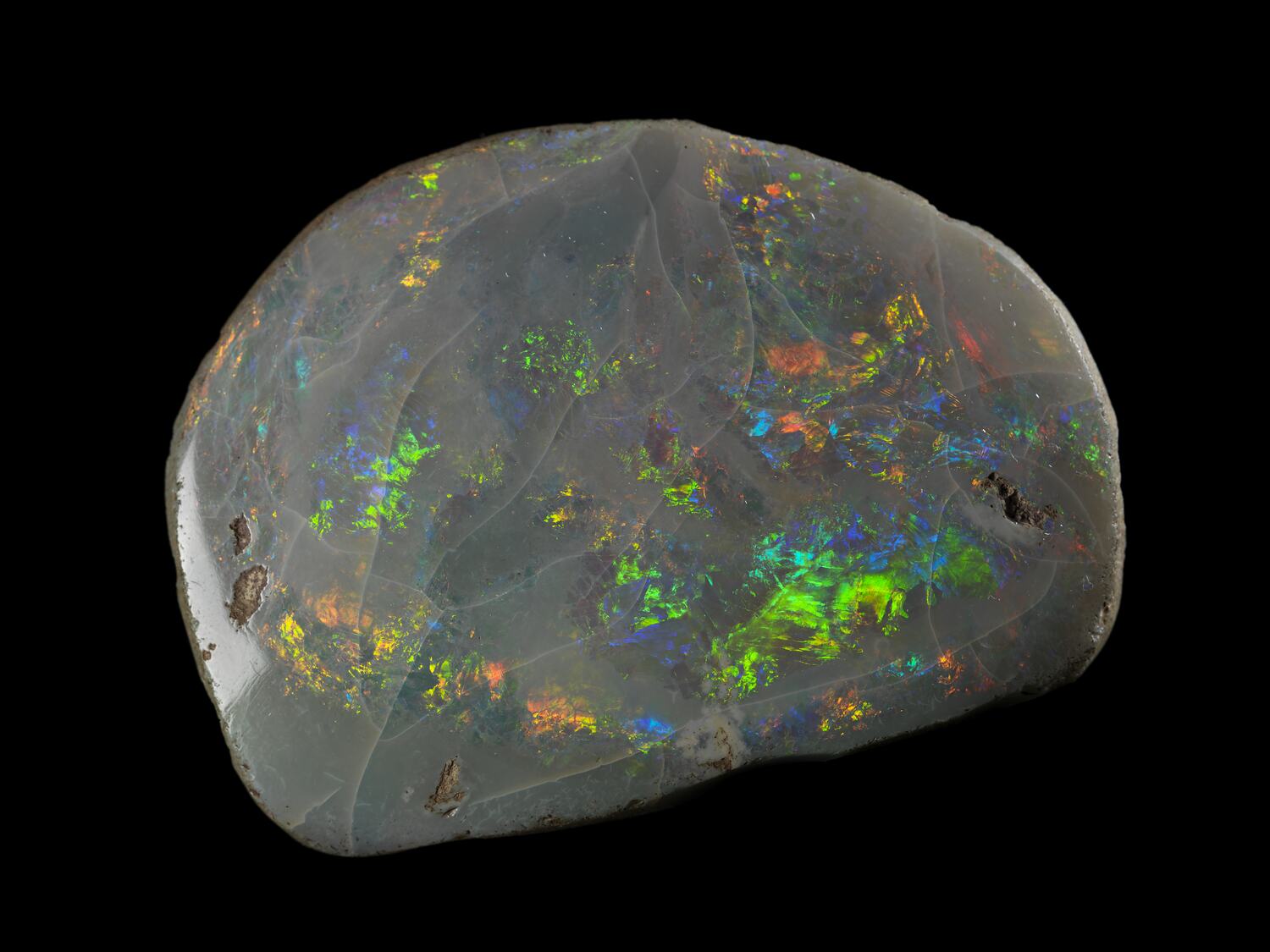
A rounded translucent gray opal cabochon shows patches of green, blue, yellow, and orange against black.

Precious opal cabochon, Museums Victoria specimen M 8723. Photo by Rodney Start.

Photographer: Rodney Start. Museums Victoria, M 8723. CC BY 4.0.

Context and image limits

Downloaded medium rendition (1500 × 1125) visually inspected. Visible surface lines and pits are not a condition report or a gem-quality grade.

Resized display copy; full photograph retained.
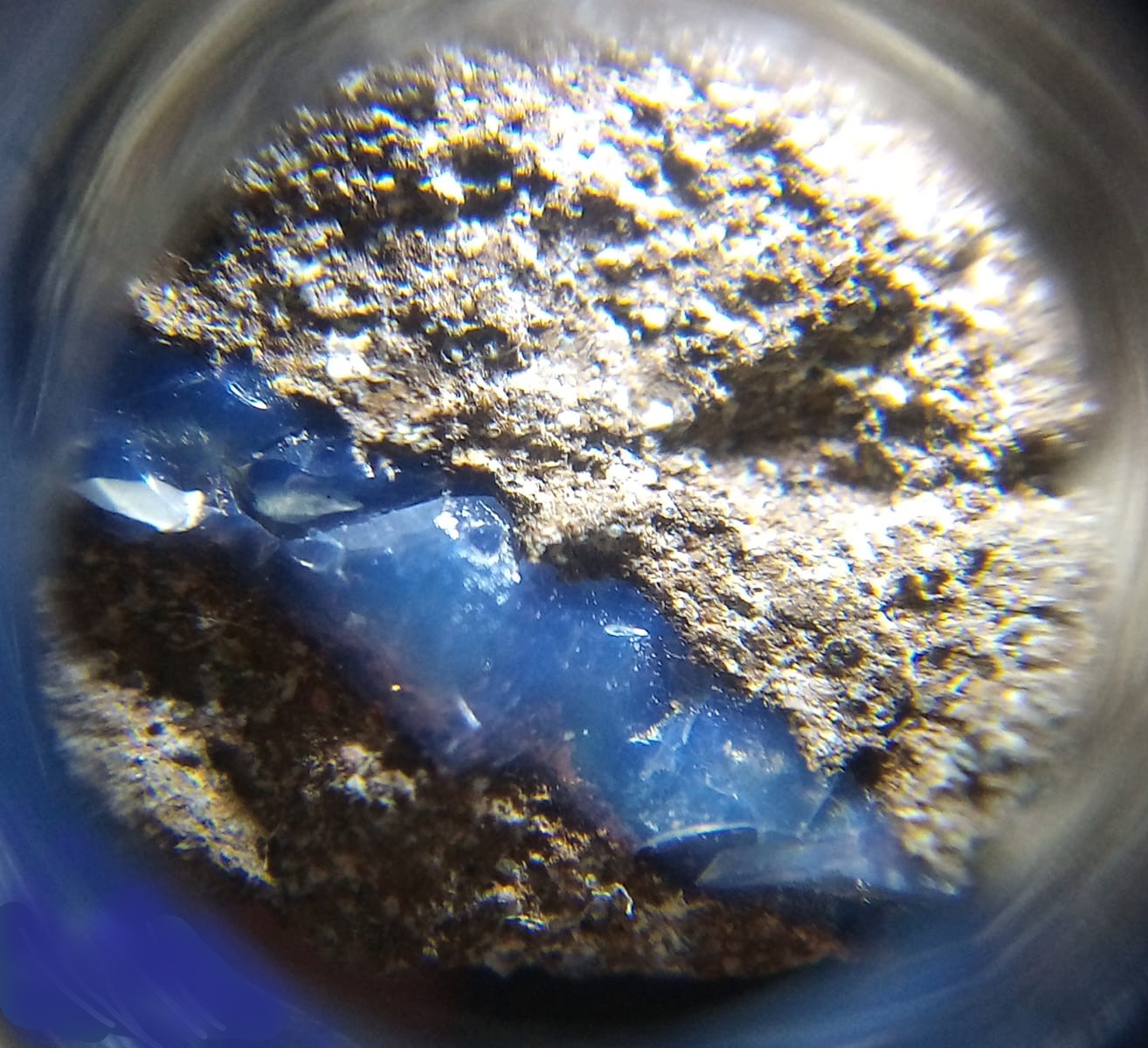
A magnified band of translucent blue opal crosses rough brown host material within a circular microscope view.

Australian opal viewed through a jewelry microscope. Photo by Max.uses.computers, 2023.

Max.uses.computers, “A close up photography of an Australian Opal.jpg”, Wikimedia Commons. CC0 1.0.

Context and image limits

A microscopy detail described by the source as highly saturated. It does not establish a gem colour grade, treatment, mine or scale.

Resized display copy; full photograph retained.
Continue at this sectionContinue at this sectionContinue at this sectionContinue at this sectionContinue at this sectionContinue at this sectionContinue at this sectionContinue at this sectionContinue at this sectionContinue at this sectionContinue at this sectionContinue at this sectionContinue at this sectionContinue at this sectionContinue at this sectionContinue at this sectionContinue at this sectionContinue at this sectionContinue at this sectionContinue at this sectionContinue at this section
16Jade materials

Jade

Jade rewards a closer look at how mineral grains, cultural names and the carver’s choices fit together.
17Lapis lazuli

Lapis Lazuli

A blue rock can carry a story from mountain geology to jewellery and the painter’s palette.
18Turquoise

Turquoise

Blue-green colour, microscopic crystals and carefully fitted mosaic pieces reveal several scales of turquoise’s story.
19Biogenic gems

Pearl

Pearls grow in mollusks.
Read the complete Pearl study

Two images, two contexts

Source-identified references, not matching specimens or photographs of the museum objects discussed later in this profile. Images are not to a common scale and cannot establish treatment or provenance.

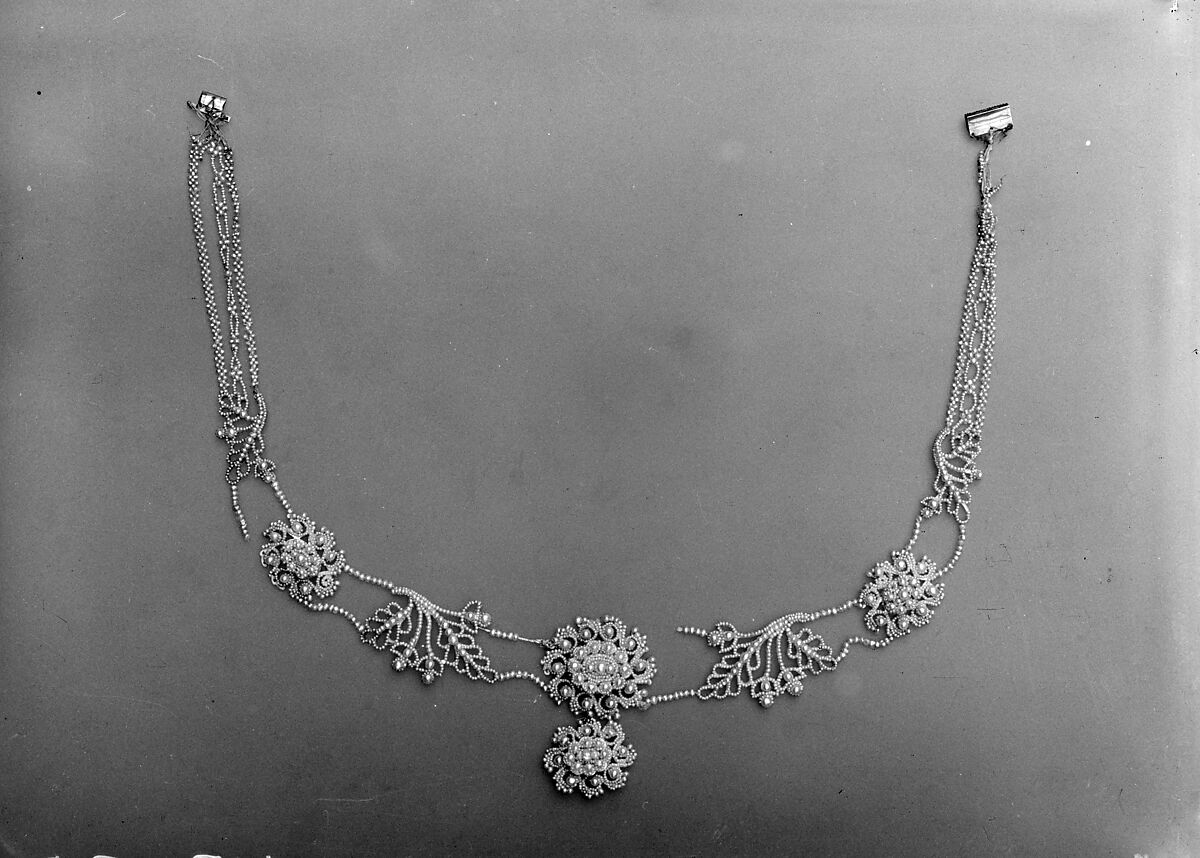
Black-and-white photograph of an open pearl necklace with looping strands, floral motifs, and a central pendant.

Pearl necklace, 1800–1900. The Met, 39.43a. Shown in a black-and-white collection photograph.

The Metropolitan Museum of Art, Rogers Fund, 1939; 39.43a. Public domain / CC0.

Context and image limits

Best for historical context. It is a black-and-white archival image, so it cannot demonstrate pearl bodycolor or orient. The object record does not establish cultured-versus-natural origin.

Resized display copy; full photograph retained.
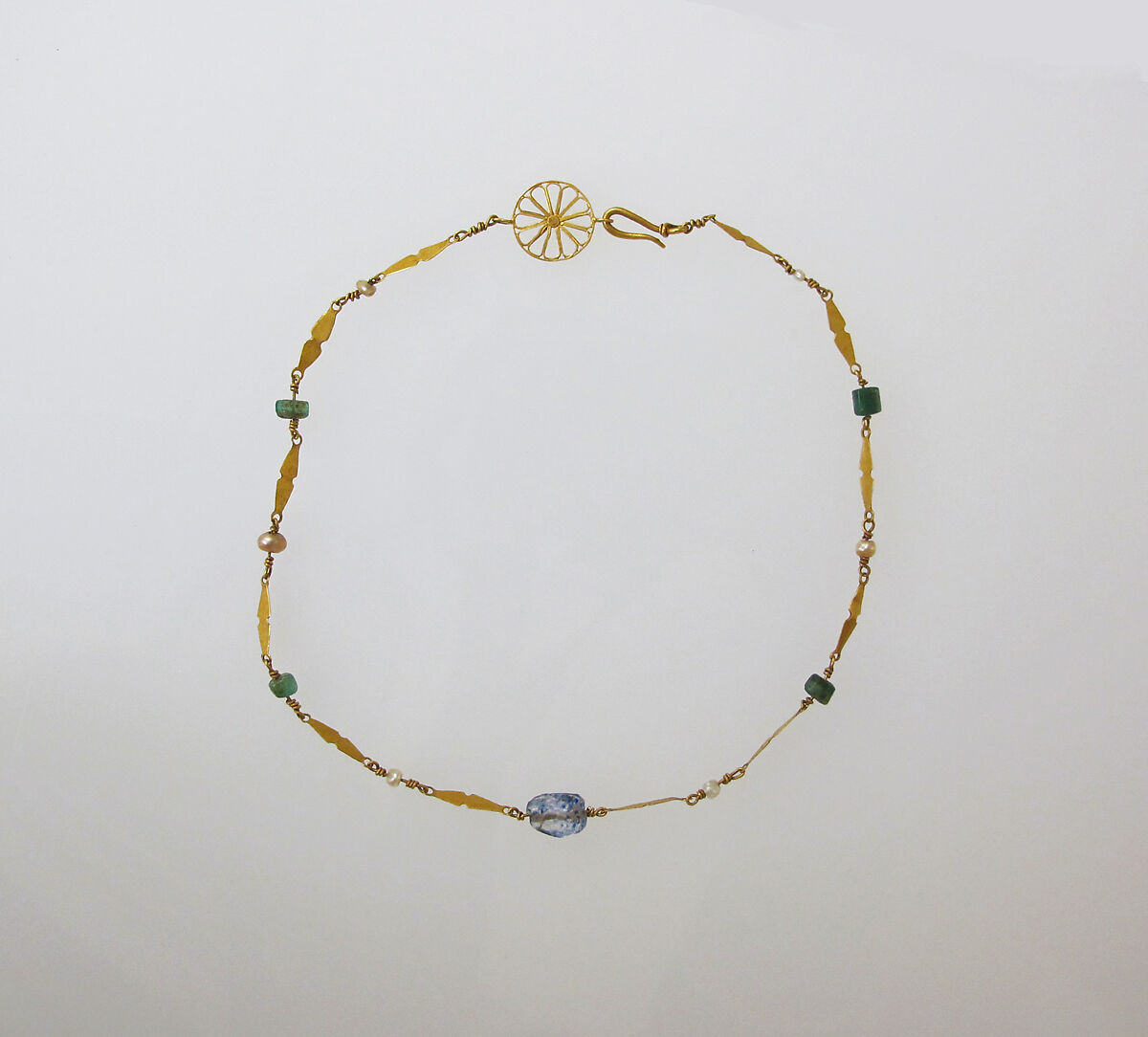
A delicate gold necklace alternates small pale pearls and green beads, with a larger blue bead near the bottom.

Roman necklace with pearls and beryl beads, 1st–2nd century CE, in gold, pearl, and beryl. The Met, 25.192.1.

The Metropolitan Museum of Art, Gift of George D. Pratt, 1925; 25.192.1. Public domain / CC0.

Context and image limits

This is a mixed-material jewel. The museum identifies the green/blue beads as beryl, without establishing a more specific variety.

Resized display copy; full photograph retained.
Continue at this sectionContinue at this sectionContinue at this sectionContinue at this sectionContinue at this sectionContinue at this sectionContinue at this sectionContinue at this sectionContinue at this sectionContinue at this sectionContinue at this sectionContinue at this sectionContinue at this sectionContinue at this sectionContinue at this sectionContinue at this sectionContinue at this sectionContinue at this section
20Organic gems

Amber

Ancient tree resin can carry a forest’s traces, a carver’s decisions and an unexpected blue glow.
21Quartz

Amethyst

Purple quartz connects crystal-lined cavities, ancient carving and the modern cutter’s handling of colour.
22Quartz

Citrine

Yellow quartz invites a clear distinction between the mineral’s growth, its colour history and its later life in jewellery.
23Quartz

Ametrine

Ametrine is quartz with contrasting amethyst-like purple and citrine-like yellow-to-orange zones in one gem.
24Quartz

Rose Quartz

Rose quartz is the familiar pink, usually cloudy variety of quartz.
25Feldspar

Moonstone

Moonstone is a feldspar gem defined by a floating sheen called adularescence.
26Feldspar

Sunstone

Sunstone is an appearance-based gem name used for more than one feldspar material.
27Cordierite

Iolite

Iolite is gem cordierite, a silicate with conspicuous pleochroism.
29Learning guides

A name is not always a species

Learn to separate mineral identity, gem variety, color and cutting style before comparing two stones.
30Learning guides

Beyond single crystals

Explore rocks, mineral aggregates, opal, amber and pearls without forcing every gem into the single-crystal model.
31Learning guides

Origin, identity and resemblance

Separate how a gem formed, what it is and what it resembles, with examples that make confusing labels readable.
32Learning guides

Ask what happened after growth

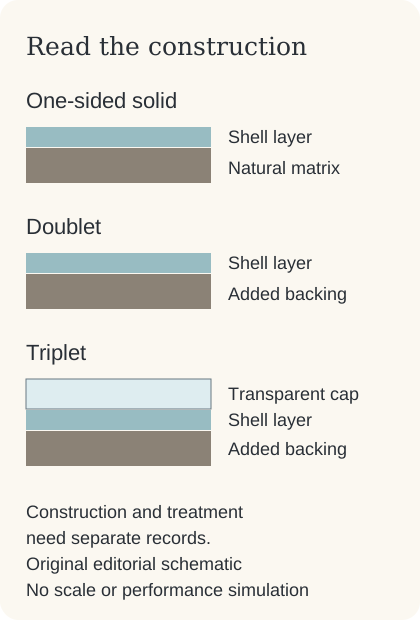
Follow a gem beyond formation: learn what heating, filling, coatings and assembled construction can change.
33Learning guides

A source map is a guide, not a passport

Read source regions, historical routes and origin opinions without mistaking a country marker for a specimen passport.
34Learning guides

Three questions before daily wear

Use three separate durability questions to make sense of scratching, chipping, fading and everyday care.
35Learning guides

Who discovered a gemstone?

Learn to distinguish first surviving evidence, mineral recognition, naming, a new deposit and a commercial launch.
36Learning guides

Families, glossary & next chapters

Navigate the mineral families and the language of colour, light and provenance.
Continue at this sectionContinue at this sectionContinue at this sectionContinue at this sectionContinue at this sectionContinue at this sectionContinue at this sectionContinue at this sectionContinue at this sectionContinue at this sectionContinue at this sectionContinue at this sectionContinue at this sectionContinue at this sectionContinue at this sectionContinue at this sectionContinue at this sectionContinue at this sectionContinue at this sectionContinue at this sectionContinue at this sectionContinue at this sectionContinue at this sectionContinue at this sectionContinue at this sectionContinue at this sectionContinue at this sectionContinue at this sectionContinue at this sectionContinue at this sectionContinue at this sectionContinue at this sectionContinue at this sectionContinue at this sectionContinue at this sectionContinue at this sectionContinue at this sectionContinue at this sectionContinue at this sectionContinue at this sectionContinue at this sectionContinue at this sectionContinue at this sectionContinue at this sectionContinue at this sectionContinue at this sectionContinue at this sectionContinue at this sectionContinue at this sectionContinue at this sectionContinue at this sectionContinue at this sectionContinue at this sectionContinue at this sectionContinue at this sectionContinue at this sectionContinue at this sectionContinue at this sectionContinue at this sectionContinue at this sectionContinue at this sectionContinue at this sectionContinue at this sectionContinue at this sectionContinue at this sectionContinue at this sectionContinue at this sectionContinue at this sectionContinue at this sectionContinue at this sectionContinue at this sectionContinue at this sectionContinue at this sectionContinue at this sectionContinue at this sectionContinue at this sectionContinue at this sectionContinue at this sectionContinue at this section
37Jewellery houses

Cartier: the architecture of an icon

From a Paris family business to sculptural panthers and disciplined modern forms, Cartier’s history turns on the productive tension between exceptional stones and instantly legible design.

Independent editorial profile, checked against official archives and museum interpretation on 3 October 2026. Interpretive observations are distinguished from documented dates. This is not an authentication, valuation or exhaustive corporate history; no affiliation with Cartier is implied.

Open the focused study

A family business with several creative centres

Read Cartier: the architecture of an icon — A family business with several creative centres

Read Cartier: the architecture of an icon — A family business with several creative centres

Evidence for this section: V&A: About the Cartier exhibition. These are attributed primary accounts.

The panther, from pattern to presence

Read Cartier: the architecture of an icon — The panther, from pattern to presence

Read Cartier: the architecture of an icon — The panther, from pattern to presence

Evidence for this section: V&A: About the Cartier exhibition · Cartier: Jeanne Toussaint and the panther. These are attributed primary accounts.

Tutti Frutti and the life of a commission

Read Cartier: the architecture of an icon — Tutti Frutti and the life of a commission

Read Cartier: the architecture of an icon — Tutti Frutti and the life of a commission

Evidence for this section: National Gallery of Victoria: Cartier artwork labels. These are attributed primary accounts.

Three bands, a screw and a nail

Read Cartier: the architecture of an icon — Three bands, a screw and a nail

Read Cartier: the architecture of an icon — Three bands, a screw and a nail

Evidence for this section: National Gallery of Victoria: Cartier artwork labels · Cartier: Iconic designs · Cartier: Love and Aldo Cipullo. These are attributed primary accounts.

Timekeeping as an optical problem

Read Cartier: the architecture of an icon — Timekeeping as an optical problem

Read Cartier: the architecture of an icon — Timekeeping as an optical problem

Evidence for this section: Cartier Collection: Watchmaking objects and dates. These are attributed primary accounts.

How to look beyond the emblem

Read Cartier: the architecture of an icon — How to look beyond the emblem

Read Cartier: the architecture of an icon — How to look beyond the emblem

Evidence for this section: V&A: About the Cartier exhibition. These are attributed primary accounts.

Sources & reading

  1. V&A: About the Cartier exhibitionvam.ac.uk · 2026-10-03

    Source for the linked sections. Manufacturer narratives and specifications are attributed accounts, not independent specimen tests.

  2. Cartier Collection: Watchmaking objects and datescartier.com · 2026-10-03

    Source for the linked sections. Manufacturer narratives and specifications are attributed accounts, not independent specimen tests.

  3. Cartier: Jeanne Toussaint and the panther365ayearof.cartier.com · 2026-10-03

    Source for the linked sections. Manufacturer narratives and specifications are attributed accounts, not independent specimen tests.

  4. National Gallery of Victoria: Cartier artwork labelsngv.vic.gov.au · 2026-10-03

    Source for the linked sections. Manufacturer narratives and specifications are attributed accounts, not independent specimen tests.

  5. Cartier: Iconic designscartier.com · 2026-10-03

    Source for the linked sections. Manufacturer narratives and specifications are attributed accounts, not independent specimen tests.

  6. Cartier: Love and Aldo Cipullocartier.com · 2026-10-03

    Source for the linked sections. Manufacturer narratives and specifications are attributed accounts, not independent specimen tests.

  7. Cartier: Santos design historycartier.com · 2026-10-03

    Source for the linked sections. Manufacturer narratives and specifications are attributed accounts, not independent specimen tests.

38Jewellery houses

Van Cleef & Arpels: engineering an appearance of ease

A clover, a dancer and a working zipper reveal a house whose imaginative world is built on precise mechanical and lapidary problems.

Independent editorial profile, researched on 3 October 2026. Sources are predominantly the house’s published archive and therefore document its own historical interpretation. The article avoids assigning a universal first to invisible setting and distinguishes patent dates from completed-jewel dates. No affiliation is implied.

Open the focused study

The family story and the business record

Read Van Cleef & Arpels: engineering an appearance of ease — The family story and the business record

Read Van Cleef & Arpels: engineering an appearance of ease — The family story and the business record

Evidence for this section: Van Cleef & Arpels: Origins and founding partners. These are attributed primary accounts.

The Mystery Set is a history of collaboration

Read Van Cleef & Arpels: engineering an appearance of ease — The Mystery Set is a history of collaboration

Read Van Cleef & Arpels: engineering an appearance of ease — The Mystery Set is a history of collaboration

Evidence for this section: The Collection: The Mystery Set and its patents · Van Cleef & Arpels: Mystery Set technique. These are attributed primary accounts.

A case that could become jewellery

Read Van Cleef & Arpels: engineering an appearance of ease — A case that could become jewellery

Read Van Cleef & Arpels: engineering an appearance of ease — A case that could become jewellery

Evidence for this section: Van Cleef & Arpels: The Minaudière. These are attributed primary accounts.

When the zipper became the spectacle

Read Van Cleef & Arpels: engineering an appearance of ease — When the zipper became the spectacle

Read Van Cleef & Arpels: engineering an appearance of ease — When the zipper became the spectacle

Evidence for this section: Van Cleef & Arpels: 1950s chronology · The Collection: Zip necklace, 1951. These are attributed primary accounts.

Ballerinas, fairies and the suggestion of movement

Read Van Cleef & Arpels: engineering an appearance of ease — Ballerinas, fairies and the suggestion of movement

Read Van Cleef & Arpels: engineering an appearance of ease — Ballerinas, fairies and the suggestion of movement

Evidence for this section: Van Cleef & Arpels: 1940s chronology. These are attributed primary accounts.

Alhambra and the longer history of luck

Read Van Cleef & Arpels: engineering an appearance of ease — Alhambra and the longer history of luck

Read Van Cleef & Arpels: engineering an appearance of ease — Alhambra and the longer history of luck

Evidence for this section: The Collection: Good-Luck Jewelry. These are attributed primary accounts.

Reading the poetry with precision

Read Van Cleef & Arpels: engineering an appearance of ease — Reading the poetry with precision

Editorial observation and questions for further study; no new historical attribution or measured performance claim is asserted in this section.

Sources & reading

  1. Van Cleef & Arpels: Origins and founding partnersvancleefarpels.com · 2026-10-03

    Source for the linked sections. Manufacturer narratives and specifications are attributed accounts, not independent specimen tests.

  2. The Collection: The Mystery Set and its patentsthe-collection.vancleefarpels.com · 2026-10-03

    Source for the linked sections. Manufacturer narratives and specifications are attributed accounts, not independent specimen tests.

  3. Van Cleef & Arpels: Mystery Set techniquevancleefarpels.com · 2026-10-03

    Source for the linked sections. Manufacturer narratives and specifications are attributed accounts, not independent specimen tests.

  4. Van Cleef & Arpels: The Minaudièrevancleefarpels.com · 2026-10-03

    Source for the linked sections. Manufacturer narratives and specifications are attributed accounts, not independent specimen tests.

  5. Van Cleef & Arpels: 1950s chronologyvancleefarpels.com · 2026-10-03

    Source for the linked sections. Manufacturer narratives and specifications are attributed accounts, not independent specimen tests.

  6. The Collection: Zip necklace, 1951the-collection.vancleefarpels.com · 2026-10-03

    Source for the linked sections. Manufacturer narratives and specifications are attributed accounts, not independent specimen tests.

  7. Van Cleef & Arpels: 1940s chronologyvancleefarpels.com · 2026-10-03

    Source for the linked sections. Manufacturer narratives and specifications are attributed accounts, not independent specimen tests.

  8. The Collection: Good-Luck Jewelrythe-collection.vancleefarpels.com · 2026-10-03

    Source for the linked sections. Manufacturer narratives and specifications are attributed accounts, not independent specimen tests.

39Jewellery houses

Tiffany & Co.: several kinds of American modernity

The six-prong solitaire is only one chapter in a history that also includes ambitious silverwork, a remarkable yellow diamond and designers with strikingly different ideas about the body.

Independent historical and design profile, checked on 3 October 2026 using Tiffany publications and a Metropolitan Museum object record. This is a selected account, not a complete chronology, authentication service or claim of affiliation. Brand superlatives are not adopted as established historical facts.

Open the focused study

A store before a jewellery legend

Read Tiffany & Co.: several kinds of American modernity — A store before a jewellery legend

Read Tiffany & Co.: several kinds of American modernity — A store before a jewellery legend

Evidence for this section: Tiffany & Co.: Heritage timeline. These are attributed primary accounts.

Silverwork deserves a place in the picture

Read Tiffany & Co.: several kinds of American modernity — Silverwork deserves a place in the picture

Read Tiffany & Co.: several kinds of American modernity — Silverwork deserves a place in the picture

Evidence for this section: The Met: Tiffany & Co. Pair of Candelabra, 1884. These are attributed primary accounts.

The raised solitaire and its limits as a story

Read Tiffany & Co.: several kinds of American modernity — The raised solitaire and its limits as a story

Read Tiffany & Co.: several kinds of American modernity — The raised solitaire and its limits as a story

Evidence for this section: Tiffany newsroom: The Tiffany Setting. These are attributed primary accounts.

A yellow diamond becomes a changing object

Read Tiffany & Co.: several kinds of American modernity — A yellow diamond becomes a changing object

Read Tiffany & Co.: several kinds of American modernity — A yellow diamond becomes a changing object

Evidence for this section: Tiffany & Co.: Charles Lewis Tiffany and the Tiffany Diamond. These are attributed primary accounts.

Schlumberger’s imaginary nature

Read Tiffany & Co.: several kinds of American modernity — Schlumberger’s imaginary nature

Read Tiffany & Co.: several kinds of American modernity — Schlumberger’s imaginary nature

Evidence for this section: Tiffany newsroom: Jean Schlumberger · Tiffany & Co.: About Jean Schlumberger. These are attributed primary accounts.

Elsa Peretti and jewellery close to the body

Read Tiffany & Co.: several kinds of American modernity — Elsa Peretti and jewellery close to the body

Read Tiffany & Co.: several kinds of American modernity — Elsa Peretti and jewellery close to the body

Evidence for this section: Tiffany & Co.: About Elsa Peretti · Tiffany & Co.: Elsa Peretti collections. These are attributed primary accounts.

A house that contains contrasting authors

Read Tiffany & Co.: several kinds of American modernity — A house that contains contrasting authors

Editorial observation and questions for further study; no new historical attribution or measured performance claim is asserted in this section.

Sources & reading

  1. Tiffany & Co.: Heritage timelinetiffany.com · 2026-10-03

    Source for the linked sections. Manufacturer narratives and specifications are attributed accounts, not independent specimen tests.

  2. Tiffany & Co.: Charles Lewis Tiffany and the Tiffany Diamondtiffany.com · 2026-10-03

    Source for the linked sections. Manufacturer narratives and specifications are attributed accounts, not independent specimen tests.

  3. The Met: Tiffany & Co. Pair of Candelabra, 1884metmuseum.org · 2026-10-03

    Source for the linked sections. Manufacturer narratives and specifications are attributed accounts, not independent specimen tests.

  4. Tiffany newsroom: The Tiffany Settingpress.tiffany.com · 2026-10-03

    Source for the linked sections. Manufacturer narratives and specifications are attributed accounts, not independent specimen tests.

  5. Tiffany newsroom: Jean Schlumbergerpress.tiffany.com · 2026-10-03

    Source for the linked sections. Manufacturer narratives and specifications are attributed accounts, not independent specimen tests.

  6. Tiffany & Co.: About Jean Schlumbergertiffany.com · 2026-10-03

    Source for the linked sections. Manufacturer narratives and specifications are attributed accounts, not independent specimen tests.

  7. Tiffany & Co.: About Elsa Perettitiffany.com · 2026-10-03

    Source for the linked sections. Manufacturer narratives and specifications are attributed accounts, not independent specimen tests.

  8. Tiffany & Co.: Elsa Peretti collectionstiffany.com · 2026-10-03

    Source for the linked sections. Manufacturer narratives and specifications are attributed accounts, not independent specimen tests.

40Jewellery houses

Harry Winston: making the stone lead

The New York house’s identity connects a dealer’s eye for remarkable gems with sculptural settings, a traveling exhibition and an unexpectedly ordinary postal package.

Independent editorial profile researched on 3 October 2026. The Smithsonian corroborates the Hope Diamond transfer; design-origin anecdotes and manufacturing descriptions are identified as the house’s own accounts. This is not authentication, valuation or a complete corporate history, and no affiliation is implied.

Open the focused study

The dealer before the house

Read Harry Winston: making the stone lead — The dealer before the house

Read Harry Winston: making the stone lead — The dealer before the house

Evidence for this section: Harry Winston: The History of the House. These are attributed primary accounts.

The Cluster as a three-dimensional arrangement

Read Harry Winston: making the stone lead — The Cluster as a three-dimensional arrangement

Read Harry Winston: making the stone lead — The Cluster as a three-dimensional arrangement

Evidence for this section: Harry Winston: Winston Cluster · Harry Winston: Our Craftsmanship. These are attributed primary accounts.

More than a founder’s solitary vision

Read Harry Winston: making the stone lead — More than a founder’s solitary vision

Read Harry Winston: making the stone lead — More than a founder’s solitary vision

Evidence for this section: Harry Winston: Our Design and named studio designers. These are attributed primary accounts.

The Court of Jewels and a public audience

Read Harry Winston: making the stone lead — The Court of Jewels and a public audience

Read Harry Winston: making the stone lead — The Court of Jewels and a public audience

Evidence for this section: Harry Winston: Rare Jewels of the World and Court of Jewels. These are attributed primary accounts.

The Hope Diamond’s unglamorous journey

Read Harry Winston: making the stone lead — The Hope Diamond’s unglamorous journey

Read Harry Winston: making the stone lead — The Hope Diamond’s unglamorous journey

Evidence for this section: Smithsonian National Postal Museum: Hope Diamond Package · Smithsonian: Hope Diamond presentation on November 10, 1958. These are attributed primary accounts.

Later collections, familiar principles

Read Harry Winston: making the stone lead — Later collections, familiar principles

Read Harry Winston: making the stone lead — Later collections, familiar principles

Evidence for this section: Harry Winston: Lily Cluster · Harry Winston: Legacy collection. These are attributed primary accounts.

Look at the relationships, not only the carats

Read Harry Winston: making the stone lead — Look at the relationships, not only the carats

Editorial observation and questions for further study; no new historical attribution or measured performance claim is asserted in this section.

Sources & reading

  1. Harry Winston: The History of the Househarrywinston.com · 2026-10-03

    Source for the linked sections. Manufacturer narratives and specifications are attributed accounts, not independent specimen tests.

  2. Harry Winston: Winston Clusterharrywinston.com · 2026-10-03

    Source for the linked sections. Manufacturer narratives and specifications are attributed accounts, not independent specimen tests.

  3. Harry Winston: Our Design and named studio designersharrywinston.com · 2026-10-03

    Source for the linked sections. Manufacturer narratives and specifications are attributed accounts, not independent specimen tests.

  4. Harry Winston: Our Craftsmanshipharrywinston.com · 2026-10-03

    Source for the linked sections. Manufacturer narratives and specifications are attributed accounts, not independent specimen tests.

  5. Harry Winston: Rare Jewels of the World and Court of Jewelsharrywinston.com · 2026-10-03

    Source for the linked sections. Manufacturer narratives and specifications are attributed accounts, not independent specimen tests.

  6. Smithsonian National Postal Museum: Hope Diamond Packagepostalmuseum.si.edu · 2026-10-03

    Source for the linked sections. Manufacturer narratives and specifications are attributed accounts, not independent specimen tests.

  7. Smithsonian: Hope Diamond presentation on November 10, 1958si.edu · 2026-10-03

    Source for the linked sections. Manufacturer narratives and specifications are attributed accounts, not independent specimen tests.

  8. Harry Winston: Lily Clusterharrywinston.com · 2026-10-03

    Source for the linked sections. Manufacturer narratives and specifications are attributed accounts, not independent specimen tests.

  9. Harry Winston: Legacy collectionharrywinston.com · 2026-10-03

    Source for the linked sections. Manufacturer narratives and specifications are attributed accounts, not independent specimen tests.

41Quartz

Agate

A patterned quartz material whose bands record changing conditions inside rock cavities.
42Quartz

Carnelian

Translucent orange-to-red chalcedony with a long history of beadmaking and deliberate color enhancement.
43Quartz

Chrysoprase

Nickel-colored green chalcedony, often prized for an even translucent glow.
44Quartz

Onyx

A chalcedony name that connects layered cameos with the polished black surfaces of modern jewelry.
45Quartz

Jasper

Opaque patterned silica whose trade names need more care than its familiar appearance suggests.
46Quartz

Rock Crystal

Colorless quartz valued for transparency, carved volume and the skill required to shape it.
47Quartz

Smoky Quartz

Brown-to-gray quartz whose color connects crystal defects, natural radiation and deliberate treatment.
48Chrysoberyl

Cat’s-Eye Chrysoberyl

An oriented cabochon in which aligned inclusions turn a point of light into a moving bright band.
49Jewellery houses

Boucheron: the mechanics of freedom

A spring-hidden necklace, sculpted gold and a ring assembled from four patterns show how Boucheron turns construction into a way of wearing jewellery.

Independent editorial profile checked on 4 October 2026. House histories are attributed where they supply the evidence; interpretive looking exercises are marked as editorial guidance. This is a selective design history, not authentication, valuation, investment advice or an exhaustive corporate history. No affiliation with the house is implied.

1858: learning to think about the wearer

Read Boucheron: the mechanics of freedom — 1858: learning to think about the wearer

Read Boucheron: the mechanics of freedom — 1858: learning to think about the wearer

Evidence: Boucheron: Frédéric Boucheron, a jeweller like no other

1879: a question mark with a spring inside

Read Boucheron: the mechanics of freedom — 1879: a question mark with a spring inside

Read Boucheron: the mechanics of freedom — 1879: a question mark with a spring inside

Evidence: Boucheron: The Question Mark icon

1893: an address becomes part of the story

Read Boucheron: the mechanics of freedom — 1893: an address becomes part of the story

Evidence: Boucheron: A story of firsts

1968: the snake becomes a drop

Read Boucheron: the mechanics of freedom — 1968: the snake becomes a drop

Read Boucheron: the mechanics of freedom — 1968: the snake becomes a drop

Evidence: Boucheron: The Serpent Bohème icon

2004: four surfaces, one ring

Read Boucheron: the mechanics of freedom — 2004: four surfaces, one ring

Read Boucheron: the mechanics of freedom — 2004: four surfaces, one ring

Evidence: Boucheron: The Quatre icon

2026: a drawing is not a finished jewel

Read Boucheron: the mechanics of freedom — 2026: a drawing is not a finished jewel

Read Boucheron: the mechanics of freedom — 2026: a drawing is not a finished jewel

Evidence: Boucheron: Histoire de Style 2026, Nom: Boucheron, Prénom: Frédéric

How to look: follow the joins

Read Boucheron: the mechanics of freedom — How to look: follow the joins

Read Boucheron: the mechanics of freedom — How to look: follow the joins

Original editorial looking prompt.

Sources & reading

  1. Boucheron: Frédéric Boucheron, a jeweller like no otherBoucheron · 2026-10-04

    Official retrospective biography. Founding, workshop and material claims used; universal priority, labour-policy and superiority claims are not independently adopted.

  2. Boucheron: The Question Mark iconBoucheron · 2026-10-04

    Official archive/craft account. Drawing date is separated from production dates. The first-claspless claim is expressly attributed, not independently proven.

  3. Boucheron: A story of firstsBoucheron · 2026-10-04

    Official chronology. The largest-order superlative and first-on-Place-Vendôme priority claim are omitted.

  4. Boucheron: The Serpent Bohème iconBoucheron · 2026-10-04

    Official collection and making account. Optical advertising about reverse-side light is not repeated as gem-science evidence.

  5. Boucheron: The Quatre iconBoucheron · 2026-10-04

    Official collection/making description. Final press assembly is not generalised to every manufacturing operation; comparative weight and protection claims excluded.

  6. Boucheron: Histoire de Style 2026, Nom: Boucheron, Prénom: FrédéricBoucheron · 2026-10-04

    Dated 2026 collection page retrieved. Never-before-produced claim is limited to the particular 1879 drawing; no production-hour or gemstone-weight claim needed.

50Jewellery houses

Chaumet: a tiara is an architecture

From the Nitot workshop to light-looking head ornaments and coded gemstone messages, Chaumet’s history asks how a jewel can carry both structure and meaning.
51Jewellery houses

Bulgari: colour, coils and the Roman street

A Greek silversmith’s Roman shops grew into a design language of rounded gems, flexible metal and strong colour, with archives that reward looking past the celebrity story.

Independent editorial profile checked on 4 October 2026. House histories are attributed where they supply the evidence; interpretive looking exercises are marked as editorial guidance. This is a selective design history, not authentication, valuation, investment advice or an exhaustive corporate history. No affiliation with the house is implied.

1884–1905: three shops, not one opening

Read Bulgari: colour, coils and the Roman street — 1884–1905: three shops, not one opening

Read Bulgari: colour, coils and the Roman street — 1884–1905: three shops, not one opening

Evidence: Bulgari: The Roman flagship, Via dei Condotti 10

1948: a watch learns to coil

Read Bulgari: colour, coils and the Roman street — 1948: a watch learns to coil

Read Bulgari: colour, coils and the Roman street — 1948: a watch learns to coil

Evidence: Bulgari: The 1940s, birth of an icon

The 1950s–1960s: compose with colour

Read Bulgari: colour, coils and the Roman street — The 1950s–1960s: compose with colour

Read Bulgari: colour, coils and the Roman street — The 1950s–1960s: compose with colour

Evidence: Bulgari: 1950s–1960s, the colour revolution

A cabochon changes the conversation

Read Bulgari: colour, coils and the Roman street — A cabochon changes the conversation

Read Bulgari: colour, coils and the Roman street — A cabochon changes the conversation

Original editorial looking prompt.

1966: a coin remains a coin

Read Bulgari: colour, coils and the Roman street — 1966: a coin remains a coin

Read Bulgari: colour, coils and the Roman street — 1966: a coin remains a coin

Evidence: Bulgari: 1960s, La Dolce Vita and Monete

1999 and after: architecture without a centre stone

Read Bulgari: colour, coils and the Roman street — 1999 and after: architecture without a centre stone

Read Bulgari: colour, coils and the Roman street — 1999 and after: architecture without a centre stone

Evidence: Zaha Hadid Design: B.zero1 for Bulgari

How to look: resist the single signature

Read Bulgari: colour, coils and the Roman street — How to look: resist the single signature

Read Bulgari: colour, coils and the Roman street — How to look: resist the single signature

Original editorial looking prompt.

Sources & reading

  1. Bulgari: The Roman flagship, Via dei Condotti 10Bulgari · 2026-10-04

    Official Italian architectural/history page retrieved. Distinct 1884, 1894 and 1905 openings preserved; Dickens sign and 1933–1934 facade story attributed to house. No private celebrity anecdotes used.

  2. Bulgari: The 1940s, birth of an iconBulgari · 2026-10-04

    Official Italian chronology/craft explanation retrieved. 1948 refers to Bulgari Serpenti; no universal Tubogas invention claim.

  3. Bulgari: 1950s–1960s, the colour revolutionBulgari · 2026-10-04

    Official archive object captions and house interpretation. Approximate dates retained. The brand assertion that cabochons had been reserved for lesser-value stones is not reproduced as universal history.

  4. Bulgari: 1960s, La Dolce Vita and MoneteBulgari · 2026-10-04

    Official history retrieved. 1966 is used for the house’s early Greek/Roman coin jewels, not all coin jewellery. Preservation describes the house’s stated method, not certification of an individual object.

  5. Zaha Hadid Design: B.zero1 for BulgariZaha Hadid Design · 2026-10-04

    Primary design-collaborator project account, retrieved. Used for the 1999 original and formal reinterpretation; no inferred chronology of all later variants.

52Jewellery houses

Buccellati: gold with the memory of cloth

Engraving, openwork and sculpted silver make Buccellati a study in how precious metal can suggest woven fabric, a living creature or a surface softened by light.
56Pyroxene

Diopside: the green gem with a second life inside diamond

Diopside is a mineral species in the pyroxene group, with ideal composition CaMgSi₂O₆.
58Benitoite

Benitoite: California’s blue gem, with an orange scientific footnote

Benitoite is a barium titanium silicate species, BaTiSi₃O₉, not a variety of sapphire.
60Prehnite

Prehnite: a soft-looking mineral with a structured interior

Prehnite is familiar as a translucent green cabochon, often with a cloudy, rounded appearance.
61Rhodochrosite

Rhodochrosite: one mineral, two very different appearances

Rhodochrosite can appear as translucent pink-and-white bands or as transparent crystals with a vivid red to orange-pink appearance.
62Rhodonite

Rhodonite: pink stone, precise name

Rhodonite is best known in opaque pink carvings, beads and cabochons with contrasting dark markings.
63Malachite

Malachite: green built in layers

Malachite's bands, swirls and rounded forms make it recognizable, but no single pattern proves identity.
64Azurite

Azurite: a blue mineral with many forms

Azurite ranges from bright blue crusts to richly colored crystals that can appear nearly black in thick sections.
65Jewellery houses

Chopard: motion, material and the making of a jewel

A watchmaker's heritage, moving diamonds and the difference between a material story and a finished jewel's construction.
66Jewellery houses

Graff: reading diamonds, cutting forms and composition

A London origin, the Lesedi La Rona transformation and a way to distinguish gem information from house storytelling.
67Jewellery houses

Mikimoto: a pearl becomes a public language

From a half pearl attached to a shell to a strand, a workshop and a monumental bell, Mikimoto’s history connects living growth with the deliberate work of making jewellery.
68Jewellery houses

TASAKI: five pearls, one straight line

A cultivation business became a contemporary design house. The balance ring makes that change visible through the meeting of individual pearls and a deliberately rigid line.
69Jewellery houses

Georg Jensen: silver, collaboration and the visible connection

A Copenhagen house read through Art Nouveau ornament, Torun's clasp and the distinction between a design date and a later reference launch.
70Jewellery houses

Damiani: a family workshop and a wider group

Valenza craft, Gabriella Damiani’s Shark bracelet and a changing corporate portfolio show why a jewellery house and its holding structure need separate histories.
71Calcite

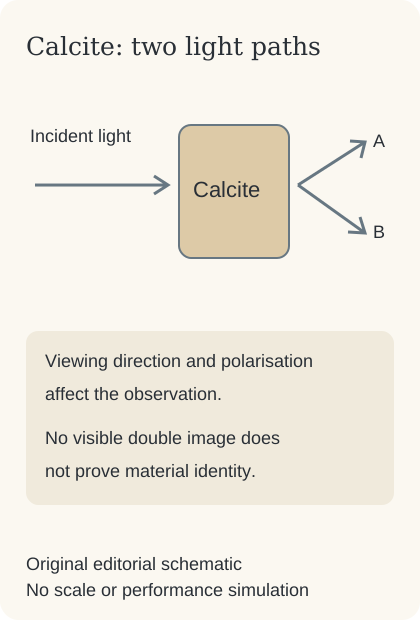
Calcite: two paths through light, many paths through history

Calcite connects visible double refraction with rocks, precision optics and traceable carved objects; its softness, cleavage and acid sensitivity shape how it should be handled.
72Gypsum

Gypsum: water in the crystal, patience in the story

Clear crystals, carved alabaster and giant Naica beams share hydrated calcium-sulfate chemistry; documented objects and growth measurements explain why texture, time and careful handling matter.
73Scapolite

Scapolite: a mineral series with several ways to change the light

Scapolite is a group and compositional series, not one fixed species recipe. Named specimens, temporary colour changes and inclusion-based iridescence show why its light effects need different explanations.
74Sodalite

Sodalite: blue material, changing colour and the limits of a label

Sodalite is a mineral species; blue appearance, lapis resemblance and hackmanite research each require their own scope.
75Serpentine

Serpentine: constituent minerals, tangiwai and the care of a recorded object

Serpentine is a group/material term; constituent mineral identity, cultural names and an object’s recorded history each need their own scope.
76Obsidian

Obsidian: volcanic glass, travelling objects and three different kinds of origin

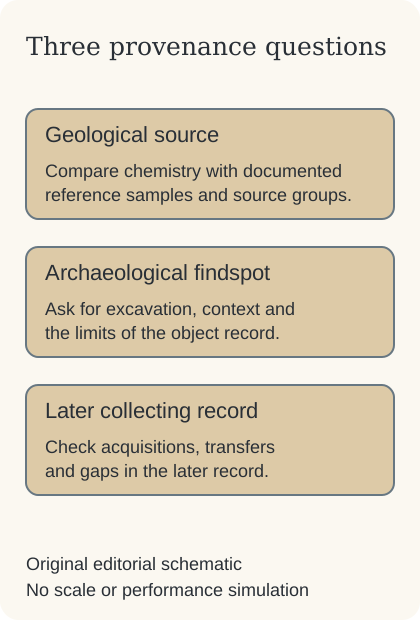
Obsidian is natural volcanic glass. Chemical sourcing, archaeological context and collecting history give different kinds of evidence about an object.
77Hematite

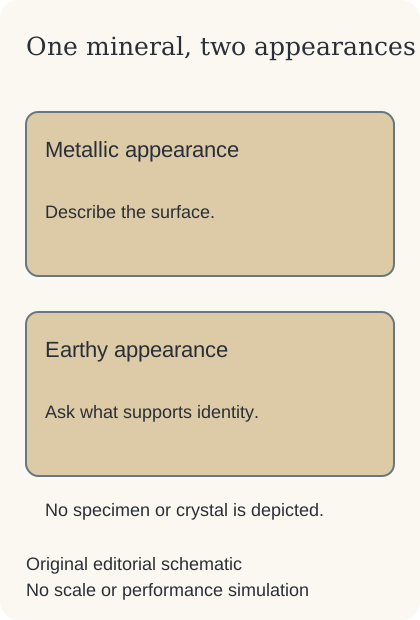
Hematite: metallic surfaces, red pigment and the evidence inside a name

Hematite connects contrasting mineral forms with carved seals, pigments and measured research; an object’s identity and history still need their own evidence.
78Pyrite

Pyrite: crystal geometry, a documented mirror and the limits of fool’s gold

Pyrite’s brassy appearance leads into distinct questions about crystal structure, documented objects, trace-gold research and humidity-sensitive conservation.
79Charoite

Charoite: purple ornamental rock and the structure within a mineral

Charoite is a mineral species within mixed ornamental rock; dated descriptions, structural studies and measured sample scopes keep the purple story precise.
80Materials library

Sugilite: a purple stone with more than one beginning

Sugilite is a mineral species; purple gem material can be a mixed aggregate. Its history becomes clearer when a name, a laboratory result and a carved object are given their own timelines.
81Materials library

Larimar: reading blue pectolite without inventing its past

Larimar is the trade name for blue pectolite from the Dominican Republic. A careful account follows the material, its commercial name and the limits of the colour research separately.
82Materials library

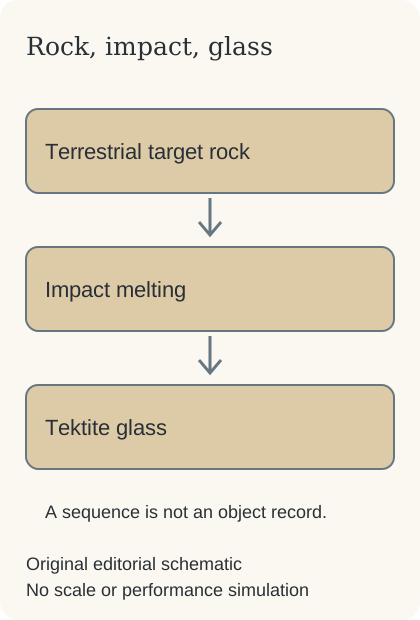
Tektites: impact glass, travelled objects and the moldavite question

Tektites are natural impact glasses made from terrestrial material; moldavite is a regional tektite topic within this profile. Formation, findspot and the later history of a collected object deserve separate records.
83Materials library

Labradorite: the flash has a direction

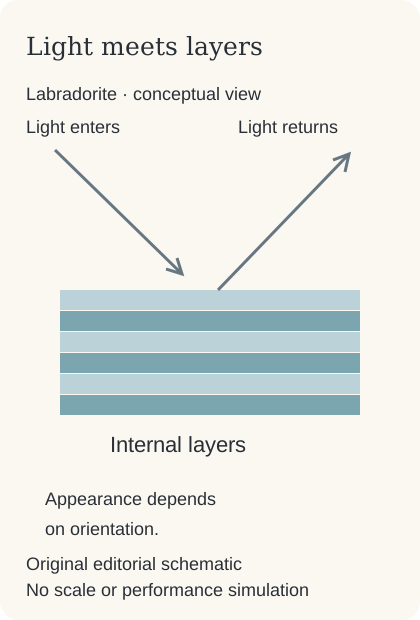
Labradorite is a compositional member of the plagioclase feldspar series. Its moving colour becomes clearer through layered optics, a documented cameo and careful distinctions between identity, appearance and treatment.
84Materials library

Amazonite: a colour, a crystal and two geological settings

Amazonite is blue-green microcline. Virginia pegmatite, Mongolian granite, colour experiments and a museum acquisition show how a variety name can connect several kinds of evidence without becoming a new mineral species.
85Materials library

Tiger’s-eye quartz: a moving band and a debated beginning

Tiger’s-eye is chatoyant quartz. Its moving band, a disputed formation interpretation and a carefully mounted museum slab show why optical appearance, geological history and object durability need different evidence.
86Materials library

Danburite: a golden cushion and a crystal under pressure

A named museum gem and a pressure experiment reveal different questions about danburite, from a documented acquisition to changing atomic arrangements.
87Materials library

Jet: black jewellery, reconstructed lives and unfinished geology

Jet connects unresolved formation questions with carefully documented jewellery: a Whitby chessboard, a reconstructed Scottish set and grave-position evidence.
88Materials library

Ammolite: a shell, a layered colour and a finished jewel

Ammolite can be read through its animal, preserved shell layer, optical research and jewellery construction, with each story kept at its proper scale.
89Materials library

Red beryl: a variety, a Utah setting and a separate growth question

Read the Utah geological account alongside laboratory comparisons, keeping growth origin and clarity treatment separate.
90Materials library

Grandidierite: direction, small gems and measured evidence

A blue-green mineral becomes clearer through directional colour, a measured Madagascar study and carefully attributed small-gem records.
91Materials library

Sphalerite: internal windmills and a cutter’s central circle

A zinc sulfide mineral links an internal three-arm observation, a carefully arranged colour pattern and a documented museum gem.
92Jewellery houses

Boodles: a family chronology and the rhythm of a jewel

A guide to separate business milestones, present stewardship, material provenance and compositional observation.
93Jewellery houses

Mellerio: heritage, the ovoid outline and a changing composition

Distinguishing a family narrative, a gemstone-cut specification, a recurring motif and a named collection.
94Jewellery houses

David Webb: an animal form and the several dates of an object

Reading design, manufacture, workshop practice and object identifiers without confusing them.
95Materials library

Coral: bounded material evidence

A biogenic skeletal material examined through Mediterranean red coral.
96Materials library

Brazilianite: bounded material evidence

A sodium aluminium phosphate with recorded crystals.
97Materials library

Diaspore: bounded material evidence

An aluminium oxyhydroxide with orthorhombic structure and brittle behavior.
98Jewellery houses

Garrard: royal objects, private rings and public trophies

Royal commissions, cluster settings and trophy making in a bounded house portrait.
99Jewellery houses

Azza Fahmy: Cairo handwork, lettering and named objects

A founder’s path, workshop techniques and lettering in selected jewellery designs.
100Jewellery houses

Hemmerle: Munich origins and unexpected material combinations

Workshop practice, archived patterns and named projects in a bounded house portrait.

Follow the connected History journey · Sources & credits · Back to the library

Follow an idea through the houses

These reading paths connect material, mechanism and institutional questions. They are editorial comparisons, rather than rankings or claims that one maker invented every part of an idea.

Cultivation, then composition

Start with pearl identity, distinguish Mikimoto’s cultivation history from TASAKI’s later straight-line design, and ask which claims belong to biology and which to selection and setting.

Pearl · Mikimoto · TASAKI · Ask what happened after growth

A large stone becomes a jewel

Follow a diamond from a material question to the documented cutting accounts of Chopard and Graff, then compare how Harry Winston asks a setting to let a stone lead.

Diamond · Chopard · Graff · Harry Winston

The maker and the material

Compare Georg Jensen’s named designers and metal care with Damiani’s Valenza workshop and Gabriella Damiani’s Shark bracelet. Buccellati offers another way to read a crafted surface.

Georg Jensen · Damiani · Buccellati · Three questions before daily wear

Read materials and mechanisms in context

These reading paths connect material, mechanism and institutional questions. They are editorial comparisons, rather than rankings or claims that one maker invented every part of an idea.

Read the material behind the name

Compare calcite and gypsum before accepting the ornamental name alabaster. Serpentine and the jade guide then show why a useful carving stone still needs a precise material description.

Calcite · Gypsum · Serpentine · Jade · A name is not always a species

Light changes the question

Calcite, scapolite and sodalite offer different questions about a visible effect. Read the named material, viewing conditions and documented treatment separately before turning an appearance into a diagnosis.

Calcite · Scapolite · Sodalite · Ask what happened after growth

A source is one part of a journey

Follow obsidian from geological formation to source comparison and an individual object. The map and discovery guides keep locality, findspot, naming history and later collecting records distinct.

Obsidian · Serpentine · A source map is a guide, not a passport · Who discovered a gemstone?

Read identities and displays in context

These paths connect the new profiles with existing studies of identity, mechanisms, ownership and evidence. Each comparison keeps the scope of its sources visible.

Read the material behind the colour

Compare hematite, pyrite, charoite and sugilite. The species-and-varieties guide helps keep appearance, mineral identity and the composition of a decorative material in separate questions.

Hematite · Pyrite · Charoite · Sugilite · A name is not always a species

Read tektites beside obsidian

Read tektites beside obsidian, then return to the rock and map guides. A material category, a proposed formation process and the provenance of an individual object require their own evidence.

Tektites · Obsidian · Beyond single crystals · A source map is a guide, not a passport

A locality and a name need context

Follow charoite, sugilite and larimar through their documented histories. The discovery and treatment guides help distinguish naming, reported discovery, locality and later changes to an offered material.

Charoite · Sugilite · Larimar · Who discovered a gemstone? · Ask what happened after growth

Read structure and ownership in context

Follow the new studies into existing guides through these connected reading paths. Each article keeps its factual sources and limits beside the narrative.

Colour, structure and the kind of name

Read labradorite and amazonite beside the feldspar studies and species guide. Compare a composition range, a named variety and the way light meets a structure.

Labradorite · Amazonite · Moonstone · Sunstone · A name is not always a species

A moving sheen and a research question

Compare tiger’s-eye quartz with cat’s-eye chrysoberyl, then follow danburite into documented objects and structural research. Different materials can invite different explanations for a striking appearance.

Tiger’s-eye quartz · Cat’s-Eye Chrysoberyl · Danburite · Who discovered a gemstone?

Organic material and the finished object

Read jet beside amber, and ammolite beside pearl and the assembly guide. A biological beginning, a later geological history and a finished gem construction need separate descriptions.

Jet · Amber · Ammolite · Pearl · Beyond single crystals · Ask what happened after growth

Read identities, objects and mechanisms in context

Follow the new studies into existing guides through these connected reading paths. Each article keeps its factual sources and limits beside the narrative.

A name and the evidence behind it

Compare the three material profiles. Use the taxonomy guide to separate a material name from a specimen identification.

Red beryl · Emerald · Grandidierite · Sphalerite · A name is not always a species

Appearance and the object in use

Read colour and optical observations beside hardness, toughness and stability. A laboratory observation and a jewellery decision answer different questions.

Grandidierite · Sphalerite · Three questions before daily wear

A workshop, a design and a dated company

Follow Boodles, Mellerio and David Webb through objects, attributed workshop accounts and current ownership statements. Keep an object date, a design date and a business date distinct.

Boodles · Mellerio · David Webb · Families, glossary & next chapters

Read identities, objects and mechanisms in context

Follow the new studies into existing guides through these connected reading paths. Each article keeps its factual sources and limits beside the narrative.

Structures behind a material name

Compare the additional material studies with the identity guide. Record what a passage establishes about a name, an observation and an unexamined object.

Coral · Pearl · Brazilianite · Diaspore · A name is not always a species

Appearance, alteration and use

Follow each study into the guide to hardness, toughness and stability. Keep the question, source, recorded observation and remaining uncertainty together.

Coral · Brazilianite · Diaspore · Three questions before daily wear

The workshop and the documented object

Follow the jewellery-house studies through their source pointers and linked reading. Record which question each passage answers and what remains unresolved.

Garrard · Azza Fahmy · Hemmerle · Georg Jensen · Families, glossary & next chapters

Editorial method, responsibility and corrections

The family connection

Begin with a detail.

Keep the references that catch your eye, prepare a short brief and continue with the adult-managed team at Nautilus Dubai. No orders are taken here.

Prepare an enquiry

The reading room

Find your next detail.

Search runs on this website only. It does not search live stock.