
Stones & Gems / The visual gallery
Look a little
closer.
Begin with twelve source-linked reference images across six gems. Read each object’s context, then continue into a profile or the gem explorer. The earlier study archive is retained separately below.
A collection you can trace
Twelve images.
Twelve source records.
Photographs and one flatbed scan provide material and historical context. They are different objects, shown at different scales and under different lighting. They do not establish treatment, quality or the origin of another gem.
Compare material, care and stories ↗Diamond
Read the diamond profile ↗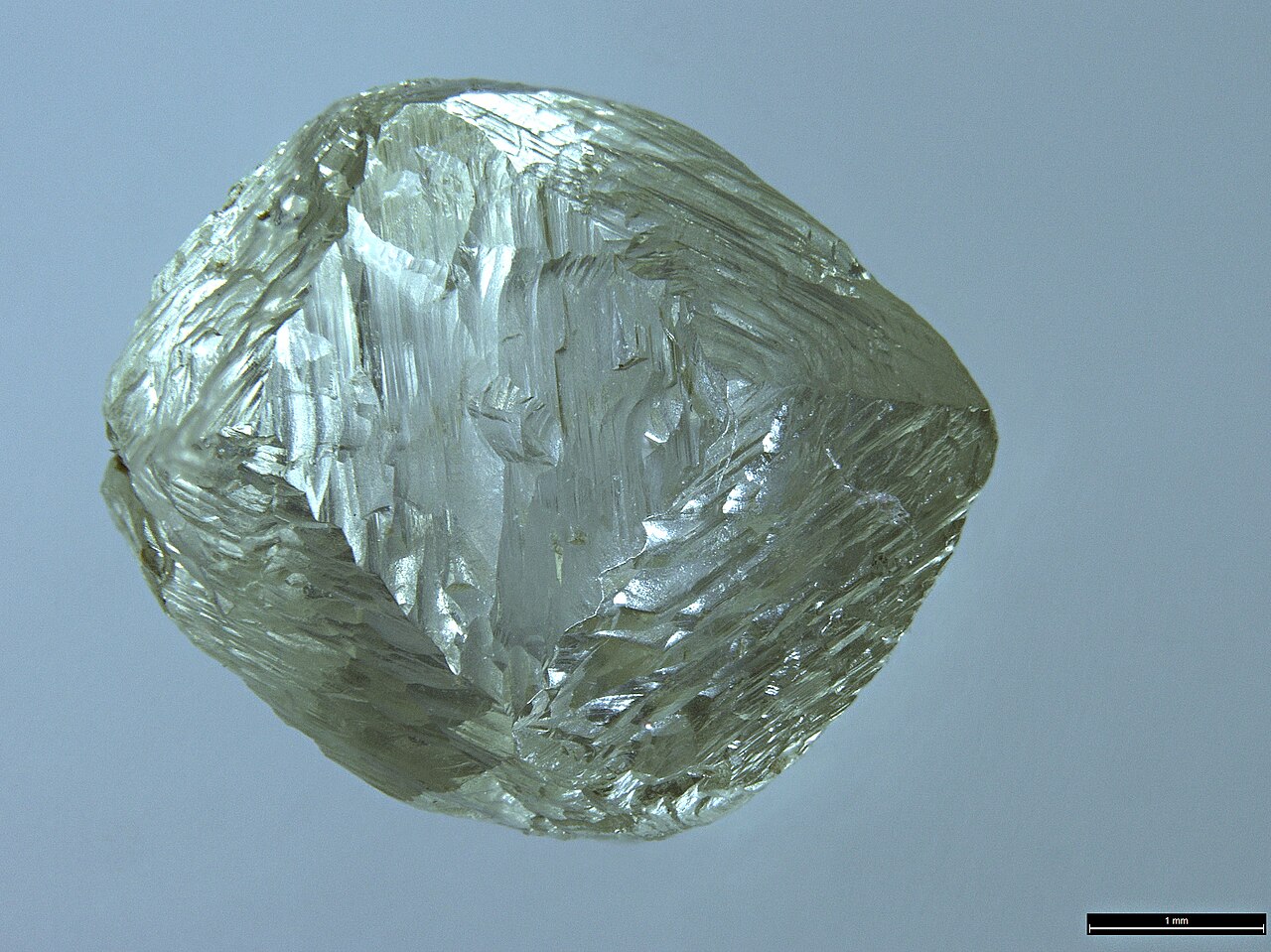
Uncut diamond crystal, identified by its photographer as 0.7 ct. Image by Tõnu Pani.
Tõnu Pani, “Diamond crystal, 0,7 ct.jpg”, Wikimedia Commons, CC BY 4.0.
Context and image limits
A natural rough crystal, not a faceted diamond. Carat weight is the uploader’s identification; no origin or grading report is supplied.
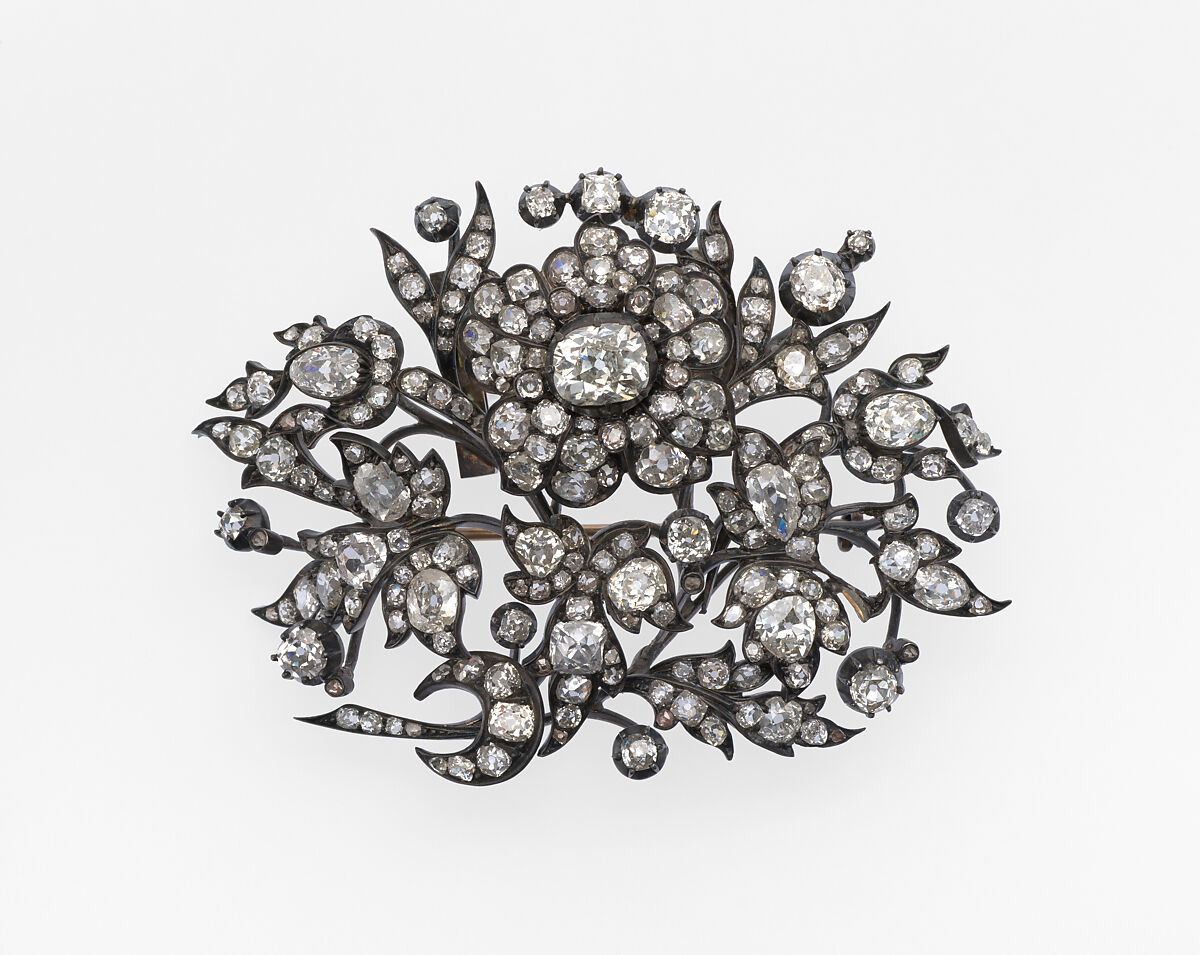
Diamond-set brooch, part of a hair ornament, probably French, mid-19th century. Diamonds, gold, and silver; The Met, 45.30.1.
The Metropolitan Museum of Art, Gift of Ellen Goin Rionda, 1945; 45.30.1. Public domain / CC0.
Context and image limits
Historical jewellery context; this photograph does not establish a loose-stone identification or a modern cut grade.
Ruby
Read the ruby profile ↗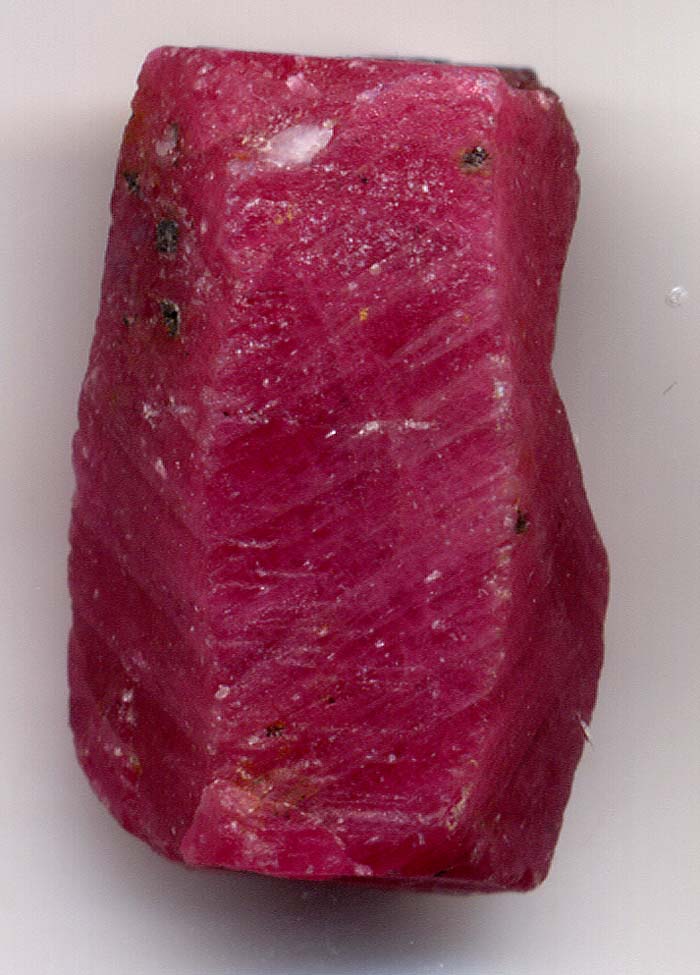
Flatbed scan of a crystal identified by the source as ruby, about 2 cm long. Adrian Pingstone, 2003. Natural-versus-synthetic origin is not established.
Adrian Pingstone (Arpingstone), “Ruby cristal.jpg”, via Wikimedia Commons. Public domain.
Context and image limits
This is a flatbed scan, not a camera photograph. Locality, treatment status, and natural-versus-synthetic origin are not established by this page.
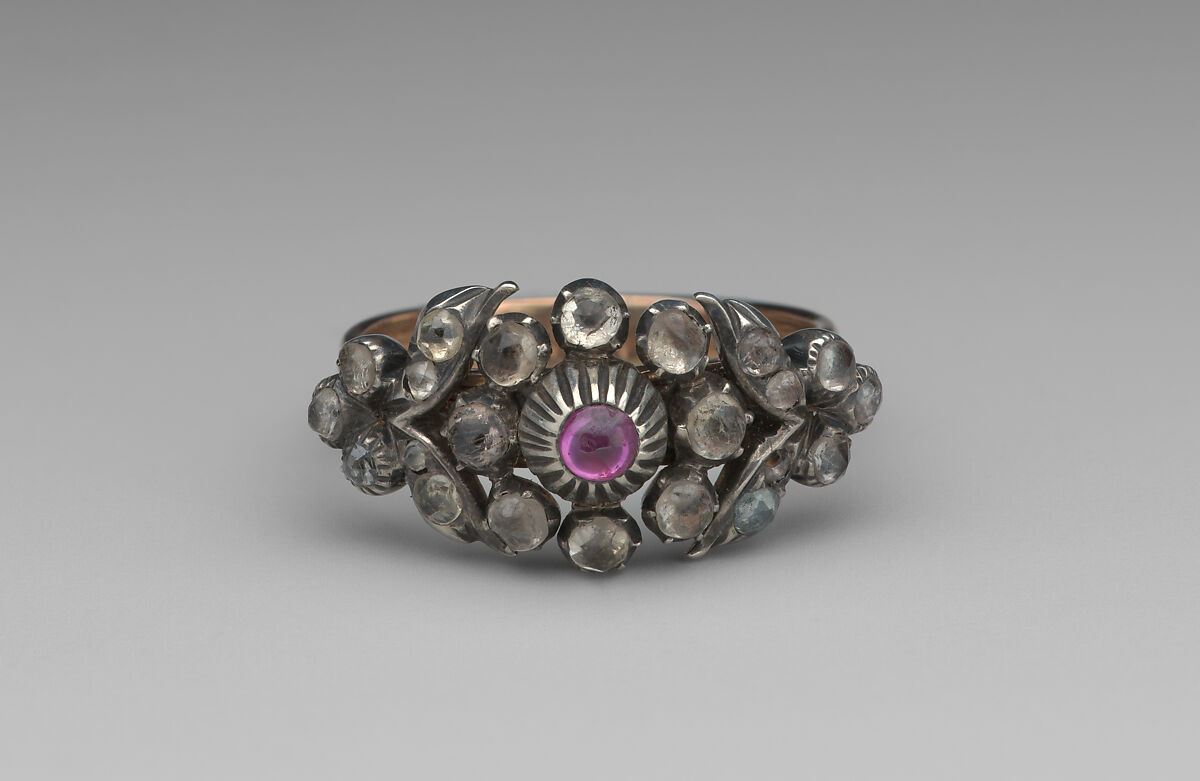
French ring, 19th century, in gold and silver with ruby and diamonds. The Met, 41.84.8.
The Metropolitan Museum of Art, Gift of Susan Dwight Bliss, 1941; 41.84.8. Public domain / CC0.
Context and image limits
Ruby identification follows the museum record. Locality, treatment and quality cannot be established from this photograph.
Sapphire
Read the sapphire profile ↗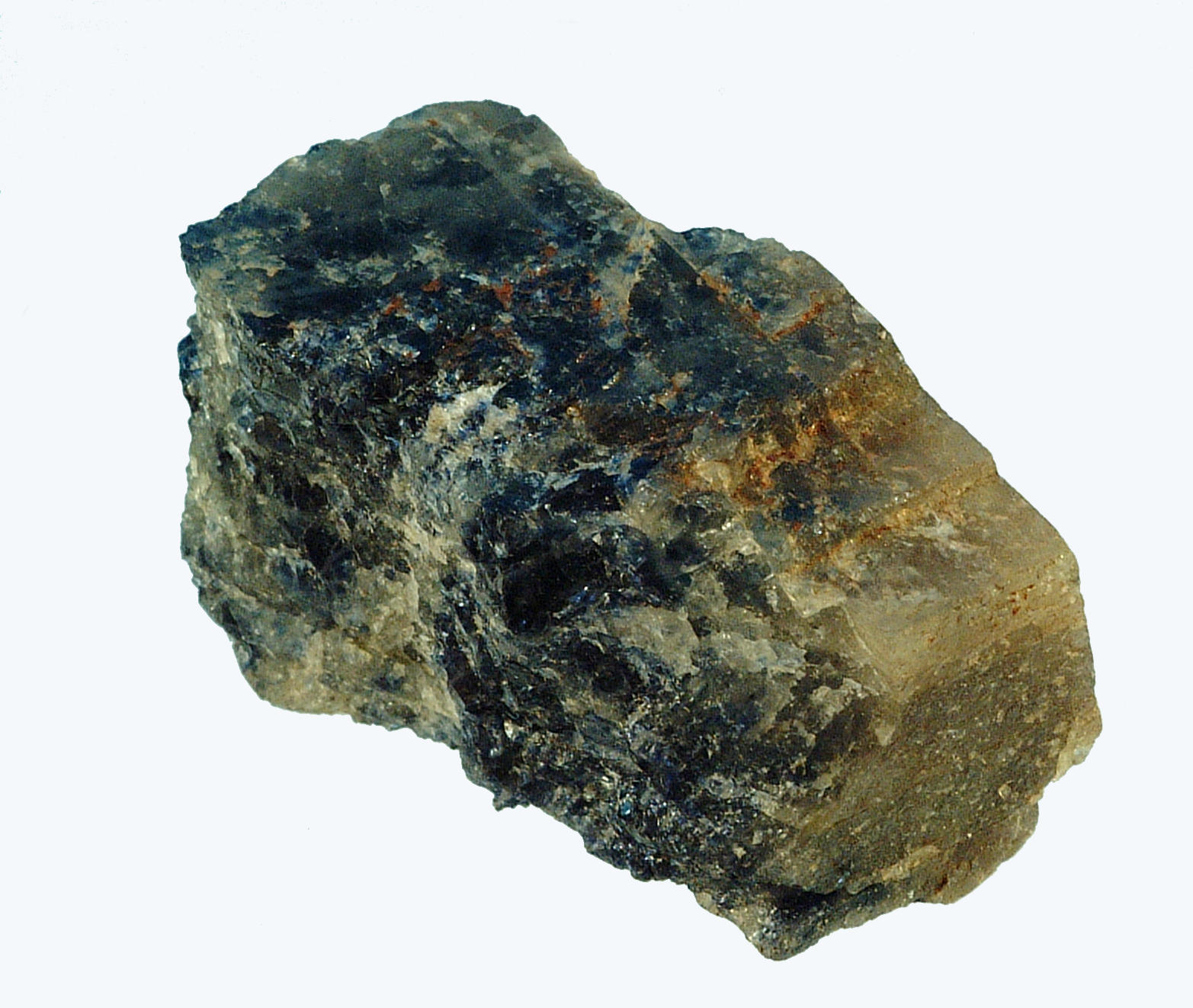
Sapphire hand specimen from near Kashmir, India, according to GeoDIL; University of North Dakota Mineralogy Collection 451. Photo by Nessa Eull, 2001.
Nessa Eull / Geoscience Digital Image Library, GeoDIL 1429; University of North Dakota Mineralogy Collection 451. CC0 1.0.
Context and image limits
The primary record confirms collection, photographer, and locality: https://geodil.dperkins.org/h/1429.html . “Near Kashmir” is the source wording, not an independent origin certification.
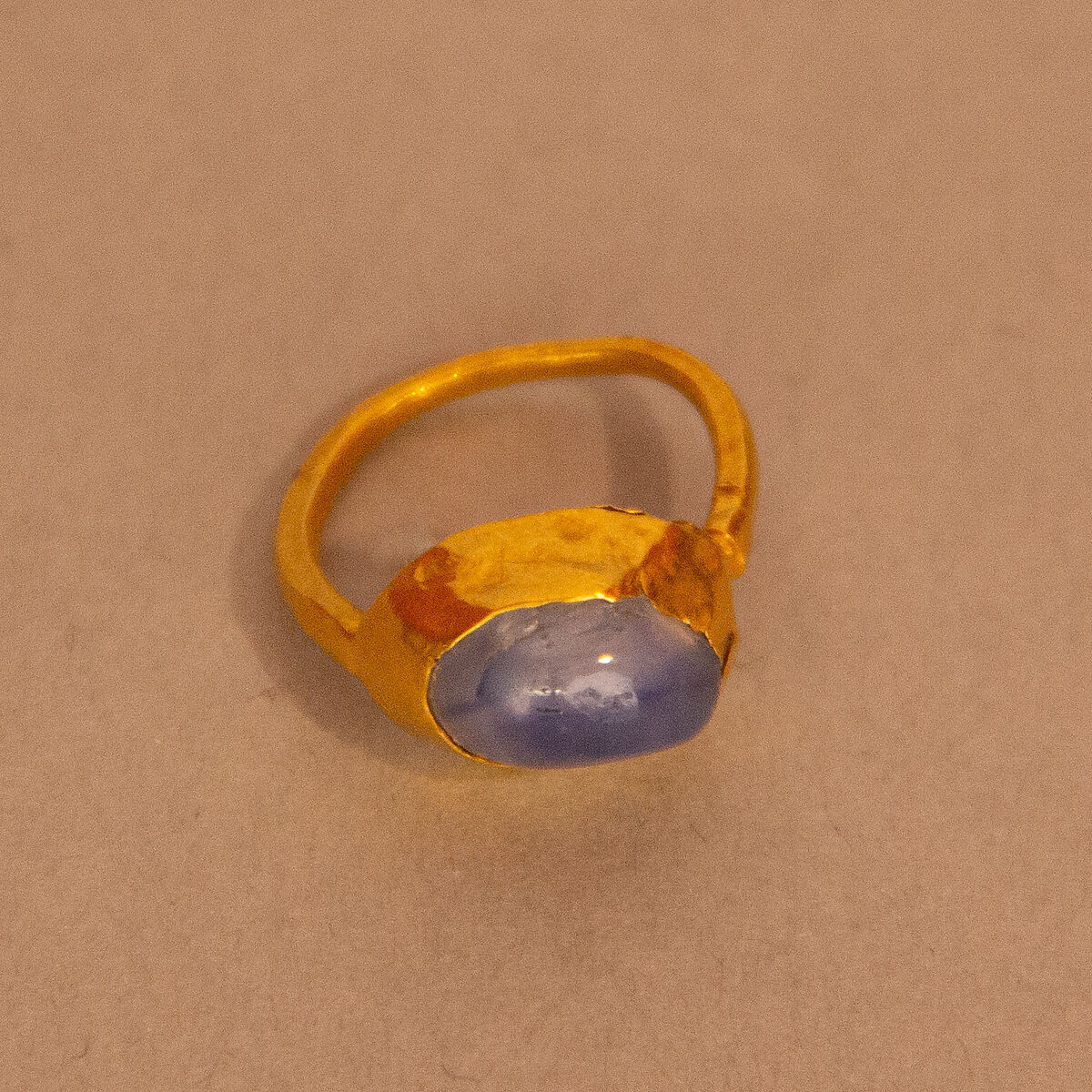
Gold-sheet and sapphire ring, 11th–13th century, found in Iran, probably Gurgan. The Met, 52.32.4.
The Metropolitan Museum of Art, Rogers Fund, 1952; 52.32.4. Public domain / CC0.
Context and image limits
The findspot is not the sapphire’s geological origin. “Probably Gurgan” remains an uncertain attribution.
Emerald
Read the emerald profile ↗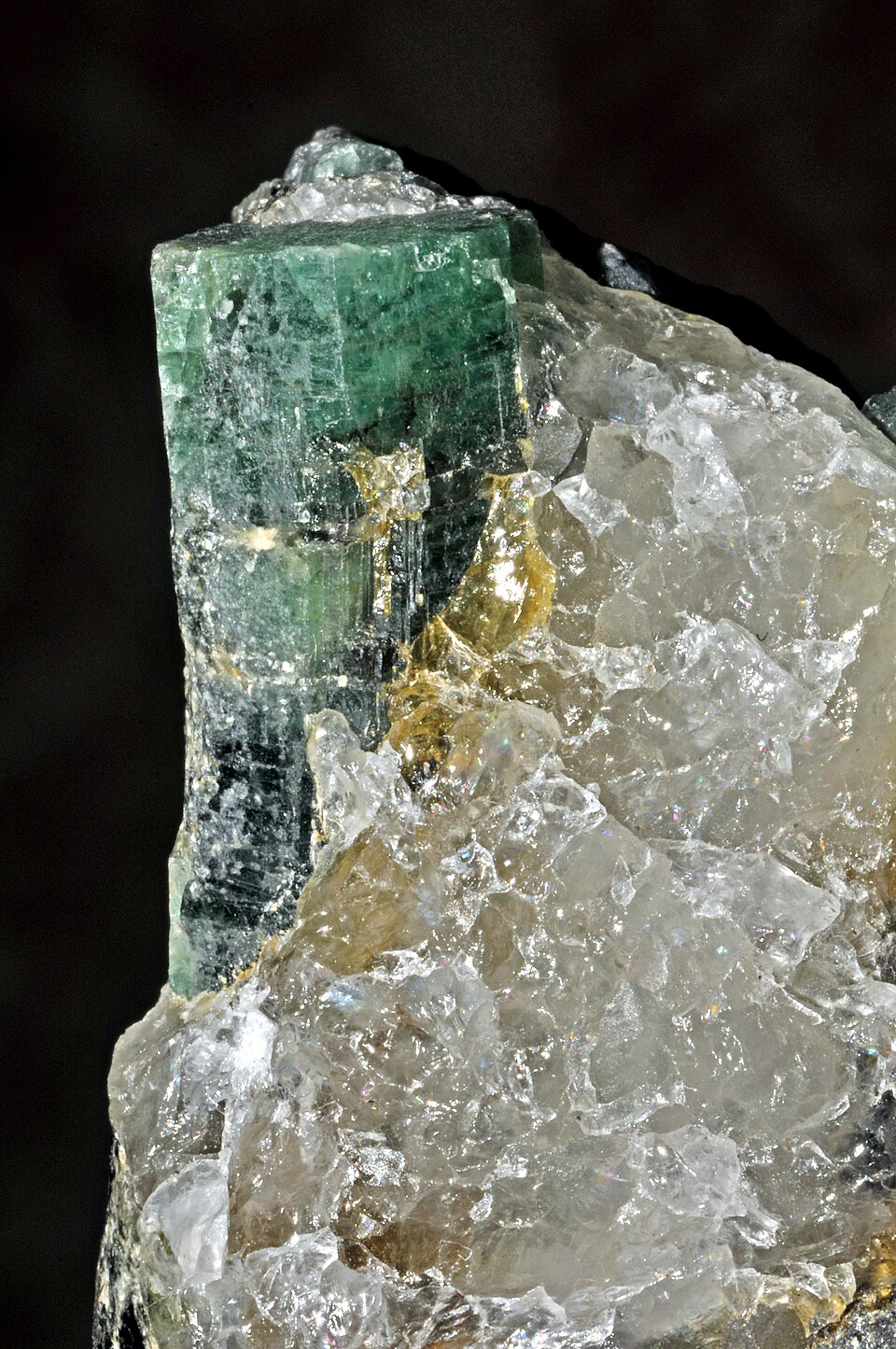
Emerald in quartz; the photographer gives the locality as Carnaíba district, Bahia, Brazil. Photo by Géry PARENT.
Géry PARENT, “Beryl, quartz 02.jpg”, via Wikimedia Commons. Public domain.
Context and image limits
The locality is supplied by the photographer, not independently certified. The stone is in matrix, not a polished emerald.
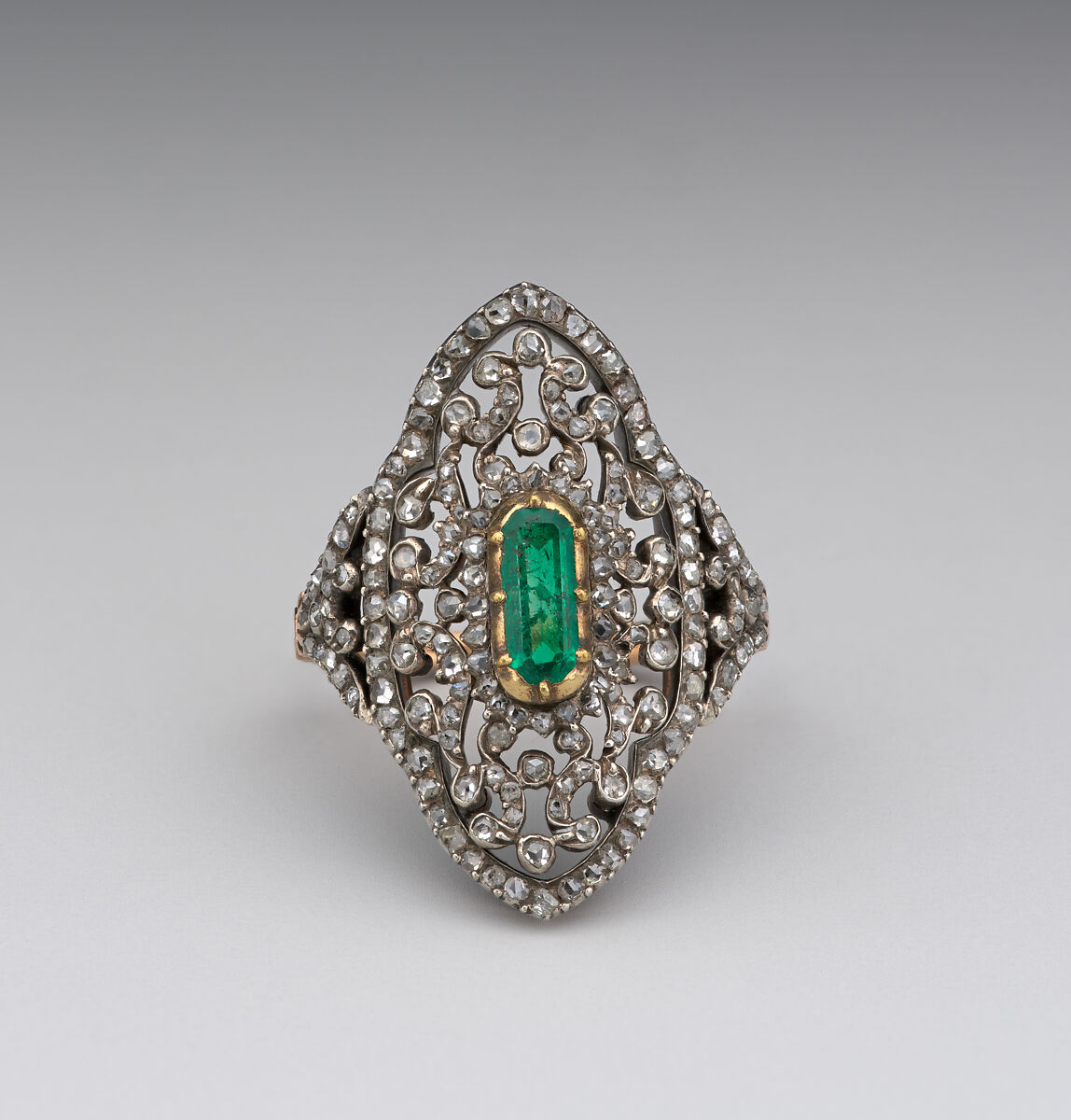
Ring made in Paris, 1838–47, with emerald and diamonds in gold and silver. The Met, 41.84.2.
The Metropolitan Museum of Art, Gift of Susan Dwight Bliss, 1941; 41.84.2. Public domain / CC0.
Context and image limits
Paris is the jewel’s cultural/manufacturing attribution, not the emerald’s mine origin.
Opal
Read the opal profile ↗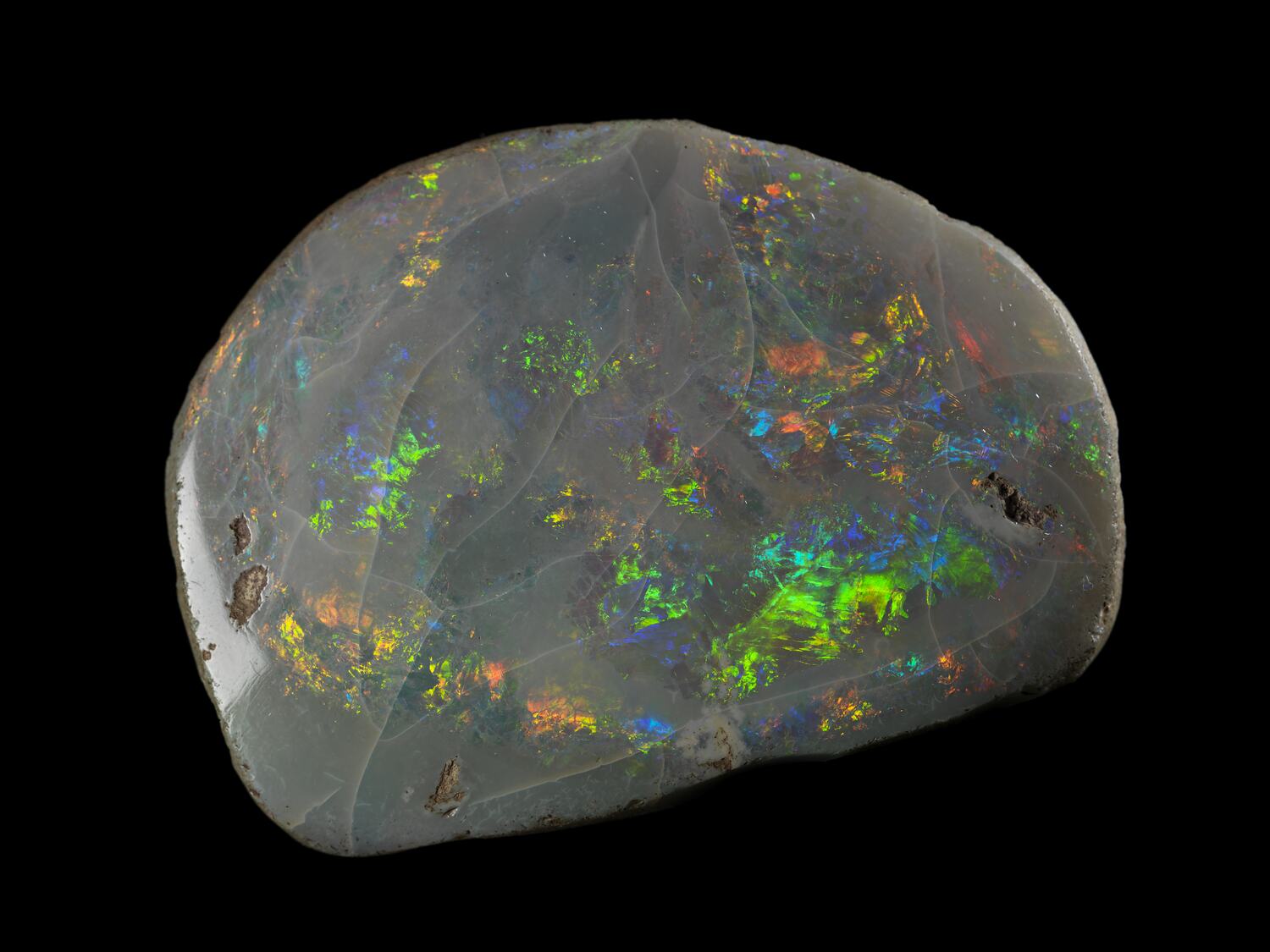
Precious opal cabochon, Museums Victoria specimen M 8723. Photo by Rodney Start.
Photographer: Rodney Start. Museums Victoria, M 8723. CC BY 4.0.
Context and image limits
Downloaded medium rendition (1500 × 1125) visually inspected. Visible surface lines and pits are not a condition report or a gem-quality grade.
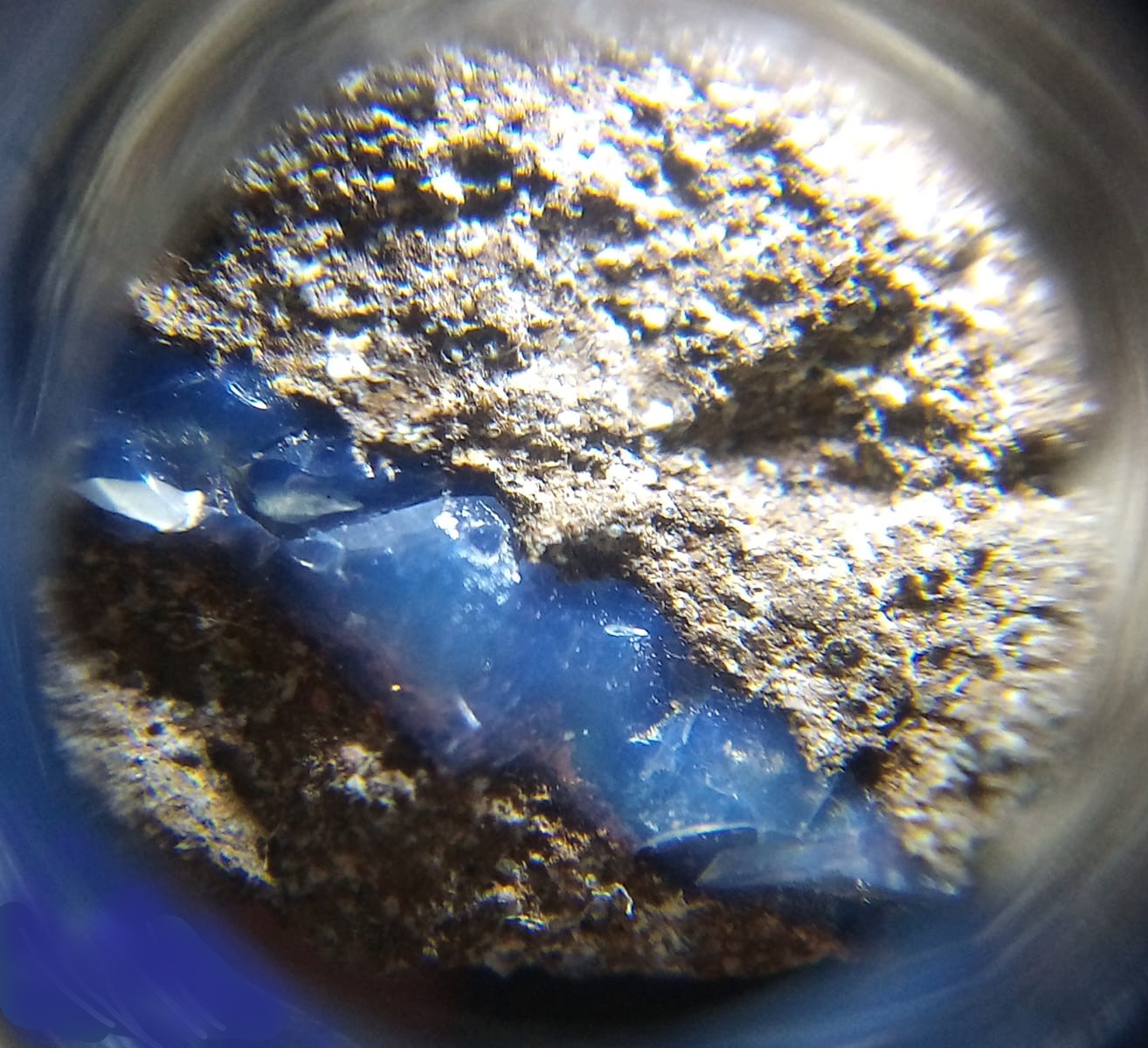
Australian opal viewed through a jewelry microscope. Photo by Max.uses.computers, 2023.
Max.uses.computers, “A close up photography of an Australian Opal.jpg”, Wikimedia Commons. CC0 1.0.
Context and image limits
A microscopy detail described by the source as highly saturated. It does not establish a gem colour grade, treatment, mine or scale.
Pearl
Read the pearl profile ↗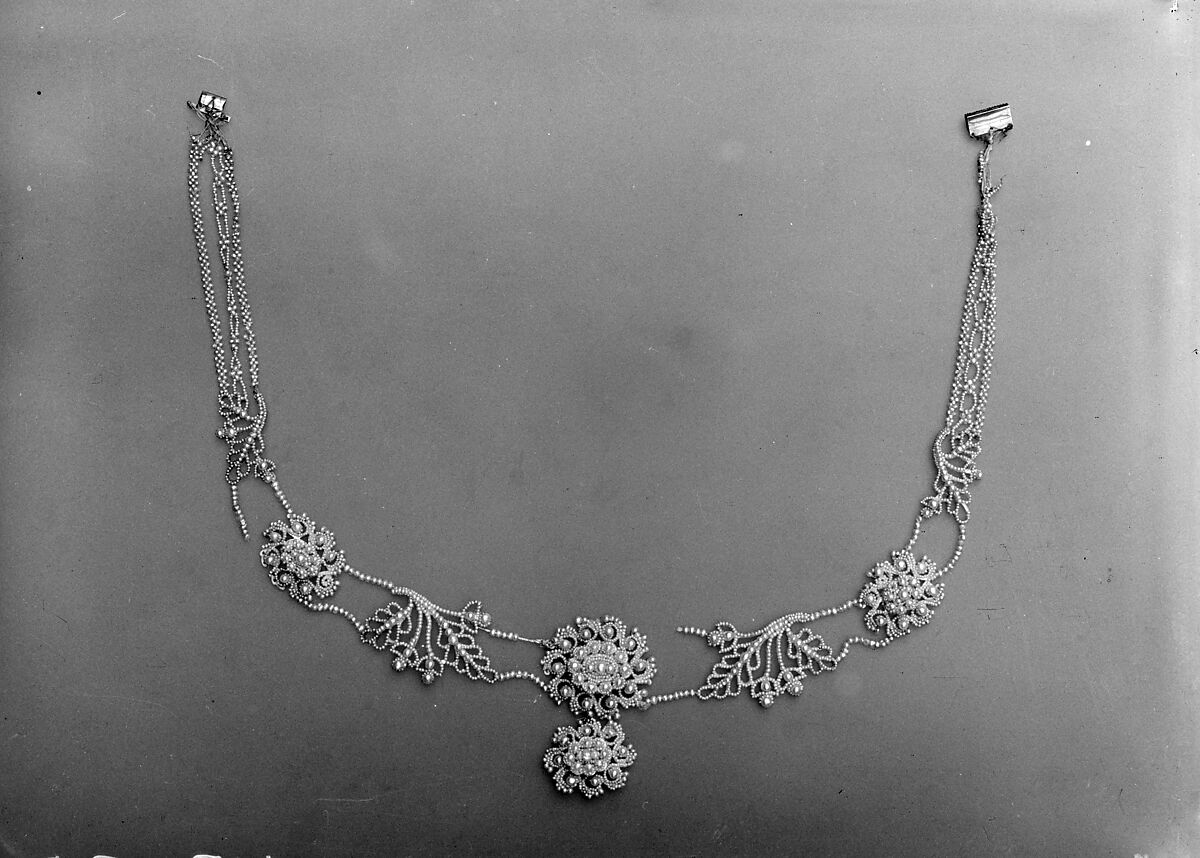
Pearl necklace, 1800–1900. The Met, 39.43a. Shown in a black-and-white collection photograph.
The Metropolitan Museum of Art, Rogers Fund, 1939; 39.43a. Public domain / CC0.
Context and image limits
Best for historical context. It is a black-and-white archival image, so it cannot demonstrate pearl bodycolor or orient. The object record does not establish cultured-versus-natural origin.
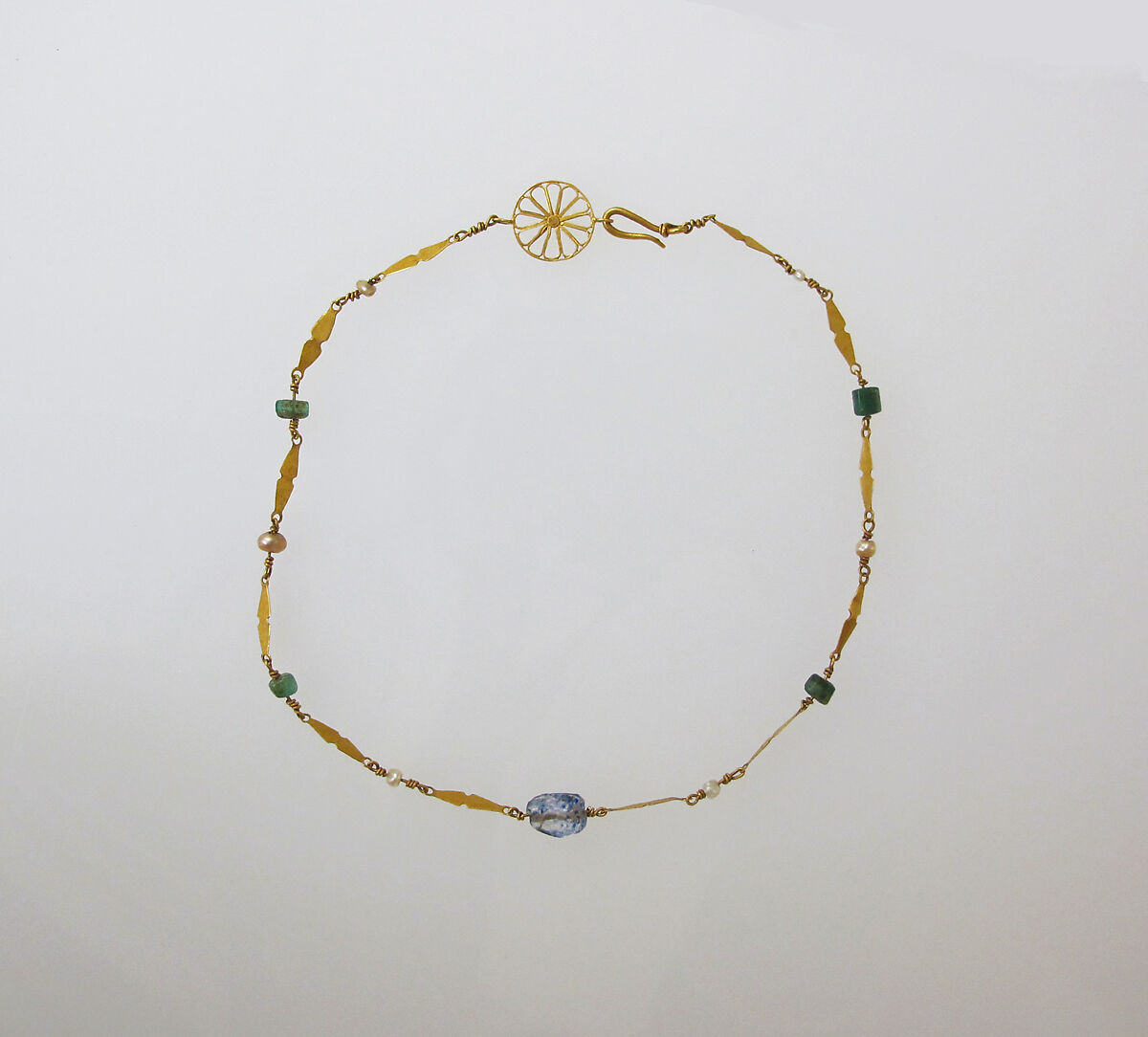
Roman necklace with pearls and beryl beads, 1st–2nd century CE, in gold, pearl, and beryl. The Met, 25.192.1.
The Metropolitan Museum of Art, Gift of George D. Pratt, 1925; 25.192.1. Public domain / CC0.
Context and image limits
This is a mixed-material jewel. The museum identifies the green/blue beads as beryl, without establishing a more specific variety.
Earlier study archive
The references already in your collection.
These earlier studies keep their original saved-reference IDs and reading links. Their images remain withheld pending separate rights review. The filters and viewing-room links below apply to this earlier archive.
The viewing room
Two details. A different perspective.
Bring two visual studies together. Look closer, record what interests you and take a considered reference into your next conversation.
This saved reference keeps its original identity. Its image is withheld pending rights review; no different object has been substituted.
01 / Archive photograph
The oval study.
A faceted oval diamond.
This saved reference keeps its original identity. Its image is withheld pending rights review; no different object has been substituted.
02 / Archive photograph
A stepped geometry.
An emerald-cut diamond, not an emerald.
This saved reference keeps its original identity. Its image is withheld pending rights review; no different object has been substituted.
03 / Archive photograph
A family of outlines.
A row of polished diamonds in different shapes.
This saved reference keeps its original identity. Its image is withheld pending rights review; no different object has been substituted.
04 / Archive photograph
Light across facets.
A group of polished diamonds.
This saved reference keeps its original identity. Its image is withheld pending rights review; no different object has been substituted.
05 / Archive photograph
Before the polish.
A rough diamond crystal with its natural form.
This saved reference keeps its original identity. Its image is withheld pending rights review; no different object has been substituted.
06 / Archive photograph
A colour comparison.
Three diamonds graded E, K and Z in the supplied comparison.
This saved reference keeps its original identity. Its image is withheld pending rights review; no different object has been substituted.
07 / Archive photograph
A jewel in context.
A brilliant diamond shown in a jewellery setting.
This saved reference keeps its original identity. Its image is withheld pending rights review; no different object has been substituted.
08 / Archive photograph
The shape study.
Diamonds with square, round, pear and marquise outlines.
This saved reference keeps its original identity. Its image is withheld pending rights review; no different object has been substituted.
09 / Illustration
The green study.
An existing faceted green colour-study illustration.
This saved reference keeps its original identity. Its image is withheld pending rights review; no different object has been substituted.
10 / Illustration
The blue study.
An existing faceted blue colour-study illustration.
This saved reference keeps its original identity. Its image is withheld pending rights review; no different object has been substituted.
11 / Illustration
The violet study.
An existing faceted violet colour-study illustration.
No studies match that search.
All photographs are carried forward from the supplied website and remain subject to their owners’ rights. Colour studies are explicitly labelled illustrations. Display magnification is not identification, certification or valuation. Image credits ↗