A considered reference · 36 subjects

The Gem Collection

Follow a material from its mineral family to its colours, formation, places and care.

Independent educational writing, with sources attached to each subject. This edition is a defined selection; the library continues to grow.

Read the eight extended atlas studies

01Diamond

Diamond

Diamond is crystalline carbon.

Continue to the extended diamond atlas study

Compare Diamond with another gem ↗

Selected documented sources, including historic localities; not a complete deposit inventory or a claim about current mine operation. Mohs is a relative scratch-resistance ranking, not a linear scale or a toughness score.

Material
mineral species
Composition
C
Mohs hardness
10
Colours
colourless, yellow, brown, blue, pink

Two images, two contexts

Source-identified references, not matching specimens or photographs of the museum objects discussed later in this profile. Images are not to a common scale and cannot establish treatment or provenance.
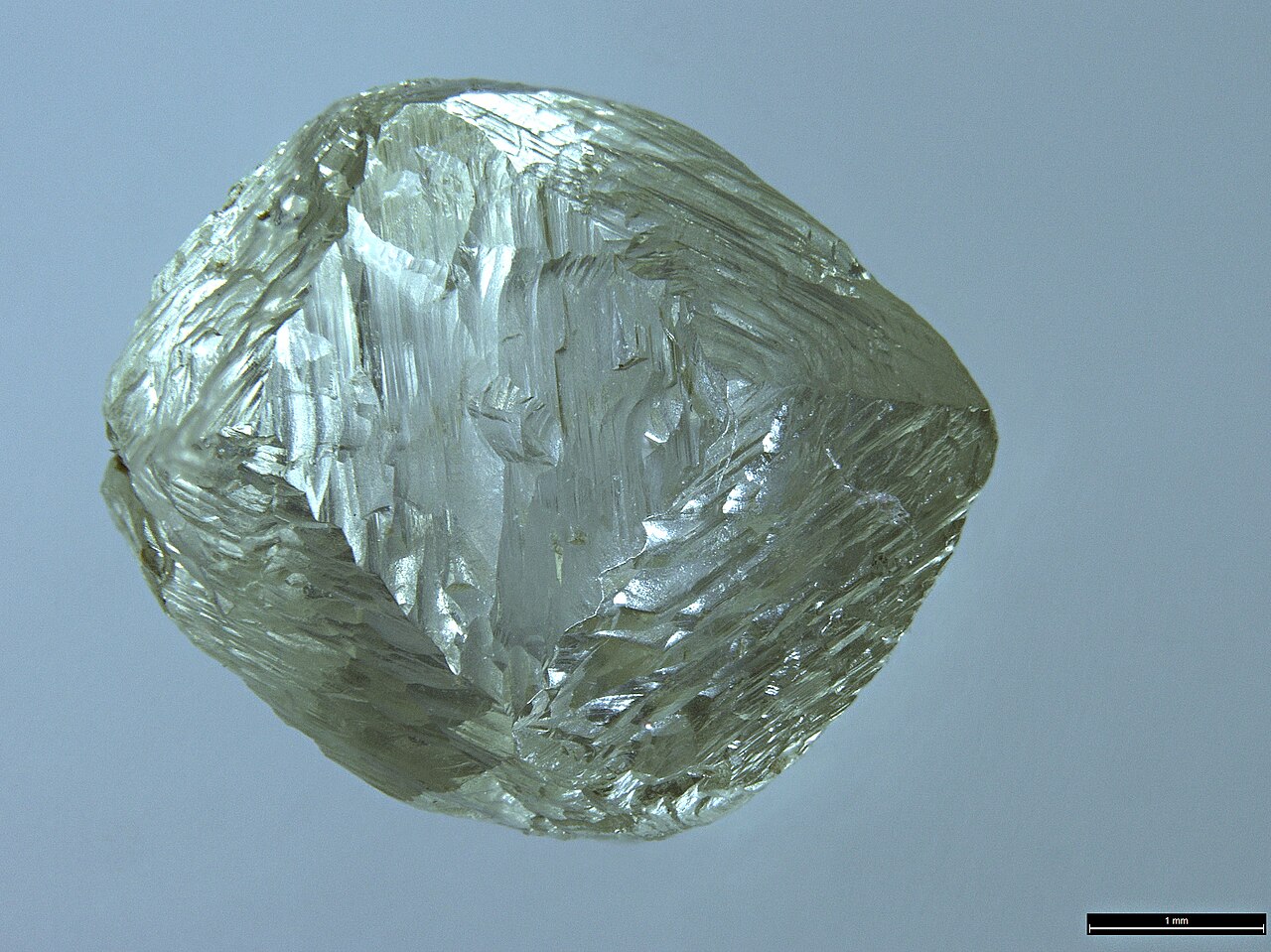
Pale translucent rough diamond with etched triangular faces; a 1 mm scale bar is at the lower right.

Uncut diamond crystal, identified by its photographer as 0.7 ct. Image by Tõnu Pani.

Tõnu Pani, “Diamond crystal, 0,7 ct.jpg”, Wikimedia Commons, CC BY 4.0.

Context and image limits

A natural rough crystal, not a faceted diamond. Carat weight is the uploader’s identification; no origin or grading report is supplied.
Resized display copy; full photograph retained.
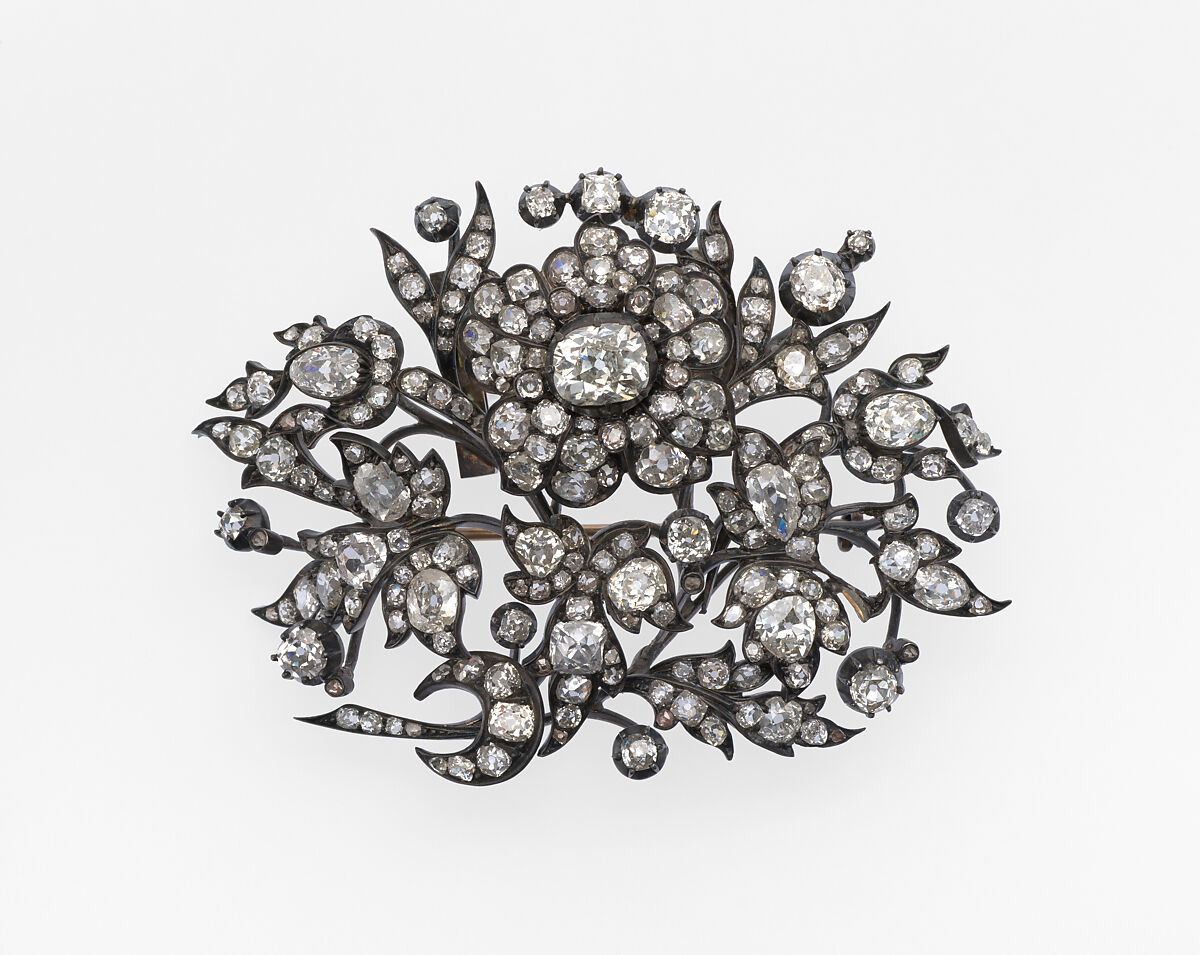
A branching floral brooch covered with clear diamonds, with a large central flower and smaller diamond buds.

Diamond-set brooch, part of a hair ornament, probably French, mid-19th century. Diamonds, gold, and silver; The Met, 45.30.1.

The Metropolitan Museum of Art, Gift of Ellen Goin Rionda, 1945; 45.30.1. Public domain / CC0.

Context and image limits

Historical jewellery context; this photograph does not establish a loose-stone identification or a modern cut grade.

Resized display copy; full photograph retained.

Carbon, arranged for light

Diamond is carbon organized in a three-dimensional cubic crystal structure. Graphite is also carbon, yet its different atomic arrangement makes it soft enough to leave a pencil mark. Diamond's identity therefore rests on structure as well as chemistry. Trace constituents and imperfections can affect its appearance without changing the mineral species.

A rough diamond may have an octahedral shape, like two pyramids meeting at their bases. The polished jewel is a second kind of object: a cutter's arrangement of facets, proportions and surfaces. Its geological identity and the quality of that optical design are separate questions. An impressive sparkle alone does not establish natural origin.

Evidence: GIA: Diamond description

A deep origin and a separate journey

Many natural diamonds form roughly 150–200 kilometres beneath Earth's surface, under the high pressures and temperatures of the mantle. Their arrival near the surface is another event. Magma can pick up pre-existing diamonds and carry them upward through rocks that become the pipes associated with some deposits. A volcanic host is therefore a means of transport, not a claim that the diamond crystallized at the surface.

Erosion can free diamonds from those host rocks. Rivers then redistribute durable crystals into alluvial deposits, sometimes far from their initial source. A river find and a pipe-mined stone can consequently represent different journeys for the same mineral.

Evidence: Geoscience Australia: Diamond

Body color is different from fire

Colorless diamonds are familiar, but diamond also occurs in yellow, brown, blue, pink and other hues. Trace nitrogen can contribute yellow; boron can produce blue. Many natural pink diamonds owe their color to deformation-related changes in the lattice rather than a pink pigment. These explanations concern body color, not the rainbow flashes generated as a cut stone disperses light.

Cut also governs brightness and the pattern of light and dark areas seen as the gem moves. A shape name, such as oval or emerald cut, does not by itself describe cutting quality. Compare a stone in more than one lighting environment rather than treating a dramatic photograph as its permanent appearance.

Evidence: GIA: Why are Pink Diamonds Pink?, GIA: Diamond Quality Factors

From river gravels to a global trade

Diamond entered human history through alluvial sources in India, long before modern geological science. Historical evidence supports an ancient trade, but not a single named discoverer of the material. By the fifteenth century, diamonds had become fashionable among European elites. Brazilian deposits enlarged supply in the eighteenth century; major southern African discoveries transformed mining and the industry during the nineteenth.

Later development in countries including Botswana and Canada widened the source map again. This sequence describes shifts in documented supply, not a progress story in which every consequence was beneficial. A gem's journey through miners, traders and cutters remains distinct from its geological formation and from the later history of its setting.

Evidence: GIA: Diamond history and lore

The Hope Diamond and an ordinary-looking parcel

One unusually tangible diamond story survives in the Smithsonian's collections. Harry Winston donated the Hope Diamond in 1958, and it reached the museum by registered mail in a brown-paper package. The National Postal Museum preserves the packaging story alongside the famous jewel's much grander associations with royal collections and later owners.

The National Museum of Natural History records the stone as 45.52 carats and its locality as India. Those catalog facts are stronger evidence than a tale attached to a famous name. The parcel also changes the scale of the story: a legendary object was moved through a carefully documented, everyday postal system.

Evidence: Smithsonian: Hope Diamond catalog record, National Postal Museum: Hope Diamond Packaging

How to read the diamond map

Nada's selected source map retains India and Brazil for historical context, South Africa for its major mining history, Botswana's Jwaneng region, and Canada. It is deliberately a map of documented places associated with diamond. A marker should not be read as a promise that a named mine is operating, that visitors can enter it, or that a particular jewel came from there.

Cutting and trading locations are different from mining localities. Nor does a country name independently establish labour conditions, environmental performance or a complete chain of custody. Those questions need documentation for the actual stone and supply chain, beyond a general reference map.

Evidence: GIA: Diamond history and lore, Geoscience Australia: Diamond

Natural, laboratory-grown and changed after growth

Laboratory-grown diamond is diamond made by people. High-pressure, high-temperature growth and chemical vapor deposition are two major production routes. A diamond simulant, such as cubic zirconia, is a different material that resembles diamond. Professional testing can distinguish these categories; an attractive appearance or a basic diamond tester is not sufficient evidence of geological origin.

Natural and laboratory-grown diamonds may also undergo post-growth treatment. HPHT processing or irradiation can change color, while filling can reduce the visibility of fractures. HPHT can name either a growth method or a treatment, so the context matters. Thus natural does not mean untreated, and laboratory-grown does not automatically mean untreated either. The useful description identifies both how the material formed and what was subsequently done to it.

Evidence: GIA: Is There a Difference Between Natural and Laboratory-Grown Diamonds?, GIA: HPHT and CVD Diamond Growth Processes, GIA: Introduction to gem treatments

Hard does not mean unbreakable

Diamond's Mohs hardness of 10 measures resistance to scratching, not immunity to impact. A blow in a cleavage direction can chip or split it; pointed corners and thin edges deserve particular protection. A loose diamond can also wear against the precious metal holding it, so the condition of the setting matters alongside the stone.

For a sound piece, use mild soapy water, a soft brush and gentle rinsing over a secure container. Avoid harsh abrasives and leave steam or ultrasonic cleaning to a professional after inspection. Tell the jeweler about any known filling, coating or color treatment before cleaning or repair. The least durable component should determine care for a mixed-gem jewel.

Evidence: GIA: Diamond care and cleaning

Places in the story

These places describe documented sources or historical settings. They do not establish the origin of an individual object.

  • India — Historic alluvial source; broad country/region evidence only.
  • Brazil — Historic source; broad country/region evidence only.
  • South Africa — Historic and modern mining region; broad country/region evidence only.
  • Botswana / Jwaneng — Documented mining district; broad country/region evidence only.
  • Canada — Documented modern source; broad country/region evidence only.

Sources & reading

  1. GIA: DiamondGIA · 2026-10-04

    Supports: identity, properties

  2. GIA: Diamond descriptionGIA · 2026-10-04

    Supports: appearance, identity

  3. GIA: Diamond history and loreGIA · 2026-10-04

    Supports: history, discoveryContext

  4. GIA: Diamond care and cleaningGIA · 2026-10-04

    Supports: care, treatments, hardness

  5. Smithsonian: History of the Hope DiamondSmithsonian · 2026-10-04

    Supports: history, appearance

  6. GIA: Introduction to gem treatmentsGIA · 2026-10-04

    Supports: treatments

  7. Geoscience Australia: DiamondPrimary source · 2026-10-04

    Supports: geology, origins-reading

  8. GIA: Diamond Quality FactorsPrimary source · 2026-10-04

    Supports: appearance

  9. GIA: Why are Pink Diamonds Pink?Primary source · 2026-10-04

    Supports: appearance

  10. Smithsonian: Hope Diamond catalog recordPrimary source · 2026-10-04

    Supports: discovery

  11. National Postal Museum: Hope Diamond PackagingPrimary source · 2026-10-04

    Supports: discovery

  12. GIA: Is There a Difference Between Natural and Laboratory-Grown Diamonds?Primary source · 2026-10-04

    Supports: treatments
  13. GIA: HPHT and CVD Diamond Growth ProcessesPrimary source · 2026-10-04

    Supports: treatments
02Corundum

Ruby

Ruby is red corundum, the same mineral species as sapphire.

Continue to the extended ruby atlas study

Compare Ruby with another gem ↗

Selected documented sources, including historic localities; not a complete deposit inventory or a claim about current mine operation. Mohs is a relative scratch-resistance ranking, not a linear scale or a toughness score.

Material
mineral variety
Composition
Al₂O₃
Mohs hardness
9
Colours
red, purplish red, orangy red

Two images, two contexts

Source-identified references, not matching specimens or photographs of the museum objects discussed later in this profile. Images are not to a common scale and cannot establish treatment or provenance.

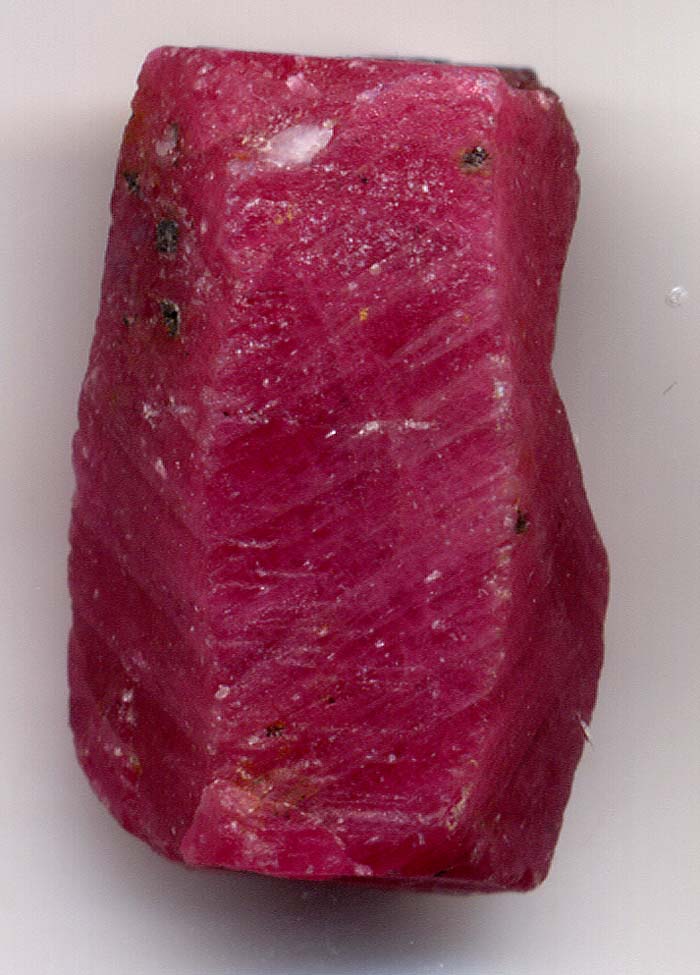
An elongated red ruby crystal with rough striated sides on a pale background.

Flatbed scan of a crystal identified by the source as ruby, about 2 cm long. Adrian Pingstone, 2003. Natural-versus-synthetic origin is not established.

Adrian Pingstone (Arpingstone), “Ruby cristal.jpg”, via Wikimedia Commons. Public domain.

Context and image limits

This is a flatbed scan, not a camera photograph. Locality, treatment status, and natural-versus-synthetic origin are not established by this page.

Resized display copy; full photograph retained.
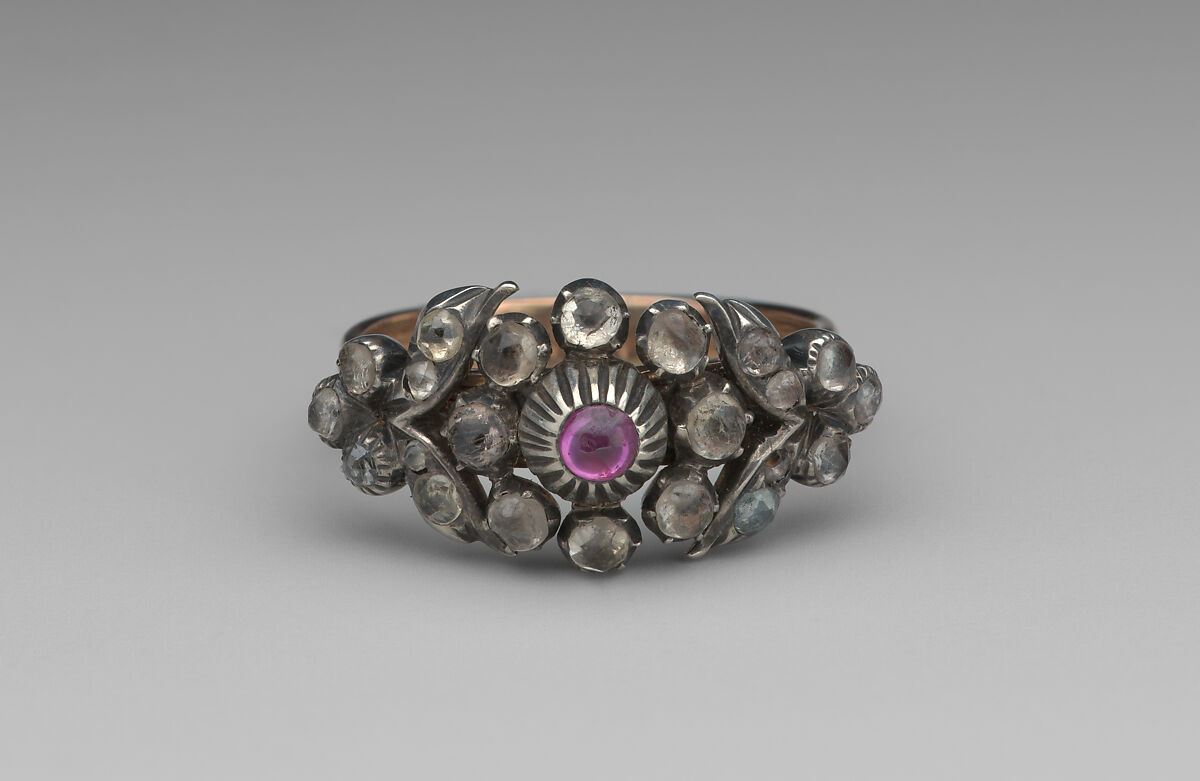
A pinkish-purple central ruby surrounded by small clear diamonds in a dark floral ring setting.

French ring, 19th century, in gold and silver with ruby and diamonds. The Met, 41.84.8.

The Metropolitan Museum of Art, Gift of Susan Dwight Bliss, 1941; 41.84.8. Public domain / CC0.

Context and image limits

Ruby identification follows the museum record. Locality, treatment and quality cannot be established from this photograph.

Resized display copy; full photograph retained.

What it is

Ruby is the red gem variety of corundum, an aluminum oxide with the formula Al₂O₃. Sapphire belongs to the same mineral species. Their different names describe varieties rather than two unrelated substances: small amounts of chromium entering the corundum structure give ruby its characteristic red. The basic mineral is colorless when those color-producing impurities are absent.

The border between ruby and pink sapphire needs care. It is not a chemical boundary at which one mineral becomes another. Color judgment and naming conventions matter, and different markets have not always drawn the line in the same place. GIA uses comparison stones to assess whether red is the dominant hue.

Evidence: GIA: Ruby, GIA: Ruby description, GIA: Ruby quality factors

Color shaped by rock and light

Ruby's red can lean toward orange or purple, while its apparent brightness depends on more than the color name. In marble-hosted deposits, including examples in Myanmar and northern Vietnam, relatively little iron commonly allows chromium-related red fluorescence to remain conspicuous. Ultraviolet light, including the ultraviolet component of sunlight, can therefore add a visible red glow. Higher iron content can suppress that fluorescence; a ruby that glows less is not automatically less natural.

Inclusions also shape appearance. Fine rutile needles, often called silk, can soften and distribute light. Suitably oriented needle inclusions can produce a star when the material is cut into a rounded cabochon. Other inclusions reduce transparency or create structural concerns. The useful question is what a particular inclusion does, rather than whether the stone contains any inclusions at all.

Evidence: GIA: Ruby description, GIA: Ruby quality factors

A life in human hands

Ruby's cultural history is much older than modern laboratory gemology. Its name is connected to the Latin word for red, and a traditional Sanskrit name is often translated as king of precious stones. Traditions in South and Southeast Asia associated ruby with status, protection and religious offering. European courtly culture later attached similar ideas of wealth, vitality and good fortune to red gems.

These accounts document beliefs and uses, not demonstrated protective or healing powers. They also require a mineralogical caution: older writers and collectors often grouped stones by visible color. A historical reference translated as ruby does not, by itself, establish that the object was red corundum.

Evidence: GIA: Ruby history and lore, GIA: Spinel history and lore

Recognition has several timelines

There is no defensible single discoverer or discovery year for ruby as a gemstone known across ancient societies. The recognition of different red minerals is a separate story. Spinel was long confused with ruby; the celebrated Black Prince's Ruby in Britain's Imperial State Crown is actually red spinel. Later mineralogical classification separated materials that earlier owners had understood mainly through appearance.

Manufacturing has its own chronology. By the early twentieth century, flame-fusion synthetic ruby was already being produced commercially on a substantial scale. A modern deposit discovery is different again: GIA's review follows the Montepuez ruby discoveries in Mozambique from 2009. None of these events marks humanity's first encounter with ruby.

Evidence: GIA: Ruby history and lore, GIA: Spinel history and lore, GIA: Inclusions in natural, synthetic and treated ruby, GIA: A decade of ruby from Mozambique

Reading the origin map

The map highlights selected documented localities, not the full geography of ruby. Mogok in Myanmar and northern Vietnam introduce the important marble-hosted setting, where metamorphism transformed limestone and helped create suitable conditions for corundum. Other documented sources include Thailand and Cambodia, Madagascar and Mozambique. Those places do not all share the same geological history.

At Montepuez, GIA describes ruby associated with amphibole-rich rocks, alongside secondary deposits where weathering and transport concentrated resistant gems after their host rocks broke down. This distinction explains why a ruby may be recovered from loose sediment rather than from the rock in which it formed. A country marker is neither an identification of an individual stone's origin nor evidence of current mine operation, traceable ownership, working conditions or responsible sourcing. Those claims need separate, specific documentation.

Evidence: GIA: Ruby description, GIA: Geographic origin determination of ruby, GIA: A decade of ruby from Mozambique

A Mogok ruby with a documented later life

The Smithsonian's Carmen Lúcia Ruby makes ruby's history tangible without requiring a legendary origin story. Its museum record gives a weight of 23.10 carats and identifies it as a Mogok ruby mined in the 1930s. It is mounted in a platinum ring with two triangular diamonds. In 2004, Peter Buck donated the ring in memory of his wife, Carmen Lúcia Buck.

The museum emphasizes the unusual combination of substantial size, even saturated red and transparency. Those are observations about this particular specimen, not a quality guarantee for every gem from Myanmar. Its recorded locality, jewelry setting and named gift also illustrate three different kinds of history: geological origin, human manufacture and later ownership.

Evidence: Smithsonian: Carmen Lúcia Ruby

Natural, treated and laboratory-grown

Natural describes geological formation; it does not mean untreated. Heating is widely used to change ruby's appearance, while diffusion and fracture filling are distinct interventions that should be identified separately. In glass-filled material, introduced glass makes fractures less conspicuous. It can dramatically improve apparent transparency without removing the fractures themselves, and the filler brings different durability requirements.

Laboratory-grown ruby is manufactured corundum with essentially ruby's chemical, physical and optical properties. It is different from a simulant, which resembles ruby but is another material. The useful description therefore answers separate questions: what is the substance, did it form naturally, and what treatments are detectable? Ask for written treatment disclosure and, where the distinction matters, an independent identification report. Attractive color or an inclusion seen in a photograph cannot answer all three questions.

Evidence: GIA: Ruby, GIA: Ruby buyer’s guide, GIA: Identification and durability of lead glass–filled rubies, GIA: Inclusions in natural, synthetic and treated ruby

Living with the gem

Corundum ranks 9 on the Mohs scratch-hardness scale and has good toughness with no cleavage. This makes sound ruby suitable for frequently worn jewelry, but hardness is not immunity to impact, and surface-reaching fractures deserve attention. Mohs numbers are relative rankings rather than evenly spaced measurements of strength.

For an identified untreated or simply heated stone, warm water with mild soap is a conservative cleaning choice. Fracture-filled, cavity-filled or dyed ruby calls for a damp cloth and treatment-specific professional advice. Lead-glass filler can be affected even by mild acids such as lemon juice. Avoid choosing steam, ultrasonic cleaning or a jeweler's repair process solely from the word ruby; have the stone, treatment and setting assessed first.

Evidence: GIA: Ruby care and cleaning, GIA: Ruby quality factors

Places in the story

These places describe documented sources or historical settings. They do not establish the origin of an individual object.

  • Myanmar / Mogok — Historic ruby region; broad country/region evidence only.
  • Vietnam / Northern Vietnam — Marble-hosted deposits; broad country/region evidence only.

Sources & reading

  1. GIA: RubyGIA · 2026-10-04

    Supports: identity, properties

  2. GIA: Ruby descriptionGIA · 2026-10-04

    Supports: appearance, identity

  3. GIA: Ruby history and loreGIA · 2026-10-04

    Supports: history, discoveryContext

  4. GIA: Ruby care and cleaningGIA · 2026-10-04

    Supports: care, treatments, hardness

  5. GIA: Introduction to gem treatmentsGIA · 2026-10-04

    Supports: treatments

  6. GIA: Ruby quality factorsPrimary source · 2026-10-04

    Supports: identity, appearance, care

  7. GIA: Spinel history and lorePrimary source · 2026-10-04

    Supports: history, discovery

  8. GIA: Inclusions in natural, synthetic and treated rubyPrimary source · 2026-10-04

    Supports: discovery, treatments

  9. GIA: Geographic origin determination of rubyPrimary source · 2026-10-04

    Supports: origin-context

  10. GIA: A decade of ruby from MozambiquePrimary source · 2026-10-04

    Supports: discovery, origin-context

  11. Smithsonian: Carmen Lúcia RubyPrimary source · 2026-10-04

    Supports: collection-story

  12. GIA: Ruby buyer’s guidePrimary source · 2026-10-04

    Supports: treatments
  13. GIA: Identification and durability of lead glass–filled rubiesPrimary source · 2026-10-04

    Supports: treatments
03Corundum

Sapphire

Sapphire is gem corundum other than the red material called ruby.

Continue to the extended sapphire atlas study

Compare Sapphire with another gem ↗

Selected documented sources, including historic localities; not a complete deposit inventory or a claim about current mine operation. Mohs is a relative scratch-resistance ranking, not a linear scale or a toughness score.

Material
mineral variety
Composition
Al₂O₃
Mohs hardness
9
Colours
blue, pink, yellow, green, orange, purple, colourless

Two images, two contexts

Source-identified references, not matching specimens or photographs of the museum objects discussed later in this profile. Images are not to a common scale and cannot establish treatment or provenance.

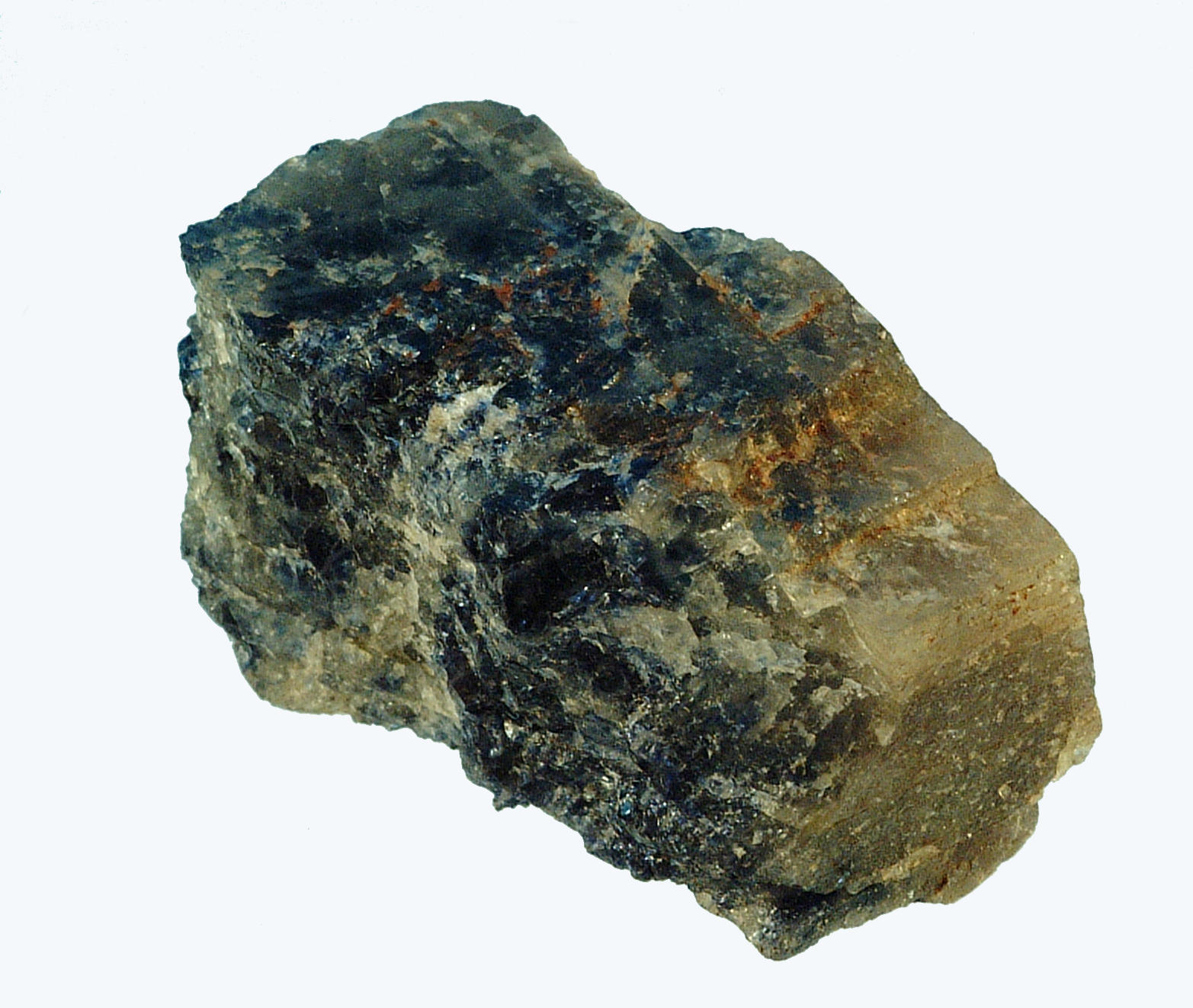
A rough dark-blue and gray sapphire specimen with an uneven surface against a pale background.

Sapphire hand specimen from near Kashmir, India, according to GeoDIL; University of North Dakota Mineralogy Collection 451. Photo by Nessa Eull, 2001.

Nessa Eull / Geoscience Digital Image Library, GeoDIL 1429; University of North Dakota Mineralogy Collection 451. CC0 1.0.

Context and image limits

The primary record confirms collection, photographer, and locality: https://geodil.dperkins.org/h/1429.html . “Near Kashmir” is the source wording, not an independent origin certification.

Resized display copy; full photograph retained.
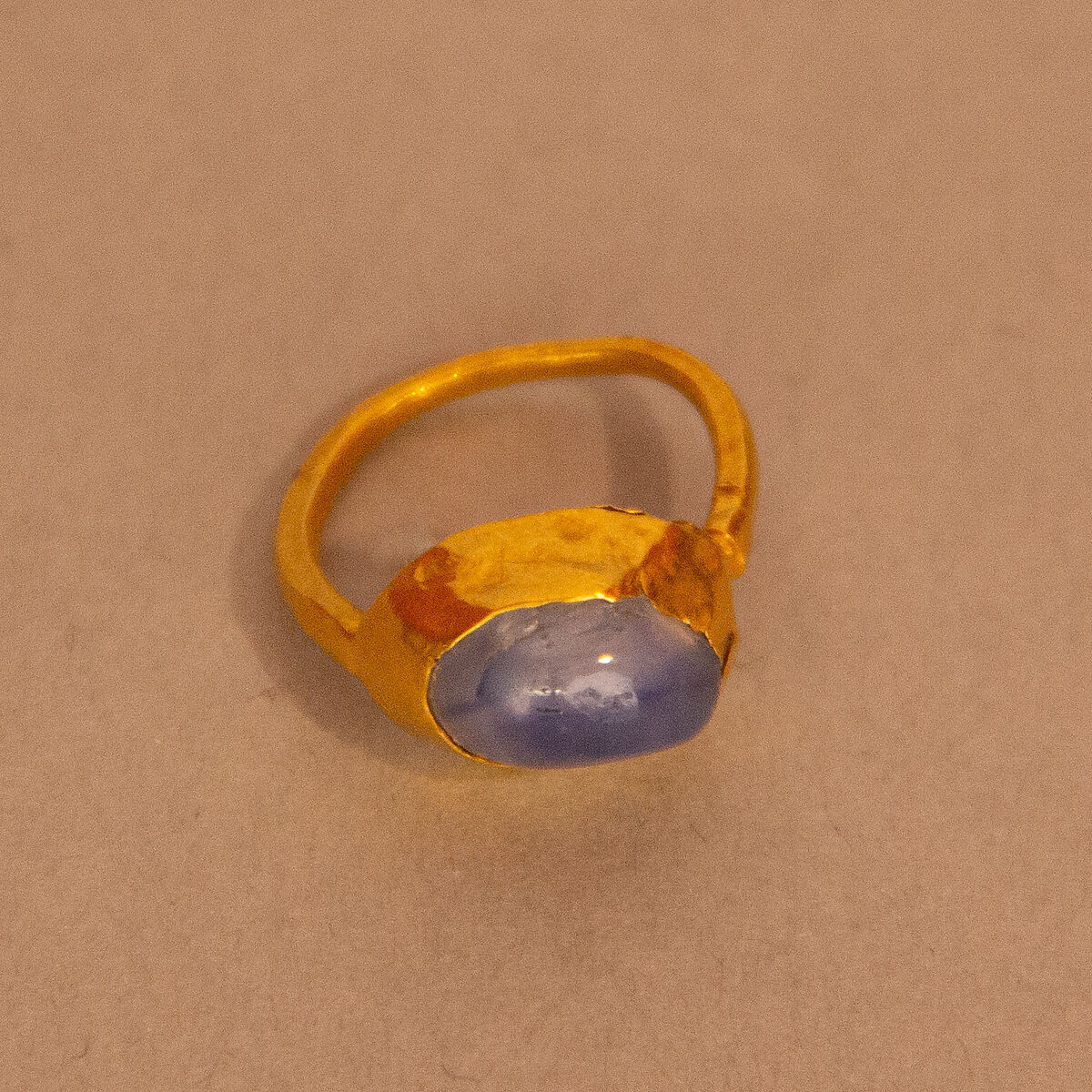
A slender gold ring holding a rounded pale blue-violet sapphire in a plain gold setting.

Gold-sheet and sapphire ring, 11th–13th century, found in Iran, probably Gurgan. The Met, 52.32.4.

The Metropolitan Museum of Art, Rogers Fund, 1952; 52.32.4. Public domain / CC0.

Context and image limits

The findspot is not the sapphire’s geological origin. “Probably Gurgan” remains an uncertain attribution.

Resized display copy; full photograph retained.

What it is

Sapphire is gem corundum other than the red variety called ruby. Corundum is aluminum oxide, Al₂O₃, so a blue sapphire, a yellow sapphire and a ruby share the same underlying mineral identity. Blue dominates everyday language and much jewelry history, but the sapphire name also embraces pink, orange, purple, green, yellow and colorless material.

A colorless stone may be sold as white sapphire, while colored varieties other than blue are often grouped as fancy sapphires. These are naming conventions within corundum, not additional mineral species. The distinction between pink sapphire and ruby also involves judgments about color.

Evidence: GIA: Sapphire, GIA: Sapphire quality factors

A family of colors and effects

Small quantities of trace elements make an enormous visual difference. Iron and titanium are important to blue sapphire; chromium contributes to pink sapphire as well as red ruby. Some crystals contain clearly different color zones, producing parti-colored gems. Others show a color change between lighting environments, commonly shifting from blue or violet toward purple under incandescent light.

Padparadscha is a trade name for a restricted pink-orange range, not a separate species or automatic statement of origin. Its boundaries have been debated, so a color description and a laboratory's stated opinion are more useful than the name alone. Cutting also matters: orientation can emphasize particular color zones, and proportions affect the way light returns to the eye. Two sapphires with similar color labels can therefore look quite different.

Evidence: GIA: Sapphire description, GIA: Sapphire quality factors, GIA: Sapphire buyer’s guide

A life in human hands

Blue sapphire became associated with authority, fidelity and the heavens in several historical traditions. It appeared in royal and ecclesiastical jewelry, and later engagement jewelry continued those connections with loyalty and romance. One well-documented modern moment came in 1981, when Prince Charles gave Lady Diana Spencer a blue sapphire engagement ring, bringing a long-established gem into intense public view.

The language is older and less precise than modern mineralogy. GIA notes that the Greek word sappheiros probably referred to lapis lazuli. An ancient translated reference to sapphire cannot therefore be read automatically as a scientific identification of corundum. Stories of protection or heavenly favor describe cultural beliefs, not measured effects of the material.

Evidence: GIA: Sapphire history and lore

Recognition, manufacture and new sources

Sapphire has no single documented discoverer. Long histories of collecting and trading gems should be distinguished from later scientific classification and from the recognition of individual deposits. A locality name such as Kashmir identifies an asserted source, not a different mineral species.

A further timeline belongs to synthetic corundum. By the early twentieth century, manufactured ruby and sapphire were entering both jewelry and watchmaking, where hard, low-friction jewel components had practical uses. Twentieth-century advances in crystal growth broadened those applications. GIA also records how discoveries in East Africa and Madagascar during the 1990s expanded attention to fancy sapphire colors. These developments changed technology and availability, rather than marking sapphire’s first discovery.

Evidence: GIA: Sapphire history and lore, GIA: Introduction to sapphire and synthetic sapphire, GIA: Sapphire description

Reading the origin map

The selected map locations include Sri Lanka, Madagascar, Australia, Tanzania and Myanmar. They provide geographical context rather than a complete deposit inventory. Corundum occurs in more than one geological setting, including metamorphic rocks and deposits associated with volcanic transport. In eastern Australia, basalt carried corundum toward the surface; subsequent weathering released durable crystals that became concentrated in sediments and stream deposits.

The recovery location can therefore be separated from the original crystal-growth setting. Laboratories investigate geographic origin using multiple lines of evidence, including inclusions and trace-element chemistry, but overlapping characteristics can prevent a firm conclusion. A map marker cannot authenticate an individual sapphire. Nor does it establish that a mine is operating now, that a seller's supply chain is documented, or that particular labor and environmental standards were met.

Evidence: GIA: Sapphire description, Geoscience Australia: Sapphire and ruby, GIA: Geographic origin determination of blue sapphire

The Star of India, from Sri Lanka

A famous name can obscure a gem's geography. The American Museum of Natural History's catalog identifies the Star of India as a 563.35-carat sapphire mined in Sri Lanka. Its spectacle is a star produced by tiny rutile inclusions, rather than by a star-shaped mark painted or carved onto the surface.

Star sapphires are fashioned as rounded cabochons so reflected light from suitably aligned inclusions can form intersecting bands, commonly producing six rays. Here, features that might reduce clarity in a transparent faceted stone create the feature people come to see. The specimen is a useful reminder that transparency is only one kind of beauty in gems, and that the name of a celebrated jewel need not be a literal statement of its mining country.

Evidence: American Museum of Natural History: Star of India, American Museum of Natural History: Star of India catalog record, GIA: Sapphire description

Natural, treated and laboratory-grown

Heating is widely used to alter sapphire's appearance. Lattice diffusion is a separate treatment in which added elements enter the crystal during heating and change its color. That color may occupy a shallow layer or extend much farther through the stone; consequently, repolishing or recutting can affect some diffusion-treated material. Fracture filling and dyeing also occur and require distinct disclosure and care.

Laboratory-grown sapphire is manufactured corundum, while a sapphire simulant is a different substance chosen for a similar appearance. Natural formation, treatment status and geographic origin are separate questions, so natural should never be used as shorthand for untreated. Ask what has been detected and what remains uncertain. A laboratory report can identify material and detectable treatments; an origin opinion, when possible, is another part of the assessment.

Evidence: GIA: Sapphire, GIA: Sapphire buyer’s guide, GIA: Sapphire care and cleaning, GIA: Introduction to sapphire and synthetic sapphire

Living with the gem

Sapphire combines Mohs hardness 9 with good toughness and no cleavage, making sound stones practical for frequently worn jewelry. Scratch resistance does not make every sapphire indestructible: fractures, inclusions, previous treatment and the condition of its setting still matter. A stone's high ranking also does not imply that the Mohs scale is linear.

Use warm water and mild soap for identified untreated or simply heated sapphire. For fracture-filled, cavity-filled or dyed material, use a damp cloth and obtain tailored advice. Fillers can be vulnerable to acids and other chemicals even when the corundum itself is stable. Before ultrasonic or steam cleaning, repair work or recutting, tell the professional about any known treatment and let them assess both the gem and its mounting.

Evidence: GIA: Sapphire care and cleaning

Places in the story

These places describe documented sources or historical settings. They do not establish the origin of an individual object.

  • Sri Lanka — Documented gem source; broad country/region evidence only.
  • Madagascar — Documented gem source; broad country/region evidence only.
  • Australia — Documented gem source; broad country/region evidence only.
  • Tanzania — Documented gem source; broad country/region evidence only.
  • Myanmar — Documented gem source; broad country/region evidence only.

Sources & reading

  1. GIA: SapphireGIA · 2026-10-04

    Supports: identity, properties

  2. GIA: Sapphire descriptionGIA · 2026-10-04

    Supports: appearance, identity

  3. GIA: Sapphire history and loreGIA · 2026-10-04

    Supports: history, discoveryContext

  4. GIA: Sapphire care and cleaningGIA · 2026-10-04

    Supports: care, treatments, hardness

  5. GIA: Introduction to gem treatmentsGIA · 2026-10-04

    Supports: treatments

  6. GIA: Sapphire quality factorsPrimary source · 2026-10-04

    Supports: identity, appearance

  7. GIA: Sapphire buyer’s guidePrimary source · 2026-10-04

    Supports: appearance, treatments

  8. GIA: Introduction to sapphire and synthetic sapphirePrimary source · 2026-10-04

    Supports: discovery, treatments

  9. Geoscience Australia: Sapphire and rubyPrimary source · 2026-10-04

    Supports: origin-context

  10. GIA: Geographic origin determination of blue sapphirePrimary source · 2026-10-04

    Supports: origin-context

  11. American Museum of Natural History: Star of IndiaPrimary source · 2026-10-04

    Supports: collection-story

  12. American Museum of Natural History: Star of India catalog recordPrimary source · 2026-10-04

    Supports: collection-story

04Beryl

Emerald

Emerald is green to bluish-green beryl.

Continue to the extended emerald atlas study

Compare Emerald with another gem ↗

Selected documented sources, including historic localities; not a complete deposit inventory or a claim about current mine operation. Mohs is a relative scratch-resistance ranking, not a linear scale or a toughness score.

Material
mineral variety
Composition
Be₃Al₂Si₆O₁₈
Mohs hardness
7.5–8
Colours
green, bluish green

Two images, two contexts

Source-identified references, not matching specimens or photographs of the museum objects discussed later in this profile. Images are not to a common scale and cannot establish treatment or provenance.

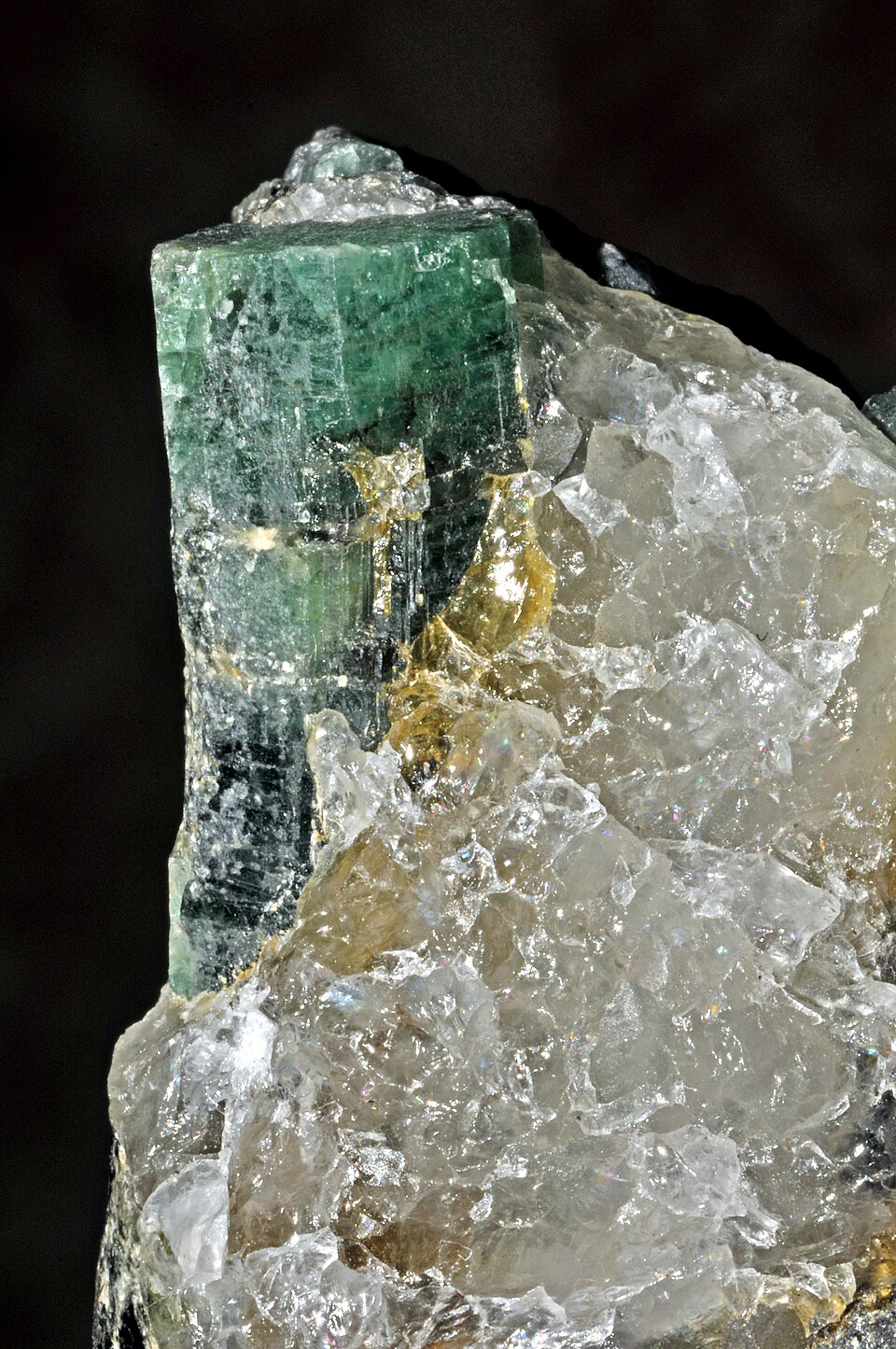
A green prismatic emerald crystal rises from a pale, glassy quartz matrix against a black background.

Emerald in quartz; the photographer gives the locality as Carnaíba district, Bahia, Brazil. Photo by Géry PARENT.

Géry PARENT, “Beryl, quartz 02.jpg”, via Wikimedia Commons. Public domain.

Context and image limits

The locality is supplied by the photographer, not independently certified. The stone is in matrix, not a polished emerald.

Resized display copy; full photograph retained.
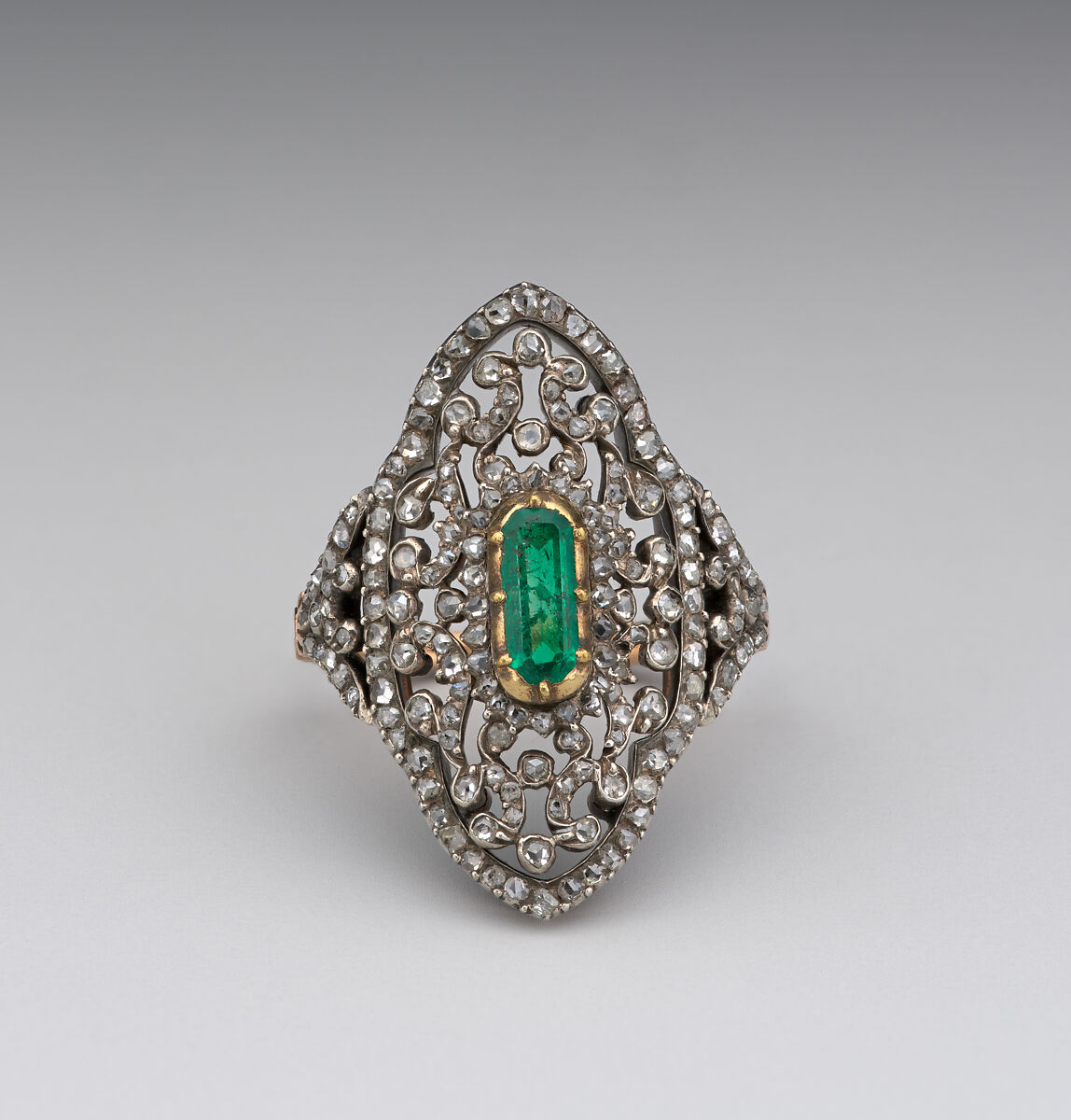
A long green emerald sits at the center of a pointed oval ring face filled with diamond-set scrollwork.

Ring made in Paris, 1838–47, with emerald and diamonds in gold and silver. The Met, 41.84.2.

The Metropolitan Museum of Art, Gift of Susan Dwight Bliss, 1941; 41.84.2. Public domain / CC0.

Context and image limits

Paris is the jewel’s cultural/manufacturing attribution, not the emerald’s mine origin.

Resized display copy; full photograph retained.

A green member of the beryl family

Emerald is the green to bluish green variety of beryl, the mineral species whose other gem varieties include aquamarine and morganite. Its basic composition is beryllium aluminum silicate. Chromium and vanadium are important coloring elements, while iron can modify the resulting appearance. Sharing beryl's structure does not make every variety behave identically in a finished jewel: inclusions and fractures have practical consequences.

The boundary between pale green beryl and emerald is partly a matter of color classification. Laboratories use comparison standards, but the trade has not always applied a single universal threshold. A photograph cannot settle a borderline identity simply because its green looks vivid on a screen.

Evidence: GIA: Emerald description, GIA: Emerald, GIA: Emerald Quality Factors

An unusual meeting of ingredients

Emerald needs chemical ingredients that do not commonly concentrate together. Beryllium and the chromium or vanadium responsible for green often come from different geological settings. Some deposits form where fluids and reactions bring these ingredients together at contacts involving pegmatitic or metamorphic rocks.

Colombia offers an important alternative to the familiar pegmatite story. Research describes emerald-bearing veins and cavities associated with black shale and hydrothermal fluids, without evidence that a nearby magma body supplied the formation process. There is consequently no single host-rock recipe for all emerald. Different growth environments leave different combinations of trace elements and internal features, which later become evidence for gemologists.

Evidence: GIA: Geology of Corundum and Emerald Gem Deposits

Green, transparency and the inner garden

Color needs to be considered with tone, saturation and transparency. A dark stone is not necessarily a more impressive green one if it returns little light. The visible internal landscape often called jardin, French for garden, can include fluid inclusions, crystals and fissures. Its presence is common, but the term should not romanticize damage or conceal a fracture that affects durability.

Cutting balances color, weight and structural risk. The beveled corners of the familiar emerald cut help protect vulnerable points, yet the name describes a cutting style rather than proof of emerald identity. Diamonds and other gems can also have an emerald cut.

Evidence: GIA: Emerald Quality Factors

Egypt, Colombia and a world of exchange

Emerald was known in antiquity, with ancient Egyptian mining forming an important chapter of its documented history. The material was admired before modern mineral classification, so an old green-stone name should not automatically be translated into a modern laboratory identification. No single discoverer can responsibly be assigned to emerald as a whole.

In the sixteenth century, Spanish conquest brought Colombian emeralds into expanded European and Asian trading networks. That was a change in international circulation, not the first human appreciation of these stones. Indigenous peoples had already used and valued them. Later sources in Brazil, Russia, Zambia and elsewhere made emerald's commercial geography more varied.

Evidence: GIA: Emerald history and lore, GIA: Geographic Origin Determination of Emerald

The Hooker Emerald: a setting can have several lives

The Smithsonian's Hooker Emerald offers a useful lesson in reading jewelry history. Its catalog identifies a 75.47-carat Colombian emerald, later given by Janet Annenberg Hooker in 1977. Tiffany acquired the gem at auction in 1911 and used it in a tiara before mounting it in the present brooch in 1950. The date of the brooch is therefore not the date the emerald first entered human hands.

The museum also distinguishes documentation from legend. Its account describes the association with Ottoman sultan Abdul Hamid II while qualifying the story that he wore the stone in a belt buckle. Keeping that qualification preserves an intriguing story without turning it into certainty.

Evidence: Smithsonian: Hooker Emerald

A source opinion needs several kinds of evidence

Nada's retained map marks Colombia, Zambia's Kafubu region, Brazil and Afghanistan as selected documented emerald sources. They are broad contextual locations, not exact mine coordinates or a complete inventory. An emerald's cutting centre and the place where a jewel was assembled can be different again.

Laboratories compare microscopic features, spectroscopy and trace-element chemistry with reference material when investigating origin. Some characteristics overlap among deposits; a green hue or one inclusion is not a universal geographic signature. An origin opinion can therefore be qualified or inconclusive. Even a well-supported locality opinion does not establish a complete chain of ownership or certify the environmental and labour conditions of extraction.

Evidence: GIA: Geographic Origin Determination of Emerald

Filling is different from growing

Surface-reaching fissures are often filled with oil or resin to make them less conspicuous. The quantity of enhancement and the nature of the filler are different questions. GIA's December 2024 report announcement explicitly separated filler identification from assessing its degree, and noted that fillers can be changed or mixed. A report describes the stone examined, so later work may matter.

Laboratory-grown emerald is also available, including flux-grown and hydrothermal material. It has emerald's essential identity but a manufactured growth history. Green glass or another mineral used to resemble emerald is a simulant. An emerald can consequently be natural and filled, laboratory-grown, or imitated by another substance; these descriptions should never be collapsed into one vague authenticity claim.

Evidence: GIA: GIA Enhances its Emerald Reports, GIA: Synthetic Emeralds Grown by Richard Nacken in the Mid-1920s, GIA: An Introduction to Simulants or Imitation Gem Materials

Let fractures and the setting guide care

Emerald's Mohs hardness of 7.5–8 gives useful scratch resistance, but it does not cancel the effects of fissures. Avoid hard knocks, protect exposed edges and remove an emerald ring for activities likely to strike the stone. Heat can extend fractures, while solvents or other chemicals may change the filler rather than the emerald crystal itself.

Use gentle cleaning with mildly soapy, lukewarm water and a soft brush when the condition of the jewel permits it. Avoid steam and ultrasonic cleaners. Tell the jeweler about known enhancement before resizing or repair. An antique setting, loose stone or uncertain treatment history calls for individual inspection before cleaning, not a more aggressive home remedy.

Evidence: GIA: Emerald care and cleaning

Places in the story

These places describe documented sources or historical settings. They do not establish the origin of an individual object.

  • Colombia — Documented emerald source; broad country/region evidence only.
  • Zambia / Kafubu — Documented emerald region; broad country/region evidence only.
  • Brazil — Documented emerald source; broad country/region evidence only.
  • Afghanistan — Documented emerald source; broad country/region evidence only.

Sources & reading

  1. GIA: EmeraldGIA · 2026-10-04

    Supports: identity, properties

  2. GIA: Emerald descriptionGIA · 2026-10-04

    Supports: appearance, identity

  3. GIA: Emerald history and loreGIA · 2026-10-04

    Supports: history, discoveryContext

  4. GIA: Emerald care and cleaningGIA · 2026-10-04

    Supports: care, treatments, hardness

  5. GIA: Geographic Origin Determination of EmeraldGIA · 2026-10-04

    Supports: origins

  6. GIA: Introduction to gem treatmentsGIA · 2026-10-04

    Supports: treatments

  7. GIA: Emerald Quality FactorsPrimary source · 2026-10-04

    Supports: identity, appearance

  8. GIA: Geology of Corundum and Emerald Gem DepositsPrimary source · 2026-10-04

    Supports: geology

  9. Smithsonian: Hooker EmeraldPrimary source · 2026-10-04

    Supports: discovery

  10. GIA: GIA Enhances its Emerald ReportsPrimary source · 2026-10-04

    Supports: treatments
  11. GIA: Synthetic Emeralds Grown by Richard Nacken in the Mid-1920sPrimary source · 2026-10-04

    Supports: treatments
  12. GIA: An Introduction to Simulants or Imitation Gem MaterialsPrimary source · 2026-10-04

    Supports: treatments
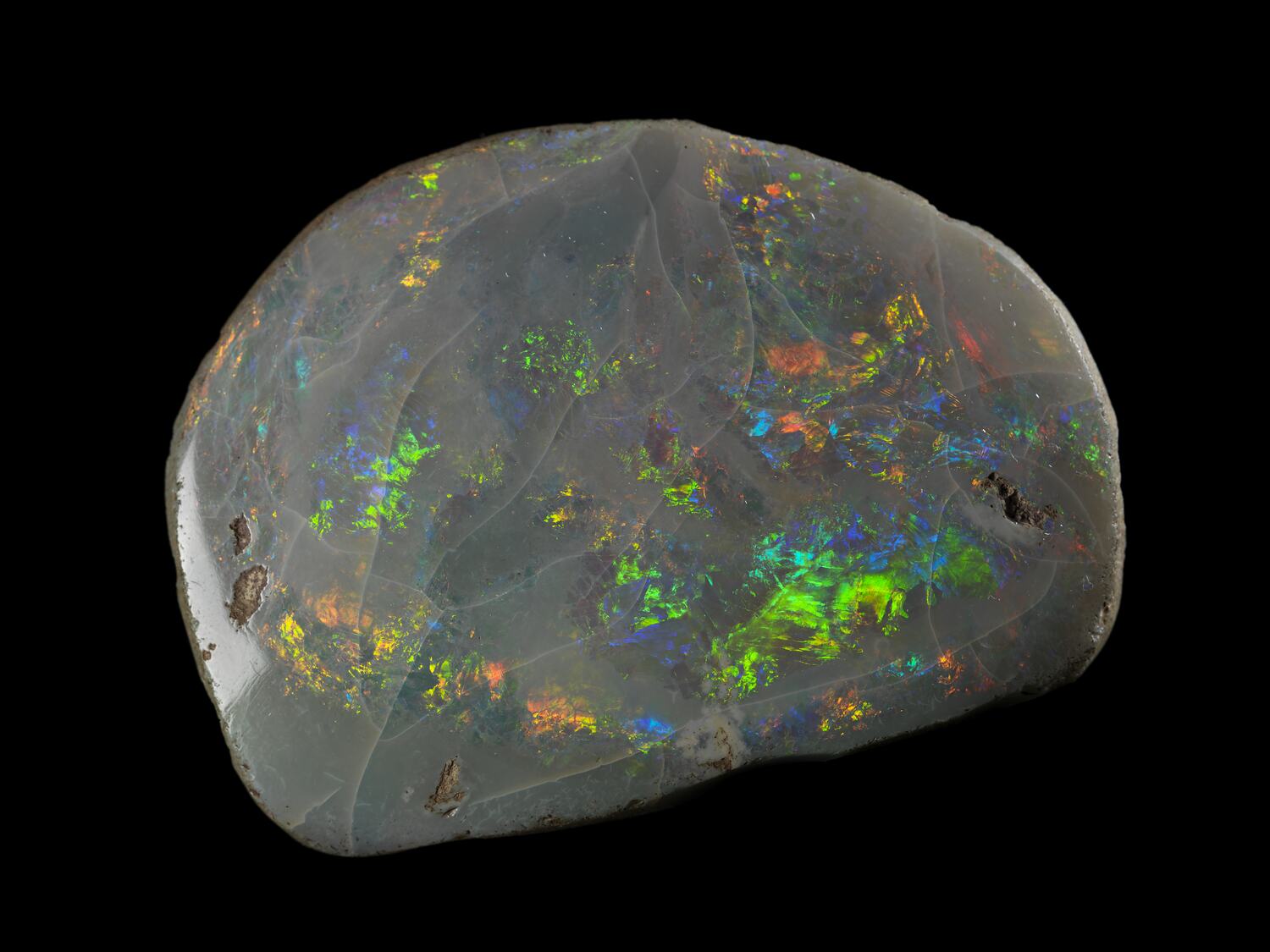
05Beryl

Aquamarine

Blue beryl links high mountain crystals, delicate colour and a remarkable carved obelisk.

Selected documented sources, including historic localities; not a complete deposit inventory or a claim about current mine operation. Mohs is a relative scratch-resistance ranking, not a linear scale or a toughness score.

Material
mineral variety
Composition
Be₃Al₂Si₆O₁₈
Mohs hardness
7.5–8
Colours
blue, greenish blue

A different colour of the beryl family

Aquamarine is the blue to greenish-blue gem variety of beryl, the same mineral species that includes emerald and morganite. The shared chemical framework is Be₃Al₂Si₆O₁₈. Variety names distinguish important appearances and colouring mechanisms without requiring every member of the family to have the same value, clarity or history.

Large, well-formed aquamarine crystals can be beautiful mineral specimens before a cutter touches them. Keeping one intact preserves its natural form; fashioning another introduces a different design. Neither choice is automatically the correct fate of every crystal. A collection can make both geological structure and human workmanship visible.

Evidence: Aquamarine: Description, Aquamarine: gem encyclopedia

Iron gives the blue its explanation

Iron-related absorption is responsible for aquamarine’s blue colour. Research on blue-to-yellow beryl shows that the state and arrangement of iron matter, not just a simple total amount. The resulting appearances can run from pale greenish blue to stronger blue, with intermediate balances of yellow and blue in related beryl.

This is a useful reminder that a colour name is not a complete chemical recipe. A photograph may also be influenced by stone thickness, illumination and the camera. Describe the hue you see, but leave the explanation of an individual specimen to examination rather than estimating its iron content from the screen.

Evidence: Color Characteristics of Blue to Yellow Beryl from Multiple Origins

A pegmatite is a setting, not a guarantee

Gem beryl can form in pegmatites, coarse-grained rocks associated with the crystallization of igneous systems. The Smithsonian notes that the chemical conditions needed for different beryl varieties vary, and that the presence of a pegmatite does not guarantee gem beryl.

In Minas Gerais, Brazil, aquamarine is recovered from both hard-rock deposits and weathered material. Pakistan’s Karakoram region supplies a contrasting landscape of high-elevation workings. Those differences affect how people reach and recover the gems. They do not imply that a blue stone reveals its birthplace to the eye, nor that one landscape is a universal measure of quality.

Evidence: Gems and Minerals: Beauties and Building Blocks, March birthstones: aquamarine

A sea-coloured name and a documented gift

The name aquamarine draws on Latin words for water and the sea. Stories about calming waves and protecting sailors belong to its cultural history; they are not evidence that beryl controls weather. The cited sources do not establish a single person who first discovered aquamarine.

A firmer dated episode concerns a particular object: in 1936, Brazil’s government presented Eleanor Roosevelt with a 1,298-carat aquamarine. It is a diplomatic gift with an institutional record, rather than an anonymous legend. The date belongs to that jewel’s human history, not to the geological age of the mineral or the beginning of aquamarine use.

Evidence: Aquamarine: History and lore, March birthstones: aquamarine

The Dom Pedro makes cutting into sculpture

The Dom Pedro aquamarine began as material from a Brazilian pegmatite, recovered in the late 1980s. Gem artist Bernd Munsteiner transformed it into an obelisk whose reverse surfaces carry carefully arranged negative cuts. These recesses redirect light through the transparent material, making the sculpture more than a large conventional faceted gem.

The Smithsonian announced its public display beginning 6 December 2012, following donation by Jane M. Mitchell and Jeffery S. Bland. Its account emphasizes the time spent studying the crystal before carving and polishing. The compelling lesson is the planning: a cutter could consider the particular material’s proportions and optical possibilities before deciding what to remove.

Evidence: Smithsonian to display the Dom Pedro Aquamarine, Dom Pedro Aquamarine: NMNH G10690

Keep the crystal’s place separate from the museum

Brazil’s Minas Gerais and Pakistan’s Karakoram region provide two useful anchors, but the source map also includes Madagascar, Nigeria and Mozambique. These are selected documented occurrences, not a current production ranking or an exhaustive inventory.

An object may gain other locations: a cutting workshop, a diplomatic presentation or a museum. Washington is relevant to the Dom Pedro’s collection story; it does not replace its Brazilian geological locality. Preserve regional precision when an exact mine is undocumented.

Evidence: March birthstones: aquamarine, Smithsonian to display the Dom Pedro Aquamarine

A bluer appearance can reflect heating

Heating is widely used to reduce greenish colour and produce a bluer aquamarine. It does not change the gem into a different mineral species. GIA’s quality guide notes that some people prefer a greener appearance, so the strongest market preference should not be presented as the only legitimate taste.

Fracture filling is uncommon but has been encountered. Ask about the actual stone’s treatment history instead of treating natural and untreated as synonyms. A blue photograph cannot independently prove that a gem has escaped heating, just as a greenish photograph cannot certify an untouched history.

Evidence: Aquamarine: Quality factors, Aquamarine: Care and cleaning

Good durability still calls for ordinary care

Aquamarine measures 7.5–8 on the Mohs scale. It is suitable for jewellery with protection from scratches and hard knocks. GIA recommends avoiding heat exposure; fractures, liquid inclusions or filling can also change which cleaning methods are appropriate.

Warm soapy water is the sensible default for a sound, identified piece. Have a jeweller inspect the stone and mounting before steam or ultrasonic cleaning rather than assuming that the material name provides blanket permission. A large gem’s exposed corners and the condition of its setting deserve attention even when the centre looks clear.

Evidence: Aquamarine: Care and cleaning

Clear does not have to mean colourless

Look through an aquamarine slowly. Does its pale colour stay legible across the whole shape, or does the centre appear almost empty while the edges carry blue? How do the long steps of an emerald cut compare with the smaller flashes of a brilliant-style design? These are useful questions about the cutter’s treatment of light.

GIA describes aquamarine’s pleochroism, which gives different colour intensities in different crystal directions and influences cutting orientation. This differs from alexandrite’s change under different illumination. An observer can appreciate the optical design without assigning an origin, treatment status or grade. Record the conditions of a comparison before announcing a winner.

Evidence: Aquamarine: Quality factors

Milestones, with their meanings kept separate

1936: Brazil presents an aquamarine to Eleanor Roosevelt. Late 1980s: Brazilian pegmatite yields the future Dom Pedro. 6 December 2012: its Smithsonian display opens. 2020: research examines iron-related colour across blue-to-yellow beryl.

Evidence: March birthstones: aquamarine, Smithsonian to display the Dom Pedro Aquamarine, Color Characteristics of Blue to Yellow Beryl from Multiple Origins

A small vocabulary for clear blue

Beryl is the mineral species; aquamarine is a variety. Pleochroism is directional variation in colour. A negative cut is a recess fashioned into a gem’s surface. A primary deposit retains material in its original geological setting; a secondary deposit contains material redistributed after weathering.

Evidence: Aquamarine: Description, Aquamarine: Quality factors, Smithsonian to display the Dom Pedro Aquamarine, March birthstones: aquamarine, Dom Pedro Aquamarine: NMNH G10690

Places in the story

These places describe documented sources or historical settings. They do not establish the origin of an individual object.

  • Brazil / Minas Gerais — Documented aquamarine region; broad country/region evidence only.
  • Pakistan / Karakoram region — Documented aquamarine region; broad country/region evidence only.

Sources & reading

  1. Aquamarine: gem encyclopediaGIA · 2026-10-04

    Beryl identity, formula and physical properties.

  2. Aquamarine: DescriptionGIA · 2026-10-04

    Material identity and appearance; no specimen authentication.

  3. Aquamarine: History and loreGIA · 2026-10-04

    Documented historical context; legends remain beliefs, not verified powers or discovery records.

  4. Aquamarine: Care and cleaningGIA · 2026-10-04

    General material guidance; individual condition, treatment and setting still require inspection.

  5. Source locality referenceGIA · 2026-10-03

    Supports: origins

  6. GIA: Introduction to gem treatmentsGIA · 2026-10-03

    Supports: treatments

  7. Aquamarine: Quality factorsGIA · 2026-10-04

    Appearance and cutting considerations; no price or grade assigned to an unseen stone.

  8. Color Characteristics of Blue to Yellow Beryl from Multiple OriginsGIA · 2026-10-04

    2020 original research: iron-related absorption, variety distinctions and interactions with structure; not an individual photo identification.

  9. Gems and Minerals: Beauties and Building BlocksSmithsonian National Museum of Natural History · 2026-10-04

    Geological formation and different requirements among beryl varieties; not all pegmatites contain gem beryl.

  10. March birthstones: aquamarineGIA · 2026-10-04

    Brazilian and Pakistani source settings; selected other countries; 1936 Roosevelt gift. Cultural protective claims are treated as lore.

  11. Smithsonian to display the Dom Pedro AquamarineSmithsonian Institution · 2026-10-04

    Institutional release dated 3 December 2012: late-1980s Brazilian pegmatite source, Munsteiner’s negative cuts, donors and 6 December display opening. Used for object history rather than weight.

  12. Dom Pedro Aquamarine: NMNH G10690Smithsonian National Museum of Natural History · 2026-10-04

    Live collection record: Minas Gerais origin, Munsteiner attribution, rear cuts, donors and 2011 gift. Display opening is separately documented by the 2012 release.

06Beryl

Morganite

Morganite is the pink to orange-pink variety of beryl.

Selected documented sources, including historic localities; not a complete deposit inventory or a claim about current mine operation. Mohs is a relative scratch-resistance ranking, not a linear scale or a toughness score.

Material
mineral variety
Composition
Be₃Al₂Si₆O₁₈
Mohs hardness
7.5–8
Colours
pink, peach, orangy pink

What it is

Morganite is the pink to orange-pink variety of beryl, the mineral species that also includes emerald and aquamarine. Its formula, Be₃Al₂Si₆O₁₈, includes beryllium, aluminium, silicon and oxygen. Small amounts of manganese give the material its characteristic pink color. A pink appearance alone, however, is not enough to identify an unknown gem as morganite.

Beryl crystals have hexagonal symmetry. Morganite can form substantial crystals, sometimes with a broad, relatively flattened outline, providing material for both large cut gems and mineral specimens kept intact.

Evidence: GIA: Morganite, Natural History Museum: Bright blue, red and pink minerals (2022)

Color and character

Pink, peach, salmon and purplish pink all fall within morganite’s familiar palette. Light tones are common. A pale gem does not have to imitate the saturated color of a different material to be recognizably morganite. Larger stones often show color more strongly, and cutters sometimes choose extra depth to make a delicate shade more apparent.

Morganite is pleochroic: color differs with viewing direction through the crystal. GIA describes pale pink and deeper bluish pink directions. Orientation therefore matters before cutting begins. Faceted stones are often free of inclusions visible to the unaided eye, while less transparent material may be carved or cut with rounded surfaces.

Evidence: GIA: Morganite, GIA: Morganite quality factors

A life in human hands

The name connects gem collecting, museum patronage and early twentieth-century jewelry. George Frederick Kunz, Tiffany’s gem specialist, helped assemble collections for J. P. Morgan. Morgan supported the arts and sciences and gave important gems to museums. Following news of a rose-beryl locality in Madagascar, Kunz proposed morganite in his honor at the New York Academy of Sciences on 5 December 1910. The naming records a relationship between a gemologist and a collector, rather than a change in the mineral’s composition.

Evidence: GIA: Morganite history and lore

Discovery, recognition and naming

The 1910 naming should be kept separate from the first human encounter with pink beryl. The cited historical account links the name to a newly recognized Madagascar locality; it does not establish Kunz as the person who found every earlier occurrence. Later finds have their own histories. GIA records the large Rose of Maine crystal found at Buckfield, Maine, in 1989. Such a named specimen documents one discovery, not the discovery of the entire variety.

Evidence: GIA: Morganite history and lore

Where it forms and what origin means

Morganite is associated with pegmatites, coarse-crystalline rocks whose formation can concentrate elements needed for gem minerals. Minas Gerais in Brazil is a major documented source in GIA’s description. Madagascar is important to the naming history, and Afghanistan is another recorded source. These places are examples, not a complete map of all occurrences or a survey of present production.

The Natural History Museum in London documents an eleven-centimetre-wide specimen from Brazil’s Urucum mine. A traceable museum specimen offers firmer locality evidence than a general country label on an unrelated loose stone.

Evidence: GIA: Morganite description, Natural History Museum: Bright blue, red and pink minerals (2022)

Natural, treated and laboratory-grown

Heating commonly removes a yellow or orange component, leaving a pinker appearance. GIA describes this routine treatment as undetectable and the resulting color as stable. Consequently, a natural-origin identification or an absence of detected treatment does not by itself prove that a morganite was never heated. An untreated claim needs an appropriate documented basis, rather than an inference from color.

Synthetic morganite also exists. GIA states that laboratory testing can distinguish it from natural material. Laboratory growth and treatment answer different questions: where the crystal formed, and what happened to it afterward. Rare fracture filling is a further issue because it changes the cleaning advice.

Evidence: GIA: Morganite quality factors, GIA: Is morganite produced synthetically?, GIA: Morganite care and cleaning, GIA: Introduction to gem treatments

Living with the gem

Morganite’s Mohs hardness of 7.5–8 gives useful scratch resistance, but it still needs protection from hard knocks. Clean it with warm water and mild soap. Avoid excessive heat and harsh chemicals, and protect exposed edges during strenuous activity.

Ultrasonic or steam cleaning is usually safe, but liquid inclusions or fractures change that assessment. Fracture-filled morganite should receive only warm soapy-water cleaning. Have a professional check uncertain stones and settings before machine cleaning. Normal light exposure is not expected to fade morganite’s color.

Evidence: GIA: Morganite care and cleaning

Terms worth knowing

A variety is a named form within a mineral species: morganite is a variety, beryl the species. Pleochroism is directional color variation within a crystal, rather than a change caused by switching lamps. An eye-clean gem has no inclusions readily visible without magnification; it can still contain microscopic features. Fracture filling introduces another substance into cracks to make them less apparent, so improved clarity does not necessarily mean fewer fractures.

Evidence: GIA: Morganite, GIA: Morganite quality factors, GIA: Introduction to gem treatments

A quick self-check

Can a natural morganite also be heat-treated? Yes: natural origin and treatment are separate facts. Does a pink shade prove a Madagascar source? No: appearance alone does not supply a documented locality. Does hardness 8 rule out damage from a blow? No: scratch resistance is not toughness. These distinctions help you read descriptions and laboratory wording without asking the color or a single number to tell the whole story.

Evidence: GIA: Morganite quality factors, GIA: Morganite description, GIA: Morganite care and cleaning

Places in the story

These places describe documented sources or historical settings. They do not establish the origin of an individual object.

  • Brazil / Minas Gerais — Documented pegmatite source; broad country/region evidence only.
  • Madagascar — Historic rose-beryl source; broad country/region evidence only.
  • Afghanistan — Documented additional source; broad country/region evidence only.

Sources & reading

  1. GIA: MorganiteGIA · 2026-10-04

    Supports: identity, properties

  2. GIA: Morganite descriptionGIA · 2026-10-04

    Supports: appearance, identity

  3. GIA: Morganite history and loreGIA · 2026-10-04

    Supports: history, discoveryContext

  4. GIA: Morganite care and cleaningGIA · 2026-10-04

    Supports: care, treatments, hardness

  5. GIA: Introduction to gem treatmentsGIA · 2026-10-04

    Supports: treatments
  6. GIA: Morganite quality factorsGIA · 2026-10-04

    Supports: color, pleochroism, appearance, common heating and its stated non-detectability. Does not establish treatment history of an individual gem.

  7. GIA: Is morganite produced synthetically?GIA · 2026-10-04

    Supports: synthetic morganite exists and can be separated by laboratory testing. No current production-volume claim is made here.

  8. Natural History Museum: Bright blue, red and pink minerals (2022)Natural History Museum, London · 2026-10-04

    Supports: beryl identity and chemistry, pegmatite association, and the museum’s Urucum specimen. Broad first-discovery wording is not used to assign a discoverer.

07Chrysoberyl

Alexandrite

Alexandrite is a color-change variety of chrysoberyl.

Selected documented sources, including historic localities; not a complete deposit inventory or a claim about current mine operation. Mohs is a relative scratch-resistance ranking, not a linear scale or a toughness score.

Open the focused study

Material
mineral variety
Composition
BeAl₂O₄
Mohs hardness
8.5
Colours
green, bluish green, purplish red, brownish red

What it is

Alexandrite is a color-change variety of chrysoberyl. Its apparent color responds to the spectrum of the illumination: daylight-like and incandescent light can bring out contrasting greenish and reddish impressions.

Evidence: GIA: Alexandrite, GIA: Alexandrite description

Color and character

The strength and attractiveness of both colors matter. Many examples show less dramatic changes than idealized photographs suggest. Pleochroism, a directional color difference within a crystal, is another property and should not be confused with the lighting-dependent color change.

Evidence: GIA: Alexandrite description

A life in human hands

Russian Ural deposits brought alexandrite to prominence in the nineteenth century. Its name honors the future Alexander II. Later sources in Brazil, Sri Lanka and East Africa widened the story beyond the original Russian association.

Evidence: GIA: Alexandrite history and lore

Discovery, recognition and naming

The early source history centers on Russia’s Ural Mountains in the nineteenth century. Popular accounts vary in exact dating and personal attribution; the naming in honor of the future Alexander II is a clearer historical anchor.

Evidence: GIA: Alexandrite history and lore

Natural, treated and laboratory-grown

Laboratory-grown alexandrite exists. Other color-change materials, including synthetic corundum, have also been sold as look-alikes; color change by itself does not prove chrysoberyl identity.

Evidence: GIA: Alexandrite care and cleaning, GIA: Introduction to gem treatments

Living with the gem

Chrysoberyl combines high hardness with useful toughness, but included or filled stones still require individual assessment. Mild soapy water is a conservative routine. Protect edges and check mounts before professional machine cleaning.

Evidence: GIA: Alexandrite care and cleaning

Places in the story

These places describe documented sources or historical settings. They do not establish the origin of an individual object.

  • Russia / Ural Mountains — Historic source; broad country/region evidence only.
  • Brazil — Documented source; broad country/region evidence only.
  • Sri Lanka — Documented source; broad country/region evidence only.

Sources & reading

  1. GIA: AlexandriteGIA · 2026-10-03

    Supports: identity, properties

  2. GIA: Alexandrite descriptionGIA · 2026-10-03

    Supports: appearance, identity

  3. GIA: Alexandrite history and loreGIA · 2026-10-03

    Supports: history, discoveryContext

  4. GIA: Alexandrite care and cleaningGIA · 2026-10-03

    Supports: care, treatments, hardness

  5. GIA: Introduction to gem treatmentsGIA · 2026-10-03

    Supports: treatments

08Garnet group

Garnet

A family of reds, oranges and greens whose tiny crystals can reveal very long journeys.

Selected documented sources, including historic localities; not a complete deposit inventory or a claim about current mine operation. Mohs is a relative scratch-resistance ranking, not a linear scale or a toughness score.

Material
mineral group
Composition
Variable across the garnet group; not one fixed composition
Mohs hardness
6.5–7.5
Colours
red, purple, orange, yellow, green, colour change

Garnet is a group, not a colour

Garnet brings together related silicate minerals with a common crystal structure and varying chemistry. Pyrope, almandine, spessartine, grossular and andradite are important gem species. Many natural garnets mix components from more than one species, so a tidy list of names should not be mistaken for five perfectly separate chemical boxes.

The distinction between species and variety is especially useful here. Tsavorite is green grossular; demantoid is green andradite. Both are green garnets, but they are not the same mineral species. Rhodolite commonly describes purplish-red pyrope-almandine material. The group name is the beginning of identification, not its most specific possible conclusion.

Evidence: Garnet: Description, Garnet: Quality factors

Colour comes from chemistry, not the family name

The garnet palette runs from purple-red through orange and yellow to vivid green, with some exceptional colour-changing examples. Iron, manganese, chromium and vanadium influence the colours of different compositions. GIA’s research on Tanzanian gems emphasizes this chemical variation rather than a single universal colouring ingredient.

A photograph of two greens therefore raises a better question than “Which one is greener?” Ask whether the labels identify grossular or andradite, what the lighting was and whether the stones were examined. A hue can invite comparison without proving chemistry. In a colour-changing specimen, changing illumination is itself part of the observation and should be recorded.

Evidence: Gems & Gemology, Summer 1992: Gem wealth of Tanzania

A familiar mineral can still yield an unusual gem

Red garnets occur widely in metamorphic rocks, where heat and pressure have reorganized earlier minerals. Gem-quality material is a more selective outcome. GIA points out that tsavorite requires unusual rock chemistry and conditions, explaining why a common mineral-group name does not imply that every variety is equally abundant.

Read rarity claims specifically: which material, colour, size and quality are being discussed? A region rich in ordinary garnet does not automatically supply transparent crystals suitable for a particular jewel. Geological abundance and availability of a desired finished gem are different questions.

Evidence: Garnet: Description

From seals to a regional jewellery tradition

Garnet has no securely named first human discoverer in this source set. Egyptian ornaments and Roman carved signet rings establish a much older history of use. In a signet, the engraved stone served a practical role by making an impression in the wax used to secure a document.

GIA dates the expansion associated with Bohemian garnet deposits to around 1500 and describes a regional jewellery industry that flourished especially in the late nineteenth century. Bohemia is a historical region in today’s Czechia. That date marks a change in a particular source and trade, not the moment when garnet first entered human life.

Evidence: Garnet: History and lore

Tiny inlays, extraordinary distances

The Sutton Hoo ship burial in Suffolk, excavated in 1939, contained thousands of garnet inlays. Gold cells held small shaped stones in elaborate patterns; textured backing foils helped return light through them. The surviving jewellery makes clear that a gem need not be large or conventionally faceted to be the focus of sophisticated optical design.

In 2023, researchers examined garnets on five Sutton Hoo objects using particle-induced X-ray emission. The British Museum reports preliminary results suggesting sources in India, Sri Lanka and Czechia. This is evidence for far-reaching material networks, not a complete itinerary for each stone. Chemistry can support a source attribution while leaving the exact sequence of traders and journeys unresolved.

Evidence: Sri Lanka to Suffolk: Sutton Hoo and the Silk Roads

Every region deserves a variety label

A garnet map becomes more informative when the variety travels with the country name. Kenya and Tanzania are important tsavorite contexts; Namibia supplies demantoid and spessartine; Sri Lanka contributes several garnet types. Historic Bohemian pyrope tells another story again.

Keep those examples beside the source record rather than using a national label as a quality ranking. The Sutton Hoo research also illustrates why a findspot differs from a geological source: the jewellery was excavated in England, but some of its garnets travelled from much farther away. A well-written caption should make both locations intelligible.

Evidence: January birthstone: garnet, Sri Lanka to Suffolk: Sutton Hoo and the Silk Roads

Often untreated is not an individual guarantee

Most garnets in the jewellery trade are not treated, according to GIA’s overview. Fracture filling is an uncommon exception that can change cleaning requirements. A general reputation for limited treatment should not replace disclosure about a particular stone.

Ask for the material and treatment information in plain language, especially if a report uses an unfamiliar variety name. “Garnet” does not supply every missing detail about its composition, condition or previous work. Equally, an unusual inclusion need not mean that somebody treated the stone.

Evidence: January birthstone: garnet, Garnet: Care and cleaning

The family shares a name, not one hardness

Mohs hardness varies approximately from 6.5 to 7.5 across gem garnets. Demantoid sits toward the softer end compared with several familiar red garnets and tsavorite. Hardness measures scratching; it does not rule out breakage under impact.

Use warm soapy water and a soft brush for a sound, identified piece. GIA advises against steam cleaning and adds important cautions about ultrasonic cleaning when fractures or filling are present. Store pieces separately from harder gems and have antique settings assessed before assuming they can tolerate modern cleaning equipment.

Evidence: Garnet: Care and cleaning

Look beyond a red-stone stereotype

Try a three-way comparison: a transparent red garnet, an orange spessartine and a green demantoid. Notice changes in tone, light return and visible internal features before deciding which appeals to you. Some demantoids contain characteristic curved fibrous inclusions called horsetails; their presence can be a point of collector interest rather than simply a clarity defect.

GIA’s quality guide also distinguishes the more included appearances often encountered in hessonite and spessartine. There is no need to judge every variety against one colourless-stone ideal. A thoughtful enthusiast describes the character of the actual example and leaves authentication, geographic origin and price to evidence suited to those questions.

Evidence: Garnet: Quality factors

Milestones, with their meanings kept separate

Ancient Egypt and Rome: ornaments and signets document early use. Late 500s–early 600s CE: Sutton Hoo objects are made. Around 1500: Bohemian deposits expand supply. 1939: the ship burial is excavated. 2023: elemental analysis studies garnets on five objects.

Evidence: Garnet: History and lore, Sri Lanka to Suffolk: Sutton Hoo and the Silk Roads

Four useful distinctions

A species is a mineral category defined by chemistry and structure; a variety is a subdivision used for particular characteristics. Cloisonné places material into small metal compartments. An intaglio is an engraved, recessed design. A findspot records where an object was recovered, which may be far from where its stones formed.

Evidence: Garnet: Description, Garnet: History and lore, Sri Lanka to Suffolk: Sutton Hoo and the Silk Roads

Places in the story

These places describe documented sources or historical settings. They do not establish the origin of an individual object.

  • Kenya — Tsavorite specimens documented; broad country/region evidence only.
  • Tanzania — Tsavorite and rhodolite specimens documented; broad country/region evidence only.
  • Namibia — Spessartine specimens documented; broad country/region evidence only.
  • Sri Lanka — Hessonite and other garnets documented; broad country/region evidence only.

Sources & reading

  1. GIA: GarnetGIA · 2026-10-03

    Supports: identity, properties

  2. Garnet: DescriptionGIA · 2026-10-04

    Material identity and appearance; no specimen authentication.

  3. Garnet: History and loreGIA · 2026-10-04

    Documented historical context; legends remain beliefs, not verified powers or discovery records.

  4. Garnet: Care and cleaningGIA · 2026-10-04

    General material guidance; individual condition, treatment and setting still require inspection.

  5. Source locality referenceGIA · 2026-10-03

    Supports: origins

  6. GIA: Introduction to gem treatmentsGIA · 2026-10-03

    Supports: treatments

  7. Garnet: Quality factorsGIA · 2026-10-04

    Appearance and cutting considerations; no price or grade assigned to an unseen stone.

  8. Gems & Gemology, Summer 1992: Gem wealth of TanzaniaGIA · 2026-10-04

    The Tanzanian-garnet discussion attributes colour differences to iron, manganese, chromium and vanadium; not a chemistry diagnosis from a photograph.

  9. January birthstone: garnetGIA · 2026-10-04

    Selected source countries and varieties; most garnets untreated, with rare filling.

  10. Sri Lanka to Suffolk: Sutton Hoo and the Silk RoadsBritish Museum · 2026-10-04

    1939 excavation, cloisonné optics, 2023 analysis of five objects and preliminary source indications. The exhibition mentioned on the source page ended in 2025; no current exhibition promise.

09Spinel

Spinel

Gem spinel belongs to a wider mineral group but is a distinct gem identity from ruby.

Selected documented sources, including historic localities; not a complete deposit inventory or a claim about current mine operation. Mohs is a relative scratch-resistance ranking, not a linear scale or a toughness score.

Open the focused study

Material
mineral species
Composition
MgAl₂O₄
Mohs hardness
8
Colours
red, pink, blue, purple, violet, grey

What it is

Gem spinel belongs to a wider mineral group but is a distinct gem identity from ruby. It commonly forms octahedral crystals. Its cubic structure means that ordinary gem spinel is singly refractive, unlike doubly refractive corundum.

Evidence: GIA: Spinel, GIA: Spinel description

Color and character

Chromium can produce red and pink; iron and cobalt contribute to blue ranges. Strong cobalt-blue and vivid pink stones are only part of the palette. Gray, violet and softer colors also deserve examination in neutral light.

Evidence: GIA: Spinel description

A life in human hands

Some royal “rubies” turned out to be spinel. The Black Prince’s Ruby in the British Imperial State Crown is the best-known example. Historical naming followed appearance long before modern instruments separated visually similar minerals.

Evidence: GIA: Spinel history and lore

Discovery, recognition and naming

Used historically without always being distinguished from ruby. Recognition as a separate mineral is a different event from a first human encounter.

Evidence: GIA: Spinel history and lore

Natural, treated and laboratory-grown

Synthetic spinel exists and has long served as an imitation of other gems. Natural spinel may also receive treatment; do not label every specimen untreated simply because untreated spinel is widely encountered.

Evidence: GIA: Spinel care and cleaning, GIA: Introduction to gem treatments

Living with the gem

Hardness 8 makes spinel practical for jewelry, but forceful knocks can still damage it. Mild soapy water is a reliable starting point. Fractures and filling need assessment before ultrasonic or steam cleaning.

Evidence: GIA: Spinel care and cleaning

Places in the story

These places describe documented sources or historical settings. They do not establish the origin of an individual object.

  • Myanmar / Mogok — Documented source; broad country/region evidence only.
  • Sri Lanka / Ratnapura — Documented source; broad country/region evidence only.
  • Vietnam / Luc Yen — Documented source; broad country/region evidence only.
  • Tanzania — Documented source; broad country/region evidence only.
  • Tajikistan — Documented source; broad country/region evidence only.

Sources & reading

  1. GIA: SpinelGIA · 2026-10-03

    Supports: identity, properties

  2. GIA: Spinel descriptionGIA · 2026-10-03

    Supports: appearance, identity

  3. GIA: Spinel history and loreGIA · 2026-10-03

    Supports: history, discoveryContext

  4. GIA: Spinel care and cleaningGIA · 2026-10-03

    Supports: care, treatments, hardness

  5. Source locality referenceGIA · 2026-10-03

    Supports: origins

  6. GIA: Introduction to gem treatmentsGIA · 2026-10-03

    Supports: treatments

10Tourmaline group

Tourmaline

One mineral group can hold a whole palette, sometimes inside a single crystal.

Selected documented sources, including historic localities; not a complete deposit inventory or a claim about current mine operation. Mohs is a relative scratch-resistance ranking, not a linear scale or a toughness score.

Material
mineral group
Composition
Complex borosilicate compositions varying by species
Mohs hardness
7–7.5
Colours
pink, red, green, blue, yellow, black, bicolour

A family with room for variation

Tourmaline names a group of borosilicate minerals rather than one fixed chemical recipe. Its members share an underlying crystal architecture while accommodating different elements. Elbaite supplies many familiar gem tourmalines; dark schorl and other species remind us that the group extends well beyond transparent jewellery stones. A colour name alone cannot determine the species.

This flexibility helps explain the extraordinary range. Iron contributes to many blues and greens, manganese to pinks and reds, while copper is important in the intense blue-to-green material associated with Paraíba. More than one cause can operate in a specimen, so the simple colour chart is a starting point rather than a chemical analysis.

Evidence: Tourmaline: Description

A pocket can contain a changing palette

Many gem tourmalines develop in pegmatites, unusually coarse-grained igneous rocks that can concentrate elements needed for colourful crystals. Productive pockets are irregularly distributed. A mine may therefore pass through considerable unproductive rock before reaching a crystal-bearing cavity, and neighbouring pockets need not yield the same colours.

A GIA review of tourmaline micro-features describes growth tubes, fractures and mineral inclusions as part of this internal record. These features are not merely blemishes on an otherwise ideal object. For a mineral enthusiast, they are evidence that a crystal grew in a changing physical setting. The challenge is to observe them before assigning them a story.

Evidence: Tourmaline traits and inclusions, Gem-Bearing Pegmatites: A Review

Two colours can occupy one crystal

Watermelon tourmaline describes a pink centre surrounded by green; a slice across the crystal can expose that arrangement like a coloured map. Other crystals change colour along their length, giving cutters opportunities for long bicolour gems. These are zones within the material, not separate stones glued together by definition.

Orientation adds another layer. Tourmaline can look darker or lighter along different crystal directions, affecting the cutter’s choices. A transparent window in a slice, an opaque black cap and a faceted pink centre reward different kinds of looking. The group is especially enjoyable when rough crystals, slices and finished gems are compared as distinct objects.

Evidence: Tourmaline: Description, Tourmaline: Quality factors

California colour crossed the Pacific

No single first finder of the tourmaline group is established by these sources. Earlier users could classify coloured gems under names that do not match modern mineralogy. A recorded deposit, a scientific distinction and the first human encounter with the material are therefore different milestones.

One well-documented trade episode links California and China. In the late nineteenth and early twentieth centuries, pink and red tourmaline from San Diego County supplied Chinese carving and jewellery workshops. GIA associates this demand with the preferences of Empress Dowager Cixi. Political upheaval in China in 1912 sharply affected the American trade, showing how a gemstone’s fortunes could depend on events far from its mine.

Evidence: Tourmaline: History and lore

Paraíba is now a question of chemistry and geography

Vivid copper-bearing tourmaline from northeastern Brazil became internationally known in the late 1980s. Comparable material subsequently entered the trade from Nigeria and Mozambique. GIA’s 2019 research uses Paraíba for this copper-bearing colour category across those sources. The name on a report should therefore be read separately from its geographic-origin conclusion.

The surprising point is how much the sources overlap visually. GIA’s research relies heavily on quantitative trace-element measurements, comparing stones with reference samples of documented provenance. Some results remain inconclusive. An electric blue appearance cannot perform that analysis, and an inconclusive result is a meaningful limit of the evidence rather than a reason to invent a Brazilian origin.

Evidence: Geographic Origin Determination of Paraíba Tourmaline

Read each place for the question it answers

Brazil, California, Afghanistan and Madagascar represent parts of the broader tourmaline story. Nigeria and Mozambique add essential context for copper-bearing material. These labels should not be collapsed into one map of identical deposits or one continuous trade route.

For a collection label, distinguish a specimen’s documented locality from a general list of source countries. If only the country is documented, preserve that level of precision. A cutting centre belongs to an object’s journey but does not automatically identify where its crystal formed.

Evidence: Tourmaline: History and lore, Geographic Origin Determination of Paraíba Tourmaline

Natural growth and later treatment are separate

Heating and irradiation can alter tourmaline’s colour. GIA notes that heat-related colour changes may be undetectable, while some irradiation-produced colours can fade with heat or strong light. Liquid inclusions also matter because heating can damage the stone.

Ask what treatment information accompanies the actual gem. Neither a striking colour nor a reassuring phrase such as natural tourmaline resolves the treatment question: natural describes growth, whereas treated describes a subsequent intervention.

Evidence: Tourmaline: Care and cleaning

Protect both colour and crystal

At 7–7.5 on the Mohs scale, tourmaline resists some everyday scratching, but its toughness is only fair. Sudden temperature changes and hard impacts deserve particular caution. GIA recommends warm soapy water and advises against steam and ultrasonic cleaners.

Keep a tourmaline piece separate from harder stones in storage, and have a loose setting or visible fracture checked before cleaning. For a multi-gem jewel, the most vulnerable stone, filling or component should determine the method.

Evidence: Tourmaline: Care and cleaning

Look for the decision the cutter made

Begin with the distribution of colour: does the design celebrate a boundary, soften it or place the strongest hue at the centre? Then follow the bright and dark areas as the stone moves. GIA describes how crystal shape and directional colour influence cutting, so outline and orientation are part of the gem’s explanation.

Write a useful visual note in two parts: what the image shows, and what its record establishes. “Green rim around a pink centre” is an observation. Species, treatment and origin require additional evidence. That distinction leaves plenty of room for an enthusiastic response to the colour without turning admiration into an appraisal.

Evidence: Tourmaline: Quality factors

Milestones, with their meanings kept separate

Late 1800s–early 1900s: Californian tourmaline supplies Chinese workshops. 1912: political change disrupts that trade. Late 1980s: Brazilian copper-bearing material becomes internationally known. 2000s: Nigerian and Mozambican sources broaden the category. 2019: GIA publishes an origin framework that includes inconclusive cases.

Evidence: Tourmaline: History and lore, Geographic Origin Determination of Paraíba Tourmaline

Words to carry into the next cabinet

Colour zoning means distinct colour areas within a crystal. Pleochroism means different colours or intensities seen in different crystal directions. A pegmatite is a very coarse-grained igneous rock. A trade name describes how a gem is marketed and may not be a mineral species or a guaranteed geographic origin.

Evidence: Tourmaline: Description, Tourmaline: Quality factors, Geographic Origin Determination of Paraíba Tourmaline

Places in the story

These places describe documented sources or historical settings. They do not establish the origin of an individual object.

  • Brazil / Paraíba — Historic copper-bearing tourmaline region; broad country/region evidence only.
  • United States / California — Historic gem-tourmaline region; broad country/region evidence only.
  • Afghanistan — Documented source; broad country/region evidence only.
  • Madagascar — Documented source; broad country/region evidence only.

Sources & reading

  1. GIA: TourmalineGIA · 2026-10-03

    Supports: identity, properties

  2. Tourmaline: DescriptionGIA · 2026-10-04

    Material identity and appearance; no specimen authentication.

  3. Tourmaline: History and loreGIA · 2026-10-04

    Documented historical context; legends remain beliefs, not verified powers or discovery records.

  4. Tourmaline: Care and cleaningGIA · 2026-10-04

    General material guidance; individual condition, treatment and setting still require inspection.

  5. GIA: Introduction to gem treatmentsGIA · 2026-10-03

    Supports: treatments

  6. Tourmaline: Quality factorsGIA · 2026-10-04

    Appearance and cutting considerations; no price or grade assigned to an unseen stone.

  7. Tourmaline traits and inclusionsGIA · 2026-10-04

    Gem pegmatites, major sources and microscopic growth features.

  8. Geographic Origin Determination of Paraíba TourmalineGIA · 2026-10-04

    2019 research: modern Paraíba terminology; Brazil, Nigeria and Mozambique; trace-element methods and inconclusive cases. Early Mozambique discovery dates differ between published accounts.

  9. Gem-Bearing Pegmatites: A ReviewGIA · 2026-10-04

    Pegmatite pockets, uneven distribution of crystals and gem-bearing environments; used alongside the more recent micro-feature review.

11Topaz

Topaz

A wide colour range, a misleading ancient name and a hardness number that does not tell the whole story.

Selected documented sources, including historic localities; not a complete deposit inventory or a claim about current mine operation. Mohs is a relative scratch-resistance ranking, not a linear scale or a toughness score.

Material
mineral species
Composition
Al₂SiO₄(F,OH)₂
Mohs hardness
8
Colours
colourless, blue, yellow, orange, pink, brown

Topaz has its own mineral identity

Topaz is an aluminium silicate containing fluorine and hydroxyl, with the formula Al₂SiO₄(F,OH)₂. It is a mineral species, distinct from the quartz varieties citrine and smoky quartz. Similar yellow or brown appearances explain some historical confusion, but colour likeness does not make these materials interchangeable.

The crystal structure also has practical consequences. Topaz has a strong cleavage direction, meaning that it can split preferentially along a particular plane. This feature belongs to the material itself; it is not a crack that every specimen already possesses. The difference becomes important when interpreting its relatively high hardness.

Evidence: Gems Formed in Magmatic Rocks: topaz, More than the Mohs Scale: Understanding Gem Durability

Colourless is only one starting point

Topaz can be colourless, blue, yellow, orange, brown, pink or purplish. Chromium contributes to natural pink, red and violet-purple colours; structural defects can account for other hues. These are changes in how the material absorbs light, not separate layers of coloured mineral inside every stone.

Imperial and sherry are trade terms rather than separate mineral species. Their boundaries are not perfectly uniform across the market. GIA notes that some dealers expect a reddish pleochroic component for the imperial description. A precise written colour description is therefore more informative than relying on the romance of one label.

Evidence: Topaz: Description, Topaz: Quality factors

Crystals, cavities and water-worn cobbles

Topaz can grow in fluorine-bearing geological environments associated with granites, pegmatites and rhyolites. Some crystals line cavities or veins. Later weathering can release crystals and fragments, which may survive transport in sediment despite their cleavage.

Distinguish the environment where the mineral formed from the deposit where someone recovered it. A rounded cobble tells a different journey from a crystal still attached to its host rock. Neither appearance alone identifies a country or a first collector.

Evidence: Gems Formed in Magmatic Rocks: topaz

An ancient name is not a modern laboratory result

One proposed origin of the word topaz is Topazios, an old name for the Red Sea island now called Zabargad. The island is historically associated with peridot, not a deposit of the mineral now classified as topaz. Another proposed derivation points to a Sanskrit word for fire. GIA presents these alternatives rather than a definitive single etymology.

This is why ancient references cannot simply be translated into modern mineral labels. They can preserve trade, colour and cultural ideas without proving a present-day identification. The cited history establishes no single first finder of mineral topaz. Later accounts of imperial naming also have competing Russian and Brazilian traditions.

Evidence: Topaz: History and lore, November birthstones: topaz

A giant with a geographically misleading name

The American Golden Topaz in the Smithsonian weighs 22,892.5 carats. Its catalogue records Minas Gerais, Brazil, as its locality and Leon Agee as its cutter. The word American in the object’s name should therefore not be read as a claim that its crystal was mined in the United States.

The museum describes a stream-rounded rough weighing 11.8 kilograms, fashioned over two years in the late 1980s into a gem with 172 facets. The story connects geological transport with a very deliberate human transformation. Its enormous size is an object-specific fact, not a typical expectation for a jewellery stone or a reason to mistake carats for physical dimensions.

Evidence: Topaz: American Golden Topaz, NMNH G9875

Warm colours come from more than one landscape

Minas Gerais, including the Ouro Preto area, is a major historical context for fine coloured topaz. Northwestern Pakistan contributes another important story: GIA records mining at Ghundao Hill near Katlang since 1972, with sought-after pink material. Russian Ural localities belong in the historical map as well.

These examples document regions and episodes rather than current access to mines. Keep a country-of-origin claim for an individual jewel separate from an educational marker. Likewise, a local colour reputation does not establish that every stone of that colour came from that place.

Evidence: November birthstones: topaz

Two very different routes to vivid colour

Much strong blue topaz in jewellery results from irradiation followed by heating. GIA dates the growth of this treated-blue market to the 1970s. The underlying stone remains topaz; treatment explains how its visible colour developed.

The iridescent effect often sold as mystic topaz uses a thin surface coating. That is a different intervention, with different care needs. A rainbow coating should not be confused with natural body colour or the flashes generated by dispersion. Ask whether the description refers to the mineral, its colour treatment or a coating, and keep all three answers in the record.

Evidence: Topaz: Quality factors, Topaz: Care and cleaning

Eight is not a promise against breakage

Topaz has Mohs hardness 8, but poor toughness because of its cleavage. A sharp impact, strong pressure or abrupt temperature change can cause damage even when another material would not easily scratch it. This is an especially clear example of why hardness and toughness should be discussed separately.

GIA recommends warm soapy water and avoiding steam or ultrasonic cleaning. Coated material should also be protected from abrasion, which can remove the surface layer. A protective mounting and considered wear can matter more than the impressive hardness number on a label; ask a jeweller to assess a particular setting before repair or cleaning.

Evidence: Topaz: Care and cleaning

Read the whole stone, not only its centre

Look along the ends of a pear or oval, where different directional colour can become conspicuous. Compare that with the central body colour and with areas that go dark as the gem turns. In a carved topaz, follow the relationship between the outline and the optical pattern rather than assuming that a conventional brilliant is the only successful design.

A pale stone may be compelling for its proportions and transparency, just as a strongly coloured one may be compelling for hue. These observations describe taste and workmanship. A screen image cannot settle natural colour, treatment, precise origin or a monetary value for the stone in front of you.

Evidence: Topaz: Quality factors

Milestones, with their meanings kept separate

Ancient terminology: topazos may refer to peridot. Nineteenth century: competing imperial-name traditions. 1972 onward: mining recorded at Katlang. 1970s: treated blue topaz reaches a broad market. Late 1980s: Leon Agee spends two years fashioning the American Golden Topaz.

Evidence: Topaz: History and lore, November birthstones: topaz, Topaz: Quality factors, Topaz: American Golden Topaz, NMNH G9875

A short toolkit for reading topaz

Cleavage is preferential splitting along a crystallographic plane. Toughness concerns resistance to breaking; hardness concerns scratching. Pleochroism is directional variation in colour. A coating is an added surface film, whereas body colour is the colour seen through the material itself. A carat measures mass, not diameter.

Evidence: More than the Mohs Scale: Understanding Gem Durability, Topaz: Description, Topaz: Care and cleaning

Places in the story

These places describe documented sources or historical settings. They do not establish the origin of an individual object.

  • Brazil / Ouro Preto — Documented topaz region; broad country/region evidence only.
  • Russia / Ural Mountains — Historic topaz region; broad country/region evidence only.

Sources & reading

  1. GIA: TopazGIA · 2026-10-03

    Supports: identity, properties

  2. Topaz: DescriptionGIA · 2026-10-04

    Material identity and appearance; no specimen authentication.

  3. Topaz: History and loreGIA · 2026-10-04

    Documented historical context; legends remain beliefs, not verified powers or discovery records.

  4. Topaz: Care and cleaningGIA · 2026-10-04

    General material guidance; individual condition, treatment and setting still require inspection.

  5. GIA: Introduction to gem treatmentsGIA · 2026-10-03

    Supports: treatments

  6. Topaz: Quality factorsGIA · 2026-10-04

    Appearance and cutting considerations; no price or grade assigned to an unseen stone.

  7. Gems Formed in Magmatic Rocks: topazGIA · 2026-10-04

    Formula, fluorine-bearing igneous environments, crystal cavities and alluvial preservation.

  8. November birthstones: topazGIA · 2026-10-04

    Minas Gerais, Katlang mining since 1972 and competing imperial-name traditions. Historical lore is not evidence of protective powers.

  9. Topaz: American Golden Topaz, NMNH G9875Smithsonian National Museum of Natural History · 2026-10-04

    22,892.5-carat Brazilian specimen; 11.8 kg rough; Leon Agee; two-year cutting in the late 1980s; 172 facets. Text evidence only: image rights not cleared here.

  10. More than the Mohs Scale: Understanding Gem DurabilityGIA · 2026-10-04

    Distinguishes scratch resistance, toughness and stability; practical protection of gemstone jewellery.

12Zircon

Zircon

A natural gem can sparkle in jewellery and preserve evidence older than most rocks.

Selected documented sources, including historic localities; not a complete deposit inventory or a claim about current mine operation. Mohs is a relative scratch-resistance ranking, not a linear scale or a toughness score.

Material
mineral species
Composition
ZrSiO₄
Mohs hardness
6–7.5
Colours
blue, colourless, brown, orange, yellow, green

Start by separating two similar names

Zircon is a natural zirconium silicate, ZrSiO₄. Cubic zirconia is a different material. The resemblance between their names should not erase zircon’s own geological identity or its long use as a gemstone. A natural zircon can have been used to imitate diamond, but imitation describes a role, not how that zircon originally formed.

In an old jewellery record, distinguish a historical description from modern identification. Preserve an inherited label when it matters to the object’s history, while stating clearly what subsequent examination has established.

Evidence: Zircon: gem encyclopedia, Zircon: History and lore

Body colour and rainbow fire are different effects

Zircon occurs in colourless, yellow, orange, brown, red, green and blue appearances. Its refractive behaviour and dispersion can give a cut gem strong brilliance and flashes of spectral colour. Those rainbow flashes are called fire; they are not the same thing as the blue or brown body colour seen through the stone.

GIA’s geological review links colour variation to trace elements, radiation exposure and natural or artificial heating. This is a more accurate starting point than assigning every hue to one ingredient. The very different histories capable of affecting colour are also a reason to avoid diagnosing treatment from an attractive image.

Evidence: Zircon: Description, Gems Formed in Magmatic Rocks: zircon

Small crystals can survive a much larger history

Zircon is often an accessory mineral: small grains form within rocks whose main constituents are other minerals. Its resistance to weathering helps preserve some grains after their original host has broken down, so zircon may be recovered from sediments with a long and complicated history.

A sediment’s deposition and a crystal’s formation are separate events: a grain may be older than the rock now enclosing it. Ask which event a reported age describes. “Found here” is not automatically “formed here at this time.”

Evidence: Gems Formed in Magmatic Rocks: zircon

A crystal can gradually lose its internal order

Some zircon contains small amounts of uranium and thorium. Over geological time, radioactive decay can damage its own crystal lattice, a process called metamictization. Gemologists distinguish high, intermediate and low zircon according to the resulting structural state and physical properties.

These labels are not quality grades arranged from desirable to undesirable, nor do they mean that a stone is mounted high or low in a setting. GIA notes that most jewellery zircon is high type. The structural history helps explain why reference tables give ranges for zircon’s properties instead of a single value applicable to every specimen.

Evidence: Zircon: Description, Chemical Analysis of Zircon

A failed new name and an enduring gem

No single first human finder of zircon is established here. GIA documents blue zircon in Victorian jewellery and colourless zircon’s use as a diamond alternative in the early twentieth century. Those episodes explain part of its reputation without reducing the mineral to a substitute for something else.

Gemologist George F. Kunz proposed starlite as a trade name to emphasize zircon’s fire, but it did not become established. A new label can try to change perception without creating a new mineral or documenting a stone’s origin.

Evidence: Zircon: History and lore

A tiny grain checks a very large claim

In 2014, research led by the University of Wisconsin–Madison strengthened the dating of a tiny Jack Hills zircon from Western Australia to about 4.4 billion years. Atom-probe work helped test whether the distribution of lead had undermined earlier age measurements. The result concerns a studied mineral grain, not a typical faceted zircon in a shop.

The distinction is central to the story. A specimen can be scientifically remarkable without being large, transparent or suitable for jewellery. That grain’s age cannot be assigned to every zircon simply because they share a mineral name. The excitement lies in the measurements and the questions they help answer about early Earth.

Evidence: Oldest bit of crust firms up idea of a cool early Earth

Two Australian places, two different stories

The Harts Range is a documented Australian gem-zircon region. Jack Hills, in Western Australia, belongs to the ancient-grain research story. They should not be merged into one source marker. Elsewhere, Sri Lanka’s Elahera region, Cambodia, Myanmar and Vietnam provide contexts where zircon can occur alongside other gems.

A source list introduces possibilities, not a passport for an unexamined stone. This matters especially when a page compares a celebrated scientific specimen with jewellery examples: each object needs its own locality evidence.

Evidence: December birthstones: zircon, Oldest bit of crust firms up idea of a cool early Earth

Heating affects more than the sales description

Heat treatment commonly produces blue and colourless zircon, and can change other colours. In some material it also restores a degree of crystallinity after radiation-related damage. GIA’s laboratory discussion makes clear that structural state and colour response are connected, rather than every piece of rough reacting identically.

Ask which treatments are known for the actual stone. A natural origin is compatible with subsequent heating. Rare fracture filling is another possible consideration, while some heat-treated colours may change after prolonged bright-light exposure. These details belong in a care record rather than being hidden behind a generic claim of durability.

Evidence: Chemical Analysis of Zircon, Zircon: Care and cleaning

Guard the edges from abrasion

Zircon’s Mohs hardness ranges roughly from 6 to 7.5, and it can be brittle. Facet edges deserve protection from hard rubbing, knocks and contact with other jewellery. A well-preserved antique surface is worth noticing before enthusiastic cleaning or polishing changes it.

Use warm soapy water for a sound piece and avoid steam or ultrasonic cleaners, as GIA recommends. Keep it separately stored and remove it for rough work. A jeweller should assess the mounting and any existing damage before deciding whether repair or specialized cleaning is appropriate.

Evidence: Zircon: Care and cleaning

Let the light show tell its own story

Compare broad flashes with finer scintillation as a zircon moves, then look for the colour between those flashes. Brilliant-style cuts exploit its lively optical properties, while step cuts offer a different rhythm. Do not mistake a dramatic lighting setup for a guarantee of the same appearance everywhere.

Separate colour, cut, surface condition and documented history in a visual note. A photograph introduces these topics but cannot settle identity, treatment, exact age or origin. Zircon’s jewellery appeal and scientific role both deserve precise descriptions.

Evidence: Zircon: Quality factors

Milestones, with their meanings kept separate

1880s: blue zircon appears in English jewellery. Early 1900s: colourless zircon serves as a diamond alternative. 2014: atom-probe work reinforces a studied Jack Hills grain’s age. 2015: GIA examines chemical and structural differences among zircon samples.

Evidence: Zircon: History and lore, Oldest bit of crust firms up idea of a cool early Earth, Chemical Analysis of Zircon

Words for light and time

Dispersion separates light into spectral colours. An accessory mineral occurs in small amounts within a rock. Metamictization is damage to crystal order from internal radiation over time. Geochronology studies geological ages. A simulant resembles another gem without necessarily sharing its material identity.

Evidence: Zircon: gem encyclopedia, Gems Formed in Magmatic Rocks: zircon, Zircon: Description, Oldest bit of crust firms up idea of a cool early Earth

Places in the story

These places describe documented sources or historical settings. They do not establish the origin of an individual object.

  • Sri Lanka / Elahera — Documented gem region; broad country/region evidence only.
  • Australia / Harts Range — Documented gem region; broad country/region evidence only.
  • Cambodia — Documented source; broad country/region evidence only.

Sources & reading

  1. Zircon: gem encyclopediaGIA · 2026-10-04

    Natural zircon versus cubic zirconia; chemical formula and optical properties. The headline age applies to particular Australian specimens, not all zircons.

  2. Zircon: DescriptionGIA · 2026-10-04

    Material identity and appearance; no specimen authentication.

  3. Zircon: History and loreGIA · 2026-10-04

    Documented historical context; legends remain beliefs, not verified powers or discovery records.

  4. Zircon: Care and cleaningGIA · 2026-10-04

    General material guidance; individual condition, treatment and setting still require inspection.

  5. Source locality referenceGIA · 2026-10-03

    Supports: origins

  6. GIA: Introduction to gem treatmentsGIA · 2026-10-03

    Supports: treatments

  7. Zircon: Quality factorsGIA · 2026-10-04

    Appearance and cutting considerations; no price or grade assigned to an unseen stone.

  8. Gems Formed in Magmatic Rocks: zirconGIA · 2026-10-04

    Accessory zircon, weathering resistance, sedimentary preservation and colour causes.

  9. Chemical Analysis of ZirconGIA · 2026-10-04

    2015 laboratory article: radiation damage, structure and heating. Broad mechanisms used without presenting a debated colour-centre theory as settled.

  10. December birthstones: zirconGIA · 2026-10-04

    Elahera, Harts Range and selected Southeast Asian source contexts.

  11. Oldest bit of crust firms up idea of a cool early EarthUniversity of Wisconsin–Madison · 2026-10-04

    University research report, 23 February 2014: atom-probe evidence and about 4.4-billion-year crystallization age for a studied Jack Hills grain. Does not date arbitrary jewellery zircon.

13Olivine

Peridot

An iron-coloured green gem whose story reaches from Red Sea records to meteorites.

Selected documented sources, including historic localities; not a complete deposit inventory or a claim about current mine operation. Mohs is a relative scratch-resistance ranking, not a linear scale or a toughness score.

Material
gem variety
Composition
(Mg,Fe)₂SiO₄
Mohs hardness
6.5–7
Colours
yellowish green, green, brownish green

Green is built into this gem’s chemistry

Peridot is gem-quality olivine, a magnesium-iron silicate written as (Mg,Fe)₂SiO₄. Its green belongs to the interaction between light and iron in the mineral. Unlike a colourless mineral made green by a tiny addition of another element, this is a material in which iron is part of the normal chemical composition.

The range is relatively narrow: yellowish green is familiar, with examples leaning toward purer green or brownish green. Peridot does not offer tourmaline’s rainbow of unrelated-looking colour varieties. Its interest lies in variations within green, in the transparency of the crystal and in the surprising settings where olivine occurs.

Evidence: Peridot: Description

Volcanic transport is only part of the story

Peridot can occur in nodules associated with basaltic lava and in larger crystals in veins or pockets in other geological settings. Do not translate every volcanic association into “the crystal grew inside the lava at the surface.” A host rock may carry material that formed deeper within Earth.

A 2016 GIA study of Vietnamese peridot examined material from the Central Highlands and linked it to a mantle-rock source. Its estimated formation conditions apply to the studied deposits, not automatically to every peridot worldwide. Specific research is more revealing than giving the entire gem variety one universal formation depth.

Evidence: Peridot: Description, Peridot from the Central Highlands of Vietnam: Properties, Origin, and Formation

Small internal worlds, not literal lily pads

Under magnification, some peridots reveal reflective, disc-like features known as lily-pad inclusions. These are descriptive names for internal features, including fractures, rather than tiny preserved plants. Other stones contain small dark mineral crystals; many fine cut examples have no inclusions obvious to the unaided eye.

An inclusion photograph is most useful when scale and lighting are stated. A microscopic feature enlarged to fill a screen may be unobtrusive in normal wear; a face-up image may conceal a feature near an edge. Ordinary viewing and magnification answer different questions.

Evidence: Peridot: Quality factors

Read the ancient account with its uncertainty intact

Zabargad, an Egyptian island in the Red Sea, is the great historical source associated with peridot. Ancient texts used names such as topazos for its green stones, creating a trap for readers who assume that an old word must identify today’s mineral topaz.

GIA’s June 2026 historical review separates literary testimony from archaeology. Pliny, writing around 77 CE, retells a story connecting these gems with Queen Berenice around 300 BCE, but the review notes the absence of direct archaeological evidence for that particular claim. Later surviving objects establish ancient use without identifying a universal first finder. Stories about snakes, magical protection or glowing stones should retain their status as historical accounts or lore.

Evidence: Historical Reading List: Peridot from Egypt

A green crystal can arrive from space

Pallasites are stony-iron meteorites containing olivine among iron-nickel metal. The Natural History Museum’s Imilac specimen offers a striking example: green crystals appear suspended in a metallic framework. Gem-quality extraterrestrial peridot is rare; ordinary jewellery-store peridot should not be given a meteorite origin merely because the possibility is exciting.

The formation of pallasites is itself an active scientific question. The museum discusses both core–mantle-boundary interpretations and alternatives involving impacts. It is better to preserve that debate than to label every specimen a simple slice of an asteroid’s boundary. The supported wonder is already substantial: familiar-looking mineral crystals can record a history beyond Earth.

Evidence: Types of meteorites: pallasites, Peridot: History and lore

Put communities as well as countries on the map

Alongside Zabargad, the source map includes Pakistan, Myanmar, China, Vietnam and the United States. Arizona’s San Carlos Apache Reservation deserves more than an anonymous country pin: GIA describes Apache families working peridot deposits there over decades. The people extracting a gem are part of its human context.

Pakistan’s Kohistan crystals and Myanmar’s Mogok-area material belong to different geological and working landscapes. A general map introduces those places; it does not certify that a photographed stone came from them, establish a complete supply chain or promise that a historic locality still produces commercial quantities.

Evidence: August birthstones: peridot, Peridot: Description

Unheated is not automatically exceptional

GIA directly addresses the sales claim “unheated peridot”: heating is not known as a routine method for improving its appearance, so the word should not be used to imply an exceptional advantage by itself. The useful comparison is with normal practice for this material, not with sapphire or another frequently heated gem.

Treatment disclosure still belongs in a specimen record, and the identity must be established independently. A green glass imitation is not made into peridot by a persuasive description. Ask what evidence supports the label before drawing conclusions from either a premium-sounding adjective or a vivid photograph.

Evidence: Does unheated peridot have greater value?

Gentle cleaning suits a lively green

Peridot has a Mohs hardness of 6.5–7 and fair-to-good toughness. Protect it from scratching and hard impacts, and avoid rapid or uneven heating. GIA also notes its vulnerability to some acids and, over long periods, acidic perspiration.

Warm soapy water with a soft brush is the conservative cleaning choice for a sound piece. Do not use steam or ultrasonic equipment. Keep the gem away from harder stones in storage, and choose wear that suits the exposure of its setting. A protected pendant and an exposed ring encounter very different everyday risks.

Evidence: Peridot: Care and cleaning

Explore green without turning it into a score

Try describing a specimen with three separate observations: its yellow or brown modifier, how light or dark it appears, and how evenly light returns across the cut. Then ask which lighting conditions the photograph represents. A saturated screen colour is not a chemical result or a standardized quality grade.

The most rewarding comparison may be between a crystal, a finished gem and a meteorite section. Keep them explicitly separate. They illustrate different contexts for olivine rather than one continuous before-and-after sequence. This lets the visitor enjoy a broad story while respecting the much narrower evidence attached to each object.

Evidence: Peridot: Quality factors, Types of meteorites: pallasites

Milestones, with their meanings kept separate

Around 77 CE: Pliny records an older Red Sea story. 1990s: Vietnamese finds broaden documented sources. 2016: a study examines Central Highlands peridot. 2026: GIA’s Egyptian history review distinguishes literary testimony from archaeological evidence.

Evidence: Historical Reading List: Peridot from Egypt, Peridot from the Central Highlands of Vietnam: Properties, Origin, and Formation

Words for a wider mineral world

Olivine is the mineral name associated with peridot. A nodule is a rounded mass within another rock. A pallasite is a meteorite type containing metal and olivine. An inclusion is a feature enclosed within a gem. A historical account and an excavated object are different kinds of evidence.

Evidence: Peridot: Description, Peridot: Quality factors, Types of meteorites: pallasites, Historical Reading List: Peridot from Egypt

Places in the story

These places describe documented sources or historical settings. They do not establish the origin of an individual object.

  • Egypt / Zabargad — Historic source; broad country/region evidence only.
  • Pakistan / Kohistan — Documented crystal source; broad country/region evidence only.
  • Myanmar — Documented source; broad country/region evidence only.
  • United States — Documented volcanic occurrences; broad country/region evidence only.
  • China — Documented volcanic occurrences; broad country/region evidence only.

Sources & reading

  1. GIA: PeridotGIA · 2026-10-03

    Supports: identity, properties

  2. Peridot: DescriptionGIA · 2026-10-04

    Material identity and appearance; no specimen authentication.

  3. Peridot: History and loreGIA · 2026-10-04

    Documented historical context; legends remain beliefs, not verified powers or discovery records.

  4. Peridot: Care and cleaningGIA · 2026-10-04

    General material guidance; individual condition, treatment and setting still require inspection.

  5. GIA: Introduction to gem treatmentsGIA · 2026-10-03

    Supports: treatments

  6. Peridot: Quality factorsGIA · 2026-10-04

    Appearance and cutting considerations; no price or grade assigned to an unseen stone.

  7. Historical Reading List: Peridot from EgyptGIA · 2026-10-04

    June 26, 2026: distinguishes ancient literary claims from archaeology; Pliny circa 77 CE, Berenice story and ancient topazos terminology.

  8. Peridot from the Central Highlands of Vietnam: Properties, Origin, and FormationGIA · 2026-10-04

    2016 original study: regional source and formation interpretation; estimated conditions must not be universalized.

  9. August birthstones: peridotGIA · 2026-10-04

    Selected source countries and San Carlos Apache mining context; ancient exact dates are treated cautiously using the 2026 historical review.

  10. Types of meteorites: pallasitesNatural History Museum, London · 2026-10-04

    Olivine in metal; Imilac example; competing formation interpretations. No assertion that any supplied gem is extraterrestrial.

  11. Does unheated peridot have greater value?GIA · 2026-10-04

    GIA warns that unheated is misleading as a special distinction for peridot.

14Zoisite

Tanzanite

Tanzanite is blue-to-violet zoisite.

Selected documented sources, including historic localities; not a complete deposit inventory or a claim about current mine operation. Mohs is a relative scratch-resistance ranking, not a linear scale or a toughness score.

Open the focused study

Material
mineral variety
Composition
Ca₂Al₃(SiO₄)₃(OH)
Mohs hardness
6–7
Colours
blue, violet, violetish blue

What it is

Tanzanite is blue-to-violet zoisite. Its commercial source is the Merelani Hills of northern Tanzania. Strong pleochroism makes the orientation chosen by the cutter especially important to the final balance of blue and violet.

Evidence: GIA: Tanzanite, GIA: Tanzanite description

Color and character

Tilting a stone can reveal different directional colors. Illumination also influences the impression: warmer light often favors violet, while cooler lighting emphasizes blue. Pale tanzanite can be attractive without imitating the darkest material.

Evidence: GIA: Tanzanite description

A life in human hands

The Merelani mining rush developed in 1967; Tiffany promoted the newly named gem internationally in 1968. Stories about the find involve local Maasai knowledge and prospecting claims. A single heroic-discoverer narrative oversimplifies that history.

Evidence: GIA: Tanzanite history and lore

Discovery, recognition and naming

GIA notes blue zoisite identification in 1962 and primary-source location in 1967. Use those distinct milestones rather than presenting 1967 as the first existence or observation of the mineral.

Evidence: GIA: Tanzanite history and lore, GIA: December birthstones

Natural, treated and laboratory-grown

Heating commonly reduces brownish or yellow-green components and emphasizes blue-violet. This normal commercial treatment must be distinguished from an unsupported claim of completely natural, unheated color.

Evidence: GIA: Tanzanite care and cleaning, GIA: Introduction to gem treatments

Living with the gem

Its cleavage and limited toughness call for protective wear. Earrings and pendants are less exposed than rings. Clean with mild soapy water; never use steam or ultrasound. Avoid heat shock and blows.

Evidence: GIA: Tanzanite care and cleaning

Places in the story

These places describe documented sources or historical settings. They do not establish the origin of an individual object.

  • Tanzania / Merelani Hills — Documented commercial source; broad country/region evidence only.

Sources & reading

  1. GIA: TanzaniteGIA · 2026-10-03

    Supports: identity, properties

  2. GIA: Tanzanite descriptionGIA · 2026-10-03

    Supports: appearance, identity

  3. GIA: Tanzanite history and loreGIA · 2026-10-03

    Supports: history, discoveryContext

  4. GIA: Tanzanite care and cleaningGIA · 2026-10-03

    Supports: care, treatments, hardness

  5. GIA: December birthstonesGIA · 2026-10-03

    Supports: discoveryContext

  6. GIA: Introduction to gem treatmentsGIA · 2026-10-03

    Supports: treatments

15Opal

Opal

Opal is hydrated silica without the regular long-range crystal structure of minerals such as quartz.

Continue to the extended opal atlas study

Compare Opal with another gem ↗

Selected documented sources, including historic localities; not a complete deposit inventory or a claim about current mine operation. Mohs is a relative scratch-resistance ranking, not a linear scale or a toughness score.

Material
mineraloid
Composition
SiO₂·nH₂O
Mohs hardness
5–6.5
Colours
white, black, orange, transparent, multicolour

Two images, two contexts

Source-identified references, not matching specimens or photographs of the museum objects discussed later in this profile. Images are not to a common scale and cannot establish treatment or provenance.

A rounded translucent gray opal cabochon shows patches of green, blue, yellow, and orange against black.

Precious opal cabochon, Museums Victoria specimen M 8723. Photo by Rodney Start.

Photographer: Rodney Start. Museums Victoria, M 8723. CC BY 4.0.

Context and image limits

Downloaded medium rendition (1500 × 1125) visually inspected. Visible surface lines and pits are not a condition report or a gem-quality grade.

Resized display copy; full photograph retained.
A magnified band of translucent blue opal crosses rough brown host material within a circular microscope view.

Australian opal viewed through a jewelry microscope. Photo by Max.uses.computers, 2023.

Max.uses.computers, “A close up photography of an Australian Opal.jpg”, Wikimedia Commons. CC0 1.0.

Context and image limits

A microscopy detail described by the source as highly saturated. It does not establish a gem colour grade, treatment, mine or scale.

Resized display copy; full photograph retained.

Silica, water and a different kind of order

Opal is hydrated silica. Its structure is different from the continuous crystal lattice of quartz, even though both materials contain silicon and oxygen. In precious opal, tiny silica spheres can be arranged regularly enough to diffract light into shifting colors. Common opal does not show that play-of-color, but it can still be attractive gem material.

The word fire needs care. Fire opal refers to a yellow, orange or red bodycolor, often in transparent or translucent material. It does not guarantee rainbow flashes. A warm orange fire opal without play-of-color is therefore not missing the feature that defines its name. Separating bodycolor from optical effect makes the terminology much clearer.

Evidence: GIA: Opal description, GIA: Opal

Water leaves a mineral record

In Australian sedimentary deposits, weathering released silica that groundwater carried through faults, joints and porous rocks. Under suitable conditions, silica accumulated and formed opal in cavities, veins or layers. This geological account is more useful than imagining a finished rainbow forming in a single flash. The host rocks and the later opal-forming processes can have different ages.

A boulder opal keeps some of its natural host rock, commonly ironstone, as part of the finished object. That surviving rock is not automatically an artificial backing. It records the relationship between the colorful seam and the material in which it formed, and can influence the cutter's choice of outline.

Evidence: Geoscience Australia: Opal

A moving image, not one fixed color

An opal can change dramatically as the observer, stone or light moves. Assess how widely the play-of-color appears across the face, whether its patches are bright or subdued, and which viewing directions reveal them. A single photograph may capture only the most favorable moment. A short neutral-light video is often a more useful visual companion to a specimen description.

White and black opal names concern the background against which the colors appear. Pattern terms such as pinfire and harlequin describe arrangements of color patches rather than different mineral species. Cut, transparency and surface condition also matter. A striking pattern does not excuse cracks, pits or other damage that threatens the gem.

Evidence: GIA: Opal Quality Factors

An old gem with a changing source map

Roman writers admired opal long before the rise of modern Australian mining. Pliny's description of its changing colors records fascination with the visual effect, rather than a scientific explanation of the microstructure. Historical names and stories reveal what people noticed; they do not identify one first discoverer of every opal deposit.

Australia's opal industry developed during the nineteenth and twentieth centuries, with districts becoming associated with different appearances. Later international trade also brought attention to material from Ethiopia and other sources. The dates when a district was commercially developed, when it was scientifically described, and when its material became fashionable are separate events. None should be substituted for the discovery of opal itself.

Evidence: GIA: Opal history and lore, Geoscience Australia: Opal, Source locality reference

Eric: a gem that is also a fossil

The Australian Museum preserves an extraordinary meeting of paleontology and gem material: the opalised marine reptile known as Eric, Umoonasaurus demoscyllus. Unearthed at Coober Pedy in 1987, the specimen retains evidence of an animal that lived in an Early Cretaceous inland sea. The museum's later research used micro-CT imaging to investigate its stomach contents.

Its importance is not simply that some bones have become beautiful. Their relationships and surviving details preserve information that isolated polished fragments could lose. This is a reminder to distinguish the age of an organism, the formation of its fossil, and the subsequent mineral replacement. An opalised marine reptile is also not automatically a dinosaur.

Evidence: Australian Museum: What was Eric’s last supper?

Representative regions, not passports

Nada's source map retains Australia, Ethiopia and Mexico's Queretaro region. Within Australia, Lightning Ridge is associated with black opal, Coober Pedy with white opal, and Queensland with boulder opal. These associations are useful orientation, not a complete deposit inventory or a guarantee of the appearance of every stone from each region.

Ethiopian material includes hydrophane opal, which is porous enough to absorb liquid. Hydrophane is a material property, not proof of dye or a synonym for every Ethiopian opal. A country's name cannot replace assessment of the actual stone. The map likewise cannot establish present mine access, operational status or the provenance of an individual jewel.

Evidence: Source locality reference, GIA: A Useful Technique to Confirm the Hydrophane Nature of Opal

Four different objects can share a similar face

A solid natural opal, treated opal, assembled opal and manufactured opal-like material require different descriptions. Treatments can include impregnation or processes that darken the background. A doublet joins an opal slice to a backing; a triplet adds a transparent top. These assemblies may contain genuine opal, but the whole object is not one solid piece.

Laboratory-created opal and resin-containing manufactured materials also exist, as do glass imitations. The precise composition matters more than a loose label such as created. Ask what each layer or component is and what processing occurred. Natural boulder opal retaining its host rock should not be confused with a separately glued backing.

Evidence: GIA: Opal care and cleaning, GIA: Opal Quality Factors, GIA: Winter 1998 Gems & Gemology, polymer-impregnated synthetic opal observations, GIA: An Introduction to Simulants or Imitation Gem Materials

Identify the material before choosing the cleaning

Opal's scratch resistance is modest, approximately 5–6.5 on the Mohs scale, and its toughness varies. Avoid impact, strong heat, sudden temperature changes and abrasive storage. A network of cracks called crazing is damage, not a desirable color pattern. Steam and ultrasonic cleaning are inappropriate for a general home-care recommendation.

Brief gentle cleaning with lukewarm, mildly soapy water is commonly advised for suitable solid opal, but there are important exceptions. Hydrophane material should not be immersed casually; liquid absorption can alter appearance and sometimes worsen cracks. Prolonged soaking can also affect adhesives in doublets and triplets. If the opal's construction or porosity is unknown, obtain specific advice before wet cleaning.

Evidence: GIA: Opal care and cleaning, GIA: A Useful Technique to Confirm the Hydrophane Nature of Opal, Source locality reference

Places in the story

These places describe documented sources or historical settings. They do not establish the origin of an individual object.

  • Australia — Documented opal source; broad country/region evidence only.
  • Ethiopia — Documented opal source; broad country/region evidence only.
  • Mexico / Queretaro — Documented fire-opal region; broad country/region evidence only.

Sources & reading

  1. GIA: OpalGIA · 2026-10-04

    Supports: identity, properties

  2. GIA: Opal descriptionGIA · 2026-10-04

    Supports: appearance, identity

  3. GIA: Opal history and loreGIA · 2026-10-04

    Supports: history, discoveryContext

  4. GIA: Opal care and cleaningGIA · 2026-10-04

    Supports: care, treatments, hardness

  5. Source locality referenceGIA · 2026-10-04

    Supports: origins

  6. GIA: Introduction to gem treatmentsGIA · 2026-10-04

    Supports: treatments
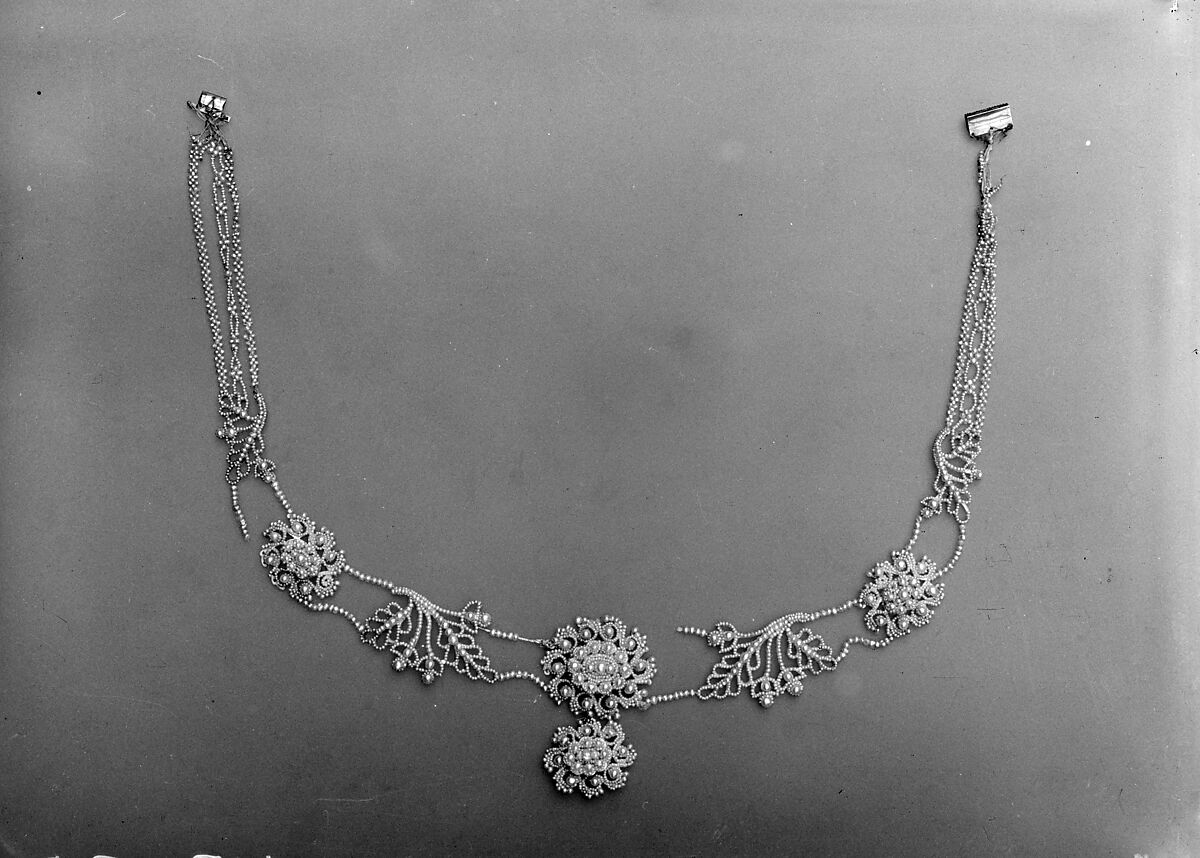
  7. Geoscience Australia: OpalPrimary source · 2026-10-04

    Supports: geology, history

  8. GIA: Opal Quality FactorsPrimary source · 2026-10-04

    Supports: appearance, treatments

  9. Australian Museum: What was Eric’s last supper?Primary source · 2026-10-04

    Supports: discovery

  10. GIA: A Useful Technique to Confirm the Hydrophane Nature of OpalPrimary source · 2026-10-04

    Supports: origins-reading, care

  11. GIA: Winter 1998 Gems & Gemology, polymer-impregnated synthetic opal observationsPrimary source · 2026-10-04

    Supports: treatments
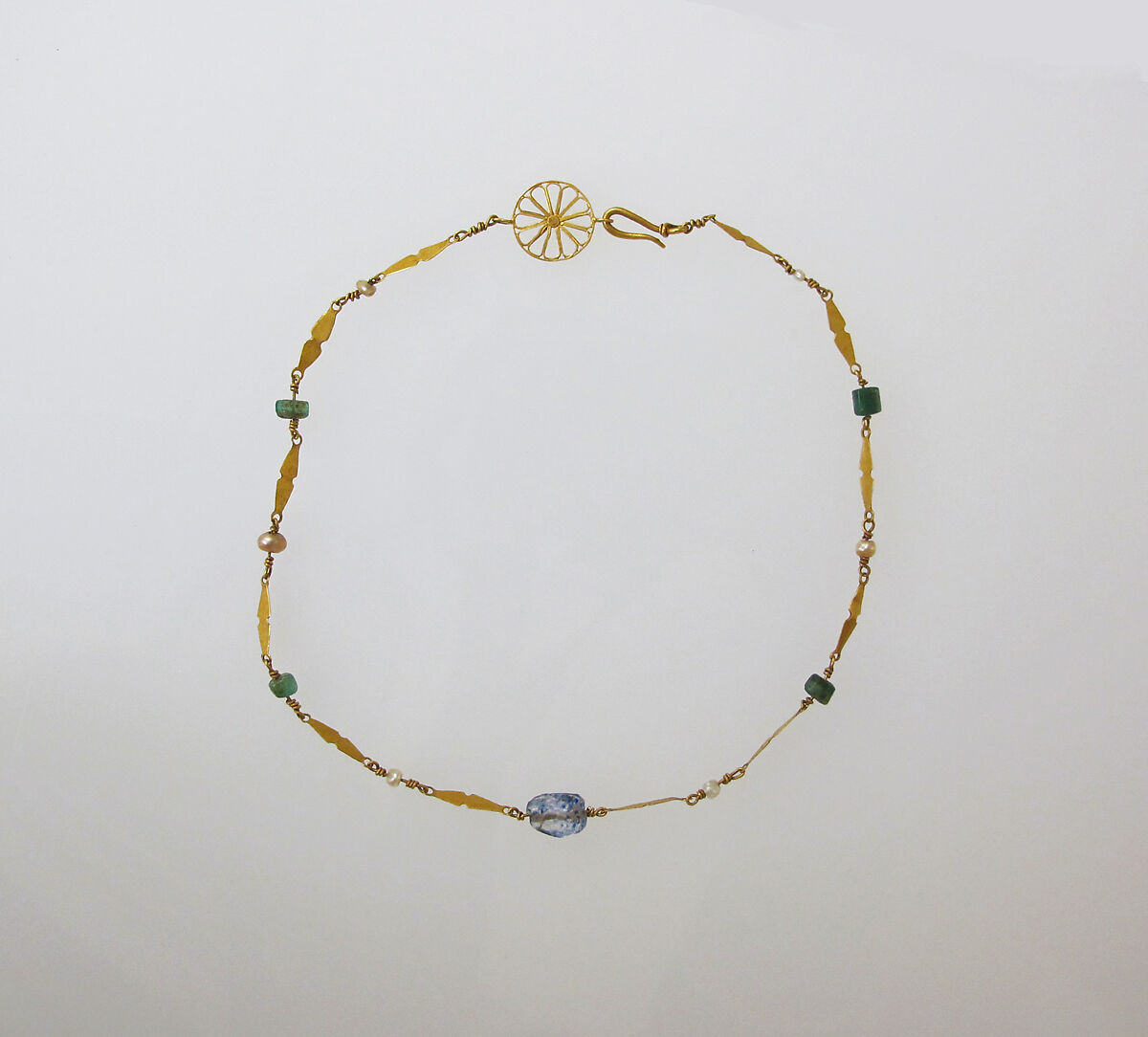
  12. GIA: An Introduction to Simulants or Imitation Gem MaterialsPrimary source · 2026-10-04

    Supports: treatments

16Jade materials

Jade

Jade rewards a closer look at how mineral grains, cultural names and the carver’s choices fit together.

Selected documented sources, including historic localities; not a complete deposit inventory or a claim about current mine operation. Mohs is a relative scratch-resistance ranking, not a linear scale or a toughness score.

Material
polycrystalline gem material
Composition
Jadeite: NaAlSi₂O₆; nephrite: calcium magnesium-iron amphibole aggregate
Mohs hardness
Jadeite 6.5–7; nephrite 6–6.5
Colours
green, white, lavender, yellow, black, orange

One name, different materials

Jade is a gem name covering more than one material. Jadeite jade is an aggregate dominated by jadeite, a pyroxene mineral; nephrite consists of tightly intergrown amphibole minerals. Both are rocks built from many small crystals rather than single transparent crystals waiting to be faceted. Their interlocking structure helps explain their remarkable toughness.

Modern terminology also includes certain green omphacite-rich materials. A label saying only jade therefore leaves an important question unanswered. Material identification, cultural naming and a seller’s description can overlap without being interchangeable. Green colour is neither necessary for jade nor sufficient to identify it.

Evidence: Jade: Description

Two geological routes to toughness

Jadeite forms in high-pressure, comparatively low-temperature settings associated with subduction, where one tectonic plate descends beneath another. Fluids circulating through deeply buried rocks help transport the chemical ingredients. Later uplift and erosion bring the resulting jade-bearing rocks within reach.

Nephrite has a different mineral recipe. GIA’s geological review describes formation where fluids alter suitable rocks: silica-bearing fluids can react with dolomite-rich material, or calcium-bearing fluids can interact with serpentinite. These are examples of metamorphism with chemical exchange. Similar finished forms can therefore conceal substantially different geological histories.

Evidence: Gems Formed in Metamorphic Rocks

Colour is only the beginning

Jadeite can be green, lavender, white, yellow, orange, brown or nearly black, sometimes with several colours in one piece. Nephrite commonly offers more muted greens, whites, greys and dark tones. Their patterns are opportunities for a carver rather than evidence of a failed single-colour gem.

Follow the light beneath a polished surface. Translucency gives depth; grain size affects texture; a mottled patch may become the deliberate focus of a design. A photograph can record those effects, but lighting and thickness strongly influence what the viewer sees.

Evidence: Jade: Description, Jadeite Jade Quality Factors

A Neolithic disk makes the history tangible

The Metropolitan Museum’s annular disk, object 17.118.43, is catalogued as nephrite from China’s Liangzhu culture, dated to the middle of the third millennium BCE. Its circular opening and restrained shape preserve a demanding achievement in grinding and polishing.

The museum cautiously interprets such objects as possible ritual possessions or signs of status. That distinction matters: the material and catalogue date are documented, while an exact original ceremony is not supplied. The disk also places Chinese nephrite craftsmanship thousands of years before jadeite became prominent in the later Chinese carving tradition.

Evidence: Annular disk (bi), object 17.118.43, Jade: History and Lore

Keep cultural names in their own setting

Te Papa explains that pounamu is a Māori category organised through appearance and cultural knowledge, not simply a translation of one mineral name. It can include nephrite and bowenite, and its named varieties attend to colour, markings and translucency.

This is a useful warning against flattening every jade tradition into one universal symbolism. A Chinese bi, a Mesoamerican jadeite ornament and a Māori pounamu taonga need their own histories. Precise mineral identification can sit beside cultural identification without replacing it.

Evidence: Pounamu: Mātauranga Māori Thesaurus

Scientific naming came much later

There is no single first discoverer of jade established by these sources. Worked objects long precede the laboratory distinction between its materials. In an 1881 paper, Augustin-Alexis Damour explicitly recalled his 4 May 1863 account of the composition and properties of the mineral he named jadeite.

That is a scientific naming milestone. It should not be retold as the discovery of an unknown material by people who had never used it. Likewise, a modern mine opening does not date the beginning of a much older artistic tradition.

Evidence: Nouvelles analyses sur la jadéite et sur quelques roches sodifères

A source map needs more than one colour

Myanmar and Guatemala are important documented jadeite sources; GIA also records Japan and Russia. Its 2024 Guatemalan report describes blue, green and lavender material, illustrating why a colour alone cannot assign a country.

Nephrite requires another map. GIA documents major green-nephrite regions in British Columbia, Siberia and northwestern China. Keep these broad source contexts separate from the documented locality of a particular carving. The workshop where an object was made is another part of its journey, not automatically the place where its rock formed.

Evidence: Guatemalan Jadeite Jade: Rough and Finished, Nephrite Jade from Multiple Sources

A, B and C describe interventions

In the jadeite treatment terminology described by GIA, A denotes natural material or material polished with wax only; B denotes acid bleaching followed by polymer impregnation; C denotes dyeing. These letters do not constitute a universal quality ladder.

Bleaching can remove unwanted colour components, while impregnation fills the resulting spaces. Ask for the actual material and treatment findings rather than relying on a reassuring letter. A well-cut natural rock can still have undergone a significant later intervention.

Evidence: Jade: Buyer’s Guide, An Introduction to Gem Treatments

Tough does not mean unscratchable

Jadeite’s Mohs hardness is 6.5–7; nephrite’s is 6–6.5. Their excellent resistance to breaking is a different property from their resistance to scratching. Protect polished surfaces from grit and harder jewellery.

Warm soapy water and a soft cloth are the cautious general choice. Heat from repairs and warm acids can cause harm, and treatment may change suitable cleaning methods. GIA permits ultrasonic and steam cleaning for untreated jade, but that is not permission to use them on an unidentified or treated object.

Evidence: Jade Care and Cleaning Guide

Notice the carver’s argument

Compare a cabochon, a bead strand and a bangle carved from one piece. A cabochon concentrates colour and translucency; a strand asks many stones to agree; a single-piece bangle commits a large area of rough to one continuous form. Look for where colour and grain have guided those decisions before asking which example is supposedly best.

Evidence: Jadeite Jade Quality Factors

Milestones with different meanings

Middle third millennium BCE: the Met’s Liangzhu nephrite disk. Late eighteenth century: jadeite becomes important in China’s established carving tradition. 1863: Damour’s jadeite naming account. 2024: GIA documents contemporary Guatemalan material. These dates concern an object, a trade development, scientific recognition and a research report respectively.

Evidence: Annular disk (bi), object 17.118.43, Jade: History and Lore, Nouvelles analyses sur la jadéite et sur quelques roches sodifères, Guatemalan Jadeite Jade: Rough and Finished

Words to carry forward

An aggregate contains multiple intergrown crystals. Translucent material passes light without a clear view through it. Metasomatism is rock alteration involving chemical exchange with fluids. A hololith is an object carved from one piece of material. For the next comparison, use the hardness-and-toughness guide and the guide to reading a gem map.

Evidence: Jade: Overview, Gems Formed in Metamorphic Rocks, Jadeite Jade Quality Factors

Places in the story

These places describe documented sources or historical settings. They do not establish the origin of an individual object.

  • Myanmar — Jadeite source; broad country/region evidence only.
  • Guatemala — Jadeite source; broad country/region evidence only.

Sources & reading

  1. Jade: OverviewGIA · 2026-10-04

    Educational context only; no identification, valuation or provenance opinion about an individual object.

  2. Jade: DescriptionGIA · 2026-10-04

    Educational context only; no identification, valuation or provenance opinion about an individual object.

  3. Jade: History and LoreGIA · 2026-10-04

    Broad history; late-eighteenth-century jadeite prominence is not treated as first-ever Chinese contact.

  4. Jade Care and Cleaning GuideGIA · 2026-10-04

    Educational context only; no identification, valuation or provenance opinion about an individual object.

  5. Source locality referenceGIA · 2026-10-03

    Supports: origins

  6. An Introduction to Gem TreatmentsGIA · 2026-10-04

    Educational context only; no identification, valuation or provenance opinion about an individual object.

  7. Jadeite Jade Quality FactorsGIA · 2026-10-04

    Educational context only; no identification, valuation or provenance opinion about an individual object.

  8. Gems Formed in Metamorphic RocksGIA · 2026-10-04

    2023 geological review; jadeite and nephrite formation are different.

  9. Annular disk (bi), object 17.118.43The Metropolitan Museum of Art · 2026-10-04

    Catalogue dates and material; ritual/status interpretation remains qualified.

  10. Pounamu: Mātauranga Māori ThesaurusMuseum of New Zealand Te Papa Tongarewa · 2026-10-04

    Cultural category is not identical to a mineral species.

  11. Nouvelles analyses sur la jadéite et sur quelques roches sodifèresAugustin-Alexis Damour / Bulletin de Minéralogie via Persée · 2026-10-04

    1881 primary paper recalls the author’s 4 May 1863 naming account; not first human use.

  12. Guatemalan Jadeite Jade: Rough and FinishedGIA · 2026-10-04

    2024 observations; source-country context, not current production ranking or authentication by colour.

  13. Nephrite Jade from Multiple SourcesGIA · 2026-10-04

    2020 source-region context; no current mine output claim.

  14. Jade: Buyer’s GuideGIA · 2026-10-04

    A/B/C treatment terminology; not quality grades.

17Lapis lazuli

Lapis Lazuli

A blue rock can carry a story from mountain geology to jewellery and the painter’s palette.

Selected documented sources, including historic localities; not a complete deposit inventory or a claim about current mine operation. Mohs is a relative scratch-resistance ranking, not a linear scale or a toughness score.

Material
rock
Composition
Multi-mineral rock, commonly including lazurite, calcite and pyrite
Mohs hardness
5–6
Colours
blue, violetish blue, white, gold flecks

A rock with several voices

Lapis lazuli is a rock, not a mineral species or a single crystal. Lazurite supplies its characteristic blue, calcite commonly makes pale patches, and pyrite adds metallic yellow flecks. Other minerals can also participate. There is consequently no single chemical formula that describes every piece of lapis.

The gold-coloured points are generally pyrite rather than gold. A patterned specimen does not fail to be lapis because it contains several minerals: that mixture is part of its identity. The useful question is how those components are arranged in this particular piece.

Evidence: Lapis Lazuli: Overview, GIA GemKids: Lapis Lazuli

The blue has a geological setting

A GIA study of Chile’s Coquimbo deposit describes lapis within limestone altered by heat, followed by chemical changes that introduced sulfur needed for lazurite. The resulting rock also contains minerals including calcite, wollastonite and diopside.

This is a specific documented setting, not a recipe to impose on every lapis deposit. It shows why a rock’s neighbours matter: the white and blue regions can preserve evidence of reactions between host material and incoming chemical components. A polished slice hides the mountain around it, but not necessarily every trace of that history.

Evidence: Lapis Lazuli from the Coquimbo Region, Chile

Read the pattern before the name

Lapis spans violetish, deep royal and lighter blues; its mineral mixture influences the result. It can be opaque or allow some light through thinner areas, with a surface lustre ranging from waxy to glassy.

Look first at the relationship between blue fields, pale veins and small metallic points. Then look at the polish. An even dark blue surface and a deliberately patterned carving offer different visual experiences. Describing the pattern is more informative than treating every stone as a blue rectangle on a colour chart.

Evidence: Lapis Lazuli: Description

Colour travelled farther than the stone’s makers

Badakhshan, in present-day Afghanistan, anchors a long history of lapis mining and exchange. GIA describes the material moving through trade networks to distant societies and being fashioned into beads, seals, bowls, inlays and carved objects.

Those categories reveal several kinds of skill. A bead must be shaped and pierced; an inlay must fit its surrounding design; a carved vessel demands control of a larger piece. The history is therefore more than a list of rulers who liked blue. It also belongs to miners, merchants and makers whose individual names are often lost.

Evidence: Lapis Lazuli: History and Lore

A painter borrowed the mountain’s blue

In Raphael’s Ansidei Madonna of 1505, the National Gallery’s technical study identifies natural ultramarine in the final blue glaze of the Madonna’s drapery. That pigment was derived from lapis lazuli imported from Afghanistan.

This creates a striking second life for the material: a rock appreciated as a solid ornament could be processed into an artist’s colour. The identification comes from conservation research into the painting’s layers. The blue seen on a screen, by itself, would not establish the pigment. The same caution applies when looking at an apparently blue gemstone in a photograph.

Evidence: Studying Raphael: Pigments and Medium

A long history is not one discovery date

These sources do not establish a single discoverer of lapis. Ancient use, a traveller’s written description, the opening of a particular mine and modern mineral analysis are different events. GIA records Marco Polo’s reference to the mining region in 1271; that date documents an account, not the beginning of lapis working.

When an object’s archaeological context is missing, preserve that gap instead of filling it with a convenient ancient trade route.

Evidence: Lapis Lazuli: History and Lore

Afghanistan is important, but not exclusive

Afghanistan, Chile and the Lake Baikal region of Russia all belong on a broad lapis source map. That distribution makes geographic shortcuts unreliable. An attractive deep blue does not prove Afghan origin, and abundant calcite does not assign a stone to Chile.

Keep a seller’s source claim separate from a documented collection locality. An antique object’s place of manufacture is also distinct from where its stone was quarried. A useful label may record both, or honestly leave one unknown.

Evidence: Lapis Lazuli: Description

A deeper blue may have a later history

Lapis can be dyed to strengthen colour or disguise pale areas. Wax or oil impregnation can alter colour and lustre, even when no dye is present. Glass, plastic and ceramics have also been used to imitate lapis.

These are different situations: treated lapis remains a natural rock that has been modified, while an imitation substitutes another material. A sparkling fleck does not settle either question. Look for specific treatment information rather than an unqualified promise that the object is genuine.

Evidence: Lapis Lazuli: Buyer’s Guide

Protect the surface and any treatment

With Mohs hardness around 5–6, depending on composition, and fair toughness, lapis needs protection from scratching and impacts. Heat and solvents can disturb waxes or other surface treatments; some dyes are unstable.

GIA recommends warm soapy water, with a small inconspicuous test if dye treatment is a concern. Keep cleaning gentle and avoid steam and ultrasonic cleaners. For an antique inlay, composite object or damaged carving, its joins and surrounding materials also matter, so an object-specific conservation assessment should take priority over a general gemstone routine.

Evidence: Lapis Lazuli: Care and Cleaning, Lapis Lazuli: Buyer’s Guide

Find the relationship between material and form

Try comparing a bead, a flat inlay and a small carving. How does each arrange the white and gold-coloured areas around the blue? Does the polish reveal a continuous surface or interrupt it? Market preferences often favour intense blue with little calcite, but close looking can still explain the character of a more patterned object without pretending to assign it a grade.

Evidence: Lapis Lazuli: Buyer’s Guide

A few reliable anchors

1271: Marco Polo’s mining-region account, as summarised by GIA. 1505: Raphael’s Ansidei Madonna uses natural ultramarine. 1905: the start of mining in Chile’s Coquimbo region reported in GIA’s 2000 study. Each date describes a different part of the material’s journey.

Evidence: Lapis Lazuli: History and Lore, Studying Raphael: Pigments and Medium, Lapis Lazuli from the Coquimbo Region, Chile

From rock to colour

An aggregate combines mineral grains. Lazurite is the blue mineral central to lapis; pyrite is the metallic yellow mineral often visible beside it. Natural ultramarine is a pigment derived from lapis. An inlay is a shaped insert set into another surface. Compare jade for another aggregate material, then use the map-reading guide to separate source from workshop.

Evidence: GIA GemKids: Lapis Lazuli, Studying Raphael: Pigments and Medium, Lapis Lazuli: History and Lore

Places in the story

These places describe documented sources or historical settings. They do not establish the origin of an individual object.

  • Afghanistan / Badakhshan — Historic lapis mining region; broad country/region evidence only.

Sources & reading

  1. Lapis Lazuli: OverviewGIA · 2026-10-04

    Educational context only; no identification, valuation or provenance opinion about an individual object.

  2. Lapis Lazuli: History and LoreGIA · 2026-10-04

    Historical accounts, not an exact first-use date or current mine-status assessment.

  3. Lapis Lazuli: Care and CleaningGIA · 2026-10-04

    Educational context only; no identification, valuation or provenance opinion about an individual object.

  4. GIA GemKids: Lapis LazuliGIA · 2026-10-04

    Educational context only; no identification, valuation or provenance opinion about an individual object.

  5. An Introduction to Gem TreatmentsGIA · 2026-10-04

    Educational context only; no identification, valuation or provenance opinion about an individual object.

  6. Lapis Lazuli: DescriptionGIA · 2026-10-04

    Educational context only; no identification, valuation or provenance opinion about an individual object.

  7. Lapis Lazuli: Buyer’s GuideGIA · 2026-10-04

    Treatment, imitation and visual assessment; generic template mistakes elsewhere on page are not used.

  8. Lapis Lazuli from the Coquimbo Region, ChileGIA · 2026-10-04

    2000 primary deposit study; 1905 mining history and geology, not present production or company status.

  9. Studying Raphael: Pigments and MediumThe National Gallery, London · 2026-10-04

    Technical study of Ansidei Madonna (1505); no inference of pigment from colour alone.

18Turquoise

Turquoise

Blue-green colour, microscopic crystals and carefully fitted mosaic pieces reveal several scales of turquoise’s story.

Selected documented sources, including historic localities; not a complete deposit inventory or a claim about current mine operation. Mohs is a relative scratch-resistance ranking, not a linear scale or a toughness score.

Material
mineral aggregate
Composition
CuAl₆(PO₄)₄(OH)₈·4H₂O
Mohs hardness
5–6
Colours
blue, greenish blue, green

Composition note. The ideal formula shown follows GIA’s 2022 and 2024 primary research. GIA’s general overview instead prints five waters; that source discrepancy is recorded here rather than silently treated as equivalent. Evidence: Composition and Spectral Characteristics of Porcelain-Treated Turquoise, Mineralogy and Geochemistry of Turquoise from Tianhu East, Xinjiang, China, GIA: Turquoise

A mineral usually seen as a mass

Turquoise is a hydrated copper-aluminium phosphate mineral, commonly encountered as an aggregate of microscopic crystals. It is a mineral gem, unlike organic amber. Closely packed crystals can give polished turquoise a fine, waxy appearance; looser packing leaves more pore space and can produce a coarser surface.

This structure helps explain why two blue stones with similar outlines may behave differently. Texture is part of the material’s character, not merely a finish applied by the cutter.

Evidence: GIA: Turquoise, GIA: Turquoise description

Weathering can gather the right ingredients

Turquoise commonly develops when copper-bearing groundwater reacts with rocks supplying aluminium and phosphorus in dry environments. At Tianhu East in Xinjiang, a 2024 study examined a more specific arrangement: turquoise veins occupy fractures in quartzite, while nearby black shale likely supplied much of the necessary chemistry.

The researchers propose weathering, dissolution, transport and precipitation as a sequence for this deposit. The distinction between an element source and the rock that hosts the finished mineral makes the geology easier to read. It is a deposit-specific model, not a claim that every turquoise mine has identical rocks.

Evidence: GIA: Turquoise description, Mineralogy and Geochemistry of Turquoise from Tianhu East, Xinjiang, China

A clear blue field or a network of lines

Colour ranges from blue through greenish blue to green. Matrix is the surviving host material visible as patches or veins. In spiderweb turquoise, delicate lines form a contrasting network across the coloured surface. Some viewers favour this pattern; others prefer an uninterrupted blue.

GIA notes that Persian blue can describe a colour regardless of origin. The phrase is therefore useful colour language, but it does not document an Iranian mine. Keep an appealing visual description separate from the evidence for locality.

Evidence: Turquoise Quality Factors

Thousands of small pieces become one serpent

The British Museum’s double-headed serpent, dated 1400–1521 CE, gives turquoise a role very different from a solitary ring stone. The object was made in what is now Mexico and is covered with about 2,000 turquoise pieces over wood. Tiny areas of colour work together to describe a sinuous body and two open jaws.

The museum catalogue describes carefully selected tiles, pine-resin adhesive and contrasting shell details. It suggests ceremonial use, possibly worn or carried, rather than presenting that function as certain. Notice the precision required to turn many irregular pieces into a continuous surface. The making place of this object does not, on its own, establish the geological source of every tile.

Evidence: Pectoral; mosaic, museum number Am1894,634, 12 things not to miss at the British Museum: Aztec serpent

The European name arrives late in a longer history

Ancient Egyptian jewellery and Chinese carving establish turquoise use long before its French-derived European name. GIA places the expression behind turquoise in the thirteenth century and connects it with trade through Turkish sources. That naming episode is not a first discovery.

Nor should one continent’s chronology stand in for all the others. The selected evidence supports multiple histories of use, while leaving the first human encounter unnamed.

Evidence: GIA: Turquoise history and lore

Source regions are context, not grades

Iran’s Nishapur district, Arizona and Nevada in the United States, and Hubei in China are established source contexts in GIA’s account. These places have different mining histories, but their names do not rank every stone produced there. An individual piece still needs its own description and documentation.

The broader Chinese record also includes Tianhu East in Xinjiang. The 2024 researchers caution that limited comparative chemical data prevented reliable origin assignment from trace-element profiles alone. A photographed matrix pattern is still less evidence.

Evidence: Source locality reference, Mineralogy and Geochemistry of Turquoise from Tianhu East, Xinjiang, China

A smooth surface can have more than one explanation

Porous turquoise may be impregnated with resin, wax or other materials, and colour can be modified with dye. In a 2015 laboratory case, spectroscopic work found several impregnation components alongside evidence of dye. One treatment label did not tell the whole story.

A 2022 study examined another approach using an inorganic silicate additive, called porcelain treatment in the Chinese trade. It can resemble fine untreated material closely. Ask for specific treatment disclosure rather than treating a strong polish as proof of an untouched gem; a photograph cannot settle the question.

Evidence: Impregnated and Dyed Turquoise, Composition and Spectral Characteristics of Porcelain-Treated Turquoise

Porosity changes the everyday precautions

At Mohs 5–6, turquoise needs protection from scratching, but surface stability matters too. Cosmetics, chemicals and even skin oils or perspiration can discolour it. High heat may damage both the material and some treatments. Put jewellery on after applying products and remove it before cleaning work.

GIA recommends warm, soapy water and rules out steam and ultrasonic cleaners. If a piece combines turquoise with adhesive, other gems or an old setting, ask for advice suited to the complete object rather than cleaning every component as though it were identical.

Evidence: GIA: Turquoise care and cleaning

Compare the design with the available material

A cabochon emphasizes colour and polish; a mosaic builds relationships between small pieces. Follow the matrix: does the design frame its pattern, echo it or seek an uninterrupted field?

GIA identifies colour, texture and matrix as central quality considerations. Personal preference can still favour a green tone or dramatic veining. Record what attracts you while reserving conclusions about treatment and provenance for appropriate evidence.

Evidence: Turquoise Quality Factors

Milestones in naming, making and research

Thirteenth century: the French-derived name enters the European story. 1400–1521 CE: the museum’s date range for the double-headed serpent. 2015: a published case identifies multiple treatments together. 2022: research characterizes porcelain-treated material. 2024: the Tianhu East study develops a deposit-specific formation model.

Evidence: GIA: Turquoise history and lore, Pectoral; mosaic, museum number Am1894,634, Impregnated and Dyed Turquoise, Composition and Spectral Characteristics of Porcelain-Treated Turquoise, Mineralogy and Geochemistry of Turquoise from Tianhu East, Xinjiang, China

Words that describe structure and workmanship

An aggregate is a mass of crystals. Porosity describes the spaces within a material. Matrix is remaining host material. A tessera is one small mosaic piece. A cabochon has a polished curved surface rather than the repeated flat facets of a faceted gem.

Evidence: GIA: Turquoise description, Pectoral; mosaic, museum number Am1894,634, Turquoise Quality Factors

Places in the story

These places describe documented sources or historical settings. They do not establish the origin of an individual object.

  • Iran / Nishapur — Historic source; broad country/region evidence only.
  • United States / Arizona and Nevada — Documented sources; broad country/region evidence only.
  • China / Hubei — Documented source; broad country/region evidence only.

Sources & reading

  1. GIA: TurquoiseGIA · 2026-10-04

    Identity and hardness; its five-water formula conflicts with the four-water formula in GIA’s 2022 and 2024 research, flagged separately for correction.

  2. GIA: Turquoise descriptionGIA · 2026-10-04

    Supports: appearance, identity

  3. GIA: Turquoise history and loreGIA · 2026-10-04

    Supports: history, discoveryContext

  4. GIA: Turquoise care and cleaningGIA · 2026-10-04

    Supports: care, treatments, hardness

  5. Source locality referenceGIA · 2026-10-04

    Selected source regions and historical mining context; no claim about current production rankings or mine status.

  6. GIA: Introduction to gem treatmentsGIA · 2026-10-04

    Retained baseline reference; the expanded treatment account uses the 2015 and 2022 material-specific studies.

  7. Turquoise Quality FactorsGIA · 2026-10-04

    Colour, matrix and cutting vocabulary; Persian blue is not a geographic-origin certificate.

  8. Mineralogy and Geochemistry of Turquoise from Tianhu East, Xinjiang, ChinaGIA / Gems & Gemology · 2026-10-04

    2024 deposit-specific model; authors acknowledge inadequate comparative data for trace-element origin assignment.

  9. Pectoral; mosaic, museum number Am1894,634British Museum · 2026-10-04

    Dated object and construction; ceremonial interpretation remains qualified. Older source-route speculation is not adopted.

  10. 12 things not to miss at the British Museum: Aztec serpentBritish Museum · 2026-10-04

    About 2,000 turquoise pieces, wooden base, Mexico and qualified ceremonial function; not a tile-origin analysis.

  11. Impregnated and Dyed TurquoiseGIA / Gems & Gemology · 2026-10-04

    2015 NGTC laboratory case; multiple treatments in one tested specimen, not a universal treatment recipe.

  12. Composition and Spectral Characteristics of Porcelain-Treated TurquoiseGIA / Gems & Gemology · 2026-10-04

    2022 investigation of inorganic treatment and identification limits; also gives the modern four-water chemical formula.

19Biogenic gems

Pearl

Pearls grow in mollusks.

Compare Pearl with another gem ↗

Selected documented sources, including historic localities; not a complete deposit inventory or a claim about current mine operation. Mohs is a relative scratch-resistance ranking, not a linear scale or a toughness score.

Material
biogenic gem material
Composition
Predominantly calcium carbonate with organic components
Mohs hardness
about 2.5
Colours
white, cream, pink, grey, black, gold

Two images, two contexts

Source-identified references, not matching specimens or photographs of the museum objects discussed later in this profile. Images are not to a common scale and cannot establish treatment or provenance.

Black-and-white photograph of an open pearl necklace with looping strands, floral motifs, and a central pendant.

Pearl necklace, 1800–1900. The Met, 39.43a. Shown in a black-and-white collection photograph.

The Metropolitan Museum of Art, Rogers Fund, 1939; 39.43a. Public domain / CC0.

Context and image limits

Best for historical context. It is a black-and-white archival image, so it cannot demonstrate pearl bodycolor or orient. The object record does not establish cultured-versus-natural origin.

Resized display copy; full photograph retained.
A delicate gold necklace alternates small pale pearls and green beads, with a larger blue bead near the bottom.

Roman necklace with pearls and beryl beads, 1st–2nd century CE, in gold, pearl, and beryl. The Met, 25.192.1.

The Metropolitan Museum of Art, Gift of George D. Pratt, 1925; 25.192.1. Public domain / CC0.

Context and image limits

This is a mixed-material jewel. The museum identifies the green/blue beads as beryl, without establishing a more specific variety.

Resized display copy; full photograph retained.

A gem made by a living animal

Pearl belongs among gems, but it is not a single crystal excavated from a rock. Certain mollusks produce pearls through biological mineralization. Calcium carbonate is the principal mineral component, accompanied by organic material. In nacreous pearls, layered nacre gives the familiar lustrous appearance; not every pearl is nacreous.

Natural and cultured pearls both come from mollusks. The distinction is whether people initiated their formation. A cultured pearl is therefore a different category from a laboratory-grown mineral crystal, and neither term means an imitation. A coated bead designed to look like a pearl is another category again. These distinctions are more informative than the ambiguous word real.

Evidence: GIA: Pearl, GIA: Pearl Research, GIA: Applications of X-Ray Radiography and X-Ray Computed Microtomography in Gemology

Formation is biological, and culture takes several forms

Natural pearls form without deliberate human intervention. In pearl culture, technicians introduce suitable tissue, sometimes together with a bead nucleus, so that the mollusk forms a pearl sac and deposits material around it. Not every cultured pearl contains a bead. Nor should an irregular shape be treated as proof that a pearl formed naturally.

The process depends on living animals and their aquatic surroundings. Water conditions and mollusk health matter to the resulting pearls, so a pearl's origin has an ecological dimension. That connection does not, by itself, certify that every farm or finished jewel meets a particular environmental standard.

Evidence: GIA: Pearl description, GIA: Pearl

Look past roundness

A pearl's bodycolor is its overall hue; an overtone is a translucent-looking secondary color; orient is a shifting iridescent effect. These are not interchangeable descriptions. White, cream, gray, gold and darker pearls can all be attractive, and a particular hue alone does not identify the producing species, country or treatment history.

Luster concerns the strength and sharpness of reflected light. Surface condition, nacre quality, size and shape also matter. Baroque pearls have irregular forms that can invite inventive settings rather than represent failed spheres. In a strand, matching is an additional achievement: the relationship among pearls can be as important as the isolated perfection of one bead.

Evidence: GIA: Pearl Quality Factors

Ancient admiration, modern abundance

People valued natural pearls for centuries before commercial pearl farming. Historic collecting and trading grounds included the Persian Gulf, waters around Sri Lanka, and freshwater systems in Asia and Europe. Their role in jewelry was never limited to a single style: pearls could express rank, religious meaning or the pleasures of color and texture.

Chinese experiments with pearl culture predated the modern industry. Japanese pioneers developed successful whole cultured pearls around the beginning of the twentieth century, and these became commercially important in the 1920s. That chronology separates old knowledge of the material from the later technologies that changed its availability. Pearl itself has no credible single discoverer.

Evidence: GIA: Pearl history and lore

Why X-rays belong in the pearl story

The rise of cultured pearls created a problem that beauty could not solve: how could an observer distinguish formation histories hidden beneath similar surfaces? GIA's history of X-ray imaging places early pearl-culture experiments alongside the development of radiography in the 1890s. The techniques later met in gem laboratories.

X-ray examination can reveal internal structures that provide evidence for natural or cultured formation. Bead nuclei are one useful feature, but non-bead cultured pearls make the problem more subtle than looking for a single round centre. A laboratory evaluates patterns and other evidence together. The lesson is practical: shape, age of a setting and family tradition are not substitutes for identification.

Evidence: GIA: Applications of X-Ray Radiography and X-Ray Computed Microtomography in Gemology

Four map regions, several kinds of pearl

Nada's existing markers illustrate Japan's association with akoya culture, China's freshwater production, Australia's South Sea pearl culture, and French Polynesia's Tahitian cultured pearls. They are representative regions rather than an exhaustive inventory. Indonesia and the Philippines are also documented South Sea sources, and akoya culture is not confined to Japan.

A pearl's trading location may be far from its growth environment. The name Tahitian also refers to a wider cultured-pearl category associated with French Polynesia, rather than a guarantee of one island's farm. Use a map to understand geography; use a supplier's traceable documentation and appropriate laboratory findings to investigate a specific necklace.

Evidence: GIA: Pearl description

Culture and treatment answer different questions

A cultured pearl can subsequently be treated, just as a natural pearl can. GIA research describes post-harvest processes including bleaching, color modification, luster enhancement and optical brightening. Dyeing can create dark or golden appearances that resemble other pearl categories. A color name therefore needs context, especially when the seller also implies a particular source or mollusk.

Ask separately whether the pearls are natural, cultured or imitation, and whether their appearance has been modified. A laboratory may need advanced testing to resolve the second question. Do not infer that matching proves treatment, or that an uneven strand proves natural color. Both are visual observations, not a complete history.

Evidence: GIA: Pearl Research

Protect the surface and the string

Pearls are soft compared with most familiar gemstone crystals, so keep them away from abrasive surfaces and harder jewelry. Chemicals, acids and high heat can damage them. Apply cosmetics and perfume before putting pearls on, and wipe the pearls gently with a very soft clean cloth after wearing to remove residues.

Never use steam or ultrasonic cleaning. Warm, mildly soapy water may be appropriate for occasional careful cleaning, but the mounting and string need attention too. Let a wetted strand dry fully before wearing. Avoid prolonged soaking, and have worn stringing or loose settings checked. For antique, glued, coated or otherwise uncertain pieces, obtain advice before attempting more than a gentle wipe.

Evidence: GIA: Pearl care and cleaning

Places in the story

These places describe documented sources or historical settings. They do not establish the origin of an individual object.

  • Japan — Akoya culture region; broad country/region evidence only.
  • China — Freshwater culture region; broad country/region evidence only.
  • Australia — South Sea culture region; broad country/region evidence only.
  • French Polynesia — Tahitian culture region; broad country/region evidence only.

Sources & reading

  1. GIA: PearlGIA · 2026-10-04

    Supports: identity, properties

  2. GIA: Pearl descriptionGIA · 2026-10-04

    Supports: appearance, identity

  3. GIA: Pearl history and loreGIA · 2026-10-04

    Supports: history, discoveryContext

  4. GIA: Pearl care and cleaningGIA · 2026-10-04

    Supports: care, treatments, hardness

  5. GIA: Introduction to gem treatmentsGIA · 2026-10-04

    Supports: treatments

  6. GIA: An Introduction to Imitation GemsPrimary source · 2026-10-04

    Supports: identity

  7. GIA: Pearl Quality FactorsPrimary source · 2026-10-04

    Supports: appearance

  8. GIA: Applications of X-Ray Radiography and X-Ray Computed Microtomography in GemologyPrimary source · 2026-10-04

    Supports: discovery

  9. GIA: Pearl ResearchPrimary source · 2026-10-04

    Supports: treatments

20Organic gems

Amber

Ancient tree resin can carry a forest’s traces, a carver’s decisions and an unexpected blue glow.

Selected documented sources, including historic localities; not a complete deposit inventory or a claim about current mine operation. Mohs is a relative scratch-resistance ranking, not a linear scale or a toughness score.

Material
fossilized resin
Composition
Complex fossilized organic resin; no single universal mineral formula
Mohs hardness
2–2.5
Colours
yellow, orange, brown, reddish brown

An organic gem with a botanical beginning

Amber is fossilized plant resin, not a mineral crystal. Its origin belongs to living trees, although the resulting material can outlast the forest by millions of years. The distinction matters: amber does not grow as a quartz crystal does, and a neat mineral formula cannot capture every natural resin composition.

Leaves, tiny animals and bubbles can occur inside it. These inclusions make some specimens useful to researchers, but an attractive trapped insect is only the beginning of an identification question.

Evidence: GIA: Amber, GIA: Amber description, GIA: Amber history and lore

A forest product becomes a geological material

Resin helped trees seal injuries and defend themselves. Material that survived burial underwent chemical changes, losing volatile components while its molecules joined into larger structures. Getty’s scientific overview emphasizes suitable burial conditions and polymerization, rather than the popular idea that amber is simply tree sap turned to stone.

The transition from fresh resin to mature amber is a continuum. Age, chemistry and the burial environment all matter; there is no universally agreed birthday at which every resin becomes amber. Copal generally names less mature resin, so an age estimate alone should not replace material examination.

Evidence: What Is Amber?

Cloudiness can be part of the character

Transparent honey colours are familiar, but amber also appears milky, orange, reddish or brown. Numerous minute gas bubbles can make a piece cloudy. A softly glowing bead and a clear specimen with an insect therefore offer different visual experiences rather than one automatically being the failed version of the other.

For close looking, distinguish the colour of the material from the things suspended inside it and from reflections on its polished surface.

Evidence: GIA: Amber description

Blue can be light emitted at the surface

A 2014 study in Gems & Gemology investigated blue amber from the Dominican Republic and Indonesia. The striking blue-green effect was ultraviolet-stimulated fluorescence concentrated near the surface. Light transmitted through the material could still look yellow or warmer, especially through thicker areas.

That is a useful reason to compare lighting conditions. A blue appearance does not mean that every part of the piece has a blue body colour, and it does not by itself establish where the amber originated.

Evidence: Color Phenomena of Blue Amber

A small lion retains evidence of being used

The Getty Museum’s Etruscan Lion’s Head pendant, dated 550–500 BCE, turns amber into a snarling miniature sculpture. Its mouth opens, its tongue projects and its mane is carefully worked. The catalogue records brownish-red colour in ordinary illumination and brighter red when light passes through it.

More revealing than the fierce expression are worn grooves beside its suspension holes. Getty interprets these as evidence of prolonged use, with a cord gradually abrading the amber. The precise way it was displayed remains uncertain. Its surviving provenance records a 1976 donation, not a documented ancient excavation. The carving date, wear history and modern collection record answer different questions.

Evidence: Pendant: Lion’s Head, accession 76.AO.80

A dated carving is not the first discovery

No first human discoverer is established by these sources. Ancient working evidence is a more reliable starting point: the Getty study identifies carving marks, drilling traces and polishing on surviving amber objects. Such evidence tells us that craftspeople understood and shaped the material.

Keep that history distinct from geological age. An ancient pendant was fashioned long after the resin formed; a modern excavation or museum acquisition is later again.

Evidence: The Working of Amber: Ancient Evidence and Modern Analysis

A beach is a recovery place, not necessarily a forest

The Baltic coast is central to amber’s European story, including Poland, Germany and Russia. Getty describes repeated erosion and redeposition, explaining why the place where amber is collected need not mark the forest that produced its resin. Storms could return buried pieces to accessible shores.

Dominican and Indonesian amber belong to other geological settings. A regional source label should preserve the actual documentation available; neither a warm colour nor a visible insect supplies an exact locality.

Evidence: Where Is Amber Found?, Color Phenomena of Blue Amber

Appearance and authenticity require separate questions

Heat and dyes can alter amber’s colour, and heat with pressure can produce green material. Getty’s discussion of forgery also records manufactured objects using plastics, synthetic resin and compressed amber. Those categories should not be folded into the single reassuring word natural.

Ask separately what the material is, whether it was modified, and what supports any archaeological attribution. A genuine piece of amber need not be an ancient carving. Household burning, scratching or solvent tests can damage an object without establishing its history.

Evidence: Amber Quality Factors, Amber and Forgery

Soft material calls for a gentle routine

Amber has a Mohs hardness of only 2–2.5 and poor toughness. Protect it from scratches, knocks, heat and chemicals. Prolonged light exposure may darken it; dyes can also change or fade. Its survival in a museum should not suggest that a jewel is indifferent to everyday wear.

GIA recommends warm water with mild soap. Avoid steam, ultrasonic cleaning and solvents, and keep pieces apart from harder gems and sharp metal edges. An old or deteriorating carving needs condition-specific conservation advice.

Evidence: GIA: Amber care and cleaning

Read the shape as a choice

Ancient amber carving often favoured compact designs with vulnerable projections reduced. Sometimes makers exploited a nodule’s irregular form rather than carving it into a standardized outline. Look for how the design accommodates its material: a tucked limb, a curved body or a shortened neck may help the whole object hold together.

The most rewarding label connects visible decisions with documented evidence. It need not promise healing powers or identify an inclusion from a photograph.

Evidence: The Working of Amber: Ancient Evidence and Modern Analysis

Three clocks, kept separate

550–500 BCE: the assigned making date of the Getty Lion’s Head. 1976: its recorded donation to the museum. 2014: publication of the blue-amber fluorescence study. These milestones describe craftsmanship, collecting and research; none is a universal discovery date for amber.

Evidence: Pendant: Lion’s Head, accession 76.AO.80, Color Phenomena of Blue Amber

Useful words for a closer look

Polymerization joins smaller molecules into larger structures. An inclusion is material enclosed within a gem. Fluorescence is light emission stimulated by absorbed radiation. Provenance records an object’s documented history; a geological source identifies where its material formed or was recovered.

Evidence: What Is Amber?, GIA: Amber description, Color Phenomena of Blue Amber, Pendant: Lion’s Head, accession 76.AO.80

Places in the story

These places describe documented sources or historical settings. They do not establish the origin of an individual object.

  • Poland / Baltic coast — Documented amber region; broad country/region evidence only.
  • Germany / Baltic coast — Documented amber region; broad country/region evidence only.
  • Russia / Baltic coast — Documented amber region; broad country/region evidence only.

Sources & reading

  1. GIA: AmberGIA · 2026-10-04

    Organic identity and properties only; simplified chemistry and DNA claims on this page are not adopted.

  2. GIA: Amber descriptionGIA · 2026-10-04

    Supports: appearance, identity

  3. GIA: Amber history and loreGIA · 2026-10-04

    Inclusions and scientific interest; not evidence for a first discoverer or ancient trade chronology.

  4. GIA: Amber care and cleaningGIA · 2026-10-04

    Supports: care, treatments, hardness

  5. GIA: Introduction to gem treatmentsGIA · 2026-10-04

    Retained baseline reference; this expanded profile uses amber-specific research for its treatment account.

  6. What Is Amber?J. Paul Getty Museum · 2026-10-04

    Resin chemistry, burial and maturation; stresses that amber formation has no universally agreed age threshold.

  7. Color Phenomena of Blue AmberGIA / Gems & Gemology · 2026-10-04

    2014 study of Dominican and Indonesian samples; fluorescence and transmission colour, not photo-based origin identification.

  8. Pendant: Lion’s Head, accession 76.AO.80J. Paul Getty Museum · 2026-10-04

    Object-specific dating, condition, wear and recorded ownership; original archaeological findspot is not supplied.

  9. The Working of Amber: Ancient Evidence and Modern AnalysisJ. Paul Getty Museum · 2026-10-04

    Working traces and design in surviving ancient carvings; hypotheses about ritual use are not verified powers.

  10. Where Is Amber Found?J. Paul Getty Museum · 2026-10-04

    Baltic sources and redeposition; historical overview, not a current mining inventory.

  11. Amber Quality FactorsGIA · 2026-10-04

    Appearance modification; no market valuation or treatment determination for an individual specimen.

  12. Amber and ForgeryJ. Paul Getty Museum · 2026-10-04

    Distinguishes material imitation and modern carving forgery; no home authentication procedure.

21Quartz

Amethyst

Purple quartz connects crystal-lined cavities, ancient carving and the modern cutter’s handling of colour.

Selected documented sources, including historic localities; not a complete deposit inventory or a claim about current mine operation. Mohs is a relative scratch-resistance ranking, not a linear scale or a toughness score.

Material
mineral variety
Composition
SiO₂
Mohs hardness
7
Colours
purple, lilac, reddish purple

Purple is the variety, quartz is the mineral

Amethyst is the purple variety of quartz, whose composition is silicon dioxide. Citrine, rock crystal and several other familiar gem names belong to the same mineral species. A change of variety name does not necessarily mean a change of mineral.

A quartz crystal can present a six-sided column ending in pointed faces. A faceted amethyst is something different: a selected piece shaped to handle light. Natural growth surfaces and polished facets deserve different descriptions, even when both make the material look beautifully geometric.

Evidence: Amethyst: Overview, Amethyst: Description

A cavity can become a crystal gallery

Some Brazilian amethyst grows in hollow geodes lined with crystals. The scale can be striking: GIA describes examples large enough for a person to stand inside. An intact geode and a small faceted gem may therefore represent very different choices about preserving and using the same resource.

Brazil does not have one uniform amethyst setting. David Stanley Epstein’s 1988 field study compared Marabá, Pau d’Arco and Rio Grande do Sul, describing different geological environments and mining methods. A country label alone cannot explain how every specimen formed.

Evidence: February Birthstone: Amethyst, Amethyst Mining in Brazil

Purple can hold an angular map

Amethyst ranges from pale lilac to vivid or very dark purple, sometimes with a reddish or bluish character. Dark and light angular zones commonly occur within a crystal. These boundaries can become more apparent from some viewing directions than from others.

Do not confuse saturation with darkness. A heavily coloured stone may lose its lively appearance in dim light, while a paler one may show an elegant play of reflections. View colour distribution and brightness together, rather than treating the deepest-looking patch as the entire gem.

Evidence: Amethyst: Description, Amethyst: Quality Factors

A small scarab gives a precise anchor

The Met’s amethyst scarab 22.1.272 is dated to about 1981–1950 BCE and records an excavation context at Lisht North in Egypt. At only 2.5 centimetres long, it brings ancient workmanship down to a very human scale: a carefully polished carving that could fit easily in a hand.

Its underside is undecorated. The museum discusses possible symbolic meanings of the form and material, rather than claiming certainty about the original owner’s thoughts. Its catalogue supplies a stronger historical anchor than saying that all ancient purple ornaments shared one belief or purpose.

Evidence: Scarab, object 22.1.272

Separate ancient use from later supply

No single discoverer of amethyst is established here. The ancient scarab already demonstrates use long before modern gemstone production. GIA describes nineteenth-century Brazilian discoveries as an important change in availability, not the first time humans recognised purple quartz.

Stories connecting amethyst with wine and sobriety belong to cultural history. They explain names and associations; they do not demonstrate protection against intoxication. Keep the fascinating belief and the physical material distinct when telling the story.

Evidence: Amethyst: History and Lore, February Birthstone: Amethyst

Place is context, not a colour guarantee

Brazil, Uruguay and Zambia are established source contexts in the existing collection. GIA also discusses Bolivia and Arizona. A country’s reputation can suggest useful comparisons, but it cannot promise the colour, clarity or natural origin of a particular stone.

GIA’s buyer guidance explicitly cautions that geographic origin alone does not determine amethyst’s value. For learning, the stronger habit is to connect a specimen to a documented locality and then examine its own characteristics. Avoid upgrading a general country label into a specific mine story.

Evidence: Source locality reference, February Birthstone: Amethyst, Amethyst: Buyer’s Guide

Purple has more than one route to the showcase

Heating can lighten some overly dark amethyst, while certain material turns yellow or orange and is marketed as citrine. Dyed quartz and rare fracture-filled amethyst also occur. Each intervention answers a different problem, so simply asking whether a gem has been treated is only the start of the conversation.

Laboratory-grown amethyst exists too. It is quartz grown by people, not automatically glass masquerading as quartz. Colour, price or an apparently perfect crystal shape cannot by themselves establish natural origin; identification needs appropriate gemological evidence.

Evidence: Amethyst: Quality Factors, An Introduction to Gem Treatments, Laboratory Growth of Gem Materials and the Attempt to Replicate Nature

Treat hardness as one part of durability

Amethyst has Mohs hardness 7 and good toughness, but it can still accumulate scratches and suffer damage. Dust and grit can contain quartz, so a familiar everyday surface is not necessarily harmless to its polish.

Use warm soapy water for ordinary cleaning. Avoid steam and abrupt temperature changes; prolonged intense light can fade some material. GIA generally permits ultrasound for untreated sound stones, but dyes, fracture filling and the condition of a setting can change that advice. A gentle method is preferable when those details are unknown.

Evidence: Amethyst Care and Cleaning Guide

The cutter manages what the crystal offers

Look at an amethyst face-up and then from the side. Does the cut distribute colour evenly, or deliberately reveal a zone? Do reflections reach the centre as well as the edges? The exercise is about seeing choices rather than inventing a numeric grade.

Terms such as AAA can be a seller’s internal categories; GIA notes that no standard amethyst quality-grading scale underlies them. A clear description of hue, brightness, visible inclusions and cut explains more than an unexplained string of letters.

Evidence: Amethyst: Buyer’s Guide

Three different clocks

About 1981–1950 BCE: the Met’s Lisht North scarab. Nineteenth century: Brazilian deposits broaden amethyst availability in GIA’s historical account. 1988: a field study compares three Brazilian mining areas. An object date, a supply change and a publication date should never be mistaken for the age of the crystal itself.

Evidence: Scarab, object 22.1.272, February Birthstone: Amethyst, Amethyst Mining in Brazil

A vocabulary for looking

A variety is a named form within a mineral species. A geode is a hollow rock cavity lined with mineral growth. Colour zoning describes distinct colour areas in a crystal. Eye-clean means that inclusions are not visible without magnification under the viewing conditions used. Continue with citrine and ametrine to see how quartz varieties and colour boundaries connect.

Evidence: Amethyst: Overview, February Birthstone: Amethyst, Amethyst: Description, Amethyst: Quality Factors

Places in the story

These places describe documented sources or historical settings. They do not establish the origin of an individual object.

  • Brazil — Documented source; broad country/region evidence only.
  • Uruguay — Documented source; broad country/region evidence only.
  • Zambia — Documented source; broad country/region evidence only.

Sources & reading

  1. Amethyst: OverviewGIA · 2026-10-04

    Educational context only; no identification, valuation or provenance opinion about an individual object.

  2. Amethyst: DescriptionGIA · 2026-10-04

    Educational context only; no identification, valuation or provenance opinion about an individual object.

  3. Amethyst: History and LoreGIA · 2026-10-04

    Beliefs are recorded as beliefs, not demonstrated powers.

  4. Amethyst Care and Cleaning GuideGIA · 2026-10-04

    Educational context only; no identification, valuation or provenance opinion about an individual object.

  5. Source locality referenceGIA · 2026-10-03

    Supports: origins

  6. An Introduction to Gem TreatmentsGIA · 2026-10-04

    Educational context only; no identification, valuation or provenance opinion about an individual object.

  7. Amethyst: Quality FactorsGIA · 2026-10-04

    Educational context only; no identification, valuation or provenance opinion about an individual object.

  8. February Birthstone: AmethystGIA · 2026-10-04

    Used for geodes, sources, synthetic availability and nineteenth-century supply change; mine-discovery romance is not used as fact.

  9. Amethyst: Buyer’s GuideGIA · 2026-10-04

    No standard AAA quality scale; geography does not establish individual quality.

  10. Amethyst Mining in BrazilGIA · 2026-10-04

    1988 primary field study; historical observed environments and treatment practices, not present production ranking.

  11. Scarab, object 22.1.272The Metropolitan Museum of Art · 2026-10-04

    Catalogue date ca. 1981–1950 BCE; excavation context and material. Symbolic interpretation remains qualified.

  12. Laboratory Growth of Gem Materials and the Attempt to Replicate NatureGIA · 2026-10-04

    2024 geological/laboratory-growth review; supports synthetic quartz and limits of identification.

22Quartz

Citrine

Yellow quartz invites a clear distinction between the mineral’s growth, its colour history and its later life in jewellery.

Selected documented sources, including historic localities; not a complete deposit inventory or a claim about current mine operation. Mohs is a relative scratch-resistance ranking, not a linear scale or a toughness score.

Material
mineral variety
Composition
SiO₂
Mohs hardness
7
Colours
yellow, orange, brownish orange

A yellow variety of a familiar mineral

Citrine is transparent yellow to brownish-orange quartz. Its mineral identity is silicon dioxide, the same species as purple amethyst and colourless rock crystal. It is not topaz, even though older trade language and a similar warm palette have often confused the two.

The name describes a gem variety, not a promise that the final colour formed without human intervention. Natural-colour citrine is comparatively uncommon; heated amethyst supplies much commercial material. A precise label can therefore identify both the quartz and the origin of its colour.

Evidence: Citrine: Description, Citrine: Overview

Growth and colour need separate explanations

Quartz crystals can grow as silica-bearing fluids deposit material in cavities. In a 1982 study near the California–Nevada border, Thomas Paradise described loose clusters of amethyst, citrine and green quartz and proposed a sequence involving crystal growth, natural irradiation and later volcanic heating.

That is a local geological interpretation, not a universal origin story for every yellow quartz. It demonstrates why a crystal’s formation and its final colour may belong to different stages. The same distinction helps separate geological colour change from deliberate heating after a stone has been mined.

Evidence: The Natural Formation and Occurrence of Green Quartz

Warm colour and the movement of light

Pale lemon, orangy yellow and deeper reddish or brownish orange can all belong in the citrine palette. The important visual questions include how evenly the colour appears and whether the cut returns lively light across the face.

Many faceted citrines lack eye-visible inclusions. Some material instead suits cabochons or carving. A large stone is not automatically more interesting than a small one: compare the proportions, polish and balance of bright and dark areas. Those observations describe appearance without claiming an identification from a picture.

Evidence: Citrine: Buyer’s Guide

Victorian jewellery offers a solid foothold

GIA documents surviving Victorian citrine jewellery, including brooches and a pendant, with one ornate brooch tentatively dated to the 1860s. These examples provide an identifiable setting for the gem’s history: warm quartz colour arranged with gold and, in one example, ruby accents.

Quartz was used much earlier, but that does not make every ancient yellow stone citrine. The family’s long history and the specific history of this colour variety should be kept distinct. A cautious object date is more useful than a confident story unsupported by an object record.

Evidence: Citrine: History and Lore

Scottish quartz carries a landscape with it

National Museums Scotland traces fashionable Cairngorm quartz from the late eighteenth century into brooches, seals and Highland-dress accessories. Its collection includes yellow citrine among a wider Scottish quartz palette, alongside smoky, colourless and purple material.

The museum also explains a provenance problem: imported stones and heat treatment accompanied the popularity of this jewellery, while many original source details were lost. A Scottish design therefore does not automatically prove Scottish-grown quartz. Keep the object’s cultural identity and the stone’s geological origin as related but separate questions.

Evidence: Geology to Jewellery: The History and Science of Cairngorm Quartz

Avoid a borrowed first-discovery story

No single discoverer of citrine is established in these sources. The name is associated with the French word citron, or lemon, but an etymology is not a dated mining event. GIA discusses citrine and topaz’s history of mistaken identity, another reason to read old yellow-gem descriptions carefully.

When a source gives only a broad statement about ancient quartz, resist turning that statement into a precise first date for citrine. The uncertainty is part of the history, not a gap that needs an invented hero.

Evidence: November Birthstones: Topaz and Citrine

Separate natural colour from the treatment supply

Brazil is central to the supply of amethyst subsequently heated to citrine colours. GIA’s source guide also names Bolivia, Spain, Madagascar, Mexico and Uruguay for citrine, including natural unheated material from Bolivia’s Anahí mine.

These are representative source contexts. They do not authenticate an individual stone, guarantee a treatment status or describe current mine output. A record of Brazilian quartz can be entirely consistent with later heating elsewhere. Likewise, a finished jewel’s place of manufacture should not be mistaken for the source of its crystal.

Evidence: November Birthstones: Topaz and Citrine, Amethyst Mining in Brazil

Three questions make a clearer label

First ask what the material is. Then ask whether it grew naturally or in a laboratory. Finally ask what treatment produced or modified its colour. GIA records laboratory-grown citrine quartz as well as the much more familiar heating of natural amethyst.

Heat-treated natural quartz is not thereby glass or a synthetic crystal. Conversely, calling something quartz does not disclose whether it was grown by people. These separate questions make the conversation more informative than a simple real-or-fake verdict, especially when an unusually vivid specimen attracts attention.

Evidence: Citrine: Buyer’s Guide, An Introduction to Gem Treatments

Avoid turning warmth of colour into actual heat

Citrine’s Mohs hardness is 7, with good toughness, but grit and harder stones can abrade its polish. Sudden temperature changes can cause fractures, and some colour can fade after prolonged intense light.

Use warm soapy water and gentle cleaning. Steam is not recommended. Although GIA considers ultrasound generally safe for sound, untreated citrine, dye, fracture filling, existing damage or other components of a jewel can change that advice. Keep the material’s actual condition and the most vulnerable part of a mixed-stone setting in mind.

Evidence: Citrine: Care and Cleaning

Dates for objects and research

Late eighteenth century onward: Cairngorm quartz gains a documented place in Scottish jewellery. Victorian era: surviving citrine pieces provide specific examples. 1982: a study proposes natural colour changes in quartz near the California–Nevada border. None of these dates measures the geological age of an individual citrine.

Evidence: Geology to Jewellery: The History and Science of Cairngorm Quartz, Citrine: History and Lore, The Natural Formation and Occurrence of Green Quartz

A label with useful distinctions

Natural colour means colour not produced by human treatment. Heat treatment deliberately changes a gem through heating. Laboratory-grown describes growth by people; imitation describes a different material used to resemble a gem. Provenance is an object’s documented history, while a geological locality identifies where its material came from. Read those details separately before joining them into a story.

Evidence: An Introduction to Gem Treatments, An Introduction to Synthetic Gem Materials, Geology to Jewellery: The History and Science of Cairngorm Quartz

Places in the story

These places describe documented sources or historical settings. They do not establish the origin of an individual object.

  • Brazil — Documented quartz source and heat-treatment production; broad country/region evidence only.

Sources & reading

  1. Citrine: OverviewGIA · 2026-10-04

    Educational context only; no identification, valuation or provenance opinion about an individual object.

  2. Citrine: DescriptionGIA · 2026-10-04

    Educational context only; no identification, valuation or provenance opinion about an individual object.

  3. Citrine: History and LoreGIA · 2026-10-04

    Victorian examples; 1860s attribution remains tentative. Ancient quartz is not automatically ancient citrine.

  4. Citrine: Care and CleaningGIA · 2026-10-04

    Educational context only; no identification, valuation or provenance opinion about an individual object.

  5. Source locality referenceGIA · 2026-10-03

    Supports: origins

  6. An Introduction to Gem TreatmentsGIA · 2026-10-04

    Educational context only; no identification, valuation or provenance opinion about an individual object.

  7. Citrine: Buyer’s GuideGIA · 2026-10-04

    Appearance, heated amethyst and laboratory-grown citrine; no image-only authentication.

  8. The Natural Formation and Occurrence of Green QuartzGIA · 2026-10-04

    1982 local formation model also addresses citrine; proposed later volcanic heating is not asserted as universal.

  9. Amethyst Mining in BrazilGIA · 2026-10-04

    1988 primary field study includes heating of Brazilian amethyst; not a current production estimate.

  10. Geology to Jewellery: The History and Science of Cairngorm QuartzNational Museums Scotland · 2026-10-04

    Scottish quartz collection and jewellery history; Cairngorm is not used as an exact synonym for citrine, and Scottish style does not prove geological origin.

  11. November Birthstones: Topaz and CitrineGIA · 2026-10-04

    Representative sources, name and quartz/topaz distinction; romantic Anahí discovery narrative is not adopted as verified history.

  12. An Introduction to Synthetic Gem MaterialsGIA · 2026-10-04

    Used for material definitions, not an identification opinion about an unseen gem.

  13. Ametrine: OverviewGIA · 2026-10-04

    Used for material definitions, not an identification opinion about an unseen gem.

23Quartz

Ametrine

Ametrine is quartz with contrasting amethyst-like purple and citrine-like yellow-to-orange zones in one gem.

Selected documented sources, including historic localities; not a complete deposit inventory or a claim about current mine operation. Mohs is a relative scratch-resistance ranking, not a linear scale or a toughness score.

Material
bicoloured mineral variety
Composition
SiO₂
Mohs hardness
7
Colours
purple and yellow, purple and orange

What it is

Ametrine is a transparent variety of quartz in which purple amethyst and yellow-to-orange citrine colors occupy different parts of the same crystal. Its composition is silicon dioxide, written SiO₂. The two colors do not make it two different mineral species, and a natural ametrine does not need to be assembled from separate stones. The longer name amethyst-citrine makes this relationship especially clear.

Its identity is therefore about both material and color arrangement. A purple quartz is amethyst; a yellow quartz is citrine; an ametrine brings the contrasting zones together in one piece.

Evidence: GIA: Ametrine, GIA: Ametrine description

Color and character

Ametrine can have a crisp boundary between its purple and golden areas, or a more mixed appearance. A rectangular step cut often displays the colors as two distinct fields. Brilliant, mixed and fantasy cuts can redirect light between the zones, creating combinations that look different as the stone moves. Neither a perfectly equal split nor a straight boundary is required for the material to be ametrine.

Many faceted examples have no inclusions visible without magnification. Stronger-looking color is often easier to find in larger stones. Look at the actual distribution, transparency and reflections together rather than treating one photograph as a complete description.

Evidence: GIA: Ametrine description, GIA: Ametrine quality factors

A life in human hands

The Anahi mine is associated with a story about a Spanish conquistador, a princess and a seventeenth-century gift. GIA presents that account as legend, so it cannot securely identify the first person to find ametrine. The better-supported modern story is the sporadic resumption of gem production in the 1960s and the appearance of ametrine in international trade during the 1970s. The deposit also supplies amethyst and citrine, depending on which portions of its quartz crystals are selected.

Evidence: GIA: Ametrine history and lore, Gems & Gemology: The Anahí Ametrine Mine, Bolivia (1994)

Discovery, recognition and naming

Early gem-market discussion questioned whether the two-color material was natural. Field visits and laboratory research published in 1994 established the natural occurrence of ametrine at Anahi. That scientific confirmation is different from claiming a first human discovery. It also explains why a striking appearance should invite investigation rather than an automatic verdict: the same broad color combination can occur naturally or be reproduced through human processes.

Evidence: Gems & Gemology: The Anahí Ametrine Mine, Bolivia (1994)

Where it forms and what origin means

Anahi lies in eastern Bolivia near the Brazilian border. GIA identifies it as the commercial source of natural ametrine; this is a statement about documented supply, not proof that every bicolored quartz was mined there. Geological work describes quartz growing in cavities among fractured dolomitic limestone. Its host rock is therefore limestone rather than the pegmatite associated with many other gemstones.

The country and deposit label here is deliberately broad. It does not establish a particular stone’s chain of custody, current mine output or permission to visit or collect.

Evidence: GIA: Ametrine, Gems & Gemology: The Anahí Ametrine Mine, Bolivia (1994)

Natural, treated and laboratory-grown

Natural ametrine exists, but laboratory-grown ametrine does too. A 1999 research study documented commercial Russian synthetic material grown from hot aqueous solutions under pressure. Its outward resemblance to natural stones makes two colors alone an inadequate identification test. The researchers used combinations of growth features and analytical measurements to distinguish the samples they examined.

Experiments have also produced amethyst-citrine coloration in natural quartz through irradiation and heating. Ask separately whether a stone is natural or laboratory-grown and whether its color has been treated. A confident-looking photograph answers neither question.

Evidence: Gems & Gemology: Russian Synthetic Ametrine (1999), Gems & Gemology: The Anahí Ametrine Mine, Bolivia (1994), GIA: Introduction to gem treatments

Living with the gem

Ametrine has Mohs hardness 7 and good toughness, but it can still scratch, chip or fracture. Warm water with mild soap is the straightforward cleaning choice. Avoid steam, strong heat and sudden temperature changes; some colors can fade after prolonged exposure to intense light. Keep it away from harsh chemical cleaners.

GIA considers ultrasonic cleaning usually safe for ordinary ametrine, with exceptions such as dyed or fracture-filled stones. If the treatment history is unknown, have the gem and setting checked before machine cleaning.

Evidence: GIA: Ametrine care and cleaning

Terms worth knowing

Color zoning means that different areas of a gem have different colors or color strengths. In ametrine, the zones can follow sectors related to the quartz crystal’s internal structure. A step cut uses orderly rows of facets; a fantasy cut uses a more individual arrangement to shape the light pattern. Eye-clean means no inclusions are apparent to ordinary unaided viewing, not that the crystal contains no internal features at all.

Evidence: Gems & Gemology: Ametrine Optical Dishes (2017), GIA: Ametrine description, GIA: Ametrine quality factors

A quick self-check

If a cut blends purple and yellow reflections, has the quartz changed species? No: cutting changes the presentation. Does a neat half-and-half color split prove natural origin? No: synthetic material can resemble it. Does a hardness of 7 make steam cleaning safe? No: scratch resistance and resistance to heat are different properties. Keeping these three distinctions separate makes ametrine easier to understand without relying on destructive home tests.

Evidence: GIA: Ametrine quality factors, Gems & Gemology: Russian Synthetic Ametrine (1999), GIA: Ametrine care and cleaning

Places in the story

These places describe documented sources or historical settings. They do not establish the origin of an individual object.

  • Bolivia / Anahi deposit, eastern Bolivia — Principal documented commercial natural source; broad country/region evidence only.

Sources & reading

  1. GIA: AmetrineGIA · 2026-10-04

    Supports: identity, properties

  2. GIA: Ametrine descriptionGIA · 2026-10-04

    Supports: appearance, identity

  3. GIA: Ametrine history and loreGIA · 2026-10-04

    Supports: history, discoveryContext

  4. GIA: Ametrine care and cleaningGIA · 2026-10-04

    Supports: care, treatments, hardness

  5. GIA: Introduction to gem treatmentsGIA · 2026-10-04

    Supports: treatments

  6. GIA: Ametrine quality factorsGIA · 2026-10-04

    Supports: appearance, cutting choices, eye-clean definition. Does not authenticate an individual stone.

  7. Gems & Gemology: The Anahí Ametrine Mine, Bolivia (1994)GIA · 2026-10-04

    Supports: field-confirmed natural occurrence, deposit geology, historical treatment experiments. Historic study; not current production or access advice.

  8. Gems & Gemology: Russian Synthetic Ametrine (1999)GIA · 2026-10-04

    Supports: documented hydrothermal synthesis and need for combined identification evidence. Does not quantify present-day market prevalence.

  9. Gems & Gemology: Ametrine Optical Dishes (2017)GIA · 2026-10-04

    Supports: sectoral color zoning and relation to crystal structure. Specialized study; no simple visual natural-origin test.

24Quartz

Rose Quartz

Rose quartz is the familiar pink, usually cloudy variety of quartz.

Selected documented sources, including historic localities; not a complete deposit inventory or a claim about current mine operation. Mohs is a relative scratch-resistance ranking, not a linear scale or a toughness score.

Material
mineral variety
Composition
SiO₂
Mohs hardness
7
Colours
pale pink, pink

What it is

Rose quartz is the pink variety of quartz, the mineral silicon dioxide. The familiar material used for beads and carvings usually occurs in irregular masses rather than clusters of sharply terminated crystals. Its cloudy or milky look is part of its character. Light can pass through without producing a clear view through the stone, giving polished pieces a soft translucence.

It belongs to the same mineral species as amethyst and citrine. Those names distinguish appearances within quartz; they do not turn each color into a separate mineral species.

Evidence: GIA: Rose Quartz, GIA: Rose Quartz description

Color and character

Colors range from almost white with a trace of pink to more definite pink. Larger pieces often show stronger color, while small beads can look very pale. The color need not be uniform: some specimens have visibly stronger zones, and small fractures can add to the cloudy appearance. A translucent carving and a transparent faceted stone are different expressions of the material rather than competing definitions of beauty.

Some appropriately oriented cabochons show a six-rayed star, called asterism. This effect depends on fine aligned inclusions and the way the stone is cut. A star is not a feature that every piece of rose quartz should display.

Evidence: GIA: Rose Quartz quality factors, GIA: Rose Quartz

A life in human hands

Rose quartz has a history as an ornamental material, including beads and engraved seals in GIA’s historical account. Its uses also extend into documented modern jewelry design. The British Museum records a silver neck ring made in Copenhagen in 1961, designed by Torun Bülow-Hübe for Georg Jensen. Its three oval pendants use silver, colorless rock crystal and rose quartz. The object provides a specific example of how pink quartz could sit alongside clear quartz and metal in one design.

Evidence: GIA: Rose Quartz history and lore, British Museum: Necklace and pendants, 2014,8024.443.a-d

Discovery, recognition and naming

No single first discoverer is established by the sources used here. A name based on pink color and a long record of use are not a discovery biography. Scientific understanding has also developed beyond the everyday name. Research distinguishes typical massive rose quartz from rare, well-formed transparent pink quartz crystals. Those crystals have a different color mechanism, so a seller’s broad use of the words rose quartz can conceal a meaningful mineralogical distinction.

Evidence: GIA: Rose Quartz history and lore, GIA: Rose Quartz description, Gems & Gemology: Structures Behind the Spectacle (2025)

Where it forms and what origin means

Brazil, Madagascar, India and Sri Lanka are documented sources. This selection identifies countries associated with the material, not an exhaustive inventory of deposits. GIA describes rose quartz in pegmatites and hydrothermal veins.

A country name alone does not tell you the mine, treatment history or route by which a carving reached its owner. A pale or rich pink shade cannot establish that history, and this profile does not claim current operation at any particular deposit.

Evidence: GIA: Rose Quartz description

Natural, treated and laboratory-grown

Rose quartz is occasionally irradiated to strengthen its color. Irradiation is a treatment of material; it is not the same process as growing a crystal in a laboratory. Neither strong pink nor pale pink is a reliable home test for treatment. Cutting and polishing, meanwhile, are routine shaping processes and should not be confused with changes intended to alter color or apparent clarity.

For a particular object, ask what the material has been identified as and what treatments are known. A gemological report can describe natural or laboratory-grown origin and detectable treatments; the word detectable matters.

Evidence: GIA: Rose Quartz care and cleaning, GIA: Introduction to gem treatments, GIA: Rose Quartz buyer’s guide

Living with the gem

Use warm water and mild soap, and avoid ultrasonic and steam cleaners. A hardness of 7 means resistance to scratching, not immunity to blows or damage at thin edges. Give beads and carvings separate storage so polished surfaces do not rub against harder objects.

GIA describes ordinary rose quartz as generally stable to light and heat. That is not a reason to heat-test a specimen. Rare transparent pink quartz crystals can lose color under ultraviolet light or heat, which is another reason to establish what kind of material you have before making assumptions about display conditions.

Evidence: GIA: Rose Quartz care and cleaning, GIA: Rose Quartz buyer’s guide, Gems & Gemology: Structures Behind the Spectacle (2025)

Terms worth knowing

Massive describes a mineral’s outward habit when it lacks distinct visible crystal faces; it does not mean that its internal structure is noncrystalline. An inclusion is material enclosed within the quartz. Microscopic silicate fibers, similar but not identical to dumortierite, account for the pink in typical rose quartz. A cabochon has a rounded polished surface, suited to showing an inclusion-related star rather than a pattern of flat facets.

Evidence: GIA: Rose Quartz description, GIA: Rose Quartz quality factors

A quick self-check

Is cloudy rose quartz necessarily a fake? No: inclusions commonly create its translucence. Must every pink quartz crystal have the same color stability? No: massive rose quartz and rare transparent pink crystals differ. Does a six-rayed star identify the country of origin? No: it describes an optical effect. Use appearance to ask better questions, rather than as a substitute for material identification or a documented history.

Evidence: GIA: Rose Quartz, Gems & Gemology: Structures Behind the Spectacle (2025), GIA: Rose Quartz description

Places in the story

These places describe documented sources or historical settings. They do not establish the origin of an individual object.

  • Brazil — Documented source; broad country/region evidence only.
  • Madagascar — Documented source; broad country/region evidence only.
  • India — Documented source; broad country/region evidence only.
  • Sri Lanka — Documented source; broad country/region evidence only.

Sources & reading

  1. GIA: Rose QuartzGIA · 2026-10-04

    Supports: identity, properties

  2. GIA: Rose Quartz descriptionGIA · 2026-10-04

    Supports: appearance, identity

  3. GIA: Rose Quartz history and loreGIA · 2026-10-04

    Supports: history, discoveryContext

  4. GIA: Rose Quartz care and cleaningGIA · 2026-10-04

    Supports: care, treatments, hardness

  5. GIA: Introduction to gem treatmentsGIA · 2026-10-04

    Supports: treatments

  6. GIA: Rose Quartz quality factorsGIA · 2026-10-04

    Supports: color range, zoning, inclusions, cutting and asterism.

  7. British Museum: Necklace and pendants, 2014,8024.443.a-dBritish Museum · 2026-10-04

    Supports: named designer, manufacturer, materials, 1961 date and Copenhagen workshop. Does not establish the stone’s geological source.

  8. Gems & Gemology: Structures Behind the Spectacle (2025)GIA · 2026-10-04

    Supports: distinction between massive rose quartz and euhedral pink quartz, asterism and different color stability. Mechanisms remain an active research topic.

  9. GIA: Rose Quartz buyer’s guideGIA · 2026-10-04

    Supports: identification-report scope, occasional irradiation and handling guidance. Does not guarantee detection of all treatments.

25Feldspar

Moonstone

Moonstone is a feldspar gem defined by a floating sheen called adularescence.

Selected documented sources, including historic localities; not a complete deposit inventory or a claim about current mine operation. Mohs is a relative scratch-resistance ranking, not a linear scale or a toughness score.

Material
phenomenal gem variety
Composition
Feldspar compositions; classic material includes orthoclase and albite
Mohs hardness
6–6.5
Colours
white, colourless, grey, peach, blue sheen

A familiar name across the feldspar family

Moonstone belongs to the feldspar group, whose members are widespread rock-forming minerals. In classic orthoclase moonstone, orthoclase and albite develop alternating microscopic layers as the material cools. Their interaction with light produces adularescence, the luminous effect that seems to travel beneath the polished surface. The glow comes from internal structure, rather than a blue pigment.

The trade name is broader than one chemical recipe. Adularescent labradorite is commonly sold as rainbow moonstone, and sanidine can also show the effect. Record both the familiar gem name and the identified feldspar when that information is available. A related mineral is not automatically an imitation simply because its scientific name differs.

Evidence: GIA: Moonstone description

Separate the background from the moving sheen

Bodycolor means the background color of the gem; adularescence describes its moving light effect. A peach, gray, white or nearly colorless body may carry a different-colored sheen. Blue sheen therefore does not necessarily mean that the whole stone has a blue bodycolor. Transparency also varies, from relatively clear material to much cloudier examples.

A cabochon is a polished dome, usually without the flat facets of a conventional faceted gem. Its curvature and orientation help display the sheen. Cutters also make beads, carvings and faceted moonstones. When looking, follow where the glow appears as the viewing angle changes, and distinguish it from a sharp reflection of the lamp on the surface.

Evidence: GIA: Moonstone quality factors

Read the locality at the right level

GIA lists India and Sri Lanka among important moonstone sources, alongside places including Brazil, Madagascar, Myanmar and Tanzania. The Labrador and Madagascar references in this collection relate specifically to adularescent labradorite. They should not be read as the only sources of classic orthoclase moonstone.

A country on a general source list is geographical context. It does not authenticate a particular pendant, identify its mine or establish a current mining operation. Keep any supplier's locality statement beside its supporting record instead of treating a familiar blue sheen as a geographical fingerprint.

Evidence: GIA: June birthstones, GIA: Moonstone description

A material suited to flowing design

René Lalique and Louis Comfort Tiffany used moonstone during the Art Nouveau era. Arts and Crafts makers also set it in handcrafted silver. Its appearance offered designers something different from a sharply glittering transparent gem: a soft-looking surface whose light changes with the viewer's position.

That design history is more secure than treating moonlight legends as a physical explanation. Stories about solidified moonbeams describe cultural imagination. They do not explain feldspar's structure or establish an effect on the wearer. The interest lies in how people interpreted an unusual visual property and chose settings to complement it.

Evidence: GIA: Moonstone history and lore

A source tradition is not a first-finder record

The older name adularia is associated with the Alpine St. Gotthard source tradition. The historical overview does not establish one first human discoverer of moonstone. Nor does a later designer's enthusiasm mark the material's first use. Preserve those different milestones: an old locality name, a documented design movement and the much longer history of people encountering feldspar.

Evidence: GIA: Moonstone history and lore

A glow can be imitated

Ask separately about material identity, any treatment and whether a gem is assembled. GIA has documented a glass top joined to a thin feldspar base, as well as rainbow-moonstone imitations combining quartz, gypsum, coatings and cement. These case reports show why a convincing appearance alone is insufficient; they do not show that every glowing cabochon is suspect.

An assembled imitation is not simply another moonstone variety. Its components and joins may need different care. A photograph cannot reliably settle those questions, so retain uncertainty when there is no suitable examination or disclosure.

Evidence: GIA: A convincing moonstone doublet, Spring 2006 Gems & Gemology, GIA: Imitation rainbow moonstone assemblage

Protect the dome and its cleavage directions

Moonstone's Mohs hardness of 6–6.5 describes relative scratch resistance. Its two cleavage directions make it vulnerable to splitting under a blow, and GIA rates its toughness as poor. Pendants and earrings usually meet fewer impacts than exposed rings. High heat and sudden temperature changes can also cause damage.

Use lukewarm water with mild soap and gentle cleaning. Avoid ultrasonic and steam cleaners. For a mounted piece, first consider the setting and any other materials: the gentlest routine must suit the whole jewel, including any joins or earlier repairs.

Evidence: GIA: Moonstone care and cleaning

Look, describe, then limit the claim

Try three questions. Is a blue flash necessarily blue bodycolor? No. Does rainbow moonstone necessarily mean orthoclase? No. Does a smooth dome prove the material is natural feldspar? No; cabochon describes a cutting form.

For a useful observation, write one sentence each about background color, transparency and the moving sheen. Add the lighting and viewing angle. Leave identity, treatment and origin in separate fields supported by records. This small exercise makes the gem easier to describe without asking a photograph to perform laboratory work.

Evidence: GIA: Moonstone, GIA: Imitation rainbow moonstone assemblage

Places in the story

These places describe documented sources or historical settings. They do not establish the origin of an individual object.

  • Madagascar — Documented rainbow-moonstone labradorite source; broad country/region evidence only.
  • Canada / Labrador — Documented adularescent labradorite region; broad country/region evidence only.

Sources & reading

  1. GIA: MoonstoneGIA · 2026-10-04

    Supports: identity, properties

  2. GIA: Moonstone descriptionGIA · 2026-10-04

    Supports: appearance, identity

  3. GIA: Moonstone history and loreGIA · 2026-10-04

    Supports: history, discoveryContext

  4. GIA: Moonstone care and cleaningGIA · 2026-10-04

    Supports: care, treatments, hardness

  5. GIA: Introduction to gem treatmentsGIA · 2026-10-04

    Supports: treatments

  6. GIA: Moonstone quality factorsGIA · 2026-10-04

    Bodycolor, sheen, cutting and inclusions; commercial value commentary is not reproduced.

  7. GIA: June birthstonesGIA · 2026-10-04

    Moonstone subsection supports selected sources and documented historical use; other birthstones are outside this entry.

  8. GIA: Imitation rainbow moonstone assemblageGIA · 2026-10-04

    2013 laboratory report of four assembled imitations; not a prevalence estimate.

  9. GIA: A convincing moonstone doublet, Spring 2006 Gems & GemologyGIA · 2026-10-04

    Indexed primary journal passage, page 76, describes one glass/feldspar doublet; not a prevalence estimate.

26Feldspar

Sunstone

Sunstone is an appearance-based gem name used for more than one feldspar material.

Selected documented sources, including historic localities; not a complete deposit inventory or a claim about current mine operation. Mohs is a relative scratch-resistance ranking, not a linear scale or a toughness score.

Material
gem variety across feldspars
Composition
Variable feldspar compositions, including potassium and plagioclase feldspars
Mohs hardness
6.5–7.2
Colours
orange, red, gold, green, colourless

An appearance name within feldspar

Sunstone is a gem name used across more than one feldspar composition. Both potassium feldspars and plagioclase feldspars can have sunstone varieties. Orthoclase, oligoclase and labradorite therefore belong in the identity discussion. Calling something sunstone does not supply one universal chemical formula.

Many examples show aventurescence: glitter from light reflected by flat internal inclusions. Others have attractive bodycolor without conspicuous glitter. The name is tied to appearance and trade usage, so a useful record adds the identified feldspar, any optical effect and the source information when known.

Evidence: GIA: Sunstone

Background color and glitter are separate

Yellow, orange and brown are familiar sunstone colors, but Oregon material can also be colorless, pink, red, green or blue-green. Some specimens combine more than one color. A name such as spinel red describes an appearance in the trade; it does not turn a red feldspar into spinel.

Reflective inclusions may create a fine sheen or distinct flashes depending on their size. In Oregon sunstone these include copper; other sunstones can contain hematite or other reflective minerals. Record the background color separately from the flashes. A photograph of one especially glittering stone cannot represent the whole material range.

Evidence: GIA: Sunstone quality factors

Oregon is an important example, not the definition

Oregon's geological survey describes its sunstone as feldspar crystals that weather out of certain lava flows in the south-central part of the state. That is a useful contrast with gems associated with pegmatites or metamorphic rocks. It describes this regional material and should not be extended automatically to every feldspar sold as sunstone.

India is another documented source of aventurescent feldspar, with red-brown examples described by GIA. The locality list is selective. It does not certify an individual gem as Oregon material or prove that a particular deposit is operating today. Origin and identification remain separate parts of the record.

Evidence: Oregon DOGAMI: Fossils, minerals and gems, GIA: Sunstone description

Regional histories arrive at different times

GIA describes growing recognition of sunstone following finds in Norway, Siberia and elsewhere during the nineteenth century. Reports from Oregon's Warner Valley lava fields followed in the early twentieth century. The account also acknowledges possible earlier Indigenous collection and illustrates material associated with an early artifact display.

That evidence should not be flattened into a universal first-discovery date. Nor should a broadly attributed legend be retold as the belief of every Indigenous community. The responsible story distinguishes a named region, documented collecting or display, and later commercial attention without inventing a single heroic finder.

Evidence: GIA: Sunstone history and lore

What does a later claim actually date?

A mining claim, a published description and a person's first encounter with a loose crystal are different events. None alone establishes the first discovery of all material called sunstone. Its use across several feldspars makes a single-discoverer label especially misleading.

For the Oregon chapter, retain the earlier-knowledge qualification in the historical source. For another locality, seek that locality's own evidence. A fuller map begins with clearly labeled records rather than drawing a fictional route from one origin to every later jewel.

Evidence: GIA: Sunstone history and lore

Let the inclusions participate in the design

Sunstone can be faceted, carved or shaped into cabochons. A cutter may choose to display a color boundary or to make reflective inclusions part of the composition. Cabochon refers to a domed polished surface, while a faceted cut uses flat polished faces. Neither term identifies the mineral.

To compare two gems, look at color distribution, transparency and how the flashes behave as the viewing angle changes. The absence of strong glitter does not by itself rule out sunstone. It may instead be one of the non-phenomenal examples included under the name.

Evidence: GIA: Sunstone quality factors, GIA: Sunstone description

Keep feldspar, treated feldspar and glass distinct

GIA distinguishes untreated Oregon sunstone from pale feldspar of other origins whose color may be enhanced. Consequently, the broad name sunstone is not enough to establish either Oregon origin or treatment status. Rare fracture filling has also been reported and matters for care.

Goldstone is a familiar imitation made of glass containing small copper crystals. Its sparkle does not make it natural feldspar. An imitation, an enhancement and a geographical claim answer different questions. Ask for clear material and treatment disclosure rather than relying on a warm color or glitter alone.

Evidence: GIA: Sunstone buyers guide, GIA: Sunstone care and cleaning

A feldspar still needs protection

GIA's dedicated care guide gives sunstone a Mohs range of 6.5–7.2 and poor toughness because of cleavage in two directions. This means a hard knock can matter even when the surface has useful scratch resistance. Protective settings and less exposed jewelry are sensible choices.

Use lukewarm water, mild soap and gentle cleaning. Avoid steam, ultrasound, high heat and harsh cleaning products. GIA describes its color as stable under light, but that does not make every setting, fracture filling or repair equally resilient. Consider the complete jewel before choosing a cleaning routine.

Evidence: GIA: Sunstone care and cleaning

Glitter does not settle every question

Does sunstone always mean one feldspar species? No. Does coppery sparkle prove Oregon origin? No. Is glass goldstone simply treated sunstone? No; it is a different material used as an imitation.

For a useful label, separate four fields: identified material, bodycolor, optical effect and documented origin. Then add treatment information. This keeps the pleasure of looking at sunstone's lively reflections connected to evidence rather than to an overconfident name.

Evidence: GIA: Sunstone, GIA: Sunstone buyers guide

Places in the story

These places describe documented sources or historical settings. They do not establish the origin of an individual object.

  • United States / Oregon — Documented copper-bearing sunstone region; broad country/region evidence only.
  • India — Documented aventurescent feldspar source; broad country/region evidence only.

Sources & reading

  1. GIA: SunstoneGIA · 2026-10-04

    Supports: identity, properties

  2. GIA: Sunstone descriptionGIA · 2026-10-04

    Supports: appearance, identity

  3. GIA: Sunstone history and loreGIA · 2026-10-04

    Supports: history, discoveryContext

  4. GIA: Sunstone care and cleaningGIA · 2026-10-04

    Supports: care, treatments, hardness

  5. GIA: Introduction to gem treatmentsGIA · 2026-10-04

    Supports: treatments

  6. GIA: Sunstone quality factorsGIA · 2026-10-04

    Colors, inclusions and cutting; no price or investment conclusions.

  7. GIA: Sunstone buyers guideGIA · 2026-10-04

    Goldstone glass imitation, treatment distinction and identification-report scope.

  8. Oregon DOGAMI: Fossils, minerals and gemsOregon Department of Geology and Mineral Industries · 2026-10-04

    Oregon sunstone geology and state-gemstone context; collecting directions are not included.

27Cordierite

Iolite

Iolite is gem cordierite, a silicate with conspicuous pleochroism.

Selected documented sources, including historic localities; not a complete deposit inventory or a claim about current mine operation. Mohs is a relative scratch-resistance ranking, not a linear scale or a toughness score.

Material
gem variety
Composition
Mg₂Al₄Si₅O₁₈, with compositional substitutions
Mohs hardness
7–7.5
Colours
violet-blue, blue-grey

Iolite is gem cordierite

Iolite is the familiar gem name for cordierite, a silicate containing magnesium, aluminum and iron. Iron contributes to its violet-to-blue appearance. The simplified formula in the fact panel represents an ideal composition; natural material can contain substitutions. Iolite remains a different mineral from sapphire or tanzanite even where their colors resemble one another.

The blue face-up view is only one part of its optical character. In suitable material, different crystal directions reveal markedly different colors. This strong pleochroism is a physical property to understand, rather than evidence that a stone has changed into another material.

Evidence: GIA: Iolite

Turn the gem while keeping the light consistent

A bluish iolite may show blue-gray, dark violet and nearly colorless to yellow directions; violet material can show brownish as well as lighter and darker violet appearances. The precise combination varies. Cutting orientation helps decide which directions dominate when the gem is viewed from above.

For a simple observation, keep the illumination steady and turn a securely held loose stone. Record the directional differences without calling them alexandrite-like color change, which compares different illumination. Reflections and a mounting can complicate what is visible. A screen photograph fixes one moment and may conceal much of that variation.

Evidence: GIA: Iolite quality factors

From metamorphic rock to gem gravel

Iolite deposits occur in magnesium- and aluminum-rich metamorphic rocks. Metamorphism means earlier rock has been changed by geological heat and pressure. A 2023 study of British Columbia's Thor-Odin dome examined gem cordierite in such altered rocks and showed why regional geology matters alongside an attractive specimen.

Iolite is also recovered from alluvial deposits, where weathering and transport concentrate resistant material in sediment. GIA's wider source list includes Sri Lanka, India, Tanzania, Madagascar and Norway. These are selected documented occurrences, not a ranking of current output. The site of recovery and the original host rock can answer different questions about origin.

Evidence: GIA: Iolite from the Thor-Odin Dome, British Columbia, GIA: Iolite description

A memorable legend needs an honest label

The name iolite comes from the Greek word ios, meaning violet. Its association with a Viking compass is often repeated: the story imagines thin slices assisting navigation by helping locate the sun. GIA explicitly presents that account as legend and does not establish that Viking navigators actually used iolite in this way.

Keep the distinction visible. A material's optical properties can inspire a plausible story without proving a particular historical practice. The gem's long use in adornment does not require a navigation claim to make it interesting. A caption should preserve the uncertainty rather than convert a possibility into a scene presented as fact.

Evidence: GIA: Iolite history and lore

Naming and later finds are separate events

Cordierite was named in honor of geologist Pierre Cordier; that honor is not evidence that he was the first person to collect the gem. No single first finder is established here. Modern locality discoveries can be more specific: the British Columbia study reports Blue Arrow in 2016 and Blue Bear in 2021. Those are records of particular occurrences, not dates when iolite first became known everywhere.

Evidence: GIA: Iolite description, GIA: Iolite from the Thor-Odin Dome, British Columbia

Some inclusions create an optical feature

Many faceted iolites are transparent, but other material contains inclusions that contribute to its appeal. Parallel elongated inclusions can produce chatoyancy, a moving cat's-eye band in a suitably oriented cabochon. Reflective plates can create aventurescence, a glittering effect. The trade term bloodshot iolite refers to examples with reddish or brownish plate-like inclusions.

These effects have different causes from pleochroism. A directional color difference, a narrow moving band and scattered flashes are three observations, not three interchangeable names. Inclusions should be described by their visible role and supported identification, rather than automatically classified as damage.

Evidence: GIA: Iolite quality factors

A general pattern is not a specimen report

GIA describes iolite as not typically treated. Its familiar blue is not normally produced by the routine heating used for some other blue gems. That broad pattern cannot prove that an unknown blue stone is iolite, or settle every question about its condition.

Keep the supplied identity, any treatment statement and supporting examination together. If none is available, record what is unknown. A claim about the usual material should not silently become a claim about a particular jewel.

Evidence: GIA: Iolite care and cleaning, GIA: Iolite description

Respect its cleavage

Iolite's Mohs hardness is 7–7.5, but it has cleavage in one direction and can split under a hard blow. Heat shock and pressure are additional concerns. Protective mountings and less exposed pieces can reduce damage; the hardness figure alone is not enough to plan rough daily wear.

Lukewarm water with mild soap is the conservative cleaning choice. Avoid ultrasonic and steam cleaners, high heat and abrupt temperature changes. GIA describes the color as stable, which is a different question from whether the crystal can withstand an impact.

Evidence: GIA: Iolite care and cleaning

Name the observation before the conclusion

You turn an iolite under one lamp and its color changes. The relevant term is pleochroism. You see a focused line moving across a cabochon: that is a possible cat's-eye effect, requiring the right inclusions and orientation. Neither observation proves a country of origin.

Finally, does a namesake identify a discoverer? No. A good label can preserve the appealing name, explain the mineral and leave unsupported history unresolved at the same time.

Evidence: GIA: Iolite, GIA: Iolite quality factors, GIA: Iolite description

Places in the story

These places describe documented sources or historical settings. They do not establish the origin of an individual object.

  • Sri Lanka — Documented source; broad country/region evidence only.
  • India — Documented source; broad country/region evidence only.
  • Tanzania — Documented source; broad country/region evidence only.
  • Madagascar — Documented source; broad country/region evidence only.
  • Norway — Documented source; broad country/region evidence only.

Sources & reading

  1. GIA: IoliteGIA · 2026-10-04

    Supports: identity, properties

  2. GIA: Iolite descriptionGIA · 2026-10-04

    Supports: appearance, identity

  3. GIA: Iolite history and loreGIA · 2026-10-04

    Supports: history, discoveryContext

  4. GIA: Iolite care and cleaningGIA · 2026-10-04

    Supports: care, treatments, hardness

  5. GIA: Introduction to gem treatmentsGIA · 2026-10-04

    Supports: treatments

  6. GIA: Iolite quality factorsGIA · 2026-10-04

    Directional colors, cutting and inclusion-related phenomena; market-value commentary omitted.

  7. GIA: Iolite from the Thor-Odin Dome, British ColumbiaGIA · 2026-10-04

    2023 geological and gemological study; local findings are not attributed to all iolite deposits.

28Spodumene

Kunzite

Kunzite is pink to violet spodumene.

Selected documented sources, including historic localities; not a complete deposit inventory or a claim about current mine operation. Mohs is a relative scratch-resistance ranking, not a linear scale or a toughness score.

Material
mineral variety
Composition
LiAlSi₂O₆
Mohs hardness
6.5–7
Colours
pink, violetish pink, purple

Pink to violet spodumene

Kunzite is the pink to violetish-purple variety of spodumene, a lithium aluminum silicate. Its formula, LiAlSi₂O₆, places it in a different mineral family from pink beryl or pink quartz. Similar color does not make those materials interchangeable. Spodumene crystals can have a long, blade-like appearance, quite different from the polished outline selected for a jewel.

Kunzite occurs in pegmatites, coarse-crystalline rocks that can also contain tourmaline and beryl. Those associations describe a geological setting, not a guarantee that each loose pink stone came from the same deposit or grew beside the same companions.

Evidence: GIA: Kunzite

Color has a direction

Manganese is responsible for kunzite's pink-to-violet color. Many examples are pale, while others have stronger violetish or purple hues. Kunzite is pleochroic: its appearance changes with the direction through the crystal. Its strongest color is generally seen along the length, which matters when the cutter plans the face-up view.

A deep cut may help retain apparent color, but depth is only part of the design. The cutter must also negotiate two cleavage directions. Facets, outline and orientation are deliberate choices imposed on a crystal with existing physical constraints; a large transparent piece of rough is not a promise of a trouble-free finished gem.

Evidence: GIA: Kunzite quality factors, GIA: Kunzite description

Several sources, one mineral variety

The established source list includes Afghanistan, Brazil, Madagascar and California. California's San Diego County is particularly important to the early recognition story. The sources are not interchangeable biographies: a gem mined in Afghanistan has its own history even though the variety was named after work on California specimens.

A precise locality requires a specimen record. The list here is intentionally regional and does not certify mine ownership, current production or the route of any illustrated stone. A collection location, such as a museum in another country, is also distinct from where its gem was recovered.

Evidence: GIA: Kunzite description

A documented recognition and naming sequence

In GIA's historical account, unidentified pink crystals from San Diego County reached Tiffany & Co. mineralogist George Frederick Kunz in 1902. He recognized them as spodumene with a previously unrecognized color for that variety. In 1903, chemistry professor Charles Baskerville named kunzite in his honor.

That sequence gives the story human detail without inventing a first finder. Kunz's identification and Baskerville's naming are separate contributions. Neither requires claiming that Kunz personally lifted the first crystal from the ground or that earlier local observers had never encountered similar material.

Evidence: GIA: Kunzite history and lore

Keep the milestone attached to the achievement

Use 1902 for the identification episode and 1903 for the published naming tradition described by GIA. They date human recognition, not the formation of the mineral. A useful discovery label should say what happened and who is credited for that specific act. Where the record does not identify a first collector, leave that role unresolved rather than filling it with the best-known name.

Evidence: GIA: Kunzite history and lore

One large gem makes the cutting problem visible

A 2020 Gems & Gemology report follows the fashioning of an Afghan spodumene crystal into the 3,051-carat kunzite called Fragility of the Eternal. The design contains 914 facets. Cracks and included regions had to be removed, and the scale required adapted equipment and a carefully planned sequence.

The report connects a named rough specimen, the cutter's decisions and subsequent laboratory examination. That is stronger evidence than pairing unrelated rough and polished photographs as though they showed one transformation. The measurements describe this documented object; they are not typical sizes or a claim that it remains the largest today.

Evidence: GIA: The Fragility of the Eternal kunzite

Natural color can still be sensitive

Irradiation followed by heating can modify kunzite's color. Both naturally colored and treated kunzite can fade after prolonged exposure to intense light or heat. Natural therefore does not mean immune to fading. Keep treatment disclosure and color stability as separate questions.

Do not test a personal gem by putting it in strong sunlight or heating it. An attractive color cannot establish the treatment history. When the record is incomplete, describe the visible color and ask for identification and treatment information instead of turning appearance into a certainty.

Evidence: GIA: Kunzite care and cleaning, GIA: Introduction to gem treatments

Hardness is not resistance to a knock

At Mohs 6.5–7, kunzite has useful scratch resistance but poor toughness because of its cleavage. Pressure, blows and temperature shock can break it. Protective settings and less exposed uses, such as pendants, reduce everyday risk. Store it away from prolonged intense light when it is not being worn.

Clean gently with lukewarm water and mild soap. Avoid steam and ultrasound. Have loose settings, surface-reaching fractures and earlier repairs assessed before cleaning or resetting a piece. A substantial gemstone still needs careful handling.

Evidence: GIA: Kunzite care and cleaning

Three distinctions worth keeping

Does changing the viewing direction necessarily mean changing the lamp? No; pleochroism concerns direction. Does a Mohs number measure toughness? No; cleavage and breakage need separate consideration. Was the person honored in the name necessarily the first finder? No.

For a notebook entry, pair one observation of color with one care implication. Then add the evidence for the name and locality. Those simple distinctions connect what makes kunzite attractive with what makes its history and handling understandable.

Evidence: GIA: Kunzite quality factors, GIA: Kunzite history and lore, GIA: Kunzite care and cleaning

Places in the story

These places describe documented sources or historical settings. They do not establish the origin of an individual object.

  • United States / San Diego County, California — Historic identification locality; broad country/region evidence only.
  • Afghanistan — Documented source; broad country/region evidence only.
  • Brazil — Documented source; broad country/region evidence only.
  • Madagascar — Documented source; broad country/region evidence only.

Sources & reading

  1. GIA: KunziteGIA · 2026-10-04

    Supports: identity, properties

  2. GIA: Kunzite descriptionGIA · 2026-10-04

    Supports: appearance, identity

  3. GIA: Kunzite history and loreGIA · 2026-10-04

    Supports: history, discoveryContext

  4. GIA: Kunzite care and cleaningGIA · 2026-10-04

    Supports: care, treatments, hardness

  5. GIA: Introduction to gem treatmentsGIA · 2026-10-04

    Supports: treatments

  6. GIA: Kunzite quality factorsGIA · 2026-10-04

    Manganese, color, pleochroism, inclusions and cutting; value claims omitted.

  7. GIA: The Fragility of the Eternal kunziteGIA · 2026-10-04

    2020 documented cutting and laboratory study; historical measurements, not a present-day world-record claim.

29Learning guides

A name is not always a species

Learn to separate mineral identity, gem variety, color and cutting style before comparing two stones.

Educational baseline. Unknown treatments, composites, antique settings and damaged stones require individualized professional advice.

A name is not always a species

A gemstone label can answer several questions at once, but its words do different jobs. Mineral species identifies a material through its chemistry and crystal structure. Variety names distinguish familiar appearances within a species. A mineral group gathers related species. These are useful levels of description, rather than a league table of desirability.

Begin by asking what kind of name you have encountered. Ruby is a variety; corundum is its mineral species. Garnet names a group. A color word such as green describes an appearance shared by many unrelated materials. Understanding those differences makes a collection easier to explore without mistaking resemblance for identity.

Evidence: Natural History Museum: Describing a new mineral species, GIA: ruby description, GIA: garnet description

Worked example: ruby and sapphire

Place a red ruby beside a blue sapphire in your imagination. The color contrast is dramatic, yet both belong to corundum. Chromium produces ruby's red; iron and titanium can produce blue in sapphire. Small chemical differences can therefore matter greatly to what the eye sees without requiring a new mineral species.

Sapphire also includes pink, yellow, green and other colors, as well as colorless material. It is not simply a scientific word for blue. When a label reads yellow sapphire, the first word describes color and the second identifies a corundum variety. A yellow stone of another species does not become sapphire because its hue matches.

Evidence: GIA: ruby description, GIA: Sapphire description

Worked example: one species, different experiences

Aquamarine and emerald are varieties of beryl. Aquamarine's familiar blue to greenish blue differs from emerald's green to bluish green, but their shared species is a more meaningful relationship than color resemblance to an unrelated gem.

Do not carry the comparison too far. Species membership alone does not tell you a particular stone's condition, inclusions or treatment history. Think of the species as the first line in a record, not the completed record. Two beryls can deserve different handling or further examination. The helpful next question is what is known about this specimen, rather than what is usually true of the family.

Evidence: GIA: Aquamarine description

A group can contain many species

Garnet offers a different pattern. Its members have related crystal structures but differing compositions. Familiar gem species include pyrope, almandine, spessartine, grossular and andradite. Many individual garnets combine components associated with more than one species. A tidy chart is an introduction to that chemistry, not a promise that every specimen occupies an isolated box.

Tourmaline is also a group with multiple species and many colors. A pink tourmaline and a green tourmaline are not automatically different mineral species. Equally, a color-based variety or trade name should not be used as a substitute for an actual chemical identification.

Evidence: GIA: garnet description, GIA: Tourmaline description

Color and shape belong in separate fields

Try reading an imaginary label: blue sapphire, oval cabochon. Sapphire supplies material information, blue supplies a color description, oval supplies the outline, and cabochon describes a rounded polished form without an ordinary faceted crown. Those words can coexist because they answer different questions.

Some corundum contains oriented inclusions that can produce a star across a suitably cut cabochon. The cutter's orientation helps reveal that effect; the star is not a separate mineral species. Similarly, cutting a stone into a familiar outline cannot establish its material identity. A photograph may illustrate color, outline or a visible phenomenon while leaving the identification unverified.

Evidence: GIA: Sapphire description

Make a useful collection label

For a learning notebook, use separate fields for the supplied name, proposed species or group, observed color, cutting style and evidence. Add natural or laboratory-grown status and treatment information only when supported. Write unknown when the record does not answer a question. This keeps an attractive descriptive name from silently becoming a laboratory conclusion.

Do the same when two sources use different labels. Record the wording before deciding whether they disagree. One may name a broad group while the other names a variety within it. Precision begins with understanding the level of the claim, not choosing whichever name sounds more impressive.

Evidence: Natural History Museum: Describing a new mineral species, GIA: garnet description

Self-check: what does each name tell you?

Question one: are ruby and blue sapphire different mineral species? No. They are different corundum varieties. Question two: does green identify one particular gem? No. It is a color description that can apply to unrelated materials. Question three: does garnet identify one fixed composition? No. It describes a group, and many garnets have mixed compositions.

Now choose any two entries in this collection. Write one sentence about their mineral relationship and another about their visible appearance. Keep the sentences separate. If the first answer is uncertain, follow the entry's identification source rather than guessing from its image.

Evidence: GIA: ruby description, GIA: garnet description, GIA: Sapphire description

Sources & reading

  1. GIA: ruby descriptionGIA · 2026-10-04

    Supporting educational reference.

  2. GIA: garnet descriptionGIA · 2026-10-04

    Supporting educational reference.

  3. GIA: Sapphire descriptionGIA · 2026-10-04

    Verified primary educational source; supports the cited concepts, not identification of an individual object.

  4. GIA: Aquamarine descriptionGIA · 2026-10-04

    Verified primary educational source; supports the cited concepts, not identification of an individual object.

  5. GIA: Tourmaline descriptionGIA · 2026-10-04

    Verified primary educational source; supports the cited concepts, not identification of an individual object.

  6. Natural History Museum: Describing a new mineral speciesNatural History Museum, London · 2026-10-04

    Verified primary educational source; supports the cited concepts, not identification of an individual object.

30Learning guides

Beyond single crystals

Explore rocks, mineral aggregates, opal, amber and pearls without forcing every gem into the single-crystal model.

Educational baseline. Unknown treatments, composites, antique settings and damaged stones require individualized professional advice.

Beyond single crystals

Gem describes a material appreciated and used as a jewel or ornament. It does not require the object to be one transparent mineral crystal. Some gems are rocks made from several minerals; others are aggregates of tiny crystals, hydrated silica or products of living organisms. Their differences are part of their interest.

Use a simple opening question: what is the material built from? Lapis lazuli invites a mineral-mixture answer. Jade invites a closer look at an interlocking texture. Amber and pearl require a biological story. None needs to imitate diamond's structure to belong in a gem collection.

Evidence: GIA: lapis lazuli, GIA: jade description, GIA: amber description, GIA: pearl description

Lapis lazuli: the whole is a rock

Lapis lazuli commonly contains lazurite, calcite and pyrite, sometimes with other minerals. Lazurite contributes its characteristic blue, white areas can be calcite, and metallic-looking golden flecks can be pyrite. The rock's appearance reflects a mixture rather than one homogeneous blue crystal.

Imagine a polished blue bead with a pale band and golden flecks. A useful observation records those colors and patterns. It does not announce gold in the bead or declare the bead authentic lapis. Visible resemblance suggests questions for identification. It cannot exclude dye, an imitation material or a misleading photograph. Keep the illustrated example separate from claims about an object in hand.

Evidence: GIA: lapis lazuli

Jade: texture matters as well as composition

Jade is a material name that needs further explanation. Jadeite jade and nephrite are the familiar categories; GIA also includes some green omphacite under specified conditions. Their tiny interlocking mineral crystals help account for exceptional toughness. They are not giant single crystals carved into shape.

This offers a reason to notice texture, translucency and the way color travels through a carving. A carver can work with uneven color rather than treating it as a mistake. But green does not establish jade identity, and a smooth polished surface does not establish untreated status. A useful record names the particular jade material when reliable testing supports it.

Evidence: GIA: jade description

Opal: color made by structure

Opal contains silica and water. In precious opal, an orderly arrangement of tiny silica spheres produces play-of-color through diffraction. That visible organization is at a different scale from the atomic crystal structure used to classify familiar crystalline minerals. The spheres should not be drawn as giant colored atoms.

Separate bodycolor from play-of-color when looking at an example. Bodycolor is the background; play-of-color consists of changing spectral flashes. Common opal lacks that play-of-color, while fire opal is named for its yellow, orange or red bodycolor and need not show the phenomenon. A familiar name can therefore describe color without promising rainbow flashes.

Evidence: GIA: Opal description, Geoscience Australia: Opal

Amber: a geological record with a biological beginning

Amber is fossilized tree resin, so its story begins with a plant rather than the growth of a mineral crystal. Some pieces contain trapped plant or animal remains; others contain bubbles or are cloudy. An insect inclusion is not required for amber to be interesting.

Treat a dramatic inclusion as a reason to ask for better evidence, not as automatic proof of ancient origin. This guide does not date amber, identify an organism or authenticate an inclusion from a picture. For a collection caption, separate the material identification from any claimed age, source region or biological identification. Each claim needs its own support.

Evidence: GIA: amber description

Pearls: biological growth and careful terminology

Natural and cultured pearls are formed by mollusks. Natural pearls develop without human initiation; cultured pearls involve deliberate human intervention and husbandry. Cultured does not mean a painted glass bead, and it is not interchangeable with laboratory-grown mineral crystal. An imitation pearl is a different category.

Nacreous pearls combine mineral layers with organic material. Their surfaces and construction call for different care from a hard faceted stone. GIA advises avoiding ultrasonic and steam cleaning for pearls. Do not assume that a cleaner suitable for the metal setting is suitable for its pearl, its adhesive, or the thread holding a strand together.

Evidence: GIA: pearl description, GIA: Pearl care and cleaning, GIA: Pearl research

Self-check: match the material to its story

Which material is a multi-mineral rock: lapis lazuli, amber or a pearl? Lapis lazuli. Which begins as tree resin? Amber. Is a cultured pearl a synthetic sapphire-like crystal? No: a mollusk produces it after human intervention. Does every opal show play-of-color? No.

For a practical exercise, compare one faceted gem entry with one rock or biogenic entry. Write down what forms the object, what gives it its visible appeal and what remains unknown. Avoid ranking them by transparency alone. A thoughtfully carved aggregate, patterned rock or lustrous pearl can be appreciated on its own terms.

Evidence: GIA: lapis lazuli, GIA: amber description, GIA: pearl description, GIA: Opal description

Sources & reading

  1. GIA: lapis lazuliGIA · 2026-10-04

    Supporting educational reference.

  2. GIA: jade descriptionGIA · 2026-10-04

    Supporting educational reference.

  3. GIA: amber descriptionGIA · 2026-10-04

    Supporting educational reference.

  4. GIA: pearl descriptionGIA · 2026-10-04

    Supporting educational reference.

  5. GIA: Opal descriptionGIA · 2026-10-04

    Verified primary educational source; supports the cited concepts, not identification of an individual object.

  6. Geoscience Australia: OpalGeoscience Australia · 2026-10-04

    Verified primary educational source; supports the cited concepts, not identification of an individual object.

  7. GIA: Pearl researchGIA · 2026-10-04

    Verified primary educational source; supports the cited concepts, not identification of an individual object.

  8. GIA: Pearl care and cleaningGIA · 2026-10-04

    Verified primary educational source; supports the cited concepts, not identification of an individual object.

31Learning guides

Origin, identity and resemblance

Separate how a gem formed, what it is and what it resembles, with examples that make confusing labels readable.

Educational baseline. Unknown treatments, composites, antique settings and damaged stones require individualized professional advice.

Origin, identity and resemblance

Three questions clear up much of the confusion around gem labels. What is the material? How did it form? Is it being used to resemble something else? These questions concern identity, formation and visual substitution. Their answers are related, but they are not interchangeable.

A natural gem forms through natural processes. A laboratory-grown or synthetic counterpart is manufactured with essentially the corresponding natural material's chemical, physical and optical characteristics. A simulant resembles the gem it substitutes for while being another material. Clear descriptions explain these differences without treating natural, laboratory-grown or imitation as a moral verdict.

Evidence: GIA: gem synthetic, GIA: gem imitation

Worked example: three sparkling stones

Imagine three correctly identified colorless stones: a natural diamond, a laboratory-grown diamond and cubic zirconia used as a diamond simulant. The first two are diamond. Their formation histories differ. The third is another material whose appearance can serve a similar decorative purpose.

Looking equally bright in a small product picture does not erase those distinctions. Nor does a diamond-like cut establish identity. Laboratory-grown diamond shares diamond's essential properties, so older simple testing approaches cannot reliably establish natural versus laboratory-grown origin. That separation calls for appropriate professional instrumentation and interpretation, rather than a home comparison of sparkle.

Evidence: GIA: Natural and laboratory-grown diamonds, GIA: gem imitation

Laboratory-grown describes a process, not one recipe

Diamond can be grown using high-pressure, high-temperature methods, commonly abbreviated HPHT, or chemical vapor deposition, called CVD. Both produce diamond under controlled conditions, but their growth environments differ. The abbreviations identify manufacturing approaches; they do not turn the product into a simulant.

Other synthetic gems use other methods. In flame fusion, powdered ingredients pass through a flame and accumulate as a growing crystal. In flux growth, constituents crystallize from a molten solvent. Hydrothermal methods use a heated water-based solution under pressure. These are introductory process descriptions, not instructions for attempting crystal growth or identifying a stone by eye.

Evidence: GIA: HPHT and CVD diamond growth processes, GIA: gem synthetic

Natural material can serve as an imitation

Zircon is a natural mineral with its own history and properties. Colorless zircon has been used to imitate diamond. In that context it is both natural in formation and a diamond simulant in use. There is no contradiction: the two descriptions answer different questions.

Zircon should also not be confused with cubic zirconia. Similar names do not make them the same material. A useful label preserves the full name before adding a comparison such as diamond-like appearance. When an advertisement says simply simulated stone or created gem, ask which material those words refer to. The omitted noun often contains the most important information.

Evidence: GIA: Zircon description, GIA: gem imitation

Formation and later treatment are separate questions

The natural-versus-laboratory-grown distinction concerns formation. Treatment concerns a later intervention. A complete identification therefore needs room for both questions. Do not silently translate natural into untreated, or assume laboratory-grown means no subsequent processing has occurred.

In a learning notebook, make two separate boxes: formation status and treatment information. A third box can record evidence, such as the wording and date of an identification report. If a description answers only one box, leave the others open. This small discipline prevents an incomplete label from sounding more comprehensive than it really is.

Evidence: GIA: How colored stones are analyzed

Use evidence appropriate to the question

An identification report can describe the submitted material and detectable treatments; an origin service, when available for that material, addresses another question. Read what the document actually says. A report title or a retailer's shorthand should not be expanded into promises outside its stated scope.

Pictures in this collection are learning aids. They can illustrate a cut, hue or surface appearance. They do not identify your stone, establish whether it was grown in a laboratory, or prove that an offered object matches a report. Keep photographs, descriptive claims and specimen-specific evidence connected carefully, rather than allowing one to stand in for all three.

Evidence: GIA: How colored stones are analyzed, GIA: Natural and laboratory-grown diamonds

Self-check: classify the claim

A laboratory-grown ruby is presented as a laboratory-grown ruby. Is it automatically an imitation of ruby? No: synthetic ruby is the corresponding manufactured material. A natural colorless zircon is offered as a diamond look-alike. Can it be natural and a simulant? Yes. Does natural diamond mean a stone is undamaged, untreated or from a named country? None of those additional claims follows from the word natural alone.

Practice by rewriting a vague label such as created blue stone. Ask for the material name first, then formation status, then treatment information and supporting evidence. A shorter, precise answer is more useful than a long string of reassuring adjectives.

Evidence: GIA: gem synthetic, GIA: gem imitation, GIA: Zircon description, GIA: How colored stones are analyzed

Sources & reading

  1. GIA: gem syntheticGIA · 2026-10-04

    Supporting educational reference.

  2. GIA: gem imitationGIA · 2026-10-04

    Supporting educational reference.

  3. GIA: Natural and laboratory-grown diamondsGIA · 2026-10-04

    Verified primary educational source; supports the cited concepts, not identification of an individual object.

  4. GIA: HPHT and CVD diamond growth processesGIA · 2026-10-04

    Verified primary educational source; supports the cited concepts, not identification of an individual object.

  5. GIA: Zircon descriptionGIA · 2026-10-04

    Verified primary educational source; supports the cited concepts, not identification of an individual object.

  6. GIA: How colored stones are analyzedGIA · 2026-10-04

    Verified primary educational source; supports the cited concepts, not identification of an individual object.

32Learning guides

Ask what happened after growth

Follow a gem beyond formation: learn what heating, filling, coatings and assembled construction can change.

Educational baseline. Unknown treatments, composites, antique settings and damaged stones require individualized professional advice.

Ask what happened after growth

Formation is only one chapter in a gem's story. After growth, material may be heated, irradiated, dyed, filled, impregnated or coated to alter its appearance or behavior. In gemological descriptions, these treatments are distinguished from ordinary cutting and polishing. A naturally formed stone can still be treated.

An assembly presents a different question. It joins separate components into one finished object. A treatment changes material; an assembly describes construction, although a component of an assembly may also have been treated. The useful goal is a clear account of what was done, what remains uncertain and whether the work affects care.

Evidence: GIA: gem treatment, GIA: Opal quality factors and assembled opals

Heating: ask about the particular process

Heating is familiar in corundum, but heat treatment is not a universal recipe with one outcome. Sapphire care guidance distinguishes ordinary heating from lattice diffusion, fracture filling and other interventions. A general statement that a stone has been enhanced leaves out information the reader may need.

Imagine two descriptions: natural sapphire and natural sapphire, heated. The second supplies an additional fact; it does not contradict the first. Neither phrase identifies a source country or guarantees a flawless stone. Ask which treatment was detected or disclosed, how the conclusion was reached and what care applies to the actual object.

Evidence: GIA: Sapphire care and cleaning

Filling: appearance and condition need separate attention

Some emeralds contain surface-reaching fractures that are filled with oil, resin or another substance to reduce their visibility. Filling does not make the original fracture cease to exist. Changes in the filler can alter appearance, and heat or cleaning methods can create additional problems.

GIA warns against ultrasonic and steam cleaning for emeralds because of their fracture and filling risks. For an inherited emerald ring of unknown treatment history, an attractive photograph is not a cleaning clearance. The practical step is to ask a qualified jeweler or gemologist to assess the stone and setting before choosing a method.

Evidence: GIA: Emerald care and cleaning

Coatings and impregnation act in different places

A coating changes a surface. In some topaz, a very thin metallic-oxide layer creates an iridescent appearance; abrasion or repolishing can remove that layer. The underlying topaz's hardness does not make the coating equally resistant. Care must account for the finish as well as the base material.

Impregnation introduces substances into pores or openings. Jade may be bleached and polymer-impregnated, dyed or otherwise treated. A broad material name is therefore insufficient for selecting cleaning equipment. Do not attempt solvent, acid, heat or scratch tests at home to reveal a treatment. Those actions can damage both the material and the information worth preserving.

Evidence: GIA: Topaz care and cleaning, GIA: Jade care and cleaning, GIA: gem treatment

Worked example: an opal doublet or triplet

An opal doublet combines a layer of opal with a backing. A typical opal triplet adds a transparent domed top over a thin opal layer and backing. These constructions allow thin material to be fashioned into a usable jewel. They are not the same process as growing synthetic opal.

A simple side-view diagram can make the distinction clearer than a face-up photograph. Label the layers and joining boundaries, and identify the drawing as schematic. A dark backing added by a maker is not the same as natural host rock retained in boulder opal. A closed setting can hide relevant joins, so a picture alone may not settle construction.

Evidence: GIA: Opal quality factors and assembled opals

Turn a reassuring adjective into useful information

For a study record, replace the single word enhanced with a short set of questions. What is the base material? Which process was disclosed or detected? Is the object one piece or an assembly? Does the process bring care restrictions? Which answers come from examination, documentation or the seller's statement?

Keep the answers in their original scope. No treatment detected is a statement about examination and detection; do not casually rewrite it as a complete record of everything that ever happened to the stone. If details are unknown, preserve that uncertainty. Missing information is a reason to investigate, not a license to infer either treatment or its absence.

Evidence: GIA: gem treatment, GIA: Sapphire care and cleaning, GIA: Emerald care and cleaning

Self-check: separate growth, treatment and construction

A natural emerald has a filled fracture. Is natural an incorrect description? No: it describes formation, while filling describes a later intervention. A thin natural opal layer is bonded to a backing. Does that make the object laboratory-grown opal? No: it is an assembly. A coated topaz is highly scratch-resistant underneath. Does that guarantee a durable coating? No.

Before planning care, write a one-line description containing material, known treatment and construction. If you cannot complete it, ask for specimen-specific advice. A successful self-check ends with the right question, not an improvised experiment on the jewel.

Evidence: GIA: Emerald care and cleaning, GIA: Topaz care and cleaning, GIA: Opal quality factors and assembled opals

Sources & reading

  1. GIA: gem treatmentGIA · 2026-10-04

    Supporting educational reference.

  2. GIA: Sapphire care and cleaningGIA · 2026-10-04

    Verified primary educational source; supports the cited concepts, not identification of an individual object.

  3. GIA: Emerald care and cleaningGIA · 2026-10-04

    Verified primary educational source; supports the cited concepts, not identification of an individual object.

  4. GIA: Topaz care and cleaningGIA · 2026-10-04

    Verified primary educational source; supports the cited concepts, not identification of an individual object.

  5. GIA: Opal quality factors and assembled opalsGIA · 2026-10-04

    Verified primary educational source; supports the cited concepts, not identification of an individual object.

  6. GIA: Jade care and cleaningGIA · 2026-10-04

    Verified primary educational source; supports the cited concepts, not identification of an individual object.

33Learning guides

A source map is a guide, not a passport

Read source regions, historical routes and origin opinions without mistaking a country marker for a specimen passport.

Educational baseline. Unknown treatments, composites, antique settings and damaged stones require individualized professional advice.

A source map is a guide, not a passport

A source map answers where a gem material has been documented. It does not, by itself, answer where the stone in your hand came from. In this collection, country and regional markers introduce geological and historical context, including past sources. They are not live production rankings, precise mine boundaries or directions for visiting a working site.

Read a marker alongside its accompanying text and date. A region can be important in one period and less active in another. A familiar country name can also conceal several deposits with different geological histories. The map is a starting point for questions, rather than a substitute for the evidence behind them.

Evidence: GIA: Where do my gemstones come from?, GIA: The geographic origin dilemma

Four locations can belong to one jewel

Separate the place of formation or recovery from the places of cutting, trade and retail. A gem may pass through several countries before reaching a wearer. The address on a shop's invoice identifies a transaction location; it does not automatically identify the deposit that produced the material.

Try an explicitly fictional itinerary: a stone is recovered in Country A, cut in Country B, sold through a dealer in Country C and purchased in Country D. All four places can appear in its paperwork. Calling D its geological origin would collapse a supply journey into a geological claim. Ask what each place name is actually documenting.

Evidence: GIA: Where do my gemstones come from?

Rivers and rocks do not follow political borders

Some gems are recovered from secondary deposits after weathering and transport, rather than directly from their original host rock. A river deposit can therefore be associated with a different location from the place where its crystals initially grew. Even the geological source may not be established for every alluvial occurrence.

National borders add another layer of interpretation. Deposits can extend across them, different countries can produce similar material and one country can contain several geological environments. These complications explain why country labels cannot be read straight from color. A blue appearance is not a national fingerprint.

Evidence: GIA: Where do my gemstones come from?

How an origin opinion is built

For suitable gem materials, a laboratory compares the submitted stone with documented reference material. Microscopy examines inclusions and growth features. Spectroscopy studies interactions with light. Chemical analysis can measure small concentrations of elements. The answer emerges from interpreting several kinds of evidence together.

Reference collections matter because a measurement becomes useful through comparison. Researchers collect and study material associated with known sources, and extend those collections as deposits and knowledge change. This is why an origin opinion is more than matching an image to a country caption. The laboratory needs reliable comparison material and methods suited to the particular gem.

Evidence: GIA: Analytical methods in geographic origin determination, GIA: Colored stone research and reference collection

Worked example: evidence can overlap

GIA's emerald-origin research shows why a memorable clue cannot always carry a conclusion by itself. Some emeralds from different countries share similar inclusion scenes or overlapping chemical features. The study combines microscopy, spectroscopy and trace-element measurements, and includes an example where the origin remained inconclusive.

For a beginner, the useful lesson is not to memorize one inclusion as a country code. It is to recognize that evidence has limits. If two possibilities remain compatible with the observations, selecting the more famous source does not make the answer stronger. An inconclusive result can be a careful scientific outcome.

Evidence: GIA: winter 2019 emerald geographic origin determination

An origin opinion is not a complete ownership history

Geographic origin and documented provenance are related but distinct. An origin opinion concerns where material is judged to have formed or been recovered. Provenance can concern the sequence of ownership, custody and transactions supported by records. Do not assume that one supplies the other.

For a collection note, keep separate fields for the source claim, who made it, the supporting document and any ownership history. A laboratory conclusion alone is not a complete account of working conditions, environmental practices or every transfer in a supply chain. If those questions matter to a decision, seek evidence directed at those particular questions.

Evidence: GIA: The geographic origin dilemma, GIA: Analytical methods in geographic origin determination

Self-check: what does the map actually establish?

A country appears on a sapphire source map. Does that establish the origin of an untested blue stone? No. A gem was bought in a well-known cutting center. Does that establish its mine? No. A laboratory reports an inconclusive origin. Must the stone be an imitation? No: identity and geographic attribution are different questions.

Choose one marker and rewrite its meaning as a careful sentence: this source documents this material in this region during the period described. Then list what you still do not know about an individual specimen. The exercise preserves the map's value without asking it to answer questions it was not built to resolve.

Evidence: GIA: winter 2019 emerald geographic origin determination, GIA: Where do my gemstones come from?, GIA: The geographic origin dilemma

Sources & reading

  1. GIA: winter 2019 emerald geographic origin determinationGIA · 2026-10-04

    Supporting educational reference.

  2. GIA: Where do my gemstones come from?GIA · 2026-10-04

    Verified primary educational source; supports the cited concepts, not identification of an individual object.

  3. GIA: Analytical methods in geographic origin determinationGIA · 2026-10-04

    Verified primary educational source; supports the cited concepts, not identification of an individual object.

  4. GIA: The geographic origin dilemmaGIA · 2026-10-04

    Verified primary educational source; supports the cited concepts, not identification of an individual object.

  5. GIA: Colored stone research and reference collectionGIA · 2026-10-04

    Verified primary educational source; supports the cited concepts, not identification of an individual object.

34Learning guides

Three questions before daily wear

Use three separate durability questions to make sense of scratching, chipping, fading and everyday care.

Educational baseline. Unknown treatments, composites, antique settings and damaged stones require individualized professional advice.

Three questions before daily wear

Durability is not one score. Hardness concerns resistance to scratches and abrasion. Toughness concerns resistance to breaking and chipping. Stability concerns response to conditions such as heat, light, chemicals and humidity. A material can perform strongly in one area while needing attention in another.

Start with the kind of risk you are considering. Contact between objects in a jewelry box raises a scratching question. A knock against a hard edge raises a breakage question. Strong light or a cleaning solution raises stability questions. Separating these situations is more useful than calling a gem simply strong or delicate.

Evidence: GIA: More than the Mohs scale

The Mohs scale is a ranking, not a ruler

The Mohs scale orders minerals by scratch resistance, from talc at 1 to diamond at 10. Its steps are not equal quantities. The difference between 9 and 10 is not the same as the difference between 4 and 5. Nor does a number describe resistance to every kind of damage.

Use the ranking to understand why storing gems together can create abrasion risks. Do not turn it into a home identification test by scraping a polished jewel against glass or another stone. A scratch test can leave permanent damage and still fail to answer the more complicated questions of identity, treatment or origin.

Evidence: GIA: Mohs scale and mineral hardness

Topaz: hardness does not remove cleavage

Topaz ranks 8 on the Mohs scale, yet its pronounced cleavage creates a vulnerability to splitting in a particular structural direction. A hard impact or sharp temperature change can cause breakage. This is not a contradiction: scratching a surface and separating a crystal are different events.

A cutter or setter considers orientation and protection. For the wearer, the lesson is to avoid using hardness alone as permission for rough activity. A topaz pendant and an exposed ring encounter different kinds of contact. Their suitability depends on the actual stone, mounting and use, rather than a number detached from its setting.

Evidence: GIA: topaz care cleaning

Two examples that overturn a simple ranking

Jadeite and nephrite have lower Mohs hardness than corundum, yet their interlocking structures give them exceptional toughness. They still need protection from scratches. This helps explain why a material can be well suited to carving while lacking diamond's resistance to abrasion.

Diamond illustrates the converse problem. It is extremely hard, but a sharp blow can still chip or fracture it. Exposed points, thin edges and pre-existing damage deserve attention. A diamond ring should not be treated as an indestructible tool. Neither a high hardness number nor a familiar advertising slogan eliminates the need to consider impact and the condition of the setting.

Evidence: GIA: jade care cleaning, GIA: Protecting diamond from chipping

Kunzite and opal: consider the environment

Kunzite can lose color after prolonged exposure to intense light or heat. Its cleavage also demands care around impact and sudden temperature change. Keeping track of where an object is displayed can therefore matter as much as how gently it is handled.

Opal is another reminder that appearance and environment interact. High heat and abrupt temperature changes can cause fractures; heat from intense light can contribute to crazing, the network of fine cracks that may develop in some material. These facts are reasons for cautious storage and handling, not instructions to experiment with heat, soaking or chemicals to test authenticity.

Evidence: GIA: Kunzite care and cleaning, GIA: Opal care and cleaning

Assess the whole piece before cleaning

A jewelry item is more than its named center stone. It may include smaller gems, surface treatments, adhesives, threads, old repairs or a vulnerable mounting. A cleaning method suitable for one component may be unsuitable for another. General material guidance cannot inspect those conditions remotely.

For an unfamiliar piece, record any existing chips or loose parts and ask a qualified professional about the entire object. Avoid ultrasonic or steam equipment until suitability is established. Removing a ring for strenuous or abrasive work and storing pieces separately are practical ways to reduce avoidable risk without attempting a material test.

Evidence: GIA: More than the Mohs scale, GIA: Protecting diamond from chipping, GIA: Opal care and cleaning

Self-check: name the risk before choosing a response

A polished surface rubs against a harder gem in a box. Which concept matters most? Hardness and abrasion. A topaz receives a sudden blow. Which concept matters? Toughness, including cleavage. A kunzite sits for months under intense display lighting. Which concept matters? Stability, including possible fading.

Now assess a hypothetical ring using three separate lines: scratching, impact, and environment. Add a fourth line for what is unknown about treatment and construction. If any line lacks evidence, do not fill it with the Mohs number. A useful durability assessment recognizes both what the material suggests and what still requires examination.

Evidence: GIA: Mohs scale and mineral hardness, GIA: topaz care cleaning, GIA: Kunzite care and cleaning

Sources & reading

  1. GIA: topaz care cleaningGIA · 2026-10-04

    Supporting educational reference.

  2. GIA: jade care cleaningGIA · 2026-10-04

    Supporting educational reference.

  3. GIA: More than the Mohs scaleGIA · 2026-10-04

    Verified primary educational source; supports the cited concepts, not identification of an individual object.

  4. GIA: Mohs scale and mineral hardnessGIA · 2026-10-04

    Verified primary educational source; supports the cited concepts, not identification of an individual object.

  5. GIA: Protecting diamond from chippingGIA · 2026-10-04

    Verified primary educational source; supports the cited concepts, not identification of an individual object.

  6. GIA: Kunzite care and cleaningGIA · 2026-10-04

    Verified primary educational source; supports the cited concepts, not identification of an individual object.

  7. GIA: Opal care and cleaningGIA · 2026-10-04

    Verified primary educational source; supports the cited concepts, not identification of an individual object.

35Learning guides

Who discovered a gemstone?

Learn to distinguish first surviving evidence, mineral recognition, naming, a new deposit and a commercial launch.

Educational baseline. Unknown treatments, composites, antique settings and damaged stones require individualized professional advice.

Who discovered a gemstone?

Who discovered a gemstone sounds like a question that should have one name and one date. Often the evidence supports a more interesting answer. Human use, scientific recognition, a name, a new deposit and a commercial introduction can occur at different times and involve different people.

Treat discovery as a question to unpack. Was someone finding material in the ground, describing an unfamiliar mineral, identifying a new variety, or introducing it to a new market? A claim becomes clearer when its verb is precise. Recognized, named, documented and marketed should not be silently replaced by first discovered.

Evidence: GIA: kunzite history lore, GIA: tanzanite history lore, Natural History Museum: Describing kernowite

Ancient use seldom supplies a first finder

GIA traces diamond's early human story to India and discusses an established trade in ancient times. That evidence does not name the first person to notice or collect a diamond. A surviving written record is evidence of knowledge by a certain point, not necessarily the beginning of all human knowledge.

The same caution applies to museum objects. A British Museum record documents jewelry with lapis lazuli and carnelian from the Royal Cemetery at Ur, around the third millennium BCE. It helps establish use, workmanship and exchange in an ancient context. It does not identify the first person anywhere to recognize either material.

Evidence: GIA: Diamond history and lore, British Museum: Necklace from the Royal Cemetery at Ur

Worked example: recognition and naming of kunzite

GIA's kunzite account places the examination of pink crystals from San Diego County in 1902. George Frederick Kunz recognized them as spodumene of a previously unrecognized color variety. Charles Baskerville subsequently named kunzite in his honor in 1903. The finder, identifier and person proposing the name are not automatically one person.

This is a useful reading exercise. A short caption saying discovered by Kunz compresses several events and may claim more than the account establishes. A more careful caption can say that Kunz identified the pink spodumene variety and that Baskerville named it. Precision gives the story more characters rather than less interest.

Evidence: GIA: kunzite history lore

Tanzanite: a deposit story and a market story

GIA presents the familiar 1967 account of a Maasai finder in the Merelani area bringing blue-to-violet crystals to the attention of Manuel d'Souza, who registered mining claims. It explicitly frames this as a commonly told account. That wording should remain visible instead of hardening into an unsupported universal first-discovery statement.

The later commercial chapter is different: Tiffany & Company named tanzanite for Tanzania and promoted it in 1968. A marketing launch can be well documented without representing the first local encounter with the material. Keep local recognition, claims, mineral identification and international promotion as separate steps in the narrative.

Evidence: GIA: tanzanite history lore

A historic name can survive a scientific correction

Spinel illustrates another complication. Some celebrated red gems historically called rubies were later recognized as spinel. The famous Black Prince's Ruby retains its historical name even though the material is spinel. A name embedded in an object's biography does not always match current mineral terminology.

When reading an old inventory, avoid assuming that every gem word had today's narrow meaning. Explain whether you are preserving the historical label or giving a modern identification. A correction to identification changes our understanding of the material; it does not erase the object's earlier owners, symbolic role or documented history.

Evidence: GIA: Spinel history and lore

Build a small evidence trail

For any discovery story, write five headings: earliest evidence consulted, scientific recognition, naming, deposit history and commercial introduction. Add the source beside each claim. If one heading is unanswered, leave it unanswered. Do not borrow a date from another heading merely to make the timeline look complete.

Notice the source's level of confidence. Reported, traditionally associated with and documented are not interchangeable. Museum records, research papers and institutional histories may answer different parts of the story. Even a precise modern mineral description can concern a specimen already held in a collection, as the Natural History Museum's account of kernowite shows.

Evidence: Natural History Museum: Describing kernowite, British Museum: Necklace from the Royal Cemetery at Ur

Self-check: choose the defensible verb

A company gives a gemstone its commercial name and promotes it internationally. Has that established the first human discovery? No. An ancient necklace contains a gem material. Does it name the first finder? No. A mineralogist identifies a pink crystal as a new variety of a known species. Is that the same event as inventing a new mineral? No.

Choose one history entry and rewrite its opening using the narrowest supported verb. Then mark the gaps that remain. A responsible history can be vivid while saying that a first discoverer is unknown, that a story is disputed or that surviving evidence begins later than the material's use.

Evidence: GIA: kunzite history lore, GIA: tanzanite history lore, British Museum: Necklace from the Royal Cemetery at Ur

Sources & reading

  1. GIA: kunzite history loreGIA · 2026-10-04

    Supporting educational reference.

  2. GIA: tanzanite history loreGIA · 2026-10-04

    Supporting educational reference.

  3. GIA: Diamond history and loreGIA · 2026-10-04

    Verified primary educational source; supports the cited concepts, not identification of an individual object.

  4. GIA: Spinel history and loreGIA · 2026-10-04

    Verified primary educational source; supports the cited concepts, not identification of an individual object.

  5. British Museum: Necklace from the Royal Cemetery at UrBritish Museum · 2026-10-04

    Museum collection record verified through web search extract on 2026-10-04; direct page fetch returned an error. Supports the record of ancient jewelry, not an earliest-ever discovery claim.

  6. Natural History Museum: Describing kernowiteNatural History Museum, London · 2026-10-04

    Verified primary educational source; supports the cited concepts, not identification of an individual object.

36Learning guides

Families, glossary & next chapters

Navigate the mineral families and the language of colour, light and provenance.

28 substantial gem entries and educational foundations. Curated coverage, not every gem material or every mineral.

Corundum

Red corundum is ruby; other gem colors belong under sapphire.

Members in this edition: ruby, sapphire.

Evidence: GIA: ruby, GIA: ruby description, GIA: sapphire, GIA: sapphire description

Beryl

Color varieties share a mineral framework; inclusions and treatments can make practical durability very different.

Members in this edition: emerald, aquamarine, morganite.

Evidence: GIA: aquamarine, GIA: aquamarine description, GIA: emerald, GIA: emerald description, GIA: morganite, GIA: morganite description

Quartz

This edition includes crystalline quartz gems and selected chalcedony materials. Their separate profiles explain the distinctions in more detail.

Members in this edition: amethyst, citrine, ametrine, rose quartz, rock crystal, smoky quartz, agate, carnelian, chrysoprase, onyx and jasper.

Evidence: GIA: amethyst, GIA: amethyst description, GIA: ametrine, GIA: ametrine description, GIA: citrine, GIA: citrine description, GIA: rose quartz, GIA: rose quartz description

Feldspar

Both gem names can encompass more than one feldspar material. Identify the actual material where relevant.

Members in this edition: moonstone, sunstone.

Evidence: GIA: moonstone, GIA: moonstone description, GIA: sunstone, GIA: sunstone description

Garnet group

Pyrope, almandine, spessartine, grossular and andradite are major gem members. Tsavorite and demantoid are varieties, not separate species.

Members in this edition: garnet.

Evidence: GIA: garnet, GIA: garnet description

Tourmaline group

Species and colorful trade names are different layers of classification.

Members in this edition: tourmaline.

Evidence: GIA: tourmaline, GIA: tourmaline description

Organic and biogenic gems

Includes living-system origins. Cultured pearl is a distinct production category from laboratory-grown mineral gems.

Members in this edition: amber, pearl.

Evidence: GIA: amber, GIA: amber description, GIA: pearl, GIA: pearl description

Adularescence

A floating or billowing sheen associated with fine internal structures in feldspar.

Evidence for this definition: GIA: Moonstone description

Asterism

A star-like reflection produced by appropriately oriented inclusions and revealed by suitable cutting.

Evidence for this definition: GIA: Sapphire description · GIA: Ruby description

Aventurescence

Glitter from reflective inclusions within a material.

Evidence for this definition: GIA: Sunstone description

Cabochon

A shaped, polished gem with a curved surface rather than a crown of facets.

Evidence for this definition: GIA: Moonstone description

Chatoyancy

A band of reflected light that moves like a cat’s eye, usually shown in a cabochon.

Evidence for this definition: GIA: Cat’s-Eye Chrysoberyl

Cleavage

A tendency to split along particular crystallographic directions.

Evidence for this definition: GIA: Topaz description

Color Change

A change in apparent color between different kinds of illumination.

Evidence for this definition: GIA: Alexandrite description

Dispersion

Separation of light into spectral colors, seen as colored flashes in some cut gems.

Evidence for this definition: GIA: Diamond description · GIA: Zircon description

Fluorescence

Visible emission produced during suitable excitation; it is distinct from ordinary body color.

Evidence for this definition: GIA: Diamond fluorescence

Inclusion

An internal feature such as a crystal, fluid pocket or growth structure.

Evidence for this definition: GIA: Emerald quality factors

Matrix

Host material retained with or surrounding the gem.

Evidence for this definition: GIA: Emerald geology

Pleochroism

Different colors seen along different directions through certain crystals.

Evidence for this definition: GIA: Iolite description

Play Of Color

Shifting spectral colors in precious opal, produced by diffraction.

Evidence for this definition: GIA: Opal description

Provenance

An object’s documented ownership or custody history; this is not identical to geological origin.

Evidence for this definition: GIA: Geographic origin determination of emerald

Toughness

Resistance to breaking or chipping, distinct from scratch hardness.

Evidence for this definition: GIA: Topaz care and cleaning

Current coverage and further themes

Available in this edition: agate, carnelian, chrysoprase, onyx and jasper.

Available in this edition: rock crystal and smoky quartz.

Available in this edition: cat’s-eye chrysoberyl, alongside the existing alexandrite study.

Additional feldspars beyond the present selection include labradorite and amazonite.

Further collector-gem topics include apatite, fluorite, sphene, diopside, kyanite, andalusite and sphalerite.

This is a defined learning collection, not an exhaustive encyclopedia. Further ornamental and organic materials need their own evidence and legal or conservation context.

Evidence:

Sources & reading

  1. GIA: alexandriteGIA · 2026-10-03

    Selected material reference for the terminology used throughout this collection.

  2. GIA: alexandrite descriptionGIA · 2026-10-03

    Selected material reference for the terminology used throughout this collection.

  3. GIA: amberGIA · 2026-10-03

    Selected material reference for the terminology used throughout this collection.

  4. GIA: amber descriptionGIA · 2026-10-03

    Selected material reference for the terminology used throughout this collection.

  5. GIA: amethystGIA · 2026-10-03

    Selected material reference for the terminology used throughout this collection.

  6. GIA: amethyst descriptionGIA · 2026-10-03

    Selected material reference for the terminology used throughout this collection.

  7. GIA: ametrineGIA · 2026-10-03

    Selected material reference for the terminology used throughout this collection.

  8. GIA: ametrine descriptionGIA · 2026-10-03

    Selected material reference for the terminology used throughout this collection.

  9. GIA: aquamarineGIA · 2026-10-03

    Selected material reference for the terminology used throughout this collection.

  10. GIA: aquamarine descriptionGIA · 2026-10-03

    Selected material reference for the terminology used throughout this collection.

  11. GIA: citrineGIA · 2026-10-03

    Selected material reference for the terminology used throughout this collection.

  12. GIA: citrine descriptionGIA · 2026-10-03

    Selected material reference for the terminology used throughout this collection.

  13. GIA: diamondGIA · 2026-10-03

    Selected material reference for the terminology used throughout this collection.

  14. GIA: diamond descriptionGIA · 2026-10-03

    Selected material reference for the terminology used throughout this collection.

  15. GIA: emeraldGIA · 2026-10-03

    Selected material reference for the terminology used throughout this collection.

  16. GIA: emerald descriptionGIA · 2026-10-03

    Selected material reference for the terminology used throughout this collection.

  17. GIA: garnetGIA · 2026-10-03

    Selected material reference for the terminology used throughout this collection.

  18. GIA: garnet descriptionGIA · 2026-10-03

    Selected material reference for the terminology used throughout this collection.

  19. GIA: ioliteGIA · 2026-10-03

    Selected material reference for the terminology used throughout this collection.

  20. GIA: iolite descriptionGIA · 2026-10-03

    Selected material reference for the terminology used throughout this collection.

  21. GIA: jadeGIA · 2026-10-03

    Selected material reference for the terminology used throughout this collection.

  22. GIA: jade descriptionGIA · 2026-10-03

    Selected material reference for the terminology used throughout this collection.

  23. GIA: kunziteGIA · 2026-10-03

    Selected material reference for the terminology used throughout this collection.

  24. GIA: kunzite descriptionGIA · 2026-10-03

    Selected material reference for the terminology used throughout this collection.

  25. GIA: lapis lazuliGIA · 2026-10-03

    Selected material reference for the terminology used throughout this collection.

  26. GIA: moonstoneGIA · 2026-10-03

    Selected material reference for the terminology used throughout this collection.

  27. GIA: moonstone descriptionGIA · 2026-10-03

    Selected material reference for the terminology used throughout this collection.

  28. GIA: morganiteGIA · 2026-10-03

    Selected material reference for the terminology used throughout this collection.

  29. GIA: morganite descriptionGIA · 2026-10-03

    Selected material reference for the terminology used throughout this collection.

  30. GIA: opalGIA · 2026-10-03

    Selected material reference for the terminology used throughout this collection.

  31. GIA: opal descriptionGIA · 2026-10-03

    Selected material reference for the terminology used throughout this collection.

  32. GIA: pearlGIA · 2026-10-03

    Selected material reference for the terminology used throughout this collection.

  33. GIA: pearl descriptionGIA · 2026-10-03

    Selected material reference for the terminology used throughout this collection.

  34. GIA: peridotGIA · 2026-10-03

    Selected material reference for the terminology used throughout this collection.

  35. GIA: peridot descriptionGIA · 2026-10-03

    Selected material reference for the terminology used throughout this collection.

  36. GIA: rose quartzGIA · 2026-10-03

    Selected material reference for the terminology used throughout this collection.

  37. GIA: rose quartz descriptionGIA · 2026-10-03

    Selected material reference for the terminology used throughout this collection.

  38. GIA: rubyGIA · 2026-10-03

    Selected material reference for the terminology used throughout this collection.

  39. GIA: ruby descriptionGIA · 2026-10-03

    Selected material reference for the terminology used throughout this collection.

  40. GIA: sapphireGIA · 2026-10-03

    Selected material reference for the terminology used throughout this collection.

  41. GIA: sapphire descriptionGIA · 2026-10-03

    Selected material reference for the terminology used throughout this collection.

  42. GIA: spinelGIA · 2026-10-03

    Selected material reference for the terminology used throughout this collection.

  43. GIA: spinel descriptionGIA · 2026-10-03

    Selected material reference for the terminology used throughout this collection.

  44. GIA: sunstoneGIA · 2026-10-03

    Selected material reference for the terminology used throughout this collection.

  45. GIA: sunstone descriptionGIA · 2026-10-03

    Selected material reference for the terminology used throughout this collection.

  46. GIA: tanzaniteGIA · 2026-10-03

    Selected material reference for the terminology used throughout this collection.

  47. GIA: tanzanite descriptionGIA · 2026-10-03

    Selected material reference for the terminology used throughout this collection.

  48. GIA: topazGIA · 2026-10-03

    Selected material reference for the terminology used throughout this collection.

  49. GIA: topaz descriptionGIA · 2026-10-03

    Selected material reference for the terminology used throughout this collection.

  50. GIA: tourmalineGIA · 2026-10-03

    Selected material reference for the terminology used throughout this collection.

  51. GIA: tourmaline descriptionGIA · 2026-10-03

    Selected material reference for the terminology used throughout this collection.

  52. GIA: turquoiseGIA · 2026-10-03

    Selected material reference for the terminology used throughout this collection.

  53. GIA: turquoise descriptionGIA · 2026-10-03

    Selected material reference for the terminology used throughout this collection.

  54. GIA: zirconGIA · 2026-10-03

    Selected material reference for the terminology used throughout this collection.

  55. GIA: zircon descriptionGIA · 2026-10-03

    Selected material reference for the terminology used throughout this collection.

Follow the connected History journey · Sources & credits · Back to the library

Editorial method, responsibility and corrections

The family connection

Begin with a detail.

Keep the references that catch your eye, prepare a short brief and continue with the adult-managed team at Nautilus Dubai. No orders are taken here.

Prepare an enquiry

The reading room

Find your next detail.

Search runs on this website only. It does not search live stock.