
One mineral family.
More than one colour.
Sapphire belongs to the mineral species corundum. Blue is its best-known colour, but non-red corundum also appears in pink, yellow, green, violet, orange and other hues. Red corundum belongs to the ruby variety.[1]
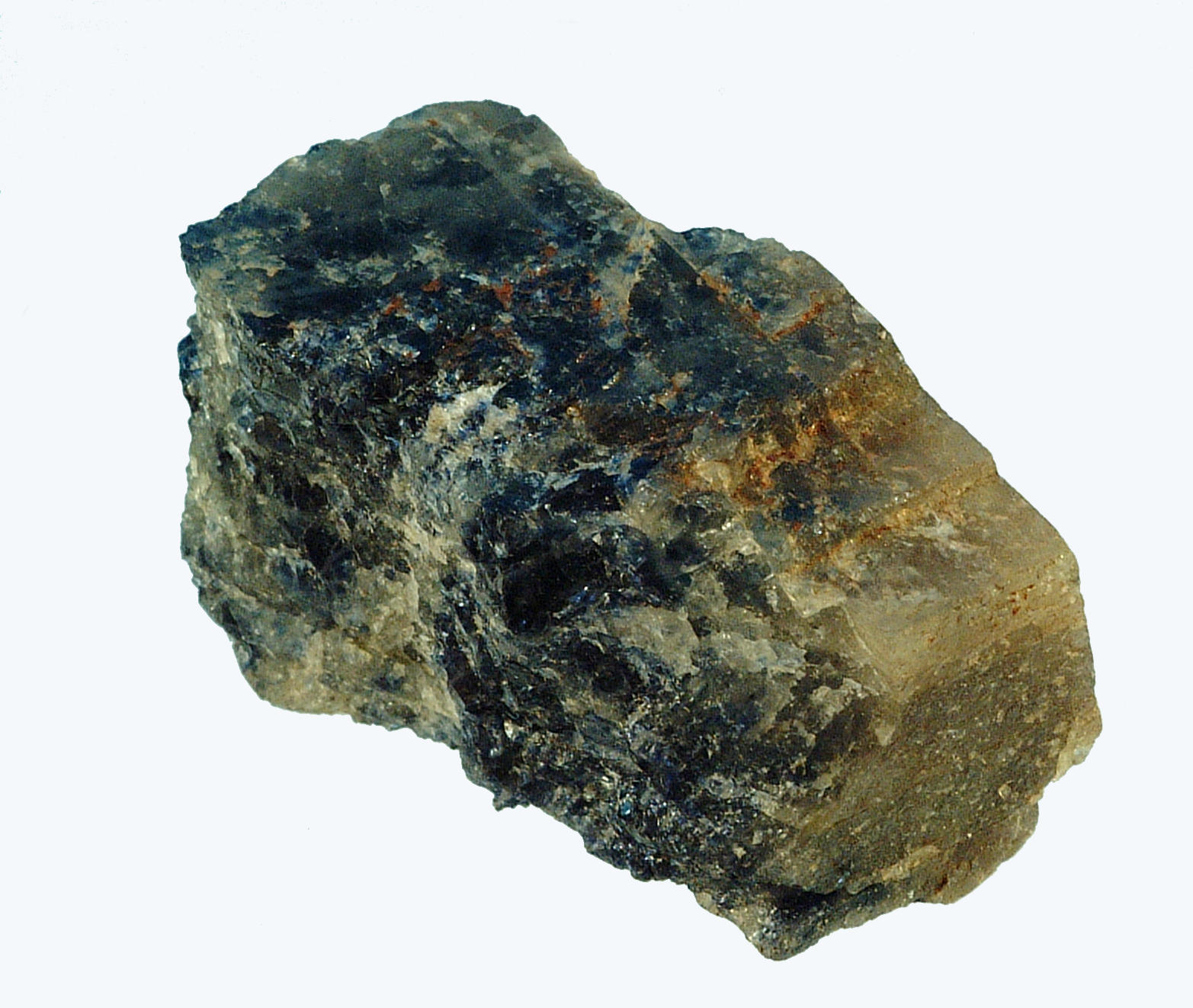
That is why a colour name is only the beginning of a useful description. It tells you what catches the eye, not everything about the material. The rough reference is identified as sapphire by its source. That record is not a laboratory identification of another stone or evidence of its treatment history.
A vocabulary
for looking closely.
GIA describes blue sapphire as ranging from greenish blue to violetish blue. Trace elements help create its colour; iron and titanium are associated with blue, while chromium can contribute pink in sapphire and red in ruby.[1]
For your own notes, separate three questions: what colour family do you see, how light or dark does it appear, and how vivid or muted is the impression? Do not turn a screen observation into a laboratory conclusion.
Which colour direction?
Record whether the impression is blue, blue leaning towards violet, or another colour. The swatch is a flat editorial colour, not a calibrated gem sample.
How light or dark?
Describe the light-to-dark impression separately from the colour name. These three flat swatches explain the question; they do not simulate a stone under different lighting.
How vivid or muted?
Use your own descriptive words, without assigning a grade. Display settings and photography limit comparisons made on a screen.
The controls change explanatory notes, not the gemstone image. They are not a colour-grading tool.
Colour is not
the only thing to see.
GIA’s buyer’s guide explains that cutters consider colour zoning, directional colour, proportions and the stone’s lightness or darkness. The cut therefore belongs in the conversation alongside colour, not as a footnote.[2]
In an image, first notice the outline. Then notice where the light appears to gather and where the face looks darker. Record those impressions as questions to revisit in person rather than making an identity, origin or quality claim.
Look once for colour. Look again for shape. Look a third time for what the photograph cannot tell you.
The questions
a photograph cannot answer.
Natural origin, laboratory growth and treatment are different questions. GIA states that its identification reports distinguish natural from laboratory-grown material and record detectable treatments. A geographic-origin opinion may be issued when possible and requested. GIA does not provide a quality grade for sapphire.[3]
Heat and lattice diffusion are among the treatments described in GIA’s sapphire guide. A treatment description should stay attached to the particular stone and its documentation. A vivid appearance on a screen is not enough to establish an untreated status or a place of origin.[2]
Keep separate
What you notice.
Your description of colour, light and shape.
Ask for evidence
What is established.
The identification and treatment information for the actual stone.
Durable does not mean
without care.
Sapphire ranks 9 on the Mohs hardness scale. That scale concerns scratch resistance; it is not a promise that a mounted stone is immune to damage. GIA also distinguishes care for untreated or heat-treated sapphire from care for filled or dyed material.[4]
Its care guide gives special restrictions for fracture-filled, cavity-filled and dyed stones. Before choosing a cleaning method, establish what the specific stone and its setting can tolerate. This journal is not a substitute for that assessment.[4]
A more thoughtful
colour conversation.
Nada’s interest in gemstones, reading and galleries grows from her family’s world of watches and stones and her father’s encouragement. The journal follows that curiosity without presenting it as professional certification.
Use the notebook to separate an observation from a question. “The outline interests me” is different from “What does the report establish?” Both can lead to a better conversation.
The viewing room can place two source-identified rough references side by side. They are different specimens, photographed under different conditions, and are not a matched colour test or stones offered for sale.
The sources
behind the story.
Primary-source reading / Checked 25 September 2026
- GIA · Sapphire description ↗
Mineral identity, colour range and colour-causing elements; original photographs remain on GIA’s site.
- GIA · Sapphire buyer’s guide ↗
Cut considerations and treatment context.
- GIA · Does GIA grade sapphire? ↗
What an identification report does, and what it does not do.
- GIA · Sapphire care and cleaning ↗
Hardness, treatment-related limitations and handling context.
The factual notes in this new chapter draw on the GIA sources above. The looking exercises are original editorial prompts. The current rough photograph is identified and credited through its own source record. Earlier saved illustration records keep their original identities and are marked unavailable in the viewing tools.
Goutte de Rosée is an independent, family-managed personal journal, not a laboratory, grading service or sales catalogue. It is not affiliated with or endorsed by GIA. Any commercial discussion is handled by adults, not by Nada.