
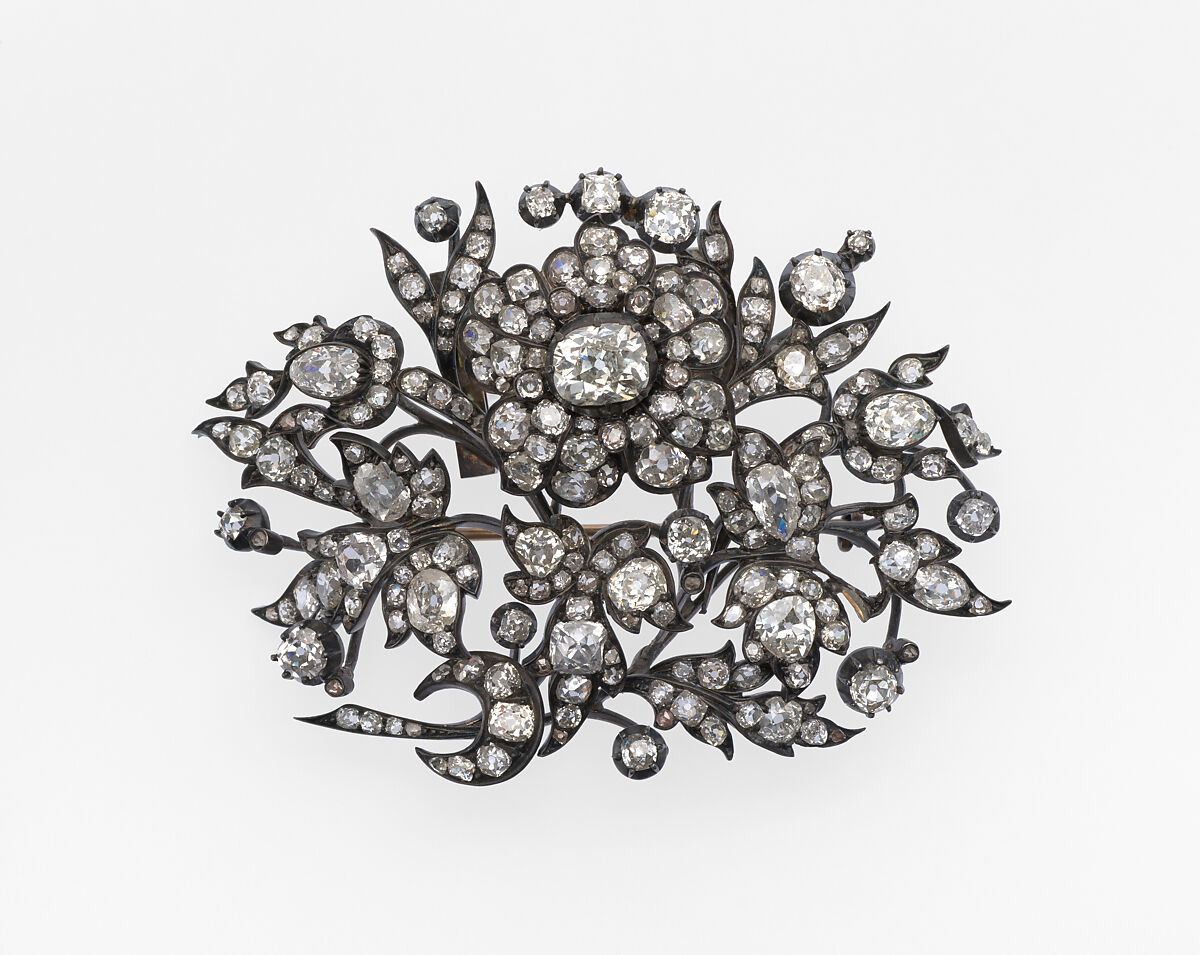
Before the jewellery box.
Natural diamonds form deep underground under intense heat and pressure. Their carbon atoms are arranged in a crystal structure; some rough crystals resemble two pyramids joined together.[1]
The cutter shapes and polishes the crystal. The flat surfaces are facets, and their angles help determine how light returns to our eyes. The finished stone can then become part of a ring, pendant or another piece of jewellery.[1][4]
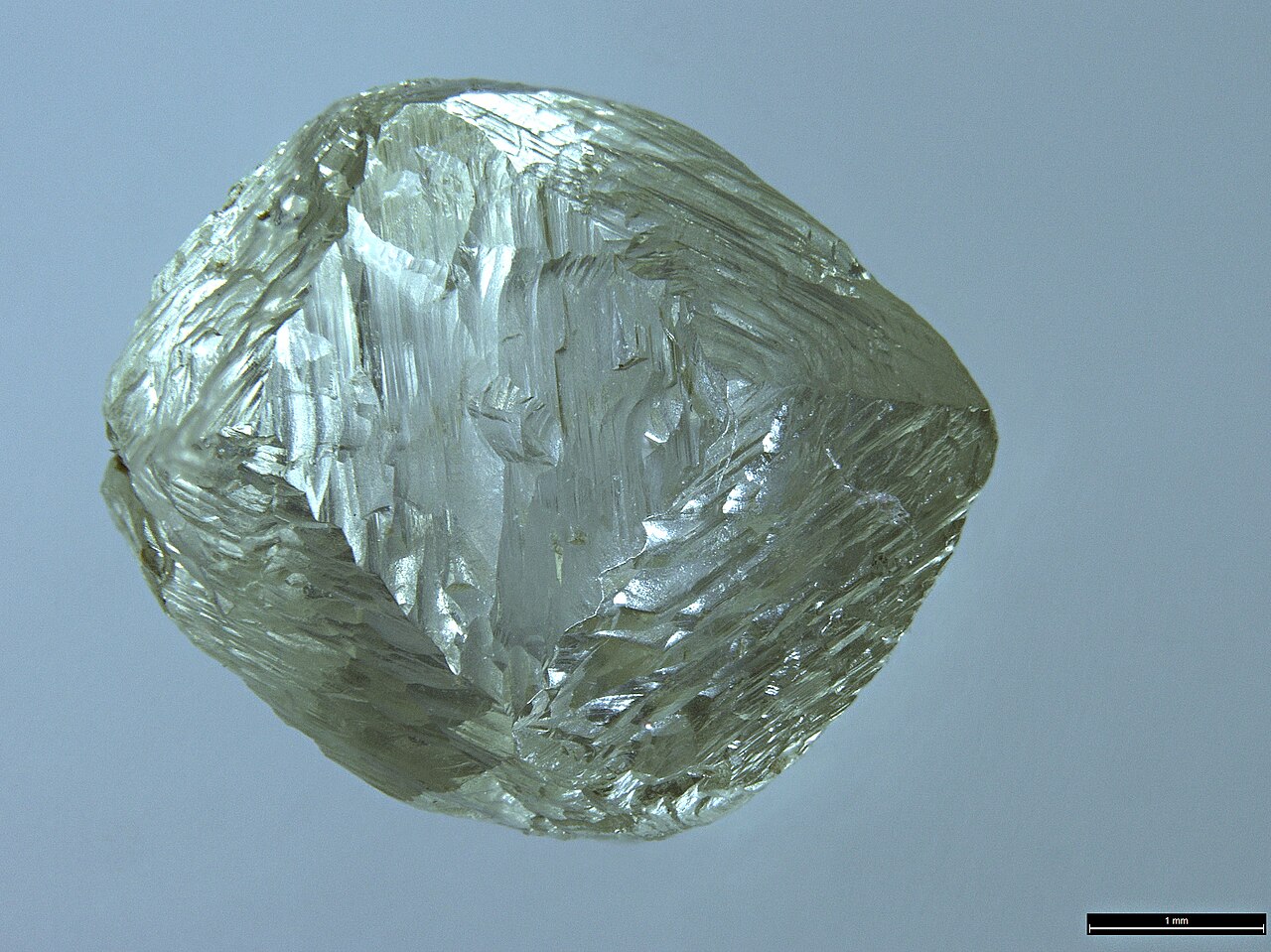
Uncut diamond crystal, identified by its photographer as 0.7 ct. Image by Tõnu Pani.
Tõnu Pani, “Diamond crystal, 0,7 ct.jpg”, Wikimedia Commons, CC BY 4.0.
Context and image limits
A natural rough crystal, not a faceted diamond. Carat weight is the uploader’s identification; no origin or grading report is supplied.
Some of the earliest diamonds were found in Indian rivers and streams. By the 1400s, diamonds were becoming fashionable accessories among Europe’s wealthy elite.[2]
Looking at light.
White reflections are described as brightness. Coloured flashes are called fire. As the light, the diamond or the viewer moves, the pattern of bright and dark areas changes.[4]
A photograph records one view under one set of conditions. The gallery is a place to compare outlines and visible features, not to measure a photographed stone’s performance or establish its value.
Inspect the study imagesFour terms.
A more precise conversation.
The four Cs provide a vocabulary for looking beyond a general impression of sparkle. Open each note below.[3]
01Cut
How the facets, proportions and finish work with light. Shape is the outline; cut quality is about craftsmanship.[3]
02Colour
Diamonds can be colourless, gently tinted or more strongly coloured. A screen image and its viewing conditions are not a substitute for the colour assessment of an actual stone.[3]
03Clarity
Internal features are called inclusions; surface features are called blemishes. Clarity describes how free a diamond is from them.[3]
04Carat
A measure of weight, not width. One carat equals 0.2 grams.[5]
Describe the visible impression.
Keep the viewing conditions in mind.
Use a report for the actual stone.
A cut is not
a gemstone’s identity.
“Emerald cut” describes a shape and facet arrangement, not the mineral itself; diamonds can have that cut too. The schematic outlines below make the naming distinction visible without pretending to show identified specimens.[1][3]
Oval outline
Stepped outline
Pear outline
Nada’s notebook begins with this distinction: record what is visible, then separate that observation from what still needs to be established. A colour or a shape alone is not a complete identification.
Open the observation notebookThe sources behind the story.
- GIA: Diamond description
- GIA: Diamond history and lore
- GIA: Diamond quality factors
- GIA: Diamond cut and light
- GIA: Carat weight
Gemological statements follow the linked GIA sources. The displayed crystal and brooch photographs have their own source-specific captions and credits. This journal is independent and not affiliated with or endorsed by GIA. It does not provide grading reports, authentication or valuations. Photograph ownership and attribution are retained on the image-credit page.