
Stone History — complete reading view
Emerald
Beryl · Be₃Al₂(SiO₃)₆ · Mohs 7.5–8
No single discoverer
Emerald was known in antiquity, so the first person to find it is not recorded. The useful question is not “who discovered emerald?” but “which deposits, cultures and scientific milestones can be documented?” Ancient Egyptian emerald mining is recorded centuries before the Common Era; Colombian deposits were worked before Spanish arrival; modern gemology later separated origin, treatment and identity questions.
Egyptian mining and ancient American use establish long histories. Cleopatra, a conquistador or a modern mining company should not be credited as the first discoverer of emerald.
Known before modern gemology
People valued green emerald long before chemistry or mineral identification existed. Ancient texts and objects show that emerald’s human story is older than the modern idea of a “gem report.” That means its history begins with use, trade and symbolism—not with one named discoverer.
Emerald: History and lore · Emerald: Material description · Colored Stones Unearthed — GIA
Why Colombia matters
Colombian emeralds are associated with hydrothermal processes unlike many other beryl deposits. Muzo, Chivor and Coscuez became historically important source names. A source name, however, is not a quality grade: fine and commercial material can come from the same region.
Emerald: History and lore · Emerald: Material description · Colored Stones Unearthed — GIA
Colour is more than “green”
Emerald belongs to beryl, and chromium and/or vanadium can contribute the green colour. Hue, tone and saturation matter. Too dark can hide brilliance; too light may fall outside some trade definitions of emerald. Colour descriptions should be visual observations, not value grades unless the grading basis is stated.
Emerald: History and lore · Emerald: Material description · Colored Stones Unearthed — GIA
Inclusions and the “jardin” idea
Emeralds commonly contain inclusions and fractures. The romantic term “jardin” describes a garden-like appearance, but inclusions are also evidence: they can help laboratories study identity, treatment and sometimes origin. A beautiful inclusion pattern is not automatically proof of origin.
Emerald: History and lore · Emerald: Material description · Colored Stones Unearthed — GIA
Treatments matter
Clarity enhancement of surface-reaching fissures is common in emerald. Oils and resins can change how fractures look. A responsible review separates what the eye sees from what a laboratory can detect and report.
Emerald: History and lore · Emerald: Material description · Colored Stones Unearthed — GIA
A famous object is not the whole species
Historical jewels such as the Hooker Emerald help visitors connect material history with people and design. But one famous stone cannot represent all emerald colours, sources, treatments or qualities.
Emerald: History and lore · Emerald: Material description · Colored Stones Unearthed — GIA
The first chapter is older than the famous names.
GIA places known Egyptian emerald mining at least as early as 330 BCE. It also describes emeralds being used by people in the Americas before Spanish arrivals in the sixteenth century. Those statements establish human knowledge, not one named person who discovered the material for everyone else.
Start the journey in these distinct histories. Ancient use in one region does not make another region's stones imitations, and later written European accounts do not erase prior local knowledge. Cleopatra belongs to the cultural story associated with emerald, not to a securely documented first-finder entry. The map therefore labels early use, source regions and museum events separately.
An emerald is a kind of beryl—not any green stone.
Emerald is the green to bluish-green variety of beryl. Its colour and strength of colour matter to the terminology: pale green beryl is not automatically called emerald. Chromium and vanadium are important colouring elements, with other chemistry influencing the appearance.
The mineral name describes a structure and composition. The word emerald-cut describes a cutting style and can apply to materials other than emerald. That small language distinction prevents a common misunderstanding: a rectangular step-cut outline does not identify the stone inside it. In the colour cabinet, compare words such as hue, tone and saturation before trying to attach a prestigious origin name.
Emerald: Material description · Emerald: Quality factors
Colombia and Zambia tell different geological stories.
The Muzo deposit in Colombia is associated with a hydrothermal-sedimentary setting. In Zambia's Kafubu area, research describes emerald mineralisation around reaction zones where beryllium-bearing fluids interacted with chromium-bearing host rocks. These are not interchangeable recipes, even though both can produce emerald.
Emeralds were known from Kafubu by 1928, with substantial commercial expansion in the 1970s. The date of a deposit's documented recognition, the start of a business and the time its crystals formed are three separate dates. The atlas shows a selected set of important places, not every emerald deposit or a current ranking of producing countries.
The Muzo emerald deposit · Emeralds from the Kafubu Area, Zambia
The garden is a description, not a diagnosis.
Emeralds often contain fractures, mineral inclusions and fluid inclusions; the evocative word jardin refers to the garden-like appearance of this internal world. The features can be beautiful and scientifically informative, but they do not all have the same meaning or effect on durability.
A three-phase inclusion contains distinguishable phases such as fluid, gas and a solid crystal. It was once strongly associated with Colombian emeralds, yet GIA research documents similar features from other sources. One attractive inclusion photograph cannot establish a country of origin by itself. A professional assessment combines observations and other analytical evidence rather than treating an isolated feature as a passport stamp.
Three-Phase Inclusions in Emerald and Their Impact on Origin Determination · Emerald: Quality factors
A crystal that did not need to become a ring.
The Smithsonian's Gachalá Emerald is an 858-carat Colombian crystal. Its size makes it memorable, but its preserved crystal form is equally important: here the subject is a mineral specimen, not a fashioned jewel. The archive records its presentation in 1969 as a gift from Harry Winston, presented by Ronald Winston.
The Muzo crystal shown in this atlas is a different specimen photographed by Didier Descouens. It is not the Gachalá Emerald, a piece removed from it or evidence of the famous crystal's discovery. The comparison is educational: inspect crystal habit, matrix and colour while keeping each object's identity intact. The museum record supplies the famous object's story; the photograph caption supplies the pictured specimen's story.
Gachalá Emerald · Presentation of Gachalá Emerald · Emerald in matrix, Muzo — photograph record

Green has more than one dimension.
Hue answers which colour family is present; tone describes how light or dark it appears; saturation describes its strength or intensity. A very dark green is not automatically a more vivid green. Inclusions, cut, orientation and illumination can all influence what reaches the eye.
Do not assign Colombia to one shade and Zambia to another. The ranges overlap, so a screen cannot reveal a stone's origin. The cabinet uses representative swatches to teach vocabulary. They are not laboratory comparison stones, photography substitutes or grades. For real observation, compare documented specimens in consistent light and keep camera and display effects in mind.
The filled fracture changes the care question.
Emerald measures 7.5–8 on the Mohs scale, yet fractures and their possible filling matter to treatment disclosure and care. Oils and resins may reduce the visibility of fractures. That does not mean every emerald is filled, nor does a photograph establish how much filling a particular gem contains.
GIA advises caution with heat, steam and ultrasonic cleaning for emerald. Treatment, damage and the mounting should be checked before choosing a method. Gentle cleaning appropriate to the identified object is not the same as soaking every green jewel in a standard solution. Request the treatment description in ordinary language as well as any technical report terminology.
Ask questions that a seller can answer.
Start by asking what is known, how it is known and which record supports it. If an origin is stated, does it come from a laboratory opinion, a documented chain of custody or a seller's description? If the stone has a report, can the report be linked to that actual stone rather than merely to the type of material?
A good review can still be warm and enthusiastic: describe the colour, the way a cut frames it and the visual character of the inclusions. Then draw a boundary around unknowns. A beautiful photograph is a reason to look closer, not a substitute for evidence. This approach makes the story more credible rather than less enjoyable.
Ancient Egypt
Ancient mining · Eastern Desert emerald workings are part of emerald’s ancient story. Approximate regional or city indicator; not an exact extraction site or a route.
Approximate coordinates: 24.1, 33.5
Muzo, Colombia
Source region · Muzo became one of the world’s most famous emerald sources. Approximate regional or city indicator; not an exact extraction site or a route.
Approximate coordinates: 5.53, -74.11
Kafubu, Zambia
Modern source · Zambian emerald production became internationally significant in the 20th century. Approximate regional or city indicator; not an exact extraction site or a route.
Approximate coordinates: -14.7, 28.2
Emeralds from the Kafubu Area, Zambia
Washington, D.C.
Museum object · The Smithsonian holds notable emeralds such as the Hooker and Gachala emeralds. Approximate regional or city indicator; not an exact extraction site or a route.
Approximate coordinates: 38.89, -77.03
Gachalá Emerald · Hooker Emerald — Smithsonian
Egypt: ancient mining region
history · Approximate Eastern Desert context for the ancient Egyptian emerald story. Approximate region or city marker, not an exact extraction site.
Approximate coordinates: 24.7, 34.6
Muzo, Colombia
source · Selected historic emerald region; the photographed matrix specimen is identified as Muzo in its source record. Approximate region or city marker, not an exact extraction site.
Approximate coordinates: 5.53, -74.1
Kafubu region, Zambia
source · A different host-rock/fluid setting; known emeralds by 1928 and commercial growth in the 1970s. Approximate region or city marker, not an exact extraction site.
Approximate coordinates: -13.1, 28.1
Emeralds from the Kafubu Area, Zambia
North Carolina, USA
source · The Smithsonian records a cut emerald from this region. This illustrates diversity of sources, not their current commercial importance. Approximate region or city marker, not an exact extraction site.
Approximate coordinates: 35.3, -81.5
Beryl, variety emerald: North Carolina specimen
Washington, DC
object · 1969 presentation of the Gachalá Emerald at the Smithsonian. Approximate region or city marker, not an exact extraction site.
Approximate coordinates: 38.89, -77.03
Presentation of Gachalá Emerald
At least 330 BCE · An ancient mining story
ancient use · Source-backed account; precision follows the stated date.
GIA dates known Egyptian emerald mining to at least this period.
Before the 1500s · Knowledge before European accounts
ancient use · Source-backed account; precision follows the stated date.
Emerald was already used in the Americas before Spanish arrivals.
1928 · Kafubu enters the documented record
source discovery · Source-backed account; precision follows the stated date.
A regional recognition date, not the formation date of emerald.
Emeralds from the Kafubu Area, Zambia
1969 · Gachalá enters a public collection
object history · Source-backed account; precision follows the stated date.
The Smithsonian archive records presentation of the 858-carat crystal.
Presentation of Gachalá Emerald
1970s · Zambian commercial expansion
commercial milestone · Source-backed account; precision follows the stated date.
Significant production begins decades after early recognition.
Emeralds from the Kafubu Area, Zambia
2014 research · One inclusion is not a country
scientific identification · Source-backed account; precision follows the stated date.
GIA research compares similar inclusions from multiple sources.
Three-Phase Inclusions in Emerald and Their Impact on Origin Determination
Colour cabinet — illustrative families, not grades
Yellowish green · Pure green · Bluish green · Deep green
Green
Emerald belongs to the green part of the beryl family. Colour intensity and classification should be assessed on the actual gem, not a digital sample. Illustrative swatch, not a calibrated sample or grade.
Bluish green
A blue modifier can be part of emerald’s appearance. This is a colour description, not a reliable marker of one country. Illustrative swatch, not a calibrated sample or grade.
Lighter tone
Tone describes lightness or darkness. Pale green beryl may fall outside the emerald name; there is no browser slider that certifies the boundary. Illustrative swatch, not a calibrated sample or grade.
Deeper tone
Darker does not automatically mean stronger saturation. The inset swatch is teaching terminology, not ranking price or quality. Illustrative swatch, not a calibrated sample or grade.
Gachala Emerald
858 ct rough crystal from Colombia; a dramatic example of emerald preserved in crystal form.
Hooker Emerald
A historic Colombian emerald later mounted in jewellery and now held by the Smithsonian.
The specimen photographs in this dossier are individually captioned. A photograph of the material does not depict these named objects unless its caption explicitly says so.
Questions to ask
- What treatment and degree of filling, if any, are disclosed?
- What evidence supports the stated geographic origin?
- Are the photographed rough, finished stone and famous jewel actually different objects?
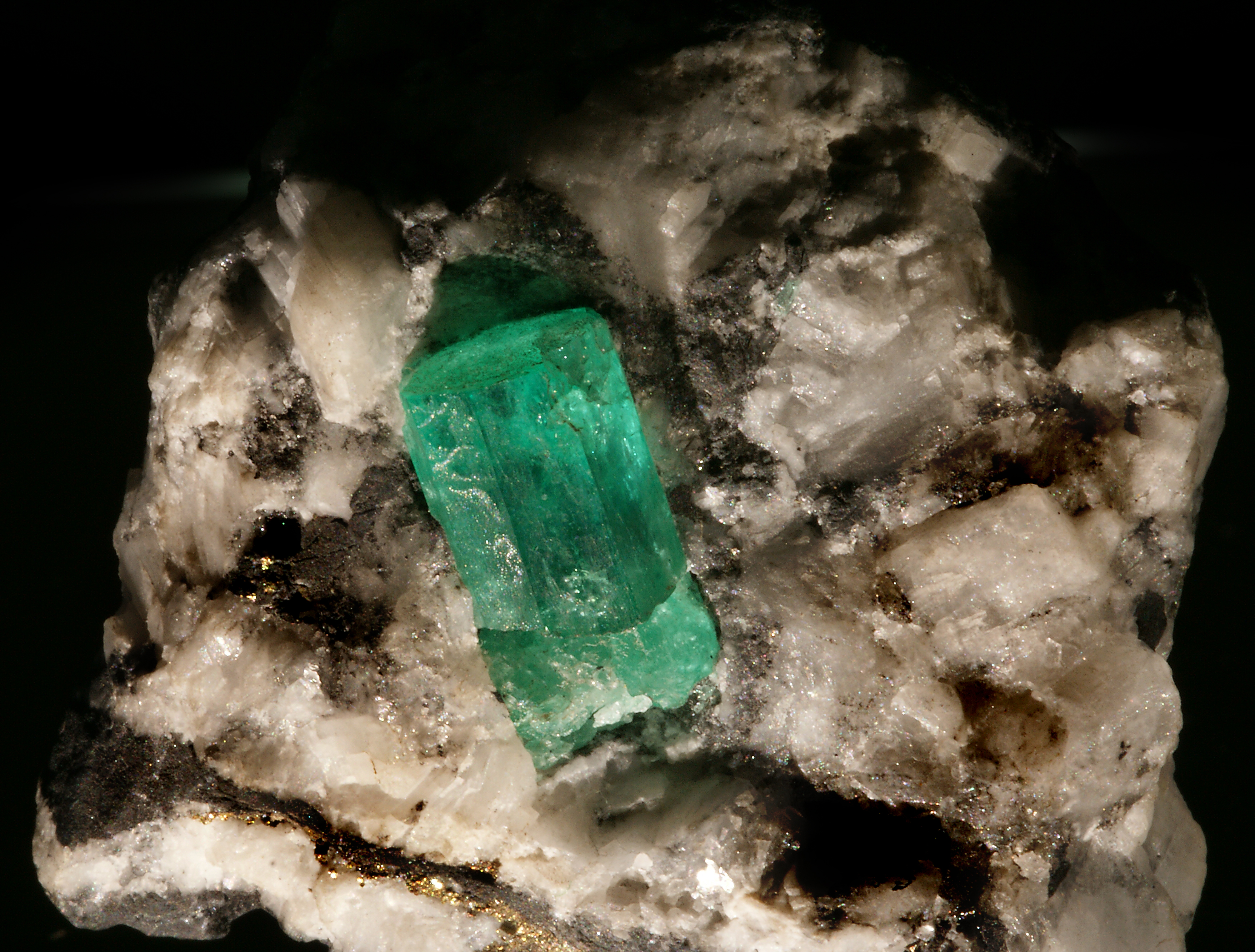
No colour changes. Reference UI fits the complete image; CSS display resizing only. Self-hosted original photograph. No crop, retouch, upscaling or recolouring.

No colour changes. Reference UI fits the complete image; CSS display resizing only. Self-hosted original photograph. No crop, retouch, upscaling or recolouring.
Ruby
Corundum · Al₂O₃ with chromium · Mohs 9
Ancient gem — first finder unknown
Ruby was valued in ancient South and Southeast Asia long before modern mineralogy. GIA notes that Myanmar has been a ruby source for many centuries. The first discoverer is not documented. Modern science later established ruby as the red variety of corundum and helped separate natural, synthetic and treated stones.
A named modern deposit discovery is different: GIA’s field account credits Suleman Hassan with finding rubies near Namahumbire in April 2009. That is part of Mozambique’s story, not the discovery of ruby as a material.
Ruby: History and lore · Mozambique: an expedition to the ruby discovery of the new millennium
Ruby before “ruby” meant corundum
Historical names often described colour more than mineral identity. Red spinel and ruby could be confused because both are red and may occur in similar deposits. That makes old inventories fascinating but tricky: a historical “ruby” is not always corundum.
Ruby: History and lore · Ruby: Material description · Colored Stones Unearthed — GIA
Mogok and marble-hosted ruby
Some celebrated rubies from Myanmar formed in metamorphosed limestone that became marble. This geological setting is very different from the romantic image of gems simply “growing in caves.” The host rock and inclusions can be part of the gem’s scientific story.
Ruby: History and lore · Ruby: Material description · Colored Stones Unearthed — GIA
What makes ruby red
Ruby is corundum coloured mainly by chromium. Colour can range from pinkish red to purplish or orangy red. Trade language may use evocative terms, but describe actual observed hue and saturation instead of treating poetic names as laboratory grades.
Ruby: History and lore · Ruby: Material description · Colored Stones Unearthed — GIA
Cutting is a compromise
Ruby rough is valuable, so cutters balance colour, transparency, weight retention and shape. Ovals and cushions are common because they can fit the rough efficiently. A shallow cut may retain weight but produce a visible “window.”
Ruby: History and lore · Ruby: Material description · Colored Stones Unearthed — GIA
Heat and other treatments
Heat treatment is common in ruby. Some rubies may also have fissure filling or diffusion-related treatment. A visual review cannot reliably determine these treatments; laboratory testing is the correct route when treatment status matters.
Ruby: History and lore · Ruby: Material description · Colored Stones Unearthed — GIA
Natural, synthetic, imitation
Synthetic ruby has the same basic chemistry and crystal structure as natural ruby but is grown by humans. Imitations are different materials chosen to look similar. The distinction is central to a collector-level explanation.
Ruby: History and lore · Ruby: Material description · Colored Stones Unearthed — GIA
A name shaped by colour.
Ruby's name is connected with the Latin word for red. Its Sanskrit associations include ratnaraj, often translated as king of precious stones. Those names reveal admiration and cultural meaning; they do not identify a first finder or create a mineralogical test.
Older texts and royal inventories need careful reading because red gems were not always separated into today's mineral categories. A historically named ruby might prove to be spinel. The right lesson is not that earlier people were foolish: they classified beautiful objects with the tools, priorities and terminology available to them. Our job is to retain the historical name while explaining the material identification.
Ruby: History and lore · Spinel: History and lore
The red member of corundum.
Ruby is red corundum, coloured principally by chromium. Corundum of other colours is generally called sapphire. Ruby may lean slightly towards purple or orange; the naming boundary with pink sapphire should not be reduced to a universal digital red swatch.
A tiny amount of a colouring element can change a crystal's appearance substantially. In some low-iron rubies, fluorescence can contribute to the vivid red appearance. Not every ruby responds in the same way, and a highly saturated photograph is not evidence of fluorescence. A proper examination separates bodycolour, response to lighting and any photographic editing.
Mogok is a story—not the whole world map.
Mogok in Myanmar is an important historical ruby region. But ruby also occurs in other environments and countries, including the more recently developed Montepuez region of Mozambique. GIA's field work describes a geological setting there that is not simply a copy of the classic marble-hosted Myanmar story.
The map uses a documented named find in Mozambique to show what good discovery attribution looks like: GIA reports Suleman Hassan finding stones near Namahumbire while chopping wood in April 2009. The account honours a local find instead of assigning every discovery to a later exporter. It is still an attributed field account, not proof of the first person ever to encounter ruby in that landscape.
Montepuez rubies, Mozambique · Mozambique: an expedition to the ruby discovery of the new millennium
Carmen Lúcia: a stone with a recorded second life.
The Smithsonian records the Carmen Lúcia Ruby as a 23.10-carat stone mined in the Mogok region in the 1930s. Dr Peter Buck gave the ruby to the museum in 2004 in memory of his wife. That account supplies dates and people for this individual jewel, not a universal history of ruby.
Its role in a public collection lets visitors encounter an exceptional object without needing to own it. In this atlas, the historical record is linked rather than illustrated with a wrongly labelled generic red stone. The rough and cut ruby photographs in the photo room are separate teaching specimens; neither is the Carmen Lúcia Ruby. The museum photograph's reuse conditions have not been substituted with another image's open licence.
Sometimes the most interesting feature is a star.
Inclusions and the way a gem is cut can change the visual experience. Fine oriented inclusions in some corundum can produce a star effect when the stone is fashioned and illuminated appropriately. A faceted transparent ruby and a star ruby are therefore not pursuing identical visual goals.
When looking at a star effect, ask whether the description concerns an observed phenomenon, a photograph or a schematic illustration. Do not mistake a sparkle drawn over a digital stone for evidence of a real star ruby. A useful display should show the lighting conditions and the whole object, then explain what creates the effect instead of adding decorative rays.
Red appearance is not a treatment report.
Ruby may be heated, and some material has fractures or cavities filled with substances such as glass. Treatment changes the questions an owner needs to ask, particularly about care and the meaning of a description. Untreated, heated and filled are not interchangeable labels.
An image can show an appealing colour, but it cannot safely settle treatment status. Ask for a clear identification and treatment disclosure tied to the actual stone. Keep a seller's descriptive colour term separate from a laboratory finding. A memorable trade name is not a standardised report, and it should not automatically imply a particular country or a level of quality.
Ruby: Care and cleaning · Ruby: Quality factors
Strong material; individual vulnerabilities.
Corundum has a Mohs hardness of 9, but care depends on more than scratch resistance. The stone's condition, treatments and setting matter. GIA's care guidance distinguishes ordinary ruby cleaning from the special risks attached to some fracture-filled or otherwise treated material.
The safe website lesson is to identify first and choose care second. Do not expose an unknown ruby jewel to heat or aggressive cleaning merely because corundum is hard. Before a practical recommendation, inspect the mounting and establish whether there are treatments or damage. A generic gem page cannot inspect an heirloom through the screen.
Ruby: Care and cleaning · More than the Mohs scale: gem durability
Look beyond “royal red.”
Try describing a ruby without using valuable, rare or royal. Is its red slightly purple or orange? Does the centre remain lively as the object moves? Are there visible inclusions, uneven areas or a distinctive outline? Keep those observations separate from identity, origin and treatment claims.
Now compare two records. One identifies its source and treatment basis; the other supplies only flattering language. The first gives you more to understand even if the second photograph looks brighter. An engaging story should make the evidence easier to read. It should not use a dramatic name or a discovery tale to bypass the questions that matter to the actual object.
Mogok, Myanmar
Historic source · Mogok is one of ruby history’s most famous source regions. Approximate regional or city indicator; not an exact extraction site or a route.
Approximate coordinates: 22.9, 96.5
Ruby: History and lore · Carmen Lúcia Ruby
Montepuez, Mozambique
Modern source · Mozambique became a major modern ruby source. Approximate regional or city indicator; not an exact extraction site or a route.
Approximate coordinates: -13.1, 38.9
Mozambique: an expedition to the ruby discovery of the new millennium
Sri Lanka
Historic corundum source · Sri Lanka has a long history of gem corundum recovery. Approximate regional or city indicator; not an exact extraction site or a route.
Approximate coordinates: 7.87, 80.77
Sri Lanka: Expedition to the Island of Jewels — GIA
Bangkok, Thailand
Trade & laboratory hub · Bangkok is home to a GIA laboratory serving gem identification. This marker indicates a study centre, not a ruby source. Approximate regional or city indicator; not an exact extraction site or a route.
Approximate coordinates: 13.75, 100.5
Mogok region, Myanmar
source · Historic ruby district and documented origin region for the Carmen Lúcia Ruby. Approximate region or city marker, not an exact extraction site.
Approximate coordinates: 22.92, 96.5
Carmen Lúcia Ruby · Ruby: History and lore
Montepuez / Namahumbire, Mozambique
discovery · Approximate region of the April 2009 find reported by GIA; not a precise dig location. Approximate region or city marker, not an exact extraction site.
Approximate coordinates: -13.12, 38.99
Mozambique: an expedition to the ruby discovery of the new millennium
Washington, DC
object · The Carmen Lúcia Ruby entered the Smithsonian collection in 2004. Approximate region or city marker, not an exact extraction site.
Approximate coordinates: 38.89, -77.03
By about 600 CE in GIA’s account · An established Myanmar story
ancient use · Source-backed account; precision follows the stated date.
The cited historical overview describes ruby knowledge in this region long before modern field reports.
1783 · Red stones become better distinguished
scientific identification · Source-backed account; precision follows the stated date.
Scientific separation of spinel helps clarify historical objects called rubies.
Historical Reading List: Ruby, Balas Ruby and Spinel
1930s · An individual ruby is mined
source discovery · Source-backed account; precision follows the stated date.
The later Carmen Lúcia Ruby is associated with Mogok mining in this decade.
2004 · A memorial gift
object history · Source-backed account; precision follows the stated date.
Peter Buck gives the Carmen Lúcia Ruby to the Smithsonian.
April 2009 · A named local find
source discovery · Source-backed account; precision follows the stated date.
GIA attributes the Namahumbire find to Suleman Hassan.
Mozambique: an expedition to the ruby discovery of the new millennium
Colour cabinet — illustrative families, not grades
Pinkish red · Red · Purplish red · Deep red
Red
Chromium is ruby’s principal red colouring element. The displayed patch illustrates a colour word, not the chromium level of a specimen. Illustrative swatch, not a calibrated sample or grade.
Purplish red
A purple modifier can occur. A trade colour name does not by itself prove origin, treatment status or quality. Illustrative swatch, not a calibrated sample or grade.
Ruby: Material description · Ruby: Quality factors
Orangy red
A warmer modifier changes the appearance without turning the screen into a classification tool. Illustrative swatch, not a calibrated sample or grade.
Pink / ruby boundary
The naming boundary with pink sapphire requires a real material assessment; it cannot be certified by choosing a swatch. Illustrative swatch, not a calibrated sample or grade.
Sunrise Ruby
A celebrated large Burmese ruby known from the auction market; use as a documented object story, not a quality template.
Ruby slippers
Harry Winston created ruby-set slippers for the 50th anniversary of The Wizard of Oz—an unexpected modern ruby story.
The ruby-set Harry Winston slippers celebrate the 1989 anniversary. They are different from the sequined shoes used in the 1939 film. The 2015 auction story is historical, not a current price or quality grade.
Questions to ask
- Is the stated discovery about the mineral, one deposit or one famous stone?
- Are treatments disclosed in plain language?
- Does a colour term describe appearance, or is it being misused as proof of origin?
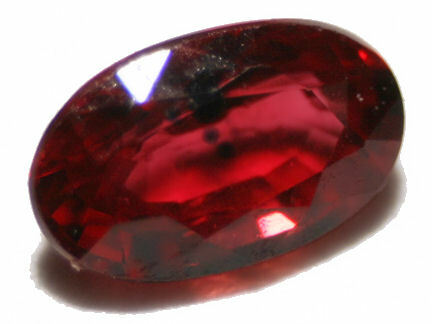

No colour changes. Reference UI fits the complete image; CSS display resizing only. Self-hosted original photograph. No crop, retouch, upscaling or recolouring.
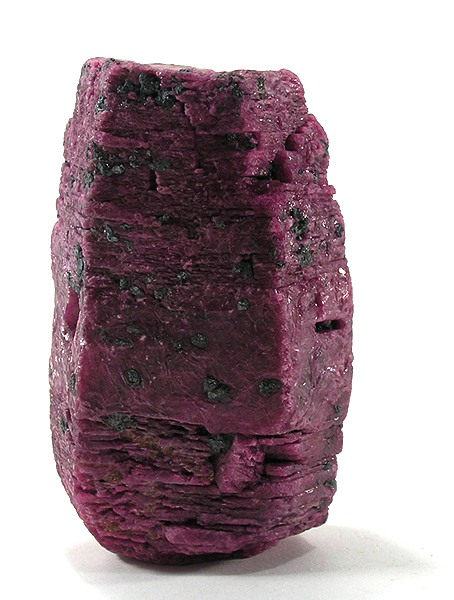

No colour changes. Reference UI fits the complete image; CSS display resizing only. Self-hosted original photograph. No crop, retouch, upscaling or recolouring.
Sapphire
Corundum · Al₂O₃ with trace elements · Mohs 9
No single discovery event
Sapphire has been known for centuries, and ancient names for blue stones were not always mineralogically precise. Modern gemology defines sapphire as corundum in colours other than the red reserved for ruby. Sri Lanka is one of the oldest documented sapphire-producing regions; later famous discoveries include Kashmir and Madagascar.
No single first finder is established here. The ancient word sappheiros may refer to another blue material, including lapis lazuli. Ilakaka’s documented 1998 discovery is a deposit milestone, not the origin of sapphire.
Sapphire: History and lore · GIA Field Gemology Team Explores Sapphire Mines at Ilakaka
The blue assumption
In ordinary jewellery language “sapphire” often means blue sapphire. Scientifically and commercially, sapphire is a broader corundum family that includes yellow, pink, violet, green and other colours.
Sapphire: History and lore · Sapphire: Material description · Colored Stones Unearthed — GIA
Ruby and sapphire are siblings
Ruby and sapphire are varieties of the same mineral species: corundum. The boundary between pink sapphire and ruby can involve trade convention and colour interpretation, so avoid assuming that every borderline colour has one universally obvious label.
Sapphire: History and lore · Sapphire: Material description · Colored Stones Unearthed — GIA
Colour comes from trace chemistry
Different trace elements and defect structures influence sapphire colour. Blue commonly involves iron and titanium interactions. Colour is also affected by crystal orientation, cutting and treatment.
Sapphire: History and lore · Sapphire: Material description · Colored Stones Unearthed — GIA
Padparadscha needs context
Padparadscha is a special pink-orange to orange-pink sapphire designation with historical association to Sri Lanka. It is not simply “any peach sapphire.” Laboratory descriptions and market usage can differ, so the designation needs a definition in context.
Sapphire: History and lore · Sapphire: Material description · Colored Stones Unearthed — GIA
Heat treatment and diffusion
Heating is common in sapphire and can improve colour or clarity. Other treatment methods exist. Visual appearance alone cannot establish treatment status.
Sapphire: History and lore · Sapphire: Material description · Colored Stones Unearthed — GIA
Stars, silk and inclusions
Oriented needle-like inclusions can produce a star effect in cabochon sapphires. In faceted stones, fine inclusions can affect transparency and also offer clues to treatment and origin.
Sapphire: History and lore · Sapphire: Material description · Colored Stones Unearthed — GIA
Begin by questioning the word.
Sapphire feels like an obvious name for blue corundum today, but ancient words are not guaranteed modern mineral labels. GIA notes that the Greek sappheiros probably referred to lapis lazuli. A translation containing sapphire therefore needs context before it is used as proof that a particular ancient society possessed corundum.
That does not remove the human history of blue stones. It makes it more interesting: people admired colour and attached meaning to it before the modern material categories were available. A good timeline records what the original text says, what an object is identified as and how certain the connection is. Those are three different pieces of evidence.
Ruby and sapphire share a family.
Sapphire and ruby are both corundum. Red corundum is called ruby; other colours are called sapphire, often with a colour qualifier. Blue is familiar, but pink, yellow, green, violet, orange and colourless examples broaden the material's visual vocabulary.
Trace chemistry and the conditions that affect a crystal determine how it absorbs and transmits light. Iron and titanium are important to many blue sapphires, while other combinations produce other appearances. The word fancy sapphire means colours beyond the familiar blue, not a separate mineral species. Start with the family, then the colour, then the individual object.
Sapphire: Material description
A map of evidence, not a league table.
The atlas includes a Sri Lankan rough crystal and a Montana Yogo sapphire through their photographic records, and the Ilakaka region through GIA's field research. These are selected examples, not an exhaustive list of sapphire sources or a ranking of countries.
GIA dates discovery at Ilakaka to 1998. A later field report explains the importance of the river area and nearby road to the rapid growth of trading and settlement. Read that as a dated account of a particular rush. It does not mean sapphire was unknown in Madagascar before that event, that every Malagasy sapphire comes from Ilakaka or that mining conditions remain as described in the older report.
GIA Field Gemology Team Explores Sapphire Mines at Ilakaka · Update on Sapphire Mining in Ilakaka-Sakaraha · Yogo sapphire — photograph record · Sapphire crystal, Sri Lanka — photograph record


The “natural crystal” that had been fashioned.
Research on the Grand Sapphire of Louis XIV revisits a long-standing historical misunderstanding: a fashioned stone had been treated as if its faces showed natural crystal geometry. The distinction matters because a cutter's decisions and a mineral's natural structure tell different stories.
This is the kind of unexpected episode that belongs in a serious gemstone history. It links an object, historical descriptions and later investigation. The lesson is not that all museum labels are wrong; it is that knowledge can improve when records and the object are examined together. The pictured Yogo sapphire in this atlas is not the Grand Sapphire and is never used as a substitute portrait of it.
The Grand Sapphire of Louis XIV: historical and gemological discoveries
A colour name can hide several questions.
Blue, pink and yellow describe hues. Tone and saturation describe other dimensions of appearance. Padparadscha is associated with a particular pink-orange range and a name connected with the lotus blossom; it is not a blanket label for every orange or pink sapphire.
Ask what the term means in the actual report or description. A display swatch cannot fix a contested boundary or determine an origin. Changes in lighting and camera processing can shift apparent colour, and colour may be unevenly distributed within a stone. A useful visual page therefore combines real specimen photographs with explanatory swatches instead of digitally repainting one stone into every colour.
Sapphire: Quality factors · Sapphire: History and lore
The cut chooses what you notice.
A cutter balances outline, colour distribution, crystal direction and the behaviour of light. Some sapphires are faceted to show transparency and colour; others are cut as cabochons to reveal a star effect from suitably oriented inclusions. The two approaches are not interchangeable styles applied without regard to the material.
In a review, describe the actual feature before celebrating it: a visible star, a band of colour, a bright centre or a darker region. A photograph of one stone does not demonstrate what all sapphires look like, and a diagram of light does not reproduce every optical behaviour. The cabinet keeps these teaching aids distinct from specimen evidence.
Treatment disclosure belongs beside beauty.
Heating is common in sapphire, while some material has other treatments that require additional disclosure and care. GIA's guidance distinguishes untreated or conventionally heated material from stones with surface-reaching fractures or filling. Treatment conclusions require suitable examination rather than a guess from a photograph.
The Mohs value of 9 is useful, but it does not overrule a damaged stone or fragile setting. Ask about treatment and condition before approving heat, steam or ultrasonic cleaning. Care should be selected for the complete jewel. This educational record supplies questions, not a universal cleaning permission for every blue stone someone owns.
Sapphire: Care and cleaning · More than the Mohs scale: gem durability
Build a description that survives the loss of the photo.
Imagine sending a friend a description without any image. Begin with the identified material and the source of that identification. Add the observed colour, outline and notable visual features. Then state the reported origin or treatment only when the record supports it.
Finally, identify the historical connection precisely. Is the sapphire actually a named royal jewel, simply from a region used in a historical example or merely a similar colour? Those distinctions prevent an ordinary stone from borrowing another object's provenance. A strong enthusiast page should help visitors become better readers of descriptions, not only better admirers of photographs.
Ratnapura, Sri Lanka
Historic alluvial source · Sri Lanka has a long tradition of corundum recovery from gravels. Approximate regional or city indicator; not an exact extraction site or a route.
Approximate coordinates: 6.68, 80.4
Sri Lanka: Expedition to the Island of Jewels — GIA
Kashmir
Historic source · Late-19th-century Kashmir production became famous for distinctive blue sapphires. Broad Kashmir regional indicator near Srinagar, not the Padder mining locality. No territorial boundary is asserted.
Approximate coordinates: 34.2, 74.8
Madagascar
Major modern source · Madagascar has produced sapphires in many colours. Approximate regional or city indicator; not an exact extraction site or a route.
Approximate coordinates: -18.8, 46.8
GIA Field Gemology Team Explores Sapphire Mines at Ilakaka
Montana, USA
Distinctive source · Montana sapphires are known for a broad colour range. Approximate regional or city indicator; not an exact extraction site or a route.
Approximate coordinates: 46.9, -110.4
Sri Lanka
source · Locality reported for the illustrated rough sapphire in its photograph record. Approximate region or city marker, not an exact extraction site.
Approximate coordinates: 7.5, 80.7
Sapphire crystal, Sri Lanka — photograph record
Yogo Gulch, Montana
source · Locality reported for the cut Yogo sapphire photograph. The pin is approximate. Approximate region or city marker, not an exact extraction site.
Approximate coordinates: 46.8, -110.5
Yogo sapphire — photograph record
Ilakaka, Madagascar
discovery · GIA documents the 1998 discovery and subsequent field studies. Approximate region or city marker, not an exact extraction site.
Approximate coordinates: -22.68, 45.22
GIA Field Gemology Team Explores Sapphire Mines at Ilakaka
Paris, France
record · Historical and research context for the Grand Sapphire of Louis XIV—not an extraction locality. Approximate region or city marker, not an exact extraction site.
Approximate coordinates: 48.85, 2.35
The Grand Sapphire of Louis XIV: historical and gemological discoveries
Ancient terminology · Blue words need interpretation
ancient use · Source-backed account; precision follows the stated date.
Sappheiros in an old text does not guarantee modern corundum.
1700s descriptions · The shape was read as natural
object history · Source-backed account; precision follows the stated date.
Historical accounts of the Grand Sapphire illustrate the risk of confusing cut facets with crystal faces.
The Grand Sapphire of Louis XIV: historical and gemological discoveries
1998 · Ilakaka discovery
source discovery · Source-backed account; precision follows the stated date.
A documented deposit milestone in Madagascar.
GIA Field Gemology Team Explores Sapphire Mines at Ilakaka
2013 field account · How a trading centre grew
commercial milestone · Source-backed account; precision follows the stated date.
GIA describes local access and the development after the 1998 rush.
Update on Sapphire Mining in Ilakaka-Sakaraha
2015 research · Old descriptions are re-examined
scientific identification · Source-backed account; precision follows the stated date.
Gemological and historical work revisits the Grand Sapphire.
The Grand Sapphire of Louis XIV: historical and gemological discoveries
Colour cabinet — illustrative families, not grades
Royal blue · Cornflower blue · Pink · Yellow · Padparadscha range
Blue
Iron and titanium contribute to the colour of many blue sapphires. This patch is not a sample of a particular origin. Illustrative swatch, not a calibrated sample or grade.
Sapphire: Material description
Pink
Pink sapphire belongs to the same mineral family; its boundary with ruby is not decided by a browser colour value. Illustrative swatch, not a calibrated sample or grade.
Sapphire: Material description
Yellow
Yellow is one of sapphire’s colour families. Do not infer natural colour or treatment status from a photograph. Illustrative swatch, not a calibrated sample or grade.
Sapphire: Material description · Sapphire: Care and cleaning
Pink–orange
The padparadscha name is associated with a pink-orange range; not every orange or pink sapphire qualifies. Illustrative swatch, not a calibrated sample or grade.
Green / violet / colourless
Sapphire’s range extends beyond the familiar blue. The green patch represents only one example of that wider vocabulary. Illustrative swatch, not a calibrated sample or grade.
Sapphire: Material description
Star of Asia
A 330 ct star sapphire in the Smithsonian collection.
Logan Sapphire
A large faceted blue sapphire in the Smithsonian collection, set with diamonds.
The specimen photographs in this dossier are individually captioned. A photograph of the material does not depict these named objects unless its caption explicitly says so.
Questions to ask
- Does an old name really identify corundum?
- Is the colour term supported by a clear description or report?
- Which historical claims belong to this actual specimen rather than to its material family?
No colour changes. Reference UI fits the complete image; CSS display resizing only. Photograph unavailable in this edition. Its caption, credit and source record are retained.
No colour changes. Reference UI fits the complete image; CSS display resizing only. Photograph unavailable in this edition. Its caption, credit and source record are retained.


Original file; no crop, recolouring or enlargement applied. Self-hosted and visually inspected. Original file; no crop, recolouring or enlargement applied.
Responsive WebP copy · full frame retained
Responsive display copies: proportionally downsampled and encoded as WebP by Goutte de Rosée; full frame retained, with no crop, retouching, recolouring or enlargement. Display orientation follows the original EXIF; any colour profile and attribution metadata are retained. The original-file description above remains applicable to the preserved original.
Diamond
Native carbon · C · Mohs 10
Ancient use, no single discoverer
GIA traces early diamond trade to India, possibly by the fourth century BCE. For many centuries diamonds were gathered from river deposits. The modern mining era changed in 1869 with a South African kimberlite pipe discovery. That is a mining milestone, not the first discovery of diamond itself.
Diamond was known and traded in ancient India. The first person to recognise or collect one is not established in the cited evidence. A later mine discovery, royal purchase or cutting innovation must not be substituted for that missing name.
Deep origin
Most natural diamonds formed far below Earth’s surface, under extreme pressure and temperature, long before humans existed. Volcanic eruptions later carried some to the surface in kimberlite or related rocks.
Diamond: History and lore · Diamond: Material description
River stones before mines
Before kimberlite pipes were exploited, many diamonds were found in alluvial deposits. Erosion released crystals from host rock and carried them into river gravels.
Diamond: History and lore · Diamond: Material description
India and the early trade
India was an early centre of diamond recovery and trade. Diamonds moved through elite networks long before modern cutting produced the brilliance associated with contemporary jewellery.
Diamond: History and lore · Diamond: Material description
Cutting changes the visual story
Diamond cutting evolved from polishing natural crystal faces to increasingly sophisticated facet arrangements. “Brilliance” is therefore partly a story of optics and craftsmanship, not just of the rough crystal.
Diamond: History and lore · Diamond: Material description
The 4Cs are not the whole object
Cut, colour, clarity and carat weight are useful description frameworks, but provenance, treatment, fluorescence, laboratory growth and design also matter in an expert discussion.
Diamond: History and lore · Diamond: Material description
Natural and laboratory-grown
Laboratory-grown diamonds are diamond: they share the same crystal structure and essentially the same physical properties. Their growth history differs. Identification requires appropriate testing, not unaided appearance.
Diamond: History and lore · Diamond: Material description
Begin in India—not in a jewellery window.
The human history of diamond begins long before the familiar engagement-ring display. GIA describes early recovery from Indian rivers and streams; some historians place diamond trading as early as the fourth century BCE. That is evidence of knowledge and exchange, not a birth certificate naming the first finder.
Read the opening map as a history of documented places, not the path of every diamond. A crystal can form deep underground, be transported towards the surface, weather out of its host rock and later be collected from sediment. The place it is found is not necessarily the place where it originally grew. Keep those two meanings of origin separate throughout this journey.
Diamond: History and lore · Diamond: Material description
The source map changes; the mineral does not.
By the fifteenth century, diamonds had become fashionable among European elites. India's long-established role was later joined by Brazilian sources in the early eighteenth century and the dramatic expansion of southern African discoveries in the nineteenth. These are turning points in availability and human activity, not dates when diamond first existed.
There is no single anonymous gem travelling along the entire map. Each source region has its own communities, deposits and records. A museum object supplies a different kind of story: people may be able to trace its ownership even when its exact mine remains uncertain. A documented chain of owners and a scientifically supported geographic origin answer different questions.
One element; an extraordinary arrangement.
Diamond is crystalline carbon. Its properties depend on the arrangement and bonding of those atoms, not simply on the word carbon: graphite is also carbon but has a different structure. Natural diamond crystals can show recognisable octahedral forms, while a polished brilliant owes its flat facets and proportions to a cutter.
Do not confuse a natural crystal face with a polished facet. In the photograph room, the rough crystal and the Hope Diamond are different specimens. They are paired to compare structure and human fashioning, not to pretend that the rough stone shown became the famous jewel. The same distinction should remain explicit whenever a website displays rough beside cut.
Colour is a structural story, not paint.
Colourless is only one part of diamond's appearance. Fancy-colour diamonds can be yellow, brown, blue, green, pink and other colours. The ordinary D-to-Z colour scale and the description of fancy colours are different frameworks; a strongly coloured diamond is not simply a failed colourless one.
Nitrogen-related defects account for much natural yellow and orange colour. Boron explains the colour of many blue diamonds, but a photograph is not a chemical test. Cut, thickness, illumination and the camera also affect what the viewer sees. Use the colour cabinet to understand categories, not to grade a stone or decide whether its colour is natural or treated.
Fancy colour diamond description · Naturally Colored Yellow and Orange Gem Diamonds: The Nitrogen Factor · Fancy Color Diamond Quality Factors
The Hope Diamond: evidence is more interesting than a curse.
The Smithsonian distinguishes its documented history from gaps. Jean-Baptiste Tavernier brought the earlier blue stone into the European historical record; its frequently repeated attribution to the Kollur mine is circumstantial, and his writings do not tell us exactly how he acquired it. The French Blue was stolen in 1792. A later blue diamond was documented in London in 1812; the Hope name followed its appearance in Henry Philip Hope's collection.
Harry Winston donated the Hope Diamond to the Smithsonian in 1958. Its delivery by registered mail is a remarkable documented detail. Stories of a supernatural curse are a different category: folklore and publicity do not establish a physical power in a gemstone. The responsible question is which claim belongs to a record, which to an inference and which to a legend.
Hope Diamond: History · Hope Diamond collection
What the cutter adds.
Look at outline, facet pattern and the distribution of light rather than searching for a single impressive adjective. For a coloured diamond, the path light takes inside a fashioned stone can change the strength of its face-up colour. Cutters therefore balance material retention, outline and appearance; the same solution is not automatically ideal for every piece of rough.
A useful observation exercise is to describe what is actually visible: bright and dark areas, apparent colour, outline and the relation between centre and edge. Then write what cannot be concluded: exact weight without a reliable record, treatment status, mine, price or a laboratory grade. This keeps a visual review valuable without pretending it is an examination.
Fancy Color Diamond Quality Factors
Hard does not mean unbreakable.
Diamond sits at 10 on the Mohs hardness scale, but hardness describes resistance to scratching. It is not a promise against chipping or breaking. Toughness, stability, existing damage and a jewel's setting all matter to practical care.
For a personal piece, first establish what the stone and its setting actually are, whether treatments are present and whether the mounting is sound. Store jewellery so harder surfaces cannot rub against softer ones. A jeweller who can inspect the item is better placed to approve cleaning equipment than a diagram on a website. Nothing in this atlas is an ultrasonic or steam-cleaning permission for an unseen object.
More than the Mohs scale: gem durability
Read a diamond record in the right order.
Start with identity: is the subject a mineral type, an individual natural diamond, a laboratory-grown diamond or an imitation material? Then read the named object's documentation, the colour description and the basis for any technical statement. Only after those steps should you compare its visual character with another object.
Imagine two equally blue photographs. One may have a detailed collection history; the other may have no documented origin at all. The similarity of the images does not transfer the first object's history to the second. A strong collector's note records visible features and unanswered questions side by side. This is the difference between appreciating a stone and inventing its passport.
India
Ancient trade · India was the world’s earliest important documented diamond source. Approximate regional or city indicator; not an exact extraction site or a route.
Approximate coordinates: 21.1, 78.0
South Africa
Modern mining era · Kimberlite discoveries transformed diamond mining in the 19th century. Approximate regional or city indicator; not an exact extraction site or a route.
Approximate coordinates: -28.5, 24.7
Botswana
Major modern source · Large-scale modern production became important after discoveries in the 20th century. Approximate regional or city indicator; not an exact extraction site or a route.
Approximate coordinates: -22.3, 24.7
Canada
Modern source · Canadian diamond mines became significant in the late 20th century. Approximate regional or city indicator; not an exact extraction site or a route.
Approximate coordinates: 64.0, -110.0
Historic Indian sources
source · Regional indicator for the early Indian diamond story; not a verified mine location for the Hope Diamond. Approximate region or city marker, not an exact extraction site.
Approximate coordinates: 16.5, 80.3
Diamond: History and lore · Hope Diamond: History
Brazil
source · Early eighteenth-century discoveries broadened the source history. This marker is regional, not a production map. Approximate region or city marker, not an exact extraction site.
Approximate coordinates: -18.2, -43.6
Southern Africa
source · Nineteenth-century discoveries changed the scale of diamond supply. Approximate region or city marker, not an exact extraction site.
Approximate coordinates: -28.7, 24.8
London
record · A large blue diamond is documented here in 1812; this is an object-history location, not a mine. Approximate region or city marker, not an exact extraction site.
Approximate coordinates: 51.5, -0.12
Washington, DC
object · The Hope Diamond entered the Smithsonian collection in 1958. Approximate region or city marker, not an exact extraction site.
Approximate coordinates: 38.89, -77.03
By the 4th century BCE, according to some historians · Early trade
ancient use · Source-backed account; precision follows the stated date.
GIA reports an early diamond trade in India; the identity of the first finder is not known.
1400s · Jewels in Europe
cultural use · Source-backed account; precision follows the stated date.
European elites increasingly used diamonds as ornaments; this is a cultural-use milestone.
Early 1700s · Brazil changes the geography
source discovery · Source-backed account; precision follows the stated date.
Brazilian sources enter a previously Indian-dominated supply story.
1812 · A blue diamond is recorded
object history · Source-backed account; precision follows the stated date.
The London record belongs to the history of the Hope Diamond, not diamond as a species.
Later 1800s · Southern African expansion
commercial milestone · Source-backed account; precision follows the stated date.
A new phase in extraction and supply—not the discovery of the mineral itself.
1958 · A museum chapter begins
object history · Source-backed account; precision follows the stated date.
Harry Winston donates the Hope Diamond to the Smithsonian.
Colour cabinet — illustrative families, not grades
Colourless · Yellow · Brown · Blue · Pink
Near-colourless
Near-colourless diamonds belong to a different descriptive framework from fancy-colour diamonds. A white screen sample cannot represent a D-to-Z grade. Illustrative swatch, not a calibrated sample or grade.
Fancy colour diamond description
Yellow / orange
Nitrogen-related defects are important causes of natural yellow and orange. Similar visible colours can also be produced through growth or treatment; colour alone is not proof. Illustrative swatch, not a calibrated sample or grade.
Naturally Colored Yellow and Orange Gem Diamonds: The Nitrogen Factor
Blue
Boron is responsible for many natural blue diamonds. The visible swatch is illustrative and says nothing about a particular stone’s chemistry. Illustrative swatch, not a calibrated sample or grade.
Fancy Color Diamond Quality Factors
Pink / green / brown
These are further visible colour families. No single chemical recipe is assigned to all of them here, and the displayed pink is only a navigation cue. Illustrative swatch, not a calibrated sample or grade.
Fancy colour diamond description
Hope Diamond
A famous blue diamond with a complex ownership history, now at the Smithsonian.
Cullinan
The largest gem-quality rough diamond found to date in historical record; it was divided into multiple major stones.
The Crown Jewels — Historic Royal Palaces
The specimen photographs in this dossier are individually captioned. A photograph of the material does not depict these named objects unless its caption explicitly says so.
Questions to ask
- Is the colour origin documented, or merely described from appearance?
- Which parts of this object’s history are records, and which are assumptions?
- Is the review based on direct examination, photographs or a collection record?
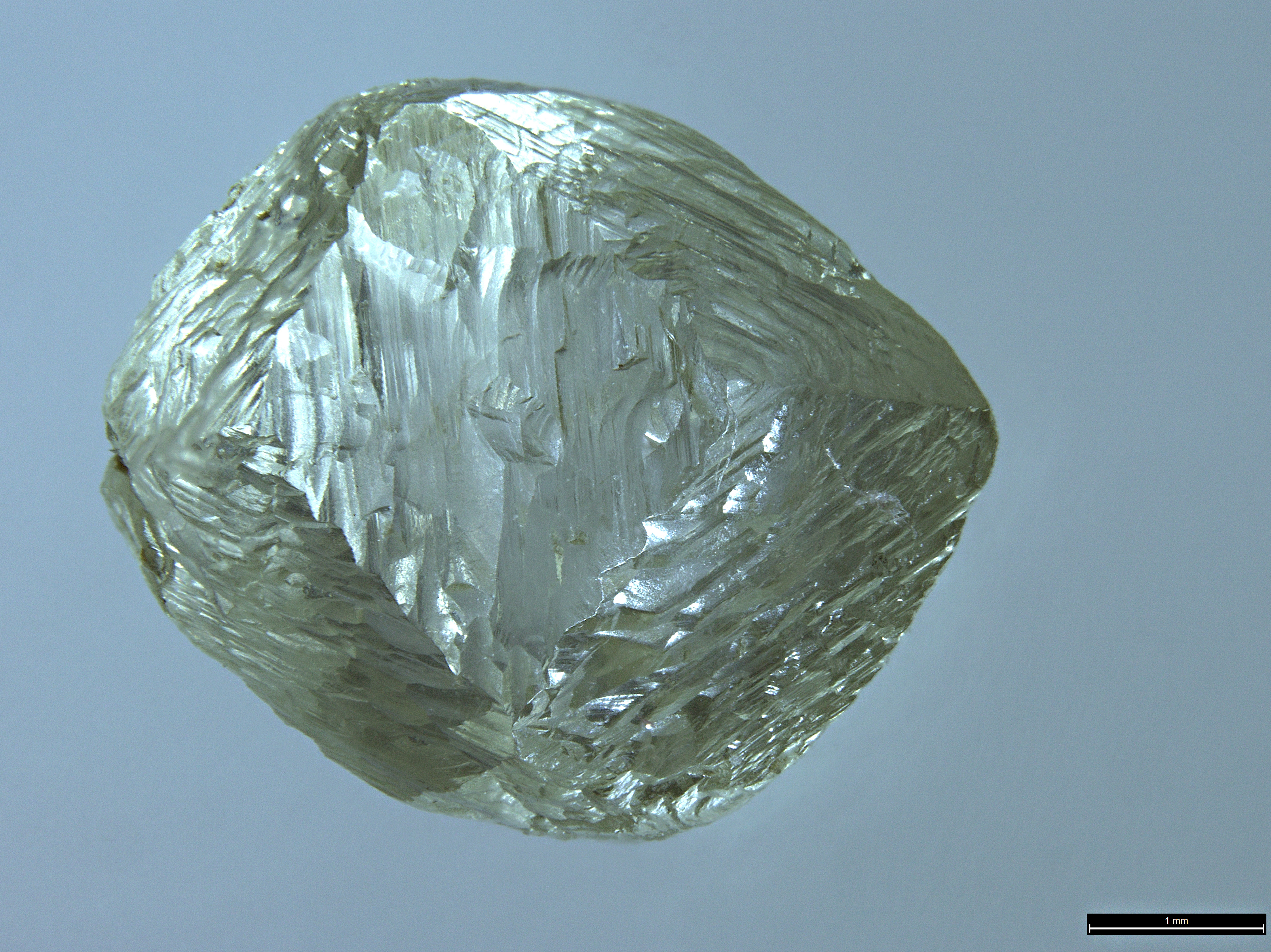

No colour changes. Reference UI fits the complete image; CSS display resizing only. Self-hosted original photograph. No crop, retouch, upscaling or recolouring.

No colour changes. Reference UI fits the complete image; CSS display resizing only. Photograph unavailable in this edition. Its caption, credit and source record are retained.
Spinel
Spinel · MgAl₂O₄ · Mohs 8
Known for centuries; scientifically separated in 1783
People encountered spinel long before mineralogists gave it a separate identity. Because red spinel can resemble ruby, famous historic “rubies” were sometimes spinels. GIA records 1783 as the milestone when Jean-Baptiste Louis Romé de l’Isle established the scientific distinction from ruby using crystal form.
GIA’s historical reading list credits Jean-Baptiste Louis Romé de l’Isle with distinguishing spinel from ruby using crystal geometry. Scientific recognition in 1783 was not the first time people found, traded or wore spinel.
Historical Reading List: Ruby, Balas Ruby and Spinel · Spinel: History and lore
The problem with old names
For centuries colour names could outrun mineral science. “Ruby” might mean a fine red gem rather than corundum specifically. That is why old crown inventories must be read with modern identification in mind.
Spinel: History and lore · Spinel: Material description · Historical Reading List: Ruby, Balas Ruby and Spinel
1783 changes the story
Romé de l’Isle used crystal geometry to distinguish spinel from corundum. This is a beautiful example of how mineralogy changed historical gem names without changing the objects themselves.
Spinel: History and lore · Spinel: Material description · Historical Reading List: Ruby, Balas Ruby and Spinel
Red is only one part of the palette
Natural spinel can be red, pink, purple, blue, grey and black. Different trace elements contribute to colour. A stone’s colour can be beautiful without making it ruby.
Spinel: History and lore · Spinel: Material description · Historical Reading List: Ruby, Balas Ruby and Spinel
Why collectors like spinel
Spinel combines hardness around 8, often attractive transparency and crystal shapes such as octahedra. Historically under-recognised, it has developed a stronger independent collector identity.
Spinel: History and lore · Spinel: Material description · Historical Reading List: Ruby, Balas Ruby and Spinel
Famous “rubies” that are spinel
The Black Prince’s Ruby and Timur Ruby are key teaching examples. The lesson is not “people were foolish”; it is that identification standards evolve.
Spinel: History and lore · Spinel: Material description · Historical Reading List: Ruby, Balas Ruby and Spinel
Synthetic spinel complicates public perception
Synthetic spinel has long been used as an imitation material, which confused consumers about natural spinel. Natural spinel deserves to be explained on its own terms.
Spinel: History and lore · Spinel: Material description · Historical Reading List: Ruby, Balas Ruby and Spinel
A famous name can outlive a correction.
Some celebrated stones historically called rubies are spinels. GIA's account includes the Black Prince's Ruby, whose inherited name remains part of its identity as a historical object. Retaining that name does not require pretending that the material is corundum.
For centuries, visual likeness and cultural value could matter more than the chemical categories used today. A red stone could enter an inventory under a broad or inherited description. The engaging question is how observers later separated these materials, not how to turn every old naming convention into a mistake to ridicule. A material can gain a clearer identity without losing its remarkable story.
1783 is a scientific milestone—not the birth of spinel.
GIA's historical reading list describes Jean-Baptiste Louis Romé de l'Isle recognising differences between spinel and ruby through crystal geometry in 1783. Work on crystal angles helped make shape measurable evidence instead of a vague visual impression.
That record deserves its own discovery card, with the role labelled scientific distinction. It is not a claim that he found the first spinel in a river or opened its first mine. Earlier people had already collected and used the material. This is why the atlas has separate fields for first known use, named deposit finds and scientific identification rather than forcing one person into a single discoverer box.
Historical Reading List: Ruby, Balas Ruby and Spinel
A cubic crystal, not a lesser ruby.
Spinel has its own composition and cubic crystal structure. Natural crystals often take octahedral forms, and twinning can create recognisable shapes. The material is singly refractive, unlike corundum; identifying that property properly requires suitable examination rather than simply looking at a web image.
A rough crystal may reveal the material's natural architecture more clearly than a faceted gem. A cutter adds a different geometry to work with light and make the best use of the rough. The red cut stone and purple crystal in the photograph room are separate specimens, chosen to show diversity. They are not a before-and-after sequence.
A place-name can become a historical clue.
The expression balas ruby is associated with historic spinel sources in the mountainous region of Badakhshan. The older terminology links geography and trade, but it should not be projected indiscriminately onto every modern red spinel. Other Asian sources form part of the material's broader history.
Our map includes Badakhshan as an approximate historical region, Myanmar as an established source context, and the Chinese locality given for one photographed specimen. The pins have different evidential roles. A source-region pin tells you something about the material's geography; an object-location pin tells you where an individual stone is recorded or displayed. Neither is a map of current mine output.
Spinel: History and lore · Spinel crystal, Hunan — photograph record

Red is the beginning of the colour cabinet.
Spinel's colour range includes red, pink, orange, violet and blue. Chromium is important to red and pink examples; iron is involved in several other colours, and cobalt can contribute to striking blue. The presence of a blue appearance alone does not prove a cobalt-bearing specimen.
The cabinet avoids recolouring one photograph. Each swatch is only a teaching cue, while the photographs preserve the specimens' recorded appearance. It is reasonable to describe a colour seen in an image; it is not reasonable to infer exact chemistry, origin or treatment from that colour. Those limits make the real range more interesting, not less.
Inclusions are things to understand.
Inclusions can influence transparency and appearance; their position and character matter more than a generic claim that inclusions are good or bad. Spinel can contain patterns described as fingerprints. A particular inclusion may also provide useful clues during gemological examination.
The rough's shape affects the cutter's options, and the finished outline need not be round. Ask how the centre, edges and overall colour behave under ordinary viewing. An enthusiast's review can compare those visible qualities, but it should not manufacture a laboratory identity conclusion or investment prediction. The phrase research-based visual review should remain visible when the writer has not handled the stone.
Durable is not the same as treatment-free.
GIA lists spinel at 8 on the Mohs scale with good toughness. That is useful background, but it is not a guarantee about every individual stone or jewel. Although many spinels are sold without treatment, treatment status must not simply be assumed; heat and fracture filling have been encountered.
Care decisions should reflect the actual stone, treatments and mounting. A conservative page can recommend checking those points and avoiding unnecessary abrasion or impact. It cannot issue a safety certificate for an unseen antique. Ask for clear disclosure rather than relying on an attractive reputation attached to the material's name.
A better identity reveal.
Imagine a visitor opening a dossier labelled Ruby. The first reveal shows the historical name; the second shows the modern material identification; the third explains what evidence changed the description. That sequence is more useful than a trick question that merely declares the viewer wrong.
Apply the same discipline to a new purchase or an inherited piece: preserve the description that arrived with it, but distinguish that description from independent findings. A stone can carry family meaning even when its material is not what someone once believed. Its history and its mineral identity are complementary records, not rivals for which one must erase the other.
Badakhshan
Historic source region · Central Asian red spinels were historically known as “Balas rubies.” Approximate regional or city indicator; not an exact extraction site or a route.
Approximate coordinates: 36.7, 71.4
Mogok, Myanmar
Classic source · Mogok produces ruby and spinel, helping explain historical confusion. Approximate regional or city indicator; not an exact extraction site or a route.
Approximate coordinates: 22.9, 96.5
Mahenge, Tanzania
Modern source · Mahenge is known for vivid pink-red spinel. Approximate regional or city indicator; not an exact extraction site or a route.
Approximate coordinates: -8.68, 36.72
Hunting for spinels in Mogok — GIA (Mahenge comparison)
London, UK
Historic object · The Black Prince’s “Ruby,” actually spinel, is part of the Crown Jewels. Approximate regional or city indicator; not an exact extraction site or a route.
Approximate coordinates: 51.5, -0.13
The Crown Jewels — Historic Royal Palaces
Badakhshan historical region
history · Approximate regional marker for balas-ruby traditions; not a modern border or exact mine location. Approximate region or city marker, not an exact extraction site.
Approximate coordinates: 37.2, 71.5
Myanmar source context
source · One important Asian source context in the historical overview. Approximate region or city marker, not an exact extraction site.
Approximate coordinates: 22.9, 96.5
Paris / French crystallography
record · Scientific context for Romé de l’Isle’s distinction, not a spinel deposit. Approximate region or city marker, not an exact extraction site.
Approximate coordinates: 48.85, 2.35
Historical Reading List: Ruby, Balas Ruby and Spinel
Xianghualing, Hunan, China
source · Locality given for the purple rough crystal in the photograph room. Approximate region or city marker, not an exact extraction site.
Approximate coordinates: 25.45, 112.55
Spinel crystal, Hunan — photograph record
Historic usage; no first year claimed · Balas ruby
historic use · Source-backed account; precision follows the stated date.
An inherited name reflects red-gem trade and source traditions.
1783 · Measure the crystal
scientific identification · Source-backed account; precision follows the stated date.
Romé de l’Isle distinguishes spinel from ruby through crystal geometry.
Historical Reading List: Ruby, Balas Ruby and Spinel
2011 photograph · A documented purple specimen
object record · Source-backed account; precision follows the stated date.
A specimen record adds a named locality and a photographer; it is not a discovery date.
Spinel crystal, Hunan — photograph record
Today’s reading practice · Keep both records
editorial exercise · Source-backed account; precision follows the stated date.
Retain historical names while displaying the modern mineral identification.
Colour cabinet — illustrative families, not grades
Red · Hot pink · Purple · Blue · Grey
Red
Chromium contributes to red spinel. A historically named ruby can therefore be a separate red material rather than corundum. Illustrative swatch, not a calibrated sample or grade.
Pink
Pink belongs to spinel’s natural colour range. Tone and saturation vary; a swatch cannot identify treatment or origin. Illustrative swatch, not a calibrated sample or grade.
Violet
Iron is involved in violet and blue appearances. The purple crystal photograph represents one specimen, not the whole range. Illustrative swatch, not a calibrated sample or grade.
Blue
Cobalt can contribute to some blue spinels; not every blue-looking specimen is established as cobalt-bearing by its photograph. Illustrative swatch, not a calibrated sample or grade.
Black Prince’s Ruby
Historic red spinel in the Imperial State Crown.
The Crown Jewels — Historic Royal Palaces
Timur Ruby
A large inscribed red spinel in the British royal collection.
Ruby and Balas ruby reading list — GIA
The specimen photographs in this dossier are individually captioned. A photograph of the material does not depict these named objects unless its caption explicitly says so.
Questions to ask
- Is a historic name being confused with modern mineral identity?
- What evidence supports any cobalt, origin or treatment claim?
- Does the cut show an interesting colour pattern without hiding the uncertainty of the review?

No colour changes. Reference UI fits the complete image; CSS display resizing only. Photograph unavailable in this edition. Its caption, credit and source record are retained.
No colour changes. Reference UI fits the complete image; CSS display resizing only. Photograph unavailable in this edition. Its caption, credit and source record are retained.


Original file; no crop, recolouring or enlargement applied. Self-hosted and visually inspected. Original file; no crop, recolouring or enlargement applied.
Responsive WebP copy · full frame retained
Responsive display copies: proportionally downsampled and encoded as WebP by Goutte de Rosée; full frame retained, with no crop, retouching, recolouring or enlargement. Display orientation follows the original EXIF; any colour profile and attribution metadata are retained. The original-file description above remains applicable to the preserved original.
Opal
Hydrated silica · SiO₂·nH₂O · Mohs 5–6.5
Anciently known; modern source stories are separate
Opal was admired in ancient Rome, so there is no documented single discoverer. Modern history is better told through source discoveries and commercial developments: Hungarian deposits were important historically, Australian fields became dominant from the late 19th century, and Ethiopian opal added another major modern chapter.
Opal was known in antiquity. Dates attached to Australian fields, museum purchases or individual fossil finds are later events—not the first discovery of opal or a substitute for earlier local knowledge.
Opal: History and lore · Australian Museum opal collection
A gem that resists simple colour labels
Precious opal can display play-of-colour that shifts as the stone, viewer or light moves. The effect is different from bodycolour and should be described separately.
Opal: History and lore · Opal: Material description
Why the colour moves
Ordered silica spheres can diffract visible light. The size and arrangement of these structures influence the colours observed. An animation of this effect is conceptual, not a calibrated optical simulation.
Opal: History and lore · Opal: Material description
Solid, doublet, triplet, boulder
Construction matters. A solid opal is one piece of opal; doublets and triplets are assembled; boulder opal naturally retains host rock. These terms describe different object structures, not simply quality levels.
Opal: History and lore · Opal: Material description
Australia changes the market
Commercial production from Australian fields in the late 19th and early 20th centuries transformed global opal supply and popular imagery.
Opal: History and lore · Opal: Material description
Ethiopian opal adds a new chapter
Wollo opal became a major modern source. Some material is hydrophane and can absorb water, so care advice must consider the material’s behaviour rather than assuming every opal reacts identically.
Opal: History and lore · Opal: Material description
The “unlucky opal” story
The superstition that opal is unlucky is not an ancient universal truth. GIA links much of the modern reputation to a 19th-century novel. That makes it a perfect “myth versus evidence” scene.
Opal: History and lore · Opal: Material description
An old fascination, not a recent invention.
GIA discusses opal in ancient Roman writing, including Pliny in the first century CE. Historical stories connect it with hope, prophetic powers or lightning, but those are beliefs and literary traditions—not explanations of what makes it flash with colour.
The historical European trade also included material from an area then called Hungary and now in Slovakia. Later Australian discoveries changed opal's commercial geography. That shift should not flatten the older history into a single first-discoverer tale. The atlas starts with recorded admiration and materials, then identifies individual localities and museum events with their own dates.
Opal: History and lore · Australian Museum opal collection
Not a tiny crystal rainbow.
Opal is hydrated silica. Unlike many faceted gems in the atlas, it is not described as a conventional large single crystal with the same kind of repeating long-range crystal structure. In precious opal, appropriately arranged silica structures interact with light to create play-of-colour.
That optical effect is not the same as the stone's bodycolour. A pale or dark background may sit beneath changing flashes. An orange fire opal may have an attractive bodycolour without showing play-of-colour at all. The first step in understanding opal is to stop using colourful as one catch-all explanation for several different appearances.
Opal: Material description · Opal · Opal: Quality factors
Follow the evidence to particular fields.
Australian opal history includes places such as Lightning Ridge, Coober Pedy and Queensland's boulder-opal fields. The Australian Museum's collection history records European purchases in 1861 and a Queensland opal donation in 1873. Those are useful dated collection events, not claims about the first human encounter with the material.
The map pairs these historical contexts with the actual Winton locality reported for the boulder-opal photograph. A location where a photographer worked is not automatically where the stone formed. The water-opal photograph was made in Sweden; its geological origin is not supplied, so it does not create an opal deposit pin in Sweden.
Opal · Australian Museum opal collection · Cabochon-cut water opal — photograph record · Boulder opal, Winton — photograph record


When a fossil becomes an opal story.
An Australian Museum account describes an opalised marine reptile found near Coober Pedy in 1987. The fossil was nicknamed Eric. Preparing and assembling it required patient work; the interesting story is the preservation of a once-living creature through a very different material history.
That does not mean every opal contains a recognisable fossil, nor that the coloured cabochon pictured here came from Eric. The fossil's story is linked as a documented example. It broadens the visitor's idea of an opal object: scientific information and visual beauty can belong together, and cutting a material for jewellery is only one of the possible ways to value it.
Move the viewpoint, not a colour filter.
Play-of-colour changes with lighting and viewing geometry. When describing it, pay attention to the colours visible, their distribution and pattern, and how the appearance changes as the object moves. A still photograph is one view, not the whole performance.
The colour cabinet separates pale, dark and warm bodycolours from play-of-colour. Its swatches are labels, not reconstructed optics. An image tinted in software would teach the wrong lesson. Real photographs need consistent captions and, ideally, several documented viewing conditions. The reference here explains the categories without claiming to reproduce a physical specimen's complete behaviour.
Solid, doublet, triplet and boulder are not synonyms.
A doublet joins an opal layer to a backing; a triplet adds a transparent protective top as part of an assembled construction. Boulder opal retains natural host rock with the opal. A natural association and a glued assembly therefore deserve different labels even when both show contrasting layers.
Solid opal does not mean perfect, untreated or suitable for every cleaning method. It describes construction, not every aspect of quality. A useful product record asks whether the pictured face is the whole stone, an opal layer, a cap or host material. The Winton photograph demonstrates one boulder specimen; it is not a manufactured cross-section or proof of every opal's construction.
A gentler handling conversation.
Opal's relatively modest hardness and sensitivity to some conditions deserve attention. GIA advises against ultrasonic and steam cleaners and discusses risks from heat and sudden temperature changes. Assembled stones introduce further care questions because adhesives and layers may be involved.
Before cleaning, identify the material and construction, check condition and obtain item-specific advice. An heirloom described only as opal could be solid, assembled, treated or something else. Avoid using a website illustration to approve a method for an unknown object. The right conclusion is not that opal is too delicate to enjoy, but that enjoyment improves when the record and care match the actual jewel.
The unexpected detail should teach you something.
A moving colour patch is entertaining; a moving colour patch with an explanation is memorable. The important question is whether the effect comes from light interacting with the material or from a video editor's filter. Keep that question beside every attractive demonstration.
Write a review in three layers: the object as documented, the appearance you can observe and the limits of the observation. This approach works for a museum fossil, a boulder specimen and a finished ring. It prevents a generic opal image from becoming a fictional mine portrait, a treatment test or a claim that one frame captures all the stone can do.
Central Europe
Historic source · Deposits in the region of modern Slovakia supplied important opal historically. Approximate regional or city indicator; not an exact extraction site or a route.
Approximate coordinates: 48.5, 20.2
Australian Museum opal collection
Coober Pedy, Australia
Major source · A famous Australian opal field. Approximate regional or city indicator; not an exact extraction site or a route.
Approximate coordinates: -29.01, 134.75
Lightning Ridge, Australia
Black opal source · A major locality associated with black opal. Approximate regional or city indicator; not an exact extraction site or a route.
Approximate coordinates: -29.43, 147.98
Wollo, Ethiopia
Modern source · Wollo opals became important in the modern market. Approximate regional or city indicator; not an exact extraction site or a route.
Approximate coordinates: 11.5, 39.6
Play-of-color opal from Wegel Tena — GIA
Historic Červenica / Dubník region
history · Historical European opal context: described as Hungarian in older records, now in Slovakia. Approximate region or city marker, not an exact extraction site.
Approximate coordinates: 48.9, 21.43
Australian Museum opal collection
Winton, Queensland
source · Locality stated for the boulder-opal photograph; approximate town/region marker. Approximate region or city marker, not an exact extraction site.
Approximate coordinates: -22.39, 143.04
Boulder opal, Winton — photograph record
Lightning Ridge, NSW
source · An Australian field named in the museum’s geological overview. Approximate region or city marker, not an exact extraction site.
Approximate coordinates: -29.43, 147.97
Coober Pedy, South Australia
object · Regional context for the 1987 opalised fossil find. Approximate region or city marker, not an exact extraction site.
Approximate coordinates: -29.01, 134.75
Sydney, Australian Museum
record · Museum collection history includes an 1873 Queensland opal donation. Approximate region or city marker, not an exact extraction site.
Approximate coordinates: -33.87, 151.21
Australian Museum opal collection
1st century CE · A written fascination
ancient use · Source-backed account; precision follows the stated date.
Pliny’s descriptions belong to the history of human admiration, not a first discovery record.
1861 · European material in a museum
object history · Source-backed account; precision follows the stated date.
Australian Museum purchases illustrate the older European source story.
Australian Museum opal collection
1873 · Queensland enters the collection
source record · Source-backed account; precision follows the stated date.
A documented donation, not the year opal first formed or was first found.
Australian Museum opal collection
1987 · The fossil nicknamed Eric
source discovery · Source-backed account; precision follows the stated date.
An opalised marine reptile is found near Coober Pedy.
2015 photograph · A Winton boulder specimen
object record · Source-backed account; precision follows the stated date.
The contemporary photo documents a particular specimen and its reported locality.
Boulder opal, Winton — photograph record
Colour cabinet — illustrative families, not grades
White body · Black body · Fire orange · Blue-green play · Red play
Pale bodycolour
The background colour and the flashes are different observations. Pale bodycolour does not guarantee strong play-of-colour. Illustrative swatch, not a calibrated sample or grade.
Dark bodycolour
A dark background can change the contrast of visible flashes. This teaching swatch is not an opal grade. Illustrative swatch, not a calibrated sample or grade.
Warm fire-opal colour
Fire opal is associated with warm yellow, orange or red bodycolour; it need not show play-of-colour. Illustrative swatch, not a calibrated sample or grade.
Play-of-colour
Changing flashes are an optical effect, not a single pigment or static hue. They are explained here, not faked by recolouring the photographs. Illustrative swatch, not a calibrated sample or grade.
Olympic Australis
A famous very large rough opal from Australia.
Famous opals — Altmann + Cherny
Aurora Australis
A celebrated black opal associated with Lightning Ridge.
Famous opals — Altmann + Cherny
The famous-opal accounts come from Altmann + Cherny. They describe individual objects, not a universal quality ranking; the Ethiopian specimen photograph is a different object.
Questions to ask
- Is this bodycolour, play-of-colour, or both?
- Is the stone solid, a doublet, a triplet or natural boulder opal?
- Does the photograph’s location describe the camera or the gemstone’s source?
No colour changes. Reference UI fits the complete image; CSS display resizing only. Photograph unavailable in this edition. Its caption, credit and source record are retained.
No colour changes. Reference UI fits the complete image; CSS display resizing only. Photograph unavailable in this edition. Its caption, credit and source record are retained.


Wikimedia 960-pixel derivative of the credited original; no additional crop or colour changes. Self-hosted and visually inspected. Wikimedia 960-pixel derivative of the credited original; no additional crop or colour changes.
Responsive WebP copy · full frame retained
Responsive display copies: proportionally downsampled and encoded as WebP by Goutte de Rosée; full frame retained, with no crop, retouching, recolouring or enlargement. Display orientation follows the original EXIF; any colour profile and attribution metadata are retained. The original-file description above remains applicable to the preserved original.
Tanzanite
Zoisite · Ca₂Al₃(SiO₄)₃(OH) · Mohs 6–7
1967 — Ali Juuyawatu is credited with the first crystal
Unlike ancient gems, tanzanite has a modern discovery story. GIA credits Masai tribesman Ali Juuyawatu with finding the first tanzanite crystal in 1967. The crystals were then brought to wider attention, and Tiffany & Co. named the blue-violet zoisite “tanzanite” after Tanzania and promoted it internationally.
GIA’s narrative also describes a Maasai finder alerting Manuel d’Souza, who pursued claims. Keep the finder, claim-holder and later marketing/naming roles separate. Tiffany did not create the mineral or become its first local finder by naming it.
Tanzanite: gem encyclopedia · Tanzanite: History and lore
A rare modern discovery story
Tanzanite is unusual because its modern history can be dated to 1967. This makes it possible to distinguish how discovery, claim registration, identification, naming and marketing are separate events.
Tanzanite: History and lore · Tanzanite: Material description
Ali Juuyawatu and the first find
GIA credits Masai tribesman Ali Juuyawatu with finding the first tanzanite crystal. Other people then played roles in claim registration, identification and commercial development.
Tanzanite: History and lore · Tanzanite: Material description
Why it looked like sapphire
Early blue-violet crystals could suggest sapphire to non-specialists, but the material proved to be zoisite. Identification changed the story from “new sapphire source” to a new gem variety.
Tanzanite: History and lore · Tanzanite: Material description
Tiffany changes the name
The trade name tanzanite made the gem easier to market than “blue zoisite.” This is a strong lesson in how naming can shape consumer identity without changing mineralogy.
Tanzanite: History and lore · Tanzanite: Material description
Pleochroism and cutting
Tanzanite can show different colours in different crystal directions. Cut orientation affects the mix of blue and violet seen face-up and also affects weight retention.
Tanzanite: History and lore · Tanzanite: Material description
Heat and care
Most tanzanite in the market has been heated to develop the blue-violet appearance. With hardness around 6–7 and cleavage, it needs more careful wear than corundum or diamond.
Tanzanite: History and lore · Tanzanite: Material description
Three roles, not one convenient discoverer.
Tanzanite provides a more recent discovery story than emerald or sapphire. GIA credits Ali Juuyawatu with finding the material in 1967. Its historical narrative describes a Maasai man bringing attention to unusual blue-violet crystals and Manuel d'Souza pursuing claims. Retell that as an attributed account, preserving local knowledge rather than deleting it from the story.
Discovery, mineral identification, a mining claim and a commercial name are different achievements. A company that helped a gem become famous should not absorb all those roles. The atlas makes them visible separately, so visitors can understand how a material moves from a local find to a named gemstone recognised elsewhere.
Tanzanite: gem encyclopedia · Tanzanite: History and lore
A new name for blue-violet zoisite.
Tanzanite is the blue to violet variety of zoisite. Tiffany introduced the memorable name associated with Tanzania, and the Smithsonian records its marketing in 1968. That commercial chapter followed the 1967 discovery accounts; it is not the date when the material's atoms first took shape underground.
The name and its place association are central to the story. A sales name, however, is not itself a laboratory identification. When a specimen is described as tanzanite, the record should still distinguish the actual mineral, treatment information and any supporting examination. Recognisable branding makes a material easier to remember; it does not replace gemology.
Tanzanite in the National Gem Collection · Tanzanite: Material description
A small source area makes a focused map.
The Merelani area of northern Tanzania is the important source region associated with tanzanite. It deserves a focused regional map rather than a fictional line crossing every continent. This atlas also marks New York for the naming and marketing chapter, and Washington for documented museum objects.
Those pins do not represent a traced shipment of the photographed crystal. They tell three different kinds of story: a source, a commercial naming context and a collection. Straight lines between them could falsely imply a proven trade itinerary, so none are drawn. The captions carry the evidence instead of allowing an attractive map to invent a journey.
Tanzanite: gem encyclopedia · Tanzanite in the National Gem Collection
Direction can change what you see.
Tanzanite is pleochroic: its apparent colour can differ with the direction through which it is viewed. Blue and violet are especially associated with the gemstone, while brownish or other directional components may occur in material before heating. This is different from alexandrite's characteristic change when the illumination changes.
Turning a crystal and changing the lamp are different experiments. A good demonstration labels which variable is changing. The static photographs here show documented views, and the colour cabinet explains the principle without turning a mouse movement into a fabricated optical measurement. Colour depth and direction should be described on the real specimen, not inferred solely from a screen.
Tanzanite: Material description
Heating belongs in the description.
Much tanzanite is heated to improve or develop its familiar blue-violet appearance. An attractive colour does not let a viewer establish whether a particular stone was heated. The distinction belongs in disclosure and supporting records rather than in an unsupported visual guess.
This does not mean a page should present natural and heated as a simple good-versus-bad contest. Explain what process is reported, what it changes and what remains unknown. A visitor should come away able to ask a clear question about treatment instead of relying on phrases such as untouched beauty, especially when no direct examination has taken place.
Tanzanite: Material description · Tanzanite: Care and cleaning
One mineral, different collection stories.
The Smithsonian's Schneider Tanzanite Ring contains a 12.11-carat tanzanite. Another collection record describes a 351.91-carat fashioned specimen donated in 2022. These objects provide different opportunities for looking: one presents the material as part of a designed jewel; the other gives exceptional size a museum context.
The larger specimen should not be called the largest in the world on the strength of a statement about one museum collection. Nor should a generic violet gem photograph be labelled as either named object. In the photo room, the ring's record and its own image stay connected. A separate Tanzanian crystal is shown as rough, with its own author and source.
Schneider Tanzanite Ring · Tanzanite in the National Gem Collection
Cleavage changes the ownership conversation.
GIA lists tanzanite at approximately 6–7 on the Mohs scale and describes cleavage as an important vulnerability. A hard knock and a scratch are not the same event, so hardness alone is not enough to choose how a piece should be worn or handled.
GIA recommends avoiding ultrasonic and steam cleaning for tanzanite. Heat, sudden temperature changes, the setting and any existing damage need attention. Ask a qualified professional to inspect a personal jewel before choosing a method. The educational aim is to understand why a protective setting and considerate handling matter, not to frighten visitors away from appreciating the material.
Tell the people’s story without a fairy tale.
Discovery stories are often compressed until only the most famous business name survives. A better page lets the visitor unfold the roles: a local finder notices a material; others pursue claims and identification; a commercial name brings wider attention. Where accounts are uncertain or incomplete, an attributed explanation is more honest than an invented dialogue.
The same approach improves a product review. Ask which specimen is shown, what the document establishes and which parts are descriptive interpretation. A strongly told story does not require a magical lightning event, an undocumented first meeting or a made-up quotation. The human decisions already provide a memorable sequence.
Merelani Hills, Tanzania
Only commercial source · Tanzanite is commercially mined in one small area near Mount Kilimanjaro. Approximate regional or city indicator; not an exact extraction site or a route.
Approximate coordinates: -3.56, 36.98
Arusha, Tanzania
Trade centre · Arusha became closely associated with the tanzanite trade. Approximate regional or city indicator; not an exact extraction site or a route.
Approximate coordinates: -3.37, 36.68
New York, USA
Naming & promotion · Tiffany & Co. helped name and internationally market the gem. Approximate regional or city indicator; not an exact extraction site or a route.
Approximate coordinates: 40.71, -74.0
Merelani region, Tanzania
discovery · Approximate regional location associated with the 1967 discovery accounts. Approximate region or city marker, not an exact extraction site.
Approximate coordinates: -3.55, 36.99
New York / Tiffany naming context
record · Commercial introduction and naming story; not a crystal-growth locality. Approximate region or city marker, not an exact extraction site.
Approximate coordinates: 40.76, -73.97
Tanzanite in the National Gem Collection
Washington, DC
object · Smithsonian tanzanite objects provide individual collection records. Approximate region or city marker, not an exact extraction site.
Approximate coordinates: 38.89, -77.03
Schneider Tanzanite Ring · Tanzanite in the National Gem Collection
1967 · A local find
named modern find · Source-backed account; precision follows the stated date.
GIA credits Ali Juuyawatu in the discovery story.
1967 accounts · Claims and identification follow
claim registration / identification · Source-backed account; precision follows the stated date.
Manuel d’Souza appears in the account as a claim-holder, distinct from the local finder.
1968 · The name reaches a wider audience
naming / commercial milestone · Source-backed account; precision follows the stated date.
The Tiffany marketing chapter follows the mineral discovery story.
Tanzanite in the National Gem Collection
2022 · A major specimen enters a collection
object history · Source-backed account; precision follows the stated date.
The Smithsonian records donation of a 351.91-carat fashioned tanzanite.
Tanzanite in the National Gem Collection
Colour cabinet — illustrative families, not grades
Blue · Violet blue · Bluish violet · Purple
Blue
Blue can be a strong component of tanzanite’s directional appearance. This is not a colour grade or a photograph of a particular specimen. Illustrative swatch, not a calibrated sample or grade.
Tanzanite: Material description
Violet-blue
Violet-blue belongs to its familiar visual range. Pleochroism concerns direction through the crystal. Illustrative swatch, not a calibrated sample or grade.
Tanzanite: Material description
Brownish component
Other directional components can occur, especially before heating; the swatch explains a category, not a treatment test. Illustrative swatch, not a calibrated sample or grade.
Tanzanite: Material description
122.70 ct Smithsonian tanzanite
A large tanzanite in the Smithsonian collection.
Tanzanite NMNH G4876 — Smithsonian
Merelani crystal specimens
Fine crystals illustrate the gem’s natural crystal habit before cutting.
The specimen table records 122.70 ct; the Smithsonian narrative gives 122.74 ct. These are conflicting entries for NMNH G4876, not the separate 351.91 ct gem acquired in 2022. The second entry is a specimen category, not a named famous object.
Questions to ask
- Who found it, who filed claims, and who supplied the commercial name?
- Is an observed change caused by viewing direction or by a different light source?
- Is the photograph tied to an identified specimen and treatment record?


No colour changes. Reference UI fits the complete image; CSS display resizing only. Photograph unavailable in this edition. Its caption, credit and source record are retained.
No colour changes. Reference UI fits the complete image; CSS display resizing only. Photograph unavailable in this edition. Its caption, credit and source record are retained.


Wikimedia 960-pixel derivative of the credited original; no additional crop or colour changes. Self-hosted and visually inspected. Wikimedia 960-pixel derivative of the credited original; no additional crop or colour changes.
Responsive WebP copy · full frame retained
Responsive display copies: proportionally downsampled and encoded as WebP by Goutte de Rosée; full frame retained, with no crop, retouching, recolouring or enlargement. Display orientation follows the original EXIF; any colour profile and attribution metadata are retained. The original-file description above remains applicable to the preserved original.
Alexandrite
Chrysoberyl · BeAl₂O₄ with chromium · Mohs 8.5
1830 — Ural Mountains discovery; naming followed
GIA dates the discovery of abundant alexandrite deposits to 1830 in Russia’s Ural Mountains. The gem was named for the future Alexander II. Historical sources differ on exact naming year and individual roles, so distinguish the discovery of the deposit from the later naming story.
GIA places the early discovery in the Ural Mountains around 1830. This source set does not securely establish one individual first finder. The namesake, later scientific work and romantic birthday tales are not interchangeable discovery evidence.
A discovery with a date
Alexandrite is younger in gem history than ruby or emerald. The 1830 Ural discovery can be discussed as a documented modern event rather than an ancient legend.
Alexandrite: History and lore · Alexandrite: Material description
Why the colour changes
Chromium-related absorption interacts with the spectral balance of the light source. Daylight-like light and warm incandescent light can make the same stone appear dramatically different.
Alexandrite: History and lore · Alexandrite: Material description
Colour change is not a simple switch
Fine alexandrite is prized for strong, attractive change, but real stones can show intermediate, brownish or mixed colours. A two-colour marketing slogan is easier than the full optical reality.
Alexandrite: History and lore · Alexandrite: Material description
Russia became the benchmark
Early Russian material became historically famous for vivid change. Later deposits in Brazil, Sri Lanka and East Africa expanded supply, but origin alone does not guarantee quality.
Alexandrite: History and lore · Alexandrite: Material description
Naming and national symbolism
The name associated the gem with the future Alexander II, and red/green colours resonated with Imperial Russian symbolism. The history is cultural; the colour-change mechanism is scientific. Both belong on the page, but they should not be confused.
Alexandrite: History and lore · Alexandrite: Material description
A laboratory report matters
Colour-change gems can be natural, synthetic or imitated. A dramatic visual effect is not proof of natural origin. Expert identification should be separated from visual appreciation.
Alexandrite: History and lore · Alexandrite: Material description
Keep the date—and keep the uncertainty.
GIA places alexandrite's early discovery in Russia's Ural Mountains around 1830. Its name is associated with the future Alexander II. A royal namesake gives the story context, but does not identify the person who first noticed the stone or prove every repeated account about the exact day.
Rather than smoothing those gaps into a dramatic scene, the atlas keeps the claim narrow. The location and approximate period are supported; a single first-finder identity is not established by the cited material. A responsible history can still be vivid: the puzzle is how one material appears so different under changing illumination, and how people recognised that behaviour.
Chrysoberyl is not beryl.
Alexandrite is a colour-change variety of chrysoberyl. Despite the similar sound of the names, chrysoberyl and beryl are different minerals; emerald belongs to beryl, not to the same mineral family as alexandrite.
That distinction matters when an expression such as emerald by day and ruby by night is used. It is a colourful analogy for appearance, not a statement that the stone changes into those two minerals. The composition does not switch when the lamp does. Use the family and formula first, then explain why the interaction of light and material produces a different visual impression.
Alexandrite: Material description · Alexandrite: gem encyclopedia
Change the lamp, not the gemstone.
Alexandrite's characteristic colour change is associated with how the material absorbs light and with the spectral balance of the illumination. It can appear greener under daylight-like conditions and redder under incandescent illumination, with considerable variation between specimens.
This is not the same as simply turning a pleochroic crystal. Both effects can be relevant to gem observation, but the defining comparison here changes the light source. A pair of photographs should therefore report the lighting conditions. The side-by-side image in this atlas is a real photographic pair from its source record—not a green stone repainted red by the interface.
Alexandrite: Material description
A Russian beginning is not a universal origin.
Russia's historical importance should not become a rule that all natural alexandrite must be Russian. GIA discusses later sources including Sri Lanka, Brazil and East Africa. The Smithsonian also records examples from Russia and Sri Lanka in its collection.
The map identifies selected source regions without drawing an invented trading route. An old Russian object and a newer Brazilian specimen have separate histories. No amount of resemblance in a colour-change photograph can establish that they share a mine. A colour, a mineral identity and a geographic-origin opinion are different claims and need different evidence.
Alexandrite: History and lore · Alexandrites in the National Gem Collection
The most useful photograph shows its conditions.
David Weinberg's documented photographic pair shows a cushion-cut alexandrite described as 26.75 carats under daylight and incandescent light. The value of the image is the controlled comparison described by the record, not an invitation to assign the pictured specimen's weight or quality to another stone.
A second rough-crystal photograph has its own locality and light labels. Those exact labels are retained rather than silently changed to fit a standard story. The museum collection link offers additional named specimens, but inconsistent weights in a source's prose and table are not repeated as settled measurements here. A precise caption is part of the evidence, not decoration beneath it.
Alexandrites in the National Gem Collection · Alexandrite under two light sources — photograph record · Brazilian alexandrite crystal, two views — photograph record


How strong is the change—and what does that mean?
Two appealing colour names do not capture every aspect of a colour-change stone. The actual hues, their tone and saturation, the strength of the change, lighting conditions and the quality of the cut all affect what a viewer experiences. A photograph can compress or exaggerate some of those differences.
The cabinet therefore labels the variable being discussed rather than scoring a stone. A green swatch and a purple-red swatch show categories; they are not proof of a one-hundred-percent change, a grade or a natural origin. For a personal gem, request a description based on appropriate examination and compare it under the conditions the record actually specifies.
Alexandrite: Material description
A good hardness number still needs context.
Alexandrite has a Mohs hardness of 8.5 and generally good toughness. GIA's care guidance nevertheless requires attention to treatments and surface-reaching fractures, as well as the condition of the complete jewel. Strong material is not permission to ignore a loose setting.
Keep the practical sequence simple: identify the gem, read treatment information, inspect condition and only then choose cleaning and wear guidance. A website can explain the reasoning but cannot inspect the item on your hand. This is particularly important for pieces with several materials, where the most vulnerable component may not be the central gemstone.
Alexandrite: Care and cleaning
A story can stay magical without claiming magic.
The surprise of two appearances is enough. There is no need to say the gem has transformed into another mineral, to manufacture a prince's discovery scene or to promise that a viewer can identify a natural specimen from colour change alone.
For an enthusiast's review, record the source of the photographs and the light conditions first. Then describe the visual change and the cut's character, keeping observation apart from authentication. End with what would require direct examination. This gives the visitor a practical way to understand a fascinating stone while preserving the honesty of both the history and the technical explanation.
Ural Mountains, Russia
Discovery region · The classic 19th-century discovery region. Approximate regional or city indicator; not an exact extraction site or a route.
Approximate coordinates: 57.0, 60.0
Brazil
Modern source · Brazil later produced important alexandrite. Approximate regional or city indicator; not an exact extraction site or a route.
Approximate coordinates: -13.5, -48.0
Sri Lanka
Modern source · Sri Lanka is another alexandrite source. Approximate regional or city indicator; not an exact extraction site or a route.
Approximate coordinates: 7.87, 80.77
East Africa
Modern source region · Tanzania and other East African localities contribute material. Approximate regional or city indicator; not an exact extraction site or a route.
Approximate coordinates: -4.0, 35.0
Ural Mountains, Russia
discovery · Approximate regional location for the early nineteenth-century discovery. Approximate region or city marker, not an exact extraction site.
Approximate coordinates: 57.0, 60.6
Sri Lanka
source · A later source context and locality of museum examples. Approximate region or city marker, not an exact extraction site.
Approximate coordinates: 7.5, 80.7
Alexandrite: History and lore · Alexandrites in the National Gem Collection
Brazil
source · Selected later source region, not a verified mine for every photograph. Approximate region or city marker, not an exact extraction site.
Approximate coordinates: -19.5, -41.6
Washington, DC
object · A collection location for documented Russian and Sri Lankan specimens. Approximate region or city marker, not an exact extraction site.
Approximate coordinates: 38.89, -77.03
Alexandrites in the National Gem Collection
Around 1830 · Early Ural discovery
source discovery · Source-backed account; precision follows the stated date.
The regional and approximate-date claim is stronger than a single first-finder claim in this source set.
19th-century naming · A royal namesake
naming · Source-backed account; precision follows the stated date.
The name refers to the future Alexander II; a namesake is not necessarily the finder.
Later source history; no single date assigned · Beyond Russia
source history · Source-backed account; precision follows the stated date.
Sri Lanka, Brazil and East Africa broaden the source story.
2006 published image record · A documented two-light comparison
object record · Source-backed account; precision follows the stated date.
The source describes the pictured 26.75-carat stone in daylight and incandescent illumination.
Alexandrite under two light sources — photograph record
Colour cabinet — illustrative families, not grades
Daylight green · Bluish green · Purplish red · Brownish red
Daylight-like green
Green to bluish-green is one side of the familiar comparison, with variation between specimens. Illustrative swatch, not a calibrated sample or grade.
Alexandrite: Material description
Incandescent reddish-purple
A different light source can produce a redder appearance in the same material. That is not a change into ruby. Illustrative swatch, not a calibrated sample or grade.
Alexandrite: Material description
Intermediate appearance
Mixed illumination and individual variation complicate a simple two-colour slogan. No percentage-change grade is assigned by this display. Illustrative swatch, not a calibrated sample or grade.
Alexandrite: Material description
43 ct British Museum alexandrite
A large historical alexandrite documented by GIA.
Smithsonian alexandrite specimens
Museum examples help demonstrate the colour-change phenomenon under different lighting.
Alexandrites in the National Gem Collection
GIA records the 43-carat museum example. The Smithsonian entry refers to collection specimens, not one uniquely named historical stone. Photographs here show a different, explicitly credited alexandrite.
Questions to ask
- What actual illumination produced each photograph?
- Is a namesake being mistaken for the discoverer?
- Which claims require direct gemological examination rather than a colour comparison?

No colour changes. Reference UI fits the complete image; CSS display resizing only. Self-hosted original photograph. No crop, retouch, upscaling or recolouring.
Responsive WebP copy · full frame retained
Responsive display copies: proportionally downsampled and encoded as WebP by Goutte de Rosée; full frame retained, with no crop, retouching, recolouring or enlargement. Display orientation follows the original EXIF; any colour profile and attribution metadata are retained. The original-file description above remains applicable to the preserved original.
No colour changes. Reference UI fits the complete image; CSS display resizing only. Photograph unavailable in this edition. Its caption, credit and source record are retained.